
Introduction: Why Supply Chains Need AI Today
Modern businesses depend heavily on fast and reliable supply chains. A supply chain includes everything from raw materials and manufacturing to warehouses, transportation, and final delivery to customers. However, today’s global supply chains are more complex than ever before. Companies must manage thousands of suppliers, changing customer demand, transportation delays, and rising operational costs.
Because of these challenges, many organisations are now adopting AI in Supply Chain Optimization to make their operations faster, smarter, and more efficient.

The Growing Complexity of Global Supply Chains
Over the past decade, global trade, e-commerce growth, and digital marketplaces have significantly expanded supply chain networks. Businesses now operate across multiple countries and rely on complex logistics systems.
For example, the global AI supply chain market reached around $19.8 billion in 2026 and is growing rapidly at over 45% annually, showing how quickly companies are investing in intelligent technologies to manage logistics and operations.
This complexity creates several challenges for businesses:
- Multiple suppliers across different countries
- Transportation delays due to weather, regulations, or geopolitical events
- Difficulty predicting customer demand
- Inventory shortages or overstocking
Traditional supply chain systems often struggle to manage these challenges efficiently. As a result, many companies are turning to AI supply chain management to improve visibility and decision-making.
Rising Customer Expectations and Faster Deliveries
Customer expectations have changed dramatically in the digital economy. Online shoppers expect:
- Same-day or next-day delivery
- Real-time tracking
- Accurate product availability
This “instant delivery culture” puts massive pressure on logistics networks.
For instance, the last mile of delivery alone can represent about 41% of total logistics costs, making it one of the most expensive and complex parts of the supply chain.
Without smart systems, companies struggle to maintain speed and efficiency while controlling costs. This is where AI logistics optimization becomes extremely valuable.
The Real Cost of Delays, Inefficiencies, and Waste
Supply chain inefficiencies can cost companies millions every year. Some common problems include:
- Poor demand forecasting
- Excess inventory
- Stock shortages
- Delayed shipments
- Inefficient delivery routes
According to industry research, companies that implement AI in supply chains can reduce operational costs by up to 15% and improve demand forecasting accuracy by 20–50%.
These improvements help businesses reduce waste, prevent overstocking, and deliver products to customers faster.
For example:
- AI-powered analytics can predict future demand trends.
- Intelligent routing systems reduce delivery times and fuel costs.
- Automated warehouses improve efficiency and accuracy.
All these improvements contribute to building a more intelligent supply chain.
Why Manual Planning Is No Longer Enough
Many traditional supply chain systems still rely heavily on manual planning and spreadsheets. While these methods worked in the past, they struggle to handle modern logistics complexity.
Manual planning often leads to:
- Forecasting errors
- Slow decision-making
- Poor inventory visibility
- Inefficient transportation planning
Artificial Intelligence changes this by analysing massive datasets in real time. AI systems can process information from multiple sources, such as:
- Sales data
- Market trends
- weather patterns
- supplier performance
- shipping routes
Using this data, AI demand forecasting can predict demand fluctuations more accurately and recommend the best actions automatically.
How Artificial Intelligence Is Transforming Supply Chain Management
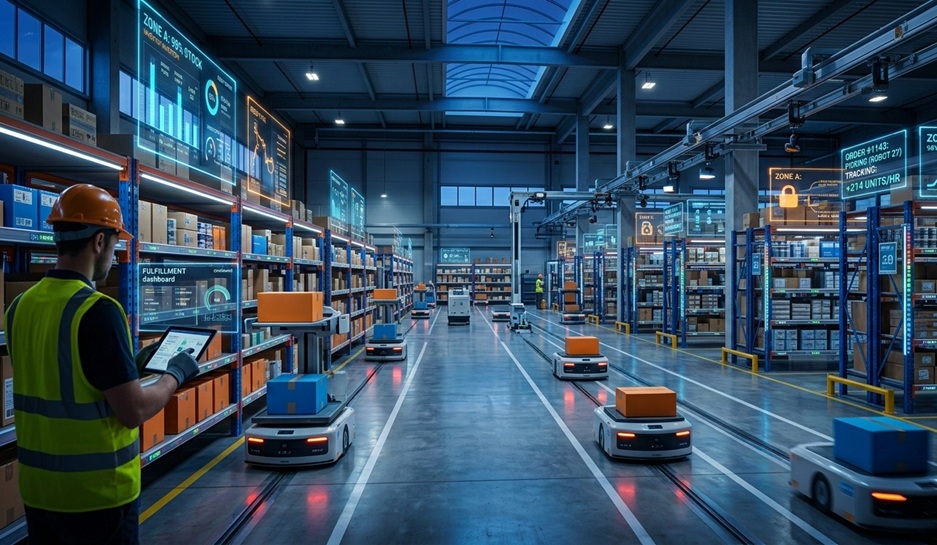
Artificial Intelligence is rapidly transforming how supply chains operate. AI systems use technologies such as machine learning, predictive analytics, and automation to make supply chains smarter and more responsive.
According to research, 70% of large organisations are expected to adopt AI-based forecasting in supply chain planning by 2030, highlighting the growing importance of intelligent automation in logistics.
Key areas where AI is improving supply chains include:
1. Demand Forecasting
AI analyses historical sales data and market trends to predict future demand. This reduces stock shortages and overstock situations.
2. Inventory Management
AI systems automatically monitor inventory levels and trigger restocking when needed.
3. Logistics Optimization
AI-powered tools analyse traffic, fuel costs, delivery routes, and weather conditions to create the most efficient transportation plans.
4. Risk Detection
AI can identify potential disruptions such as supplier delays, port congestion, or natural disasters before they occur.
These capabilities allow companies to build a more resilient and intelligent supply chain.
AI Gives Businesses a Powerful Competitive Advantage
Companies that adopt AI in Supply Chain Optimization gain several competitive advantages:
- Faster delivery times
- Lower operational costs
- Improved customer satisfaction
- Better demand forecasting
- Reduced waste and inventory losses
Research from Gartner shows that top-performing supply chain organisations adopt AI technologies at more than twice the rate of low-performing companies, highlighting how AI adoption directly impacts business success.
As competition increases, businesses that fail to adopt intelligent technologies may struggle to keep up with faster and more efficient competitors.
The Future of Intelligent Supply Chains
The future of supply chain management will be increasingly automated and data-driven. AI systems will continue to evolve, enabling supply chains that can predict disruptions, automate decisions, and optimise logistics in real time.
Experts predict that by 2030, around 50% of supply chain management solutions will use intelligent AI agents capable of making autonomous decisions.
This means supply chains will become more adaptive, resilient, and efficient than ever before.
2. What is AI in Supply Chain Optimization?
In today’s fast-moving business world, companies must deliver products quickly, reduce costs, and manage complex global operations. This is why many organisations are now adopting AI in Supply Chain Optimization. Artificial Intelligence helps businesses make smarter decisions, reduce delays, and improve efficiency across the entire supply chain.
In simple words, AI supply chain management means using intelligent computer systems to analyse data, predict demand, automate processes, and optimise logistics operations. Instead of relying on manual planning or guesswork, businesses can use AI tools to make accurate, data-driven decisions.
From ordering raw materials to delivering finished products to customers, AI helps companies build a faster and more intelligent supply chain that can respond quickly to market changes.
Definition of AI in Supply Chain Optimization
AI in Supply Chain Optimization refers to the use of advanced technologies such as machine learning, predictive analytics, and automation to improve supply chain activities like planning, demand forecasting, inventory control, and transportation management.
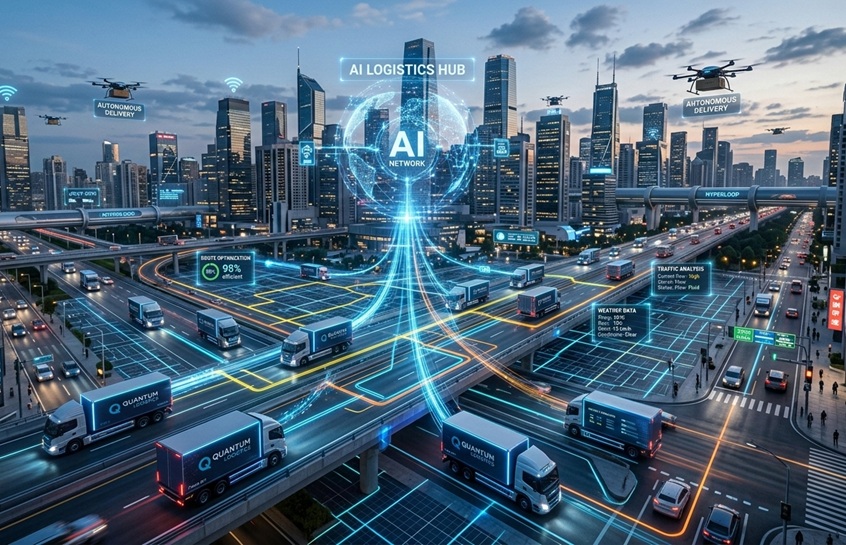
Traditional supply chains often depend on spreadsheets, manual analysis, and human judgement. While these methods worked in the past, modern supply chains generate huge amounts of data that humans cannot analyse quickly.
AI solves this problem by analysing large datasets in real time and identifying patterns that help businesses make better decisions.
For example, AI systems can:
- Predict how many products customers will buy next month
- Automatically manage inventory levels
- Identify the fastest delivery routes
- Detect potential supply chain disruptions
Because of these capabilities, AI logistics optimization helps businesses operate more efficiently while reducing operational risks.
Technologies Used in AI Supply Chain Management
Several advanced technologies work together to power AI supply chain management. These technologies help companies automate operations, improve forecasting accuracy, and optimise logistics networks.
Machine Learning
Machine learning is one of the most important technologies used in AI in Supply Chain Optimization. It allows computer systems to learn from historical data and improve their predictions over time.
Machine learning algorithms analyse patterns in sales data, customer behaviour, seasonal trends, and market conditions. Based on this information, businesses can make better decisions about production, inventory, and logistics.
For example, machine learning can help companies:
- forecast product demand
- detect unusual supply chain patterns
- improve delivery planning
- reduce forecasting errors
This makes machine learning a key part of building an intelligent supply chain.
Predictive Analytics
Predictive analytics uses historical data and advanced algorithms to forecast future events. In supply chains, this technology helps companies anticipate demand changes and potential disruptions.
For example, predictive analytics can analyse:
- past sales data
- seasonal demand trends
- supplier delivery history
- transportation delays
- weather patterns
Using this information, AI systems can predict potential problems before they occur. Businesses can then take action early and avoid delays.
Predictive analytics plays a crucial role in AI logistics optimization because it helps companies plan transportation routes and inventory levels more accurately.
Robotic Process Automation (RPA)
Robotic Process Automation, or RPA, is used to automate repetitive and time-consuming tasks in supply chain operations.
Many routine tasks in logistics and inventory management require manual work, such as:
- processing orders
- updating stock levels
- generating shipping documents
- tracking deliveries
RPA uses software robots to perform these tasks automatically. This reduces human errors and allows employees to focus on more strategic work.
By combining RPA with Artificial Intelligence, companies can create highly efficient supply chain operations.
AI Demand Forecasting
Demand forecasting is one of the most important activities in supply chain management. Businesses must estimate how much product customers will buy in the future so they can plan production and inventory accordingly.
Traditional forecasting methods often rely on simple calculations or human judgement, which can lead to inaccurate predictions.
AI demand forecasting uses machine learning and predictive analytics to analyse large datasets such as:
- historical sales data
- customer purchasing patterns
- seasonal demand changes
- market trends
These systems continuously learn from new data, which helps businesses improve forecasting accuracy over time.
Accurate demand forecasting helps companies maintain the right inventory levels, preventing both stock shortages and excess inventory.
Intelligent Automation
Intelligent automation combines Artificial Intelligence with automation technologies to create systems that can make decisions automatically.
For example, intelligent automation can:
- reorder products when stock levels fall below a certain limit
- adjust delivery routes based on traffic conditions
- identify supply chain disruptions early
- optimise warehouse operations
This level of automation reduces the need for manual intervention and helps businesses run their operations more efficiently.
As a result, companies can build a fully intelligent supply chain that responds quickly to changing conditions.
Why Businesses Use AI in Supply Chain Optimization
Companies across the world are adopting AI in Supply Chain Optimization because it provides significant operational and financial benefits. Modern supply chains face many challenges, including rising customer expectations, increasing transportation costs, and unpredictable demand patterns.
AI helps businesses overcome these challenges in several ways.
Reducing Delays
Delivery delays are one of the biggest problems in supply chain management. These delays can occur due to traffic congestion, poor route planning, weather disruptions, or inefficient logistics processes.
AI systems analyse real-time data such as traffic conditions, shipping schedules, and weather updates to recommend the fastest and most efficient transportation routes.
This type of AI logistics optimization helps companies deliver products faster and improve customer satisfaction.
Improving Planning
Supply chain planning involves many complex decisions, including how much inventory to order, where to store products, and how to transport them efficiently.
AI systems analyse large volumes of data and provide accurate insights that help managers make better decisions. Businesses can plan production schedules, manage inventory levels, and optimise logistics operations more effectively.
This makes AI supply chain management an essential tool for modern businesses.
Increasing Efficiency
Manual processes in supply chains often slow down operations and increase the risk of mistakes. AI automates many routine tasks, allowing businesses to operate more efficiently.
For example, AI can automatically monitor inventory, update supply chain data, and optimise delivery schedules. This reduces workload for employees and speeds up operations.
As a result, businesses can improve productivity and reduce operational costs.
Reducing Waste
Waste is a major problem in traditional supply chains. Excess inventory, inefficient transportation routes, and inaccurate demand forecasting often lead to unnecessary costs.
AI helps businesses reduce waste by optimising inventory management and logistics planning.
For example:
- AI prevents overstocking by accurately predicting demand.
- Intelligent routing systems reduce fuel consumption.
- Automated inventory systems reduce product spoilage.
These improvements help companies operate more sustainably while improving profitability.
Building an Intelligent Supply Chain for the Future
The future of supply chain management will be increasingly data-driven and automated. Businesses that adopt AI in Supply Chain Optimization can transform their traditional logistics systems into advanced intelligent supply chains.
With technologies like machine learning, predictive analytics, AI demand forecasting, and intelligent automation, companies can improve efficiency, reduce delays, and optimise logistics operations.
As global competition continues to grow, organisations that invest in AI supply chain management will be better prepared to handle complex supply networks and deliver superior customer experiences.
3. Major Problems in Traditional Supply Chains
Before the adoption of modern technologies, most businesses managed their supply chains using manual processes, spreadsheets, and basic software tools. While these systems worked in the past, they struggle to handle the complexity of today’s global markets.
Traditional supply chains often face problems such as inaccurate forecasting, delivery delays, poor inventory management, and a lack of real-time data. These challenges lead to higher costs, operational waste, and poor customer experiences.
This is why many organisations are now moving towards AI in Supply Chain Optimization. By using intelligent systems, businesses can overcome many of the limitations of traditional supply chains and build a smarter and more intelligent supply chain.
Below are some of the most common problems businesses face when they do not use AI supply chain management.
3.1 Poor Demand Forecasting
One of the biggest challenges in traditional supply chains is inaccurate demand forecasting. Businesses must estimate how much product customers will buy in the future. If these predictions are wrong, it can create serious problems.
In many companies, demand forecasting is still done manually using spreadsheets or basic calculations. These methods rely heavily on past sales data and human judgement. Unfortunately, they often fail to consider important factors such as market trends, seasonal demand, economic conditions, and customer behaviour.
Because of this, manual forecasting often leads to major errors.
Manual Forecasting Errors
Human analysis can only process a limited amount of data. When supply chains become complex and involve thousands of products and multiple markets, manual forecasting becomes unreliable.
Businesses may underestimate demand or overestimate it. Even small forecasting errors can have a big impact on the entire supply chain.
For example, if demand is underestimated, the company may not produce enough products. If demand is overestimated, the company may produce too many products that remain unsold.
This is why many organisations are adopting AI demand forecasting, which can analyse large datasets and predict demand much more accurately.
Stockouts or Overstock
Poor forecasting often leads to two major problems:
Stockouts:
When demand is higher than expected, businesses may run out of stock. This leads to lost sales and unhappy customers.
Overstock:
When demand is lower than expected, businesses may end up with too much inventory sitting in warehouses. This increases storage costs and ties up valuable capital.
With AI in Supply Chain Optimization, companies can predict demand more accurately and maintain the right inventory levels.
3.2 Delivery Delays
Delivery delays are another common issue in traditional supply chains. Customers today expect fast and reliable delivery, especially in the age of e-commerce. However, many logistics operations still rely on outdated systems and manual planning.
Without intelligent systems, businesses often struggle to manage transportation networks efficiently.
Inefficient Route Planning
In traditional logistics operations, delivery routes are often planned manually. Managers may select routes based on experience or static maps rather than real-time data.
This can result in inefficient routes that increase delivery times and fuel consumption. Drivers may encounter heavy traffic, road closures, or weather disruptions that were not considered during planning.
Modern AI logistics optimization systems solve this problem by analysing real-time traffic data, weather conditions, and road networks. These systems automatically suggest the most efficient routes, helping businesses deliver products faster and reduce transportation costs.
Unexpected Disruptions
Supply chains are vulnerable to unexpected disruptions such as:
- bad weather
- transportation strikes
- port congestion
- supplier delays
- accidents or road closures
Traditional systems often react to these disruptions too late because they lack predictive capabilities.
With AI supply chain management, businesses can detect potential disruptions early and adjust logistics plans before problems occur.
3.3 Inventory Mismanagement
Inventory management is one of the most critical parts of supply chain operations. Businesses must maintain the right balance of stock to meet customer demand without increasing storage costs.
However, traditional supply chains often struggle with inventory mismanagement.
Too Much or Too Little Stock
Without accurate forecasting and automated systems, companies often maintain either too much or too little inventory.
Too much inventory leads to:
- higher storage costs
- product damage or spoilage
- wasted warehouse space
- tied-up capital
Too little inventory leads to:
- stock shortages
- delayed orders
- lost sales opportunities
- poor customer satisfaction
An intelligent supply chain powered by AI can monitor inventory levels continuously and automatically adjust restocking decisions based on demand patterns.
High Warehouse Costs
Excess inventory also increases warehouse costs. Businesses must pay for additional storage space, handling, and inventory management.
When products remain unsold for long periods, companies may also face depreciation or obsolescence, especially in industries such as electronics and fashion.
By implementing AI in Supply Chain Optimization, companies can manage inventory more efficiently and significantly reduce warehouse expenses.
3.4 Supply Chain Visibility Issues
Another major problem in traditional supply chains is the lack of visibility. Many companies cannot track products, shipments, or inventory levels in real time.
Without accurate data, managers often struggle to make informed decisions.
Lack of Real-Time Tracking
In traditional supply chains, information about shipments or inventory may be delayed or incomplete. Businesses may not know exactly where products are located during transportation.
This lack of visibility makes it difficult to respond quickly to problems such as delivery delays or inventory shortages.
Modern AI supply chain management systems integrate data from multiple sources such as GPS tracking, warehouse systems, and transportation platforms. This allows businesses to monitor supply chain activities in real time.
Delayed Decision Making
When businesses do not have real-time data, decision-making becomes slow and reactive.
For example, if a shipment is delayed, managers may not discover the problem until customers start complaining. By that time, it may be too late to take corrective action.
AI-powered systems provide instant insights and alerts, allowing businesses to respond quickly to potential disruptions.
3.5 Operational Waste
Operational waste is another major issue in traditional supply chains. Inefficient processes often lead to unnecessary costs and resource wastage.
Without modern optimisation tools, businesses struggle to eliminate inefficiencies in logistics and inventory management.
Unused Inventory
Unsold inventory is one of the biggest forms of waste in supply chains. Products that remain in warehouses for long periods may become outdated, damaged, or obsolete.
This problem is especially common in industries where products have a limited lifecycle.
Using AI demand forecasting, businesses can predict customer demand more accurately and reduce the risk of excess inventory.
Transportation Inefficiency
Transportation is one of the most expensive parts of supply chain operations. Poor route planning and inefficient logistics networks often increase fuel consumption and delivery times.
Traditional systems lack the ability to analyse real-time transportation data. As a result, vehicles may travel longer distances than necessary or operate below full capacity.
With AI logistics optimization, businesses can improve route planning, maximise vehicle utilisation, and reduce fuel costs.
4. How AI Eliminates Supply Chain Delays
Delays are one of the biggest challenges in modern supply chains. When products are delayed, businesses lose sales, customers become unhappy, and operational costs increase. Traditional supply chains often struggle to prevent delays because they rely on manual planning, limited data, and slow decision-making.
This is where AI in Supply Chain Optimization plays a powerful role. Artificial Intelligence helps businesses analyse large amounts of data, predict future demand, optimise logistics operations, and detect potential problems before they occur.
By using AI supply chain management, companies can build a faster and more responsive intelligent supply chain that reduces delays and improves efficiency.
Below are some of the key ways AI helps eliminate supply chain delays.
4.1 AI Demand Forecasting
One of the most effective ways to reduce supply chain delays is by improving demand forecasting. If businesses know how much customers will buy in the future, they can plan production, inventory, and logistics more effectively.
Traditional forecasting methods often rely on simple calculations and past sales records. These methods may not consider important factors such as market trends, seasonal demand changes, or customer behaviour.
AI demand forecasting uses advanced algorithms and machine learning to analyse large datasets and predict future demand more accurately.
AI systems predict demand using several important data sources, including:
- Historical data – past sales records help identify long-term trends.
- Seasonal trends – demand often changes during holidays, special events, or certain times of the year.
- Customer behaviour – purchasing patterns help businesses understand what customers are likely to buy.
- External factors – economic conditions, weather changes, and market trends can influence demand.
By analysing all these factors together, AI systems provide much more accurate predictions than manual forecasting.
Benefits of AI Demand Forecasting
Using AI demand forecasting offers several important benefits:
- Accurate forecasting – businesses can predict demand more reliably.
- Fewer stockouts – companies can ensure products are available when customers need them.
- Better inventory planning – warehouses maintain optimal stock levels.
As a result, businesses can reduce supply chain disruptions and improve operational efficiency.
4.2 Smart Logistics and Route Optimization

Transportation is a critical part of supply chain operations. If delivery routes are poorly planned, shipments may arrive late, fuel costs increase, and logistics efficiency decreases.
Traditional route planning often depends on static maps or manual decisions. These methods cannot adapt quickly to real-time changes such as traffic congestion or weather disruptions.
AI logistics optimization solves this problem by analysing real-time transportation data and identifying the most efficient delivery routes.
AI systems analyse several important factors when planning logistics operations, including:
- Traffic data – real-time traffic conditions help avoid congested roads.
- Delivery routes – AI calculates the shortest and fastest routes.
- Weather patterns – weather conditions can affect transportation schedules.
- Transportation costs – fuel prices and vehicle capacity are considered to reduce expenses.
By analysing this information instantly, AI systems can recommend the best delivery strategies.
Benefits of Smart Logistics Optimization
AI-powered logistics planning provides several important advantages:
- Faster delivery – optimised routes reduce travel time.
- Lower fuel costs – efficient route planning reduces fuel consumption.
- Optimised transportation routes – delivery vehicles operate more efficiently.
These improvements help companies deliver products faster while controlling logistics costs.
4.3 Real-Time Supply Chain Visibility
Another major cause of supply chain delays is the lack of real-time information. In traditional systems, businesses often do not know exactly where products are during transportation or how much inventory is available in warehouses.
This lack of visibility makes it difficult for managers to respond quickly to problems.
With AI supply chain management, companies can track supply chain activities in real time. AI systems collect and analyse data from multiple sources to provide a clear overview of operations.
AI-powered platforms can track several important elements of the supply chain, including:
- Shipments – real-time tracking shows where products are during transportation.
- Warehouse inventory – AI systems monitor stock levels continuously.
- Supplier performance – businesses can evaluate how reliably suppliers deliver materials.
By combining all this information, companies gain complete visibility across the entire intelligent supply chain.
Benefits of Real-Time Visibility
Real-time tracking provides several important advantages:
- Faster decision making – managers can respond quickly to unexpected situations.
- Early problem detection – delays or disruptions can be identified before they become major issues.
- Improved transparency – businesses have better control over their supply chain operations.
With better visibility, companies can solve problems faster and maintain smoother operations.
4.4 Predictive Maintenance for Equipment
Supply chains depend heavily on machines, vehicles, and warehouse equipment. If these systems suddenly fail, production may stop and deliveries can be delayed.
Traditional maintenance methods often rely on fixed schedules or manual inspections. However, equipment can still fail unexpectedly between maintenance checks.
AI in Supply Chain Optimization introduces a smarter approach called predictive maintenance.
AI systems continuously monitor machines and vehicles using sensors and data analysis. These systems detect unusual patterns that may indicate a potential failure.
For example, AI can analyse:
- engine performance in delivery vehicles
- temperature and vibration levels in machines
- operating efficiency of warehouse equipment
When the system detects a possible problem, it alerts technicians before the equipment fails.
Benefits of Predictive Maintenance
Predictive maintenance offers several important advantages:
- Avoid production delays – equipment problems are detected before breakdowns occur.
- Reduce maintenance costs – businesses repair machines only when necessary.
- Increase equipment lifespan – regular monitoring helps machines operate more efficiently.
By preventing unexpected failures, predictive maintenance keeps supply chain operations running smoothly.
5. How AI Reduces Supply Chain Waste
Waste is one of the biggest problems in traditional supply chains. Many businesses lose money because of excess inventory, inefficient production planning, and poor supplier decisions. These problems increase operational costs and reduce overall efficiency.
With modern technology, companies can now use AI in Supply Chain Optimization to reduce waste and improve operational performance. Artificial Intelligence analyses large amounts of data and helps businesses make smarter decisions across the entire supply chain.
From inventory management to supplier selection and production planning, AI supply chain management allows companies to optimise processes and build a more efficient and intelligent supply chain.
Below are some of the key ways AI helps reduce waste in supply chain operations.
5.1 Inventory Optimization
One of the most common causes of waste in supply chains is poor inventory management. Businesses often struggle to maintain the right balance of stock.
If companies keep too much inventory, they face high storage costs and the risk of product damage or obsolescence. On the other hand, if they keep too little stock, they may run out of products and lose sales.
This is where AI inventory optimization becomes extremely valuable.
AI systems analyse multiple data sources to determine the ideal inventory levels for each product. These systems continuously monitor demand patterns and adjust stock levels automatically.
AI considers several important factors when managing inventory, including:
- historical sales data
- seasonal demand trends
- customer purchasing behaviour
- supplier delivery times
By analysing these factors, AI systems can predict demand more accurately and recommend the perfect stock level.
Benefits of Inventory Optimization
Using AI for inventory management provides several important benefits:
- Reduced overstock – businesses avoid storing unnecessary products.
- Reduced stockouts – customers can find products when they need them.
- Lower storage costs – companies use warehouse space more efficiently.
With better inventory management, businesses can reduce operational waste and improve profitability.
5.2 Smart Procurement
Procurement is another area where supply chains often experience waste. Choosing unreliable suppliers or paying higher prices for materials can significantly increase operational costs.
Traditional procurement decisions are often based on limited information or long-term supplier relationships. However, these methods may not always identify the best suppliers.
AI supply chain management improves procurement by analysing supplier performance using data-driven insights.
AI systems evaluate suppliers based on several important factors, including:
- Reliability – how consistently suppliers deliver materials on time.
- Delivery performance – how quickly and efficiently suppliers fulfil orders.
- Cost efficiency – the overall cost of materials and transportation.
By analysing these factors, AI systems can identify the most reliable and cost-effective suppliers.
Result: Smarter Purchasing Decisions
When businesses use AI-powered procurement tools, they can make smarter purchasing decisions. AI recommends suppliers that offer the best balance of quality, reliability, and cost.
This helps companies:
- avoid unreliable suppliers
- reduce procurement costs
- improve supply chain stability
As a result, businesses can create a stronger and more efficient intelligent supply chain.
5.3 Production Planning Optimization
Another major source of supply chain waste is inefficient production planning. If companies produce too many products, they may end up with excess inventory that remains unsold. If they produce too few products, they may fail to meet customer demand.
Traditional production planning often relies on manual forecasting and limited data analysis. This makes it difficult to balance supply and demand accurately.
AI in Supply Chain Optimization improves production planning by analysing real-time data and forecasting demand more precisely.
AI systems continuously analyse:
- customer demand patterns
- market trends
- production capacity
- raw material availability
Using this information, AI can recommend the optimal production schedule.
Benefits of Production Planning Optimization
AI-driven production planning provides several important advantages:
- Less excess production – companies avoid producing products that may not sell.
- Optimised resources – businesses use labour, machines, and materials more efficiently.
By balancing supply and demand more accurately, AI helps reduce waste across the entire production process.
Building a Waste-Free Intelligent Supply Chain
Reducing waste is essential for businesses that want to remain competitive in today’s global market. Inefficient supply chains not only increase operational costs but also create environmental challenges.
By adopting AI in Supply Chain Optimization, companies can significantly reduce waste in inventory management, procurement, and production planning.
Technologies such as AI demand forecasting, AI logistics optimization, and intelligent automation allow businesses to operate more efficiently and make smarter decisions.
As more organisations adopt AI supply chain management, supply chains will become more sustainable, cost-effective, and intelligent. Businesses that invest in these technologies can build a modern intelligent supply chain that minimises waste while maximising efficiency and profitability.
6. Real-World Examples of AI in Supply Chain
Many global companies are already using AI in Supply Chain Optimization to improve logistics, forecasting, warehouse management, and delivery operations. These real-world examples show how Artificial Intelligence is transforming modern supply chains and helping businesses build a faster and more intelligent supply chain.
Companies such as Amazon, Walmart, and DHL are leaders in adopting AI supply chain management. They use advanced technologies like machine learning, predictive analytics, and intelligent automation to reduce delays, optimise logistics, and improve inventory planning.
These real-life examples help demonstrate the real impact of AI logistics optimization and AI demand forecasting in global supply chain operations.
Amazon
Amazon is one of the most advanced companies using AI in Supply Chain Optimization. The company operates one of the largest logistics networks in the world, delivering millions of packages every day.
To manage this massive system efficiently, Amazon uses Artificial Intelligence across warehouses, transportation networks, and delivery systems.
Warehouse Automation
Amazon uses AI-powered robots and automation systems in its fulfilment centres. These robots help move products, pick items from shelves, and prepare orders for delivery.
Today, Amazon operates more than 520,000 AI-powered robots across its warehouses, which work alongside human employees to speed up order processing. These robotics systems have helped Amazon increase order processing capacity by about 40% per hour and achieve 99.8% accuracy in order fulfilment.
This level of automation helps Amazon deliver products faster while reducing operational costs.
Delivery Prediction
Amazon also uses machine learning models to predict customer demand and delivery times. AI systems analyse purchasing patterns, regional demand, and seasonal trends to forecast which products will sell and where they should be stored.
These predictive systems help Amazon place inventory closer to customers, which significantly reduces delivery time.
Route Optimization
AI also plays a major role in AI logistics optimization at Amazon. Intelligent algorithms analyse traffic conditions, delivery locations, and weather patterns to create the most efficient delivery routes.
This ensures that drivers travel shorter distances, deliveries arrive faster, and fuel consumption is reduced.
Walmart
Walmart is another global retailer that uses AI supply chain management to improve inventory planning, logistics operations, and store replenishment.
With thousands of stores and millions of daily customers, Walmart relies heavily on AI systems to maintain an efficient supply chain.
Demand Forecasting
Walmart uses advanced AI demand forecasting systems that analyse hundreds of variables, including sales history, local events, and weather patterns.
These AI models help Walmart predict customer demand more accurately and ensure that stores always have the right products in stock.
In fact, Walmart’s AI-driven inventory management system operates across more than 4,700 stores, helping maintain 99.2% product availability while reducing inventory costs by about $1.5 billion annually.
This demonstrates how AI in Supply Chain Optimization can significantly improve operational efficiency.
Inventory Management
AI systems also help Walmart monitor inventory levels in real time. These tools automatically identify when stock levels are low and trigger replenishment orders.
By using intelligent inventory systems, Walmart can reduce stock shortages and improve product availability for customers.
DHL
DHL, one of the world’s largest logistics companies, also uses AI logistics optimization to manage its global transportation network.
With operations in more than 220 countries, DHL must handle millions of shipments every day. AI helps the company plan routes, predict demand, and improve delivery efficiency.
Logistics Planning
DHL uses AI-powered systems to analyse delivery routes, transportation schedules, and logistics networks. These systems help DHL determine the most efficient way to move packages across cities and countries.
AI algorithms continuously analyse new data and adjust logistics plans to avoid delays.
Predictive Analytics
DHL also uses predictive analytics to forecast shipping volumes and detect potential disruptions.
For example, With the help of AI in supply chain optimization, DHL has improved delivery speed by about 25% across more than 220 countries. The system can also predict package volumes with around 95% accuracy, which helps DHL prepare trucks, staff, and warehouses in advance.
The company also uses AI-powered “smart trucks” that can automatically reroute deliveries based on real-time traffic and weather data. These systems help DHL reduce delivery times by around 25% and save millions of delivery miles each year.
Why These Examples Matter
The success of companies like Amazon, Walmart, and DHL shows how powerful AI in Supply Chain Optimization can be.
By using technologies such as AI demand forecasting, predictive analytics, warehouse automation, and AI logistics optimization, these organisations have transformed their supply chains into highly efficient systems.
The key benefits they achieve include:
- faster delivery times
- better inventory management
- lower operational costs
- improved forecasting accuracy
- reduced waste and delays
These real-world case studies clearly demonstrate that AI supply chain management is no longer a future concept. It is already helping global businesses build smarter and more efficient intelligent supply chains.
7. Key Benefits of AI in Supply Chain Optimization
Businesses around the world are adopting AI in Supply Chain Optimization because it helps them run their operations faster, smarter, and more efficiently. Modern supply chains are complex and require accurate planning, quick decision-making, and strong coordination between suppliers, warehouses, and transportation networks.
Traditional supply chains often struggle with delays, inventory problems, and inefficient logistics. However, AI supply chain management uses technologies such as machine learning, predictive analytics, and intelligent automation to solve these problems.
By analysing large amounts of data and providing real-time insights, AI helps companies build a more responsive and intelligent supply chain. Below are some of the most important benefits businesses gain when they implement AI in their supply chain operations.
Faster Delivery Times
One of the biggest advantages of AI logistics optimization is faster product delivery. AI systems analyse traffic patterns, delivery routes, and transportation schedules to identify the most efficient way to move goods.
For example, AI-powered logistics platforms can automatically adjust routes based on real-time traffic data, weather conditions, and road closures. This ensures delivery vehicles take the fastest route and avoid unnecessary delays.
As a result, businesses can deliver products to customers more quickly, which improves service quality and competitiveness.
Lower Operational Costs
Supply chain operations often involve high costs related to transportation, warehousing, labour, and inventory management. Inefficient planning can increase these expenses even further.
AI in Supply Chain Optimization helps companies reduce these costs by improving resource planning and automating repetitive processes. AI systems can optimise delivery routes, reduce fuel consumption, and improve warehouse operations.
By making smarter decisions and eliminating inefficiencies, businesses can significantly reduce operational costs while maintaining high service levels.
Better Demand Forecasting
Accurate demand forecasting is essential for supply chain success. If businesses cannot predict customer demand correctly, they may either run out of stock or produce too many products.
AI demand forecasting uses advanced algorithms to analyse historical sales data, seasonal trends, market conditions, and customer behaviour. These insights help businesses predict demand much more accurately than traditional forecasting methods.
With better demand predictions, companies can plan production schedules, manage inventory levels, and avoid supply chain disruptions.
Reduced Inventory Waste
Inventory waste is a major problem in many traditional supply chains. Businesses often store more products than necessary, which leads to higher warehouse costs and unsold inventory.
Using AI supply chain management, companies can monitor inventory levels in real time and maintain the ideal amount of stock. AI systems analyse demand patterns and automatically recommend when to restock or reduce inventory.
This helps businesses reduce excess stock, minimise product waste, and improve overall supply chain efficiency.
Improved Customer Satisfaction
Customers today expect fast delivery, accurate order fulfilment, and reliable service. If businesses fail to meet these expectations, customers may choose competitors.
AI in Supply Chain Optimization helps companies deliver better customer experiences by improving delivery speed, product availability, and order accuracy.
For example, AI can ensure products are stocked in the right warehouses and shipped using the most efficient delivery routes. This reduces delivery delays and ensures customers receive their orders on time.
When businesses consistently meet customer expectations, customer satisfaction and brand loyalty naturally increase.
Real-Time Supply Chain Visibility
One of the biggest advantages of modern AI supply chain management systems is real-time visibility. Traditional supply chains often lack accurate information about inventory levels, shipment status, and supplier performance.
AI-powered platforms collect data from multiple sources, including warehouses, transport systems, and suppliers. This data is analysed in real time to provide a clear view of supply chain operations.
With real-time visibility, businesses can quickly identify potential problems, track shipments, and make faster decisions.
This transparency is a key component of building a truly intelligent supply chain.
Increased Operational Efficiency
AI also helps businesses improve overall operational efficiency. Many supply chain processes involve repetitive tasks such as order processing, inventory tracking, and logistics planning.
With intelligent automation, AI systems can handle these tasks automatically. This reduces manual work, minimises human errors, and allows employees to focus on more strategic activities.
By improving planning, automating processes, and optimising logistics operations, AI logistics optimization enables businesses to operate faster and more efficiently.
Summary of Key Benefits
Businesses that adopt AI in Supply Chain Optimization gain several important advantages:
- Faster delivery times
- Lower operational costs
- More accurate AI demand forecasting
- Reduced inventory waste
- Improved customer satisfaction
- Real-time supply chain visibility
- Increased operational efficiency
As supply chains continue to grow more complex, AI will play an increasingly important role in helping organisations build smarter and more resilient operations.
Companies that invest in AI supply chain management today are better prepared to create a modern intelligent supply chain that can compete in the fast-moving global marketplace.
8. Industries Benefiting from AI Supply Chain Optimization
Many industries today depend on fast, reliable, and efficient supply chains. From retail stores to hospitals, businesses must ensure that products and materials reach the right place at the right time. However, traditional supply chain systems often struggle with delays, inaccurate forecasting, and inefficient inventory management.
This is why many industries are now adopting AI in Supply Chain Optimization. Artificial Intelligence helps organisations analyse data, predict demand, automate processes, and improve logistics operations. With the help of AI supply chain management, businesses can create a smarter and more intelligent supply chain that reduces delays and improves efficiency.
Below are some of the major industries that are benefiting from AI logistics optimization and AI demand forecasting.
Retail
The retail industry deals with thousands of products and constantly changing customer demand. Retailers must ensure that products are available in stores and warehouses at the right time.
Without accurate forecasting and efficient inventory management, retailers may face stock shortages or excess inventory.
Demand Forecasting
Retail companies use AI demand forecasting to analyse large amounts of data such as past sales, seasonal trends, customer behaviour, and market conditions.
AI systems can identify patterns that help retailers predict which products customers are most likely to buy. This allows businesses to plan inventory more accurately and avoid stock shortages.
For example, during holiday seasons or special promotions, AI systems can predict increased demand and ensure that enough products are available.
Inventory Management
Retailers also use AI supply chain management tools to monitor inventory levels in real time. These systems automatically track stock levels across stores, warehouses, and distribution centres.
AI can alert managers when inventory is running low and recommend restocking before products sell out. This helps retailers maintain the right balance of stock while reducing storage costs.
As a result, retailers can improve product availability and customer satisfaction.
Manufacturing
Manufacturing companies rely on a steady supply of raw materials and efficient production planning. If materials arrive late or machines stop working, production delays can occur.
This is why many manufacturers are implementing AI in Supply Chain Optimization to improve their operations.
Production Planning
Manufacturers use AI systems to analyse demand forecasts, production capacity, and raw material availability. This helps them create better production schedules.
With AI demand forecasting, manufacturers can predict how many products will be needed in the future and adjust production accordingly.
This prevents both overproduction and product shortages, improving efficiency and reducing waste.
Predictive Maintenance
Another important application of AI in manufacturing is predictive maintenance.
AI systems monitor machines and equipment using sensors and performance data. These systems can detect early signs of mechanical problems before equipment fails.
This allows companies to schedule maintenance in advance and avoid unexpected breakdowns. As a result, production lines run smoothly and supply chain disruptions are reduced.
E-commerce
The rapid growth of online shopping has created new challenges for supply chain management. E-commerce companies must process large volumes of orders and deliver products quickly to customers.
To meet these expectations, many online retailers rely heavily on AI logistics optimization.
Logistics Optimization
AI systems analyse transportation routes, traffic conditions, delivery schedules, and warehouse locations. Using this information, they determine the most efficient way to deliver products.
For example, AI can decide which warehouse should ship an order or which delivery route will be the fastest.
This improves overall logistics efficiency and reduces delivery delays.
Delivery Speed Improvement
Speed is a critical factor in e-commerce success. Customers expect fast and reliable delivery, often within one or two days.
AI supply chain management helps e-commerce companies meet these expectations by optimising delivery networks and predicting order demand in different regions.
AI can also place products in warehouses closer to customers, which reduces shipping time and improves delivery speed.
Healthcare
The healthcare industry depends on reliable supply chains to ensure that hospitals and clinics always have access to essential medical supplies.
Delays or shortages in medical equipment, medicines, or protective equipment can have serious consequences for patient care.
This is why healthcare organisations are increasingly adopting AI in Supply Chain Optimization.
Medical Supply Tracking
AI-powered systems help hospitals track medical supplies in real time. These systems monitor the movement of medicines, medical devices, and protective equipment throughout the supply chain.
With real-time tracking, healthcare providers can quickly identify supply shortages and take action before critical items run out.
Inventory Management
Hospitals also use AI supply chain management systems to manage inventory more efficiently. AI tools analyse usage patterns and predict how much medical equipment or medicine will be needed in the future.
This helps healthcare organisations maintain the right inventory levels while avoiding unnecessary waste.
Efficient inventory management ensures that medical supplies are always available when patients need them.
The Growing Impact of AI Across Industries
The examples above show that AI in Supply Chain Optimization is transforming operations across many industries. Whether it is retail, manufacturing, e-commerce, or healthcare, businesses are using AI technologies to improve efficiency and reduce operational challenges.
By using AI demand forecasting, AI logistics optimization, and intelligent automation, organisations can build faster, more reliable, and more intelligent supply chains.
As global markets continue to grow and supply chains become more complex, industries that adopt AI supply chain management will gain a significant competitive advantage in the future.
9. Challenges of Implementing AI in Supply Chains
While AI in Supply Chain Optimization offers many advantages, businesses should also understand the challenges involved in adopting this technology. Implementing Artificial Intelligence requires careful planning, investment, and the right technical expertise.
Many organisations are eager to adopt AI supply chain management to improve forecasting, logistics, and inventory planning. However, successful implementation is not always easy. Companies may face issues related to cost, data quality, and the availability of skilled professionals.
Understanding these challenges helps businesses prepare better and build a strong foundation for creating a modern intelligent supply chain.
Below are some of the most common challenges organisations face when implementing AI in supply chain operations.
High Initial Investment
One of the biggest challenges of implementing AI in Supply Chain Optimization is the high initial investment required. AI systems need advanced infrastructure, powerful computing systems, and specialised software platforms.
Businesses may need to invest in several technologies, such as:
- cloud computing systems
- data storage platforms
- AI analytics tools
- automation software
- integrated supply chain management systems
In addition, companies often need to upgrade their existing IT infrastructure to support AI-driven solutions. This can increase the overall cost of implementation.
However, although the initial investment may be high, many organisations find that AI supply chain management delivers long-term benefits such as lower operational costs, faster logistics operations, and improved demand forecasting accuracy.
Over time, these benefits often outweigh the initial costs.
Data Quality Issues
Artificial Intelligence depends heavily on data. AI systems analyse large datasets to identify patterns, predict demand, and optimise supply chain operations.
If the data used by AI systems is incomplete, outdated, or inaccurate, the results may also be unreliable. Poor data quality can lead to incorrect forecasts, inefficient logistics planning, and inventory errors.
For example, if sales data or supplier information is inaccurate, AI demand forecasting may produce incorrect predictions. This could lead to stock shortages or excess inventory.
To successfully implement AI supply chain management, businesses must ensure that their data is:
- accurate
- well organised
- updated regularly
- integrated across all supply chain systems
Improving data quality is an essential step in building a reliable and effective intelligent supply chain.
Skill Gap
Another challenge many organisations face is the shortage of skilled professionals who understand Artificial Intelligence and data analytics.
Implementing AI in Supply Chain Optimization requires experts who can design AI models, analyse supply chain data, and manage intelligent automation systems.
Companies may need professionals with skills in areas such as:
- data science
- machine learning
- supply chain analytics
- AI system integration
However, many organisations struggle to find employees with these specialised skills. This skill gap can slow down the adoption of AI technologies.
To overcome this challenge, businesses often invest in employee training programs or collaborate with technology partners that specialise in AI logistics optimization and intelligent automation solutions.
Building a Strong Foundation for AI Adoption
Despite these challenges, the adoption of AI in Supply Chain Optimization continues to grow rapidly across industries. Companies that carefully plan their AI strategy and address these challenges early can achieve significant long-term benefits.
By investing in the right infrastructure, maintaining high-quality data, and developing skilled teams, organisations can successfully implement AI supply chain management.
Once these foundations are in place, businesses can build a powerful intelligent supply chain that improves efficiency, reduces delays, and delivers better customer experiences.
10. Future of AI in Supply Chain Optimization
The future of AI in supply chain optimization is moving towards fully intelligent, automated, and predictive supply networks. Traditional supply chains depend on manual planning and historical data. However, modern AI-driven supply chains analyse huge volumes of data in real time and automatically adjust operations.
Industry reports show that over 70% of supply chain leaders now prioritise AI investments, and AI systems can improve demand forecasting accuracy by up to 70% while reducing stock-outs by 40%.
At the same time, the AI supply chain market is expected to reach about $25 billion by 2027, showing how quickly organisations are adopting intelligent technologies.
In the coming years, supply chains will not only be automated but also self-learning and predictive, helping companies eliminate delays, reduce waste, and make smarter logistics decisions.
Emerging Trends in AI-Driven Supply Chains
1. Autonomous Supply Chains
One of the most important trends in AI supply chain optimization is the rise of autonomous supply chains. These systems operate with minimal human intervention by using artificial intelligence, machine learning, and IoT sensors.
Autonomous supply chains can automatically:
- Predict demand fluctuations
- Adjust inventory levels
- Optimise delivery routes
- Respond to disruptions instantly
For example, AI systems analyse data such as weather patterns, traffic conditions, customer demand, and supplier performance to make real-time decisions. Instead of waiting for managers to act, the system adapts automatically.
According to industry projections, up to 90% of supply chains could become AI-driven and autonomous by 2027.
This shift will allow companies to build self-optimising supply networks that continuously improve efficiency.
Primary keyword naturally used: AI in supply chain optimization
Secondary keywords: autonomous supply chain, AI supply chain management, intelligent logistics
2. AI-Powered Warehouses
Warehouses are becoming smarter with the help of AI, robotics, and computer vision. In an AI-powered warehouse, robots and automated systems handle tasks such as picking, sorting, packing, and inventory tracking.
AI technologies in warehouses include:
- Autonomous mobile robots
- Computer vision for quality inspection
- AI inventory management systems
- Smart route optimisation inside warehouses
Studies show that AI-powered warehouse robots can perform up to 70% of picking tasks, significantly improving efficiency.
Warehouse automation can also increase operational efficiency by 25–35% while reducing labour costs by 20–40%.
Major logistics companies are already investing heavily in this technology. For example, Amazon has deployed over 750,000 warehouse robots, helping speed up order fulfilment and reduce operational costs.
In the future, warehouses will operate as fully automated logistics hubs, where AI coordinates robots, humans, and inventory in real time.
3. AI Digital Twins
Another major innovation in AI supply chain management is the use of AI digital twins.
A digital twin is a virtual replica of a real supply chain system. It uses real-time data from sensors, warehouses, vehicles, and suppliers to simulate operations.
Companies can use digital twins to:
- Test logistics strategies
- Predict disruptions
- Optimise warehouse layouts
- Improve demand forecasting
Research shows that companies using digital twins can achieve up to 30% improvement in forecast accuracy.
For example, large retailers use digital twins to simulate demand changes caused by weather, promotions, or market trends. These simulations help companies make faster and more accurate decisions before problems occur.
As a result, digital twins are becoming a powerful tool for predictive supply chain optimisation.
4. Real-Time Predictive Supply Networks
The next generation of AI logistics systems will focus on real-time predictive supply networks.
Traditional supply chains react to problems after they happen. AI-enabled networks, however, predict disruptions before they occur.
These systems combine:
- Artificial intelligence
- IoT sensors
- cloud computing
- real-time data analytics
AI continuously monitors supply chain data such as:
- shipping routes
- supplier delays
- inventory levels
- demand patterns
When a risk is detected, the system automatically suggests solutions such as:
- switching suppliers
- rerouting shipments
- adjusting production schedules
In many companies, AI reduces transportation planning time by around 40% and improves supplier performance through predictive analytics.
This shift from reactive logistics to predictive supply networks will make global supply chains far more resilient.
Expected Impact of AI on Supply Chains
The adoption of AI in supply chain optimization will transform logistics, manufacturing, and global trade. Several major benefits are already visible.
1. Faster Supply Chains
AI systems process massive amounts of data in seconds. This allows companies to respond quickly to demand changes and operational disruptions.
For example:
- AI route optimisation reduces delivery delays
- automated warehouses speed up order processing
- predictive analytics improves production planning
Many organisations report significantly faster decision-making after adopting AI-based supply chain systems.
As AI adoption grows, supply chains will become faster, more agile, and more responsive to market demand.
2. Minimal Waste
Waste is one of the biggest challenges in traditional supply chains. Overstocking, damaged goods, and inefficient transportation increase costs.
AI helps reduce waste by:
- predicting demand accurately
- identifying excess inventory
- optimising packaging and storage
- improving transportation efficiency
Studies show that 66% of companies using AI in supply chains reduce inventory holding costs.
By ensuring the right product reaches the right place at the right time, AI supports more sustainable and cost-efficient logistics systems.
3. Smarter Logistics Decisions
AI transforms logistics decision-making by analysing complex datasets that humans cannot process quickly.
AI systems can analyse:
- historical sales data
- weather patterns
- global trade trends
- traffic conditions
- supplier performance
This leads to data-driven logistics decisions rather than guesswork.
As a result, companies can:
- optimise transport routes
- choose the best suppliers
- improve demand forecasting
- reduce operational risks
AI is therefore becoming the intelligence engine behind modern supply chains, helping organisations make smarter and faster decisions.
11. Why Businesses Choose Cor Advance Solutions for AI Automation
In today’s fast-moving digital world, businesses are looking for smarter ways to save time, reduce costs, and improve productivity. This is where AI automation plays an important role. Companies across industries are now using Artificial Intelligence (AI) to automate repetitive tasks, analyse data quickly, and make better business decisions.
However, adopting AI successfully requires the right technology partner. Many organisations choose Cor Advance Solutions because the company focuses on building practical, reliable, and affordable AI automation solutions that help businesses grow faster.
Cor Advance Solutions works closely with small and medium-sized businesses as well as growing enterprises to implement intelligent systems that streamline operations, improve efficiency, and support long-term growth.
The company combines deep technical knowledge with a strong understanding of real business challenges. Instead of offering generic tools, they deliver customised AI solutions designed specifically for each client’s needs.
Primary keyword used naturally: AI automation solutions
Secondary keywords used naturally: business automation solutions, AI workflow automation, predictive AI systems, AI supply chain analytics
AI Automation Expertise
One of the main reasons businesses trust Cor Advance Solutions is their strong expertise in AI automation technologies. The team understands how to combine artificial intelligence, machine learning, and data analytics to build intelligent systems that simplify business processes.
Many organisations still depend on manual work for tasks such as data entry, customer management, reporting, and logistics planning. These tasks take time and often lead to human errors. With the help of AI workflow automation, companies can automate these repetitive activities and focus more on strategy and growth.
Cor Advance Solutions develops AI systems that can:
- analyse large amounts of business data
- automate repetitive operational tasks
- detect patterns and trends
- improve decision-making through predictive insights
By using modern AI technologies, businesses can improve productivity, reduce operational costs, and deliver better services to their customers.
Customized AI Solutions for Every Business
Every business operates differently. A retail company, for example, faces very different challenges compared to a manufacturing company or a logistics provider. Because of this, using the same automation system for every organisation rarely works.
Cor Advance Solutions focuses on delivering customised AI solutions that are designed specifically for each client’s industry and workflow.
The company carefully studies a client’s business processes before building any AI system. This approach helps ensure that the technology actually solves real problems instead of adding complexity.
Their customised AI automation solutions help businesses:
- optimise internal workflows
- improve customer experience
- increase operational efficiency
- gain deeper insights from business data
By developing tailored AI systems, Cor Advance Solutions ensures that companies receive technology that truly supports their growth.
Scalable AI Systems for Future Growth
Another important reason businesses choose Cor Advance Solutions is the scalability of their AI systems.
As businesses grow, their operations become more complex. Data volumes increase, customer demands grow, and processes become harder to manage manually. A good AI system should be able to grow along with the business.
Cor Advance Solutions builds scalable AI automation systems that can expand as the company grows. This means businesses do not need to rebuild their technology infrastructure every few years.
Scalable AI systems allow companies to:
- handle increasing amounts of data
- support larger teams and operations
- integrate with new technologies
- adapt to changing market demands
This long-term approach makes AI automation a sustainable investment rather than a short-term solution.
Affordable Automation for Small and Medium-Sized Businesses
Many small and medium-sized businesses believe that AI technology is expensive and only available to large corporations. However, this is no longer true.
Cor Advance Solutions focuses on providing affordable automation for SMEs. Their goal is to make AI technology accessible to businesses that want to improve efficiency without spending huge budgets.
Instead of building overly complex systems, the company focuses on practical automation solutions that deliver clear value. Businesses can start with smaller automation projects and expand gradually as they see results.
This approach allows SMEs to:
- reduce manual work
- improve productivity
- save operational costs
- compete with larger companies
By offering cost-effective AI automation solutions, Cor Advance Solutions helps businesses adopt modern technology without financial pressure.
Key AI Automation Services Offered by Cor Advance Solutions
Cor Advance Solutions provides a range of advanced business automation solutions designed to improve efficiency and decision-making across different industries.
Below are some of the key services offered by the company.
AI Workflow Automation
One of the most popular services offered by Cor Advance Solutions is AI workflow automation.
Many businesses still rely on manual processes for tasks such as:
- document management
- customer data processing
- order handling
- reporting and analysis
These repetitive tasks consume valuable time and often slow down business operations.
AI workflow automation helps businesses automate these processes using intelligent systems. AI tools can automatically handle routine tasks, allowing employees to focus on more strategic and creative work.
Benefits of AI workflow automation include:
- faster business operations
- fewer manual errors
- improved productivity
- better employee efficiency
This makes workflow automation one of the most powerful ways to improve business performance.
AI Supply Chain Analytics
Supply chain management is becoming more complex due to global trade, changing customer demand, and transportation challenges. Businesses need smarter tools to manage these operations effectively.
Cor Advance Solutions offers AI supply chain analytics to help companies gain better visibility into their logistics operations.
AI systems analyse supply chain data to identify patterns and predict potential disruptions. This allows businesses to take action before problems occur.
AI supply chain analytics helps companies:
- forecast demand more accurately
- optimise inventory levels
- improve supplier management
- reduce logistics costs
By using data-driven insights, businesses can build more efficient and resilient supply chains.
Predictive AI Systems
Another powerful service provided by Cor Advance Solutions is the development of predictive AI systems.
Predictive AI uses machine learning algorithms to analyse historical data and forecast future outcomes. This allows businesses to make smarter decisions based on real data rather than assumptions.
Predictive AI systems can help companies:
- predict customer demand
- detect potential operational risks
- improve financial planning
- identify growth opportunities
For example, predictive AI can analyse sales patterns to forecast future demand, helping companies plan production and inventory more effectively.
These intelligent insights give businesses a strong competitive advantage.
Business Automation Solutions
Cor Advance Solutions also provides complete business automation solutions that integrate AI technology across different departments.
Instead of automating a single task, these solutions optimise entire business processes such as:
- customer service automation
- marketing automation
- financial reporting automation
- operational process automation
By connecting different systems together, businesses can create a fully automated workflow where information flows smoothly between departments.
This integrated approach improves efficiency, reduces operational delays, and ensures that business teams always have access to accurate data.
FAQs
What is AI in supply chain optimization?
AI in supply chain optimization means using artificial intelligence to improve how goods move from suppliers to customers. AI systems analyse large amounts of data to predict demand, manage inventory, and optimise logistics operations. Businesses use AI to automate decisions and reduce manual work. As a result, companies can build faster, smarter, and more efficient supply chains.
How does AI improve supply chain efficiency?
AI improves supply chain efficiency by analysing real-time data and automating complex tasks. It can predict demand, optimise delivery routes, and manage inventory levels more accurately. AI also identifies delays or disruptions before they happen. This helps businesses reduce operational costs and keep their supply chain running smoothly.
Why are businesses adopting AI in supply chain management?
Businesses are adopting AI in supply chain management to handle growing demand, complex logistics networks, and rising operational costs. AI helps companies make faster and more accurate decisions using real-time data. It also improves forecasting, warehouse operations, and transportation planning. This allows businesses to operate more efficiently and stay competitive.
What industries benefit most from AI supply chain automation?
Many industries benefit from AI supply chain automation, especially retail, manufacturing, logistics, e-commerce, healthcare, and food distribution. These sectors manage large inventories and complex logistics operations. AI helps them improve forecasting, reduce waste, and optimise deliveries. As a result, companies can improve efficiency and customer satisfaction.
How can AI reduce supply chain delays?
AI reduces supply chain delays by predicting potential disruptions before they occur. It analyses data such as weather conditions, traffic patterns, supplier performance, and demand trends. AI systems can automatically adjust delivery routes or production schedules when problems are detected. This helps businesses maintain faster and more reliable supply chains.
Can AI help reduce supply chain waste?
Yes, AI can significantly reduce supply chain waste by improving demand forecasting and inventory management. AI systems predict how much product is needed and prevent overproduction or excess stock. They also optimise storage and transportation processes. This reduces unused inventory, lowers operational costs, and supports more sustainable supply chains.
Can AI reduce logistics costs?
AI helps reduce logistics costs by optimising transportation routes, improving delivery planning, and reducing fuel consumption. AI systems analyse traffic, shipment schedules, and demand patterns to find the most efficient delivery options. Businesses can also reduce warehouse and inventory costs through automation. This makes logistics operations faster and more cost-effective.
Why is AI forecasting better than traditional forecasting?
AI forecasting is more accurate than traditional forecasting because it analyses both historical data and real-time market information. Traditional methods mainly rely on past data and manual analysis. AI systems use machine learning to detect hidden patterns and predict future demand. This allows businesses to plan inventory, production, and logistics more effectively.
Can AI improve last-mile delivery?
Yes, AI can greatly improve last-mile delivery, which is the final stage of shipping products to customers. AI systems optimise delivery routes based on traffic conditions, weather, and order locations. This helps delivery companies reduce delays and fuel costs. Faster and more reliable deliveries also improve the overall customer experience.
12. Conclusion
The modern supply chain is changing rapidly. Businesses can no longer rely only on manual planning, spreadsheets, and traditional systems to manage complex global operations. Rising customer expectations, market uncertainty, and increasing operational costs require smarter and faster decision-making.
This is why AI in supply chain optimization is becoming one of the most important technologies for modern businesses. Artificial Intelligence helps companies analyse huge amounts of data, predict demand more accurately, and automate complex processes that once required significant human effort.
Throughout this guide, we explored how AI automation in supply chain management is helping businesses improve efficiency, reduce waste, and build stronger, more resilient supply networks.
Key Takeaway Points
AI Is Transforming Supply Chain Operations
Artificial Intelligence is reshaping the way supply chains operate. From demand forecasting to logistics planning, AI systems are helping businesses move from reactive decision-making to intelligent and predictive operations.
With the help of AI supply chain analytics, businesses can process real-time data from suppliers, warehouses, transportation networks, and customers. This allows organisations to identify problems earlier and make faster decisions.
As a result, supply chains are becoming more connected, automated, and data-driven.
Businesses Can Eliminate Delays and Waste
One of the biggest challenges in traditional supply chains is inefficiency. Delays in shipments, inaccurate demand planning, and excess inventory often lead to unnecessary costs.
By implementing AI automation solutions, companies can identify inefficiencies and optimise operations across the entire supply chain.
AI technologies help businesses:
- detect supply chain bottlenecks
- optimise delivery routes
- improve supplier coordination
- reduce overstock and product shortages
This leads to faster deliveries, smoother operations, and significantly reduced waste.
AI Improves Forecasting, Logistics, and Inventory Management
Accurate forecasting is essential for supply chain success. Without reliable predictions, companies often struggle with overproduction or inventory shortages.
AI uses machine learning algorithms to analyse historical sales data, seasonal trends, customer behaviour, and market signals. This allows businesses to create highly accurate forecasts and plan their operations more effectively.
AI also improves logistics optimisation and inventory management by helping companies:
- predict future demand more accurately
- maintain optimal stock levels
- optimise transportation routes
- improve warehouse efficiency
With better forecasting and planning, businesses can reduce costs while improving customer satisfaction.
Early AI Adoption Creates Competitive Advantage
Businesses that adopt AI automation in supply chain management early gain a significant competitive advantage.
Early adopters benefit from:
- faster and more agile supply chains
- improved operational efficiency
- smarter data-driven decision-making
- better customer service and delivery performance
Companies that delay AI adoption risk falling behind competitors who are already using intelligent technologies to optimise their operations.
As AI continues to evolve, organisations that invest in AI-driven supply chain optimisation today will be better prepared for the future.
Build Smarter Supply Chains with Cor Advance Solutions
The future of supply chain management belongs to businesses that use intelligent technology to improve efficiency and make better decisions.
If your organisation wants to eliminate delays, reduce operational waste, and build a smarter supply chain, adopting the right AI automation solutions is the first step.
Cor Advance Solutions helps businesses implement practical and scalable AI technologies that transform supply chain operations. From AI workflow automation and predictive AI systems to AI supply chain analytics, the company provides powerful solutions that help organisations operate faster, smarter, and more efficiently.
If you are ready to modernise your operations and gain a competitive edge, explore AI automation solutions with Cor Advance Solutions and start building a more intelligent and efficient supply chain for the future.