
Artificial Intelligence (AI) in logistics is transforming the way goods move across the world. One of the biggest breakthroughs is delivery route optimisation, where AI helps logistics teams plan smarter, faster and cheaper delivery journeys. In today’s online‑shopping era, efficient delivery systems are no longer optional — they are essential for businesses to stay competitive and satisfy customers.
The global demand for efficient logistics has skyrocketed as e‑commerce grows and customer expectations rise. Traditional route planning often relies on basic maps and manual planning, which can lead to longer journeys, higher fuel costs and delayed deliveries. AI changes this by analysing vast amounts of data — such as real‑time traffic, weather and delivery windows — to calculate the most efficient routes in seconds.
For example, studies show that logistics providers using AI for delivery route optimisation see significant improvements in cost savings and delivery performance. AI can handle complex variables that human planners find difficult to manage, and this capability reduces delivery costs while boosting on‑time performance. According to industry insights, AI tools help reduce delivery costs and improve delivery speed, with many companies reporting up to a 15–20% rise in efficiency with AI‑enhanced route planning.
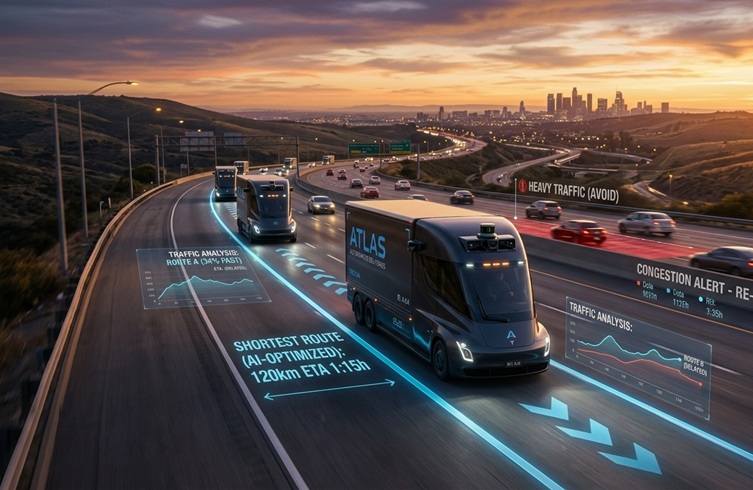
At the same time, businesses are increasingly adopting AI logistics software and smart logistics solutions to cope with complex delivery networks. These tools form part of a broader supply chain AI ecosystem that includes predictive analytics, real‑time tracking and automated decision‑making.
In this landscape, Cor Advance Solutions has emerged as a player in the information technology space, building expertise within the AI and logistics software sector. Registered in Ahmedabad, India, the company engages in IT services and solutions that support innovation across different industries including logistics technology.
2. Understanding AI in Logistics
Artificial Intelligence (AI) is rapidly transforming the logistics industry, making operations smarter, faster, and more efficient. In the context of logistics, AI is not just a technology; it acts as the brain behind modern supply chains, helping businesses make data-driven decisions that improve delivery performance, reduce costs, and enhance customer satisfaction. Let’s explore AI in logistics in detail.
1. Definition of AI in Logistics
AI in logistics refers to the use of intelligent computer systems to manage, analyse, and optimise the movement of goods. These systems can process large amounts of data in real-time, recognise patterns, and make predictions that would be impossible for humans to achieve manually. Essentially, AI acts as the brain of modern logistics operations, enabling companies to handle complex tasks such as route planning, inventory management, and demand forecasting with precision.
For example, a study by McKinsey highlights that companies implementing AI in logistics can achieve up to 20% reduction in operational costs and a significant improvement in delivery speed.
2. Types of AI Used in Logistics
Several types of AI technologies are commonly applied in logistics:
- Machine Learning in Logistics: Machine learning algorithms analyse historical and real-time data to identify patterns and make decisions automatically. For instance, they can predict peak delivery times, optimise warehouse storage, and even forecast demand for certain products.
- Predictive Analytics in Logistics: This involves using data models to predict future outcomes. By analysing past trends, predictive analytics helps logistics companies anticipate delays, adjust delivery routes, and ensure timely shipments.
- Optimization Algorithms: AI can use algorithms to find the most efficient routes, reduce fuel consumption, and allocate resources optimally. These algorithms ensure that packages reach customers faster while minimising operational costs.
Together, these AI technologies create a smarter, more responsive logistics network that can adapt to changing conditions quickly.
3. Importance of AI for Businesses
The adoption of AI in logistics offers several business advantages:
- Faster Delivery: AI-powered route optimisation and predictive analytics allow companies to deliver goods more quickly and accurately.
- Lower Operational Costs: By automating repetitive tasks and optimising routes, AI helps reduce fuel usage, labour costs, and warehouse inefficiencies.
- Higher Customer Satisfaction: Faster deliveries and accurate tracking improve customer experiences, which is crucial in today’s competitive market.
According to a report by Deloitte, businesses that integrate AI in logistics experience not only operational efficiency but also strategic benefits, such as better inventory management and improved decision-making across the supply chain.
3. Challenges in Traditional Delivery Route Planning
Before the widespread adoption of AI, logistics companies relied heavily on manual planning and basic software for delivery routes. This traditional approach came with several challenges that often slowed down operations and increased costs. Understanding these delivery route challenges is crucial for businesses looking to improve efficiency and customer satisfaction.
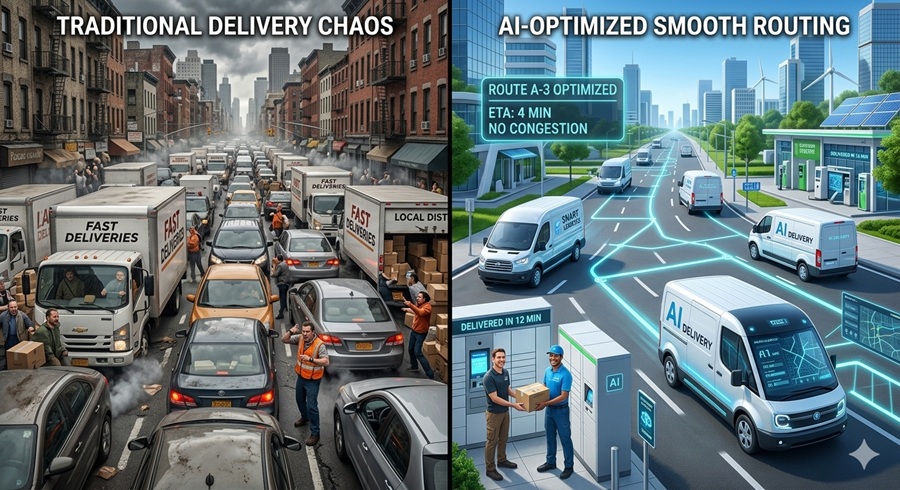
Key Challenges in Traditional Logistics
- Manual Route Planning Errors
Planning routes by hand or using basic software often leads to mistakes. Logistics managers may overlook traffic patterns, delivery priorities, or vehicle capacities, resulting in delayed deliveries and unhappy customers. - Traffic and Weather Unpredictability
Traditional logistics methods struggle to adapt to sudden traffic jams, accidents, or severe weather conditions. Without predictive tools, drivers often face unexpected delays, causing supply chain disruptions. - High Fuel and Labour Costs
Inefficient routes mean vehicles travel longer distances than necessary. This increases fuel consumption and labour expenses, directly impacting the company’s bottom line. - Limited Real-Time Visibility
Traditional logistics systems offer very little insight into ongoing deliveries. Managers cannot track vehicles in real-time, anticipate delays, or quickly reassign tasks, which often leads to bottlenecks in the supply chain. - Route Inefficiency and Supply Chain Delays
Inefficient route planning creates longer delivery times and slows down the entire supply chain. Logistics bottlenecks can affect warehouse operations, inventory turnover, and customer satisfaction.
Using infographics and bullet points, businesses can easily visualise these pain points and communicate the need for smarter, AI-driven logistics solutions.
In essence, traditional logistics struggles with route inefficiency, supply chain delays, and logistics bottlenecks, all of which can be dramatically improved with AI-powered delivery route optimisation.
4. How AI Optimises Delivery Routes
AI is revolutionising logistics by creating smart delivery routes that are faster, more efficient, and cost-effective. Traditional route planning often struggles with traffic, weather, and unpredictable demand, but AI route optimization offers dynamic solutions that improve overall supply chain performance.
1. Real-Time Traffic & Weather Analysis
One of the major advantages of AI in logistics is its ability to monitor real-time traffic and weather conditions. AI logistics software can predict potential delays from roadblocks, accidents, or adverse weather and automatically adjust delivery routes. This proactive approach ensures that drivers avoid delays, packages reach customers on time, and overall delivery efficiency improves.
2. Dynamic Route Planning
Dynamic route planning uses advanced algorithms to optimise routes based on multiple factors such as time, distance, and fuel efficiency. Instead of fixed routes, AI continuously recalculates the best path for each vehicle. This means drivers take the most efficient routes, reducing fuel costs and cutting down delivery times. Companies using dynamic route planning often see a significant improvement in operational efficiency and resource utilisation.
3. Predictive Analytics
Predictive analytics in logistics goes beyond reacting to problems—it anticipates them. AI analyses historical data, seasonal trends, and customer demand patterns to forecast delivery needs. By predicting demand spikes or bottlenecks, logistics managers can adjust delivery schedules in advance, ensuring timely fulfilment and reducing supply chain disruptions.
4. Vehicle & Resource Allocation
AI also optimises how vehicles and drivers are assigned to deliveries. By analysing factors like vehicle capacity, driver availability, and route requirements, AI ensures that resources are matched efficiently. This reduces idle time, lowers operational costs, and improves overall fleet productivity.
5. Benefits of AI-Powered Delivery Route Optimization
Adopting AI in logistics brings significant advantages that directly impact efficiency, cost savings, and customer satisfaction. By using AI-powered delivery route optimization, businesses can transform their supply chain operations, making them faster, smarter, and more eco-friendly. Understanding these AI logistics benefits and delivery optimization advantages is crucial for companies aiming to stay competitive in today’s market.
1. Cost Savings on Fuel and Labour
One of the most immediate benefits of AI in logistics is the reduction in operational costs. Dynamic route planning ensures that vehicles take the shortest and most efficient paths, reducing fuel consumption. Additionally, AI optimises driver assignments, which lowers labour costs by eliminating inefficiencies and unnecessary hours. Companies can save a substantial amount on day-to-day operations while maintaining high service standards.
2. Shorter Delivery Times
AI-driven logistics software analyses traffic patterns, weather conditions, and route options in real-time to provide the fastest paths. This leads to significantly shorter delivery times, ensuring that goods reach customers quickly and reliably. Businesses that implement AI experience faster turnaround times, which can be a strong competitive advantage.
3. Increased Fleet Utilisation
AI ensures vehicles and drivers are used efficiently by matching delivery tasks to available resources intelligently. This increases fleet utilisation, reduces idle time, and allows companies to handle more deliveries without needing to expand their fleet. Higher utilisation translates into better overall productivity and lower per-delivery costs.
4. Better Customer Experience with Accurate ETAs
Customers increasingly expect precise delivery times. AI can calculate predictive ETAs based on real-time data, ensuring customers are informed of when their packages will arrive. Accurate delivery estimates improve customer trust, satisfaction, and loyalty, creating a positive experience that encourages repeat business.
5. Lower Environmental Footprint (Eco-Friendly Logistics)
By optimising routes and reducing fuel consumption, AI-powered logistics contributes to a lower carbon footprint. Efficient delivery planning means fewer unnecessary miles, which is better for the environment. Companies embracing eco-friendly logistics not only save costs but also enhance their brand reputation among environmentally conscious customers.
6. Case Studies & Real‑World Applications
Understanding AI in logistics from real examples helps prove how powerful these technologies are. Below are trusted AI logistics case studies that show real companies using AI to solve real problems. These smart delivery examples highlight measurable success in delivery efficiency, cost savings, product safety, and customer satisfaction.
1. E‑Commerce Delivery Time Reduced by Around 30%
Several logistic networks using AI route optimisation and predictive analytics have achieved major improvements in delivery performance. In one urban logistics case study from a large delivery operation in New York City, AI‑driven systems were introduced to analyse traffic and delivery data in real time. After six months:
- Delivery times dropped by 22%
- Fuel use fell by about 15%
- Successful first‑time deliveries increased by around 18%
- Customer satisfaction improved noticeably
This shows how AI in delivery can make routes smarter and faster in busy cities.
Another similar urban example in Singapore saw an e‑commerce company reduce delivery times for same‑day orders by up to 30% after implementing dynamic AI route planning, while also improving on‑time delivery rates and lowering costs.
2. Cold Chain Logistics Using AI to Prevent Spoilage
Cold chain logistics refers to transporting temperature‑sensitive goods like food or medicines. In one real case, a global food company used AI implementation in logistics to monitor and predict temperature variations throughout its supply chain. The AI system alerted managers ahead of problems that could lead to spoilage.
As a result:
- The company saved around $2 million each year by preventing spoilage
- Product quality improved, and customer confidence grew
- Real‑time tracking and alerts helped ensure goods stayed safe in transit
These results were reported by industry analysts and show how AI can protect value in sensitive logistics operations.
3. Last‑Mile Delivery Optimisation in Urban Areas
“Last mile” means the final delivery step to a customer. Traditional delivery struggles here due to traffic, congestion, and unpredictable conditions. In Lisbon, Portugal, an urban logistics provider used AI to plan last‑mile deliveries more efficiently. After introducing AI:
- Delivery times were 15–20% faster
- Fleet use improved by about 30%
- Customer satisfaction scores rose by around 20%
- Fuel and energy use improved by 10–25%
- CO₂ emissions fell by as much as 25–40%, supporting eco‑friendly logistics
This case underlines how AI in delivery can improve performance, cost and sustainability all at once.
4. Broader AI Implementation Benefits in Logistics
Many global logistics leaders are also using AI across their operations:
- Amazon uses AI for demand forecasting, dynamic route planning and automated warehousing, helping achieve faster delivery times and lower costs.
- UPS’s ORION system calculates efficient delivery routes in real time, reducing fuel use and shortening delivery times.
- IBM Supply Chain Insights clients have reported up to 30% fewer delays by predicting risks and disruptions before they happen.
These examples show how AI implementation in logistics isn’t just theoretical — it delivers clear business value.
7. Implementation Steps for Businesses
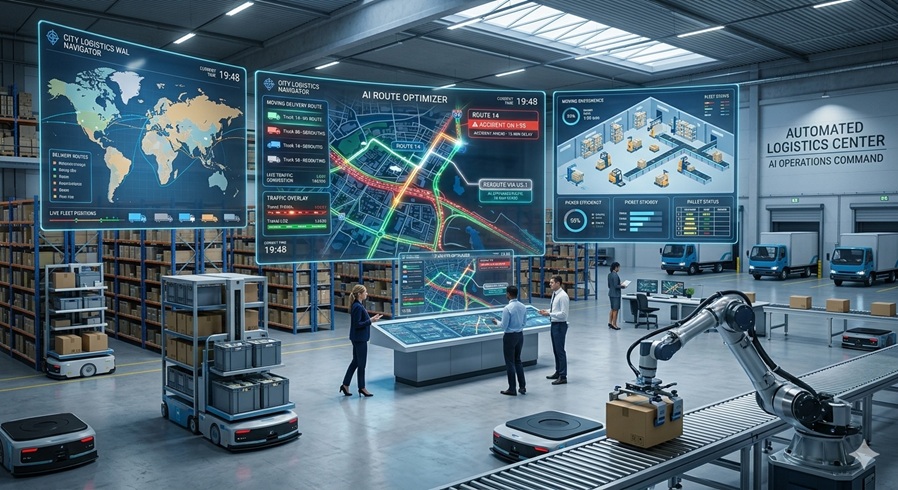
Adopting AI in logistics can transform delivery operations, making them faster, smarter, and more cost-effective. However, successful adoption requires a structured approach. Here’s a step-by-step guide for businesses to implement AI logistics implementation effectively and harness the power of AI delivery software.
1. Assess Current Logistics Operations
Before introducing AI, businesses must evaluate their existing logistics processes. Identify pain points such as delays, route inefficiencies, and resource underutilisation. Assessing the current state provides a clear understanding of where AI can deliver the most value and sets a benchmark for measuring improvement.
2. Choose AI-Powered Logistics Software
Selecting the right software is critical. Look for solutions that offer features such as dynamic route planning, predictive analytics, and real-time tracking. Modern AI delivery software can automate repetitive tasks, optimise routes, and provide actionable insights for better decision-making.
3. Integrate Predictive Analytics and Real-Time Tracking
AI works best when it has access to data. Integrate predictive analytics to anticipate demand spikes, traffic patterns, and potential delivery issues. Combine this with real-time tracking to monitor vehicles and shipments. This integration ensures smarter decisions, faster deliveries, and higher operational efficiency.
4. Train Staff and Monitor Performance
Even the best AI tools require human oversight. Train logistics staff to use the software effectively and interpret AI-generated insights. Establish performance metrics to track improvements in delivery speed, operational costs, and fleet utilisation. Regular monitoring ensures the AI system is delivering maximum benefits.
5. Continuously Optimise Based on AI Insights
AI is not a one-time solution—it continuously learns from data. Use insights generated by the AI system to refine routes, improve schedules, and enhance resource allocation. Over time, this leads to smarter operations, logistics automation, and improved customer satisfaction.
Partner with Cor Advance Solutions to implement AI in your logistics operations and experience faster deliveries, lower costs, and smarter supply chain management.
8. Future Trends of AI in Logistics
The future of AI in logistics looks very exciting and full of innovation. Businesses around the world are already investing heavily in new technologies that will change the way goods are delivered, stored, tracked and managed. These AI delivery trends are shaping the next generation of logistics, making supply chains smarter, faster and more sustainable. Below are the key trends to watch, with real data and trusted sources.
1. Autonomous Delivery Vehicles & Drones
One of the most talked‑about trends in the future of AI in logistics is the use of autonomous delivery vehicles and drones. These self‑driving systems can deliver goods without human drivers, which could vastly reduce costs and improve delivery speed. Companies are already testing these technologies:
- Amazon Prime Air has made around 16,000 autonomous drone deliveries in the United States, often within 60 minutes of ordering. These drones operate under strict air safety certification and show how drone delivery is becoming real for small‑package logistics.
- Delivery robots and autonomous vehicles are also being developed to carry heavier loads across city streets. For example, startups are testing large autonomous delivery vehicles that can carry hundreds of pounds of goods, aiming to reduce fulfilment costs by up to 70 % compared with traditional human couriers.
These technologies are part of the broader AI supply chain transformation that could make deliveries faster, cheaper and more reliable in both urban and rural areas.
2. AI‑Driven Warehouse Automation
Warehouses are becoming far more efficient thanks to AI logistics automation. AI‑powered robots now handle tasks such as picking, packing, sorting and inventory checks, reducing human error and improving throughput. According to industry reports:
- Autonomous mobile robots (AMRs) can improve warehouse processing times by up to 70 %, helping companies prepare goods more quickly for delivery.
- AI systems with computer vision can scan incoming and outgoing packages to detect damage instantly, reducing returns and quality issues.
These developments mean warehouses operate around the clock with higher accuracy and lower labour costs, helping businesses keep up with growing demand.
3. Hyper‑Personalized Delivery Experiences
Another emerging AI delivery trend is personalised delivery. In the near future, AI systems will analyse customer preferences, past behaviour and real‑time data to offer tailored delivery choices — such as choosing specific delivery time slots, receiving updates by phone or changing the drop‑off location last‑minute. Analysts predict this type of hyper‑personalisation will become a key factor for customer satisfaction by 2030, making deliveries more convenient than ever.
Personalised delivery not only improves the customer journey but also reduces missed deliveries, which currently cost businesses time and extra fuel.
4. Sustainable and Eco‑Friendly AI Solutions
Sustainability is becoming central to logistics innovation. AI helps companies reduce their environmental footprint by optimising routes, lowering fuel consumption and supporting electric delivery fleets. For example:
- In Lisbon, a logistics company combined electric vehicles with AI‑driven optimisation tools and achieved a 15–20 % reduction in delivery times, a 10–25 % improvement in energy efficiency, and up to a 40 % decrease in CO₂ emissions.
These results show how the future of AI in logistics is about more than just speed and cost — it is also shaping greener and more responsible supply chains.
9. FAQ:
1. How does AI improve delivery routes?
AI improves delivery routes by analysing real-time traffic, weather, and historical delivery data to create smart delivery routes. Using predictive analytics and dynamic route planning, AI reduces delays, shortens travel times, and optimises fuel and resource usage, making deliveries faster and more efficient.
2. What is AI in logistics?
AI in logistics refers to the use of intelligent software and algorithms to automate and optimise supply chain operations. It includes machine learning in logistics, predictive analytics, and route optimisation to improve delivery speed, reduce costs, and enhance customer satisfaction.
3. What are the benefits of AI logistics software?
AI logistics software offers many benefits, including faster deliveries, lower operational costs, better fleet utilisation, and improved tracking accuracy. It also enhances the customer experience by providing real-time updates and accurate estimated delivery times.
4. How much does AI route optimization reduce costs?
Implementing AI route optimization can reduce operational costs by 10–30%, depending on delivery volume and route complexity. Companies report savings in fuel, labour, and vehicle maintenance while achieving faster deliveries and higher customer satisfaction.
5. Can small businesses implement AI for deliveries?
Yes, small businesses can implement AI in delivery using affordable, cloud-based AI logistics solutions. These tools help optimise routes, predict demand, and automate scheduling without needing large IT infrastructure, making advanced logistics accessible to businesses of all sizes.
10. Conclusion
The logistics industry is experiencing a major transformation thanks to AI logistics solutions and advanced delivery route optimization. From dynamic route planning and predictive analytics to real-time tracking and fleet management, AI is enabling businesses to operate faster, smarter, and more efficiently.
Companies adopting AI see measurable benefits: reduced operational costs, shorter delivery times, higher fleet utilisation, and enhanced customer satisfaction. AI supply chain optimization not only improves operational performance but also helps businesses stay competitive in today’s fast-paced market.
Moreover, the rise of smart logistics technologies, including autonomous vehicles, AI-driven warehouse automation, and hyper-personalised delivery experiences, shows that AI is no longer a future concept — it is the standard for successful logistics operations.
For businesses looking to gain these advantages, now is the time to act. Partner with Cor Advance Solutions to implement cutting-edge AI solutions in your logistics operations, optimise delivery routes, and build a smarter, more efficient supply chain that drives growth and customer loyalty.