
1. Introduction: The Retail Industry’s Biggest Challenge
The retail industry is evolving rapidly. Today, retailers must manage physical stores, e-commerce platforms, mobile apps, and global supply chains at the same time. Customers expect products to be available instantly, whether they shop online or visit a store.
However, meeting these expectations is becoming increasingly difficult. One of the biggest challenges in modern retail is managing inventory correctly—ensuring that the right products are available at the right place and at the right time.
Two major problems arise when inventory planning fails: stockouts and overstocking. These issues not only increase operational costs but also damage customer trust and reduce sales.
This is why many retailers are now investing in AI Retail Solutions, where advanced technologies analyse large volumes of data to predict demand and optimise inventory. Through predictive analytics in retail, companies can forecast sales trends, maintain optimal stock levels, and improve decision-making across their supply chains.
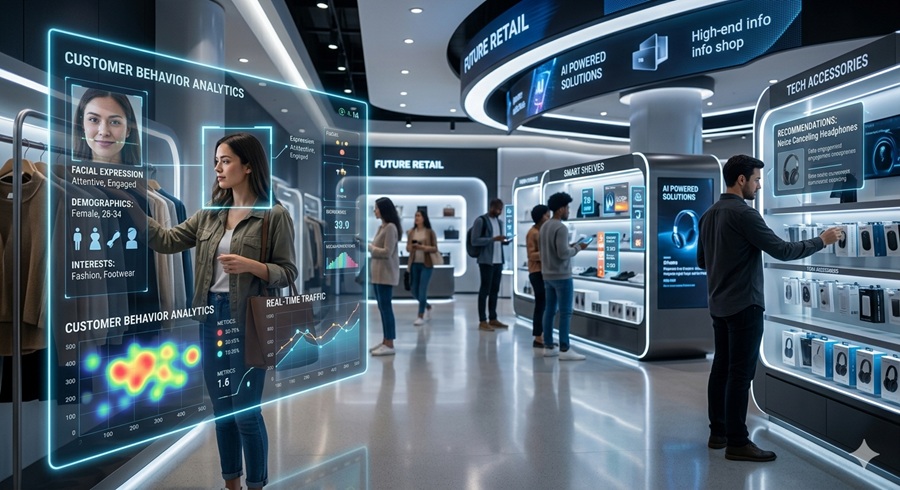
Modern Retail Challenges in a Data-Driven World
Retailers today manage thousands or even millions of products across multiple channels such as physical stores, e-commerce platforms, and marketplaces. Managing inventory across these channels is extremely complex.
Traditional inventory planning methods rely heavily on historical data, spreadsheets, or manual forecasting. However, these methods cannot accurately predict modern consumer behaviour, seasonal demand, sudden market trends, or supply chain disruptions.
Because of these limitations, retailers often face two common situations:
- Products run out of stock when customers want them
- Warehouses become full of slow-moving products
Both scenarios lead to significant financial losses and operational inefficiencies.
Industry research shows that inventory distortion—caused by stockouts and overstocking—cost the global retail industry approximately $1.77 trillion in 2023, representing around 7.2% of total retail sales worldwide.
This massive loss highlights why retailers must adopt smarter strategies such as predictive analytics in retail and advanced AI retail solutions.
Why Stockouts and Overstocking Are Costly Problems
1. Lost Sales and Revenue
When a product is unavailable, retailers immediately lose potential sales. Customers rarely wait for restocking and often buy from competitors instead.
Research shows that global retailers lose around $1.2 trillion every year due to stockouts alone.
Even more concerning, studies reveal that:
- 69% of online shoppers abandon their purchase when a product is out of stock.
- 91% of customers prefer switching to another retailer instead of waiting for restocking.
For retailers, this means a single inventory mistake can result not only in lost sales but also in lost customers.
2. Customer Loyalty and Brand Damage
Stockouts damage brand reputation and customer loyalty. Modern consumers expect products to be available instantly, especially in the era of same-day delivery and fast e-commerce.
Retail surveys show that frequent stockouts can cause 10–25% of customers to permanently stop shopping with a retailer after a poor experience.
Once a customer switches to another brand, winning them back often requires expensive marketing and discounts.
3. Financial Loss from Overstocking
Overstocking creates another serious problem. When retailers stock more products than required, several issues arise:
- Warehousing and storage costs increase
- Capital gets locked in unsold inventory
- Products may become obsolete or expire
- Retailers must offer heavy discounts to clear stock
Studies indicate that poor product availability and inventory planning can cause retailers to lose up to 8% of their potential revenue.
This is why retail inventory optimisation has become one of the most critical priorities for modern retail businesses.
Impact of Poor Inventory Planning on Sales and Customer Experience
Poor inventory management affects every part of the retail operation.
Some common consequences include:
- Missed sales opportunities
- Poor online product availability
- Delayed fulfilment and delivery issues
- Increased operational costs
- Lower customer satisfaction
Retail research shows that inventory errors and inaccurate forecasting can cause businesses to lose between 3% and 10% of their annual sales.
In today’s digital commerce environment, where customers can easily compare prices and switch brands, these losses can significantly reduce long-term business growth.
Introduction to Artificial Intelligence in Retail
To solve these challenges, retailers are increasingly adopting AI in Retail technologies.
Artificial Intelligence allows businesses to analyse large volumes of data from multiple sources, including:
- historical sales data
- customer behaviour
- seasonal demand patterns
- promotional campaigns
- supplier lead times
- weather and local events
Using this data, AI systems can forecast demand much more accurately than traditional methods.
For example, AI-powered inventory systems can analyse real-time data and automatically recommend:
- how much stock to order
- when to reorder products
- which products will trend in the future
- which items may become slow-moving
This approach is known as predictive analytics in retail, and it is transforming how retailers manage inventory and plan sales strategies.
How Predictive Insights Are Transforming Retail Decisions
Predictive insights generated by AI allow retailers to move from reactive decision-making to proactive planning.
Instead of responding after a problem occurs, retailers can now predict demand changes before they happen.
Modern AI retail solutions can deliver several measurable improvements:
- Reduce stockouts by up to 62% using real-time demand forecasting
- Reduce excess inventory by up to 30%
- Improve forecast accuracy compared with traditional planning methods
These capabilities enable retailers to optimise inventory levels, improve product availability, and increase overall sales performance.
The Shift Toward Data-Driven Retail Strategies
Retail is quickly becoming a data-driven industry. Companies that rely on guesswork or manual planning are increasingly struggling to keep up with demand fluctuations and competitive pressure.
Data-driven retail strategies powered by AI in Retail allow businesses to:
- anticipate customer demand
- optimise inventory across multiple locations
- reduce operational costs
- improve customer satisfaction
As retailers continue to adopt predictive technologies, AI-driven retail inventory optimisation will become a core component of modern retail success.
2. Understanding AI in Retail
Artificial Intelligence (AI) is rapidly transforming the global retail industry. Today, retailers generate huge amounts of data every day—from customer purchases and website clicks to supply chain information and product demand. AI in retail helps businesses analyse this massive data quickly and turn it into useful insights.
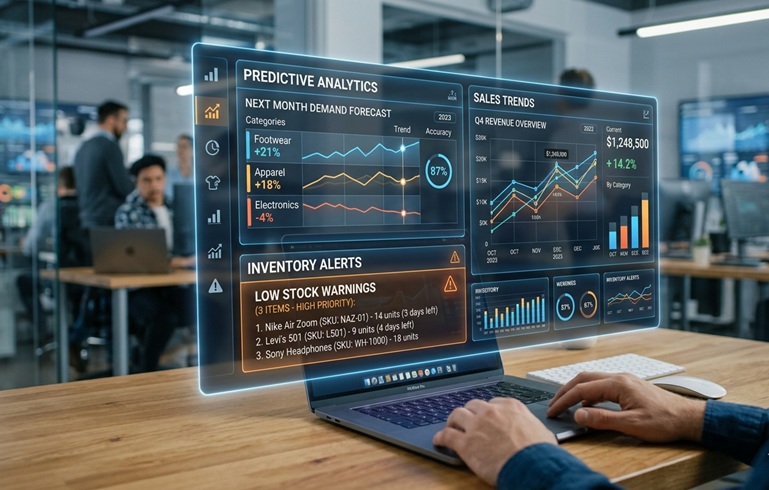
In simple terms, retail artificial intelligence refers to the use of smart computer systems that can learn from data, recognise patterns, and make predictions. These technologies help retailers make better decisions, improve customer experiences, and run their operations more efficiently.
According to research by McKinsey & Company, retailers that adopt advanced AI technologies can increase operating margins by up to 5–10% through improved pricing, inventory management, and personalised marketing. Another report from IBM shows that AI-powered automation can reduce retail supply chain costs by up to 20%.
As a result, AI powered retail analytics and advanced AI retail technology are now becoming essential tools for both online and physical stores.
What is AI in Retail?
AI in retail means using intelligent computer systems to analyse large volumes of data and automatically improve business processes. These systems can learn from customer behaviour, product demand, and sales trends to make smart predictions.
For example, AI can analyse:
- Millions of customer transactions
- Online browsing behaviour
- Store foot traffic patterns
- Inventory levels across warehouses
- Seasonal shopping trends
By analysing this information, retail artificial intelligence systems help retailers:
- Predict which products customers will buy
- Ensure shelves never run out of stock
- Personalise product recommendations
- Optimise pricing strategies
- Improve supply chain efficiency
A study by Deloitte found that over 60% of global retailers are already investing in AI retail technology to improve decision-making and customer experiences.
In simple words, AI allows retailers to move from guesswork to data-driven decisions.
Core Technologies Used in Retail AI
Several advanced technologies power modern AI powered retail analytics systems. Each technology performs a specific role in analysing data and improving retail operations.
1. Machine Learning
Machine Learning (ML) is one of the most important technologies in retail artificial intelligence. It allows computers to learn from historical data and improve predictions over time without being explicitly programmed.
Retailers use machine learning to:
- Predict customer buying behaviour
- Recommend products online
- detect fraud in transactions
- optimise marketing campaigns
For example, e-commerce platforms analyse customer browsing and purchase history to suggest products that customers are most likely to buy.
2. Predictive Analytics
Predictive analytics uses historical data, statistics, and machine learning models to forecast future events.
In retail, predictive analytics helps businesses:
- Forecast product demand
- Identify future sales trends
- Predict seasonal buying behaviour
- Reduce overstock and stockouts
According to research from Gartner, predictive analytics can reduce inventory costs by 20–30% when used effectively.
This makes AI powered retail analytics extremely valuable for supply chain and inventory planning.
3. Computer Vision
Computer vision allows AI systems to analyse images and videos from cameras.
Retail stores use computer vision to:
- Monitor store shelves
- detect empty product spaces
- analyse customer movement in stores
- automate checkout processes
For example, some modern retail stores use AI cameras to automatically identify products picked by customers and charge them without traditional checkout counters.
4. Natural Language Processing (NLP)
Natural Language Processing (NLP) allows computers to understand and respond to human language.
Retail companies use NLP for:
- AI chatbots for customer support
- voice assistants for shopping
- analysing customer reviews and feedback
- automated email responses
These tools improve customer service while reducing operational costs.
For example, many retailers now use AI chatbots that can answer thousands of customer queries instantly.
5. Demand Forecasting Algorithms
Demand forecasting algorithms are specialised AI models designed to predict future product demand.
These algorithms analyse data such as:
- past sales history
- seasonal trends
- weather patterns
- promotions and discounts
- regional buying behaviour
By using AI retail technology, retailers can predict demand much more accurately than traditional forecasting methods.
Accurate demand forecasting helps retailers:
- reduce excess inventory
- prevent stockouts
- improve supply chain efficiency
- maximise sales opportunities
Real Examples of AI Use in Retail
Many global retailers are already using retail artificial intelligence to improve operations and customer experiences.
Smart Inventory Systems
AI-powered inventory systems automatically track stock levels in real time. They analyse sales patterns and automatically reorder products when inventory is low.
For example, companies like Amazon use AI-driven inventory management to ensure products are available across warehouses and fulfilment centres.
This helps reduce out-of-stock situations and improves delivery efficiency.
Personalised Shopping Experiences
One of the most powerful uses of AI powered retail analytics is personalisation.
AI systems analyse:
- customer browsing history
- purchase behaviour
- product preferences
- location and demographics
Using this data, retailers recommend products tailored to each customer.
For example, Netflix and Amazon use AI recommendation engines that personalise content and product suggestions based on user behaviour.
Research from Accenture shows that 91% of consumers are more likely to shop with brands that provide personalised offers and recommendations.
Automated Pricing Strategies
AI is also used to optimise product pricing automatically.
AI pricing systems analyse:
- competitor prices
- customer demand
- product popularity
- market conditions
Based on these factors, AI can adjust prices dynamically to maximise sales and profit.
For example, airlines, hotels, and online retailers use AI-based dynamic pricing to update prices multiple times per day depending on demand.
Why AI in Retail Is Growing So Fast
The rapid growth of AI retail technology is driven by several key factors:
- Massive growth of customer data
- Rising competition in e-commerce
- Need for personalised customer experiences
- Demand for efficient supply chains
- Advances in machine learning and cloud computing
According to Statista, the global AI in retail market is expected to exceed $40 billion by 2030, highlighting how quickly businesses are adopting retail artificial intelligence solutions.
3. What Are Predictive Insights in Retail?
In today’s data-driven retail world, businesses collect enormous amounts of information every day. From customer purchases to online browsing behaviour, retailers have access to valuable data that can reveal future trends. Predictive insights in retail help businesses turn this data into smart forecasts and better decisions.
Simply put, predictive insights retail refers to the process of analysing past and real-time data using advanced technologies like machine learning to predict what is likely to happen in the future. Retailers use these insights to understand customer demand, manage inventory, improve marketing campaigns, and increase sales.
According to research from Gartner, companies that use advanced retail predictive analytics can improve forecasting accuracy by up to 85%, which significantly reduces overstock and stock shortages.
Predictive insights are therefore becoming one of the most powerful tools in modern AI retail technology, helping retailers move from reactive decisions to proactive strategies.
Definition of Predictive Insights in Retail
Predictive insights in retail use historical data, real-time information, and machine learning algorithms to forecast future trends and customer behaviour.
Instead of relying on guesswork, retailers use retail predictive analytics systems to analyse patterns in data and identify what customers are likely to buy next.
For example, predictive systems can help retailers answer important questions such as:
- Which products will sell the most next month?
- When will a product run out of stock?
- Which customers are likely to make repeat purchases?
- What promotions will increase sales?
By answering these questions, predictive insights allow retailers to plan inventory, pricing, and marketing more effectively.
A study by McKinsey & Company found that retailers using advanced analytics and demand forecasting retail technologies can increase revenue by 5–10% while reducing inventory costs.
How Predictive Insights Work in Retail
The process of generating predictive insights retail involves several important steps. These steps allow retailers to transform raw data into accurate forecasts and actionable recommendations.
1. Data Collection
The first step in retail predictive analytics is collecting large volumes of data from different sources.
Retailers collect data from:
- Point-of-sale (POS) systems
- e-commerce platforms
- mobile apps
- customer loyalty programmes
- supply chain systems
This data includes information about customer purchases, product demand, pricing, inventory levels, and browsing behaviour.
The more data retailers collect, the more accurate their demand forecasting retail models become.
2. Data Analysis
After data is collected, advanced AI tools analyse the information to identify meaningful relationships and trends.
These systems can process millions of data points much faster than humans. By analysing customer transactions, shopping patterns, and market conditions, retailers gain valuable insights into how their business operates.
Companies such as Amazon use powerful AI powered retail analytics platforms to analyse massive datasets and optimise their operations.
3. Pattern Identification
Once the data is analysed, AI systems identify patterns and hidden relationships within the data.
For example, the system may detect patterns such as:
- Customers buying certain products together
- Increased demand during holidays or festivals
- Popular products in specific regions
- Seasonal demand fluctuations
These patterns help retailers understand how customer behaviour changes over time.
According to Deloitte, businesses that effectively use data-driven insights gain a significant competitive advantage in retail markets.
4. Demand Prediction
After identifying patterns, predictive algorithms forecast future demand.
This process is known as demand forecasting retail, and it helps retailers predict:
- future sales volumes
- product demand across locations
- peak shopping periods
- inventory requirements
Accurate demand forecasting ensures that retailers stock the right products at the right time.
For example, large retailers like Walmart use predictive analytics to analyse billions of transactions and predict demand across thousands of stores.
5. Automated Recommendations
The final step in predictive insights retail is generating automated recommendations for business decisions.
AI systems suggest actions such as:
- restocking specific products
- adjusting prices based on demand
- launching targeted marketing campaigns
- offering personalised product recommendations
These automated recommendations allow retailers to respond quickly to market changes and customer needs.
Types of Retail Data Used for Predictive Insights
To generate accurate retail predictive analytics, AI systems rely on several types of retail data.
Sales History
Past sales data is one of the most important sources for demand forecasting retail. By analysing historical sales trends, retailers can identify patterns and predict future product demand.
Customer Behaviour
Retailers analyse customer browsing behaviour, purchase frequency, and product preferences to understand buying habits.
This information helps businesses personalise recommendations and improve customer experiences.
Seasonal Trends
Retail sales often change depending on seasons, holidays, and special events. Predictive analytics identifies these seasonal patterns to ensure products are available during peak demand periods.
Market Demand
Retailers also monitor external market signals such as competitor pricing, economic conditions, and industry trends to predict future demand more accurately.
Supply Chain Signals
Supply chain data, including supplier delivery times, warehouse inventory levels, and logistics performance, helps retailers optimise stock availability and avoid disruptions.
Why Predictive Insights Are Important for Retail
Retail businesses operate in a highly competitive environment where customer expectations are constantly changing. Predictive insights retail allow companies to stay ahead by making smarter decisions based on data.
With the help of retail predictive analytics, retailers can:
- reduce inventory waste
- prevent stock shortages
- improve customer satisfaction
- increase sales opportunities
- optimise supply chain efficiency
According to data from Statista, the global market for AI-powered analytics in retail continues to grow rapidly as more companies invest in AI retail technology.
4. Why Stockouts Are a Huge Problem for Retailers
In the retail industry, one of the biggest challenges businesses face is stockouts. A stockout happens when a product that customers want to buy is not available in the store or online, even though there is demand for it.
For retailers, this situation can be extremely costly. When customers cannot find the product they want, they often leave the store or website and buy it from a competitor instead. This leads to lost sales, unhappy customers, and damage to the brand’s reputation.
In today’s competitive market, where customers expect fast delivery and product availability, avoiding stockouts has become a critical priority. That is why many retailers are investing in retail predictive analytics, AI-powered demand forecasting retail systems, and smarter inventory management tools.
According to research from IHL Group, global retailers lose over $1 trillion every year due to stockouts and inventory distortions. This shows how serious the problem is for the retail industry.
What Is a Stockout?
A stockout occurs when a product is unavailable for customers to purchase, even though there is demand for it.
This can happen in physical stores, warehouses, or online retail platforms. For example, if a customer wants to buy a popular product but the shelf is empty or the website shows “out of stock”, the retailer is experiencing a stockout.
Stockouts usually happen when retailers fail to predict demand accurately or when supply chain disruptions delay product deliveries.
In simple terms:
Stockout = Customer demand – Product availability
When retailers cannot match supply with demand, they lose the opportunity to make a sale.
According to studies by McKinsey & Company, stockout rates in retail stores typically range between 8% and 10%, meaning nearly one out of every ten products customers want may not be available.
Major Causes of Stockouts
Stockouts usually happen due to several operational and forecasting challenges. Understanding these causes helps retailers reduce inventory problems and improve product availability.
Inaccurate Demand Forecasting
One of the most common causes of stockouts is poor demand forecasting.
If retailers underestimate how many units of a product customers will buy, they will not stock enough inventory. As demand increases, products sell out quickly.
Traditional forecasting methods often rely on historical averages, which cannot always predict sudden demand changes. This is why many retailers now use AI retail technology and predictive insights retail systems to forecast demand more accurately.
Supply Chain Delays
Another major cause of stockouts is supply chain disruptions.
Products must travel through multiple stages before reaching the store:
- manufacturers
- warehouses
- distribution centres
- transport networks
If delays occur at any stage—such as shipping issues, supplier problems, or logistics disruptions—retailers may not receive products on time.
The global supply chain disruptions during recent years highlighted how vulnerable retailers can be when inventory planning is weak.
According to research from Deloitte, supply chain disruptions remain one of the top operational risks for retail businesses worldwide.
Poor Inventory Visibility
Many retailers struggle because they cannot clearly see their inventory levels across all locations.
For example, a company may have stock available in a warehouse but not in a particular store. Without real-time inventory visibility, retailers cannot move products quickly to meet demand.
Modern AI-powered retail analytics platforms solve this problem by providing real-time inventory tracking across warehouses, stores, and online channels.
Seasonal Demand Spikes
Retail demand often changes during specific seasons, holidays, or special events.
For example:
- holiday shopping periods
- back-to-school seasons
- festive sales events
- major promotions or discounts
If retailers fail to anticipate these demand spikes, products can sell out much faster than expected.
Advanced demand forecasting retail systems analyse seasonal trends and historical sales data to prepare retailers for these sudden increases in demand.
Business Impact of Stockouts
Stockouts do not only affect product availability. They also have a major impact on revenue, customer loyalty, and long-term business growth.
Lost Revenue
The most direct impact of stockouts is lost sales.
When customers cannot find the product they want, the retailer misses the opportunity to complete the transaction.
Research from Statista shows that stockouts cause billions of dollars in lost retail sales every year across global markets.
Even a small increase in stock availability can significantly boost sales.
Customer Frustration
Customers expect retailers to have products available when they need them. When items are out of stock, customers feel disappointed and frustrated.
This frustration can lead to:
- abandoned purchases
- negative reviews
- reduced customer loyalty
In a digital world where customers can easily compare stores online, product availability plays a crucial role in customer satisfaction.
Brand Reputation Damage
Frequent stockouts can harm a retailer’s reputation.
If customers repeatedly find products unavailable, they may begin to see the brand as unreliable.
This can damage long-term brand trust and reduce customer lifetime value.
Retailers must therefore maintain consistent inventory availability to protect their reputation.
Competitor Advantage
When a retailer experiences stockouts, competitors benefit.
Customers who cannot find a product in one store often search for the same item elsewhere. Competitors that have the product available can quickly capture those sales.
In highly competitive markets, even small inventory mistakes can give competitors an advantage.
Retail Stockout Statistics
Industry research highlights how serious the stockout problem is for retailers.
Key findings include:
- Global retailers lose over $1 trillion annually due to stockouts and inventory distortion (IHL Group).
- Average stockout rates in retail stores range between 8% and 10% (McKinsey & Company).
- Around 40% of customers will buy the product from another retailer if it is unavailable (data reported in retail supply chain studies referenced by Deloitte).
These statistics clearly show why retailers are investing heavily in predictive insights retail systems, AI powered retail analytics, and advanced demand forecasting retail tools to reduce stockouts.
5. How AI Predictive Insights Prevent Stockouts
Stockouts are one of the most expensive problems in the retail industry. When products are unavailable, retailers lose sales, customers become frustrated, and competitors gain an advantage. To solve this challenge, many retailers are now using AI predictive insights to improve inventory planning and demand forecasting.
Artificial intelligence (AI) helps retailers analyse large volumes of historical and real-time data to predict product demand more accurately. With the help of AI demand forecasting, predictive inventory management, and AI supply chain optimization, retailers can ensure that the right products are available at the right time.
According to research from McKinsey & Company, AI-driven supply chain forecasting can reduce inventory errors by 20–50% and significantly lower stockout rates. This makes AI predictive insights one of the most valuable technologies for modern retail operations.
AI-Powered Demand Forecasting
One of the most powerful ways AI prevents stockouts is through AI demand forecasting.
Traditional demand forecasting often relies on historical averages and manual analysis. However, this approach cannot always predict sudden demand changes caused by trends, promotions, weather conditions, or seasonal events.
AI-powered forecasting systems analyse many different data sources, such as:
- past sales data
- customer buying behaviour
- seasonal trends
- marketing campaigns
- market demand signals
Machine learning algorithms analyse these patterns and predict future demand with much greater accuracy.
For example, retailers like Amazon use advanced AI models to predict customer demand across thousands of products and locations. This allows them to stock warehouses efficiently and avoid running out of popular items.
Accurate AI demand forecasting ensures that retailers always have enough products available when customers want them.
Smart Inventory Management
Another major advantage of AI predictive insights is predictive inventory management.
Retailers must balance two major risks:
- having too little inventory (which causes stockouts)
- having too much inventory (which increases storage costs)
AI helps retailers maintain the optimal stock level by analysing demand trends and inventory movement in real time.
With predictive inventory management systems, retailers can:
- monitor product availability continuously
- predict when stock will run out
- adjust inventory levels automatically
- prevent both shortages and overstocking
According to research from Gartner, companies using advanced inventory analytics can improve supply chain efficiency by up to 30%.
This makes predictive inventory management an essential tool for reducing stockouts and improving retail operations.
Real-Time Supply Chain Visibility
Stockouts often occur because retailers lack visibility into their supply chain. Without real-time information about product movement, businesses may not realise there is a shortage until it is too late.
AI solves this problem by providing real-time supply chain visibility.
Through AI supply chain optimization, retailers can track inventory across:
- warehouses
- distribution centres
- transport networks
- retail stores
- online fulfilment centres
AI systems continuously analyse supply chain data and alert retailers when inventory levels are dropping or when delivery delays occur.
For example, companies such as Walmart use advanced AI analytics to track millions of products across their global supply chain network.
This visibility allows retailers to react quickly and prevent stock shortages before they affect customers.
Automated Reordering Systems
Another key benefit of AI predictive insights is automated reordering.
Traditionally, inventory managers had to manually check stock levels and place orders with suppliers. This process could be slow and prone to errors.
AI-powered systems automate this process.
When inventory reaches a predefined threshold, the system automatically:
- alerts the retailer
- generates a purchase order
- places a restocking request with suppliers
These automated reordering systems ensure that products are replenished before shelves become empty.
According to industry research from Deloitte, automated supply chain systems can significantly reduce manual errors and improve inventory accuracy.
This automation helps retailers maintain consistent product availability and avoid stockouts.
Multi-Location Inventory Optimisation
Modern retailers often operate across multiple locations, including:
- physical stores
- warehouses
- distribution centres
- e-commerce fulfilment centres
Managing inventory across these locations can be extremely complex.
AI predictive insights help retailers optimise inventory across all locations.
Through AI supply chain optimization, retailers can:
- distribute inventory based on local demand
- transfer stock between stores when needed
- allocate products to high-demand locations
- optimise warehouse storage and logistics
For example, if AI detects higher demand for a product in one city, it can recommend transferring inventory from another location where demand is lower.
This ensures the right product is available at the right store at the right time, which greatly reduces the risk of stockouts.
Why Retailers Are Adopting AI for Inventory Management
The growing complexity of retail operations makes manual forecasting and inventory planning increasingly difficult. AI predictive insights help retailers make faster and smarter decisions using data-driven analysis.
Retailers that implement AI demand forecasting, predictive inventory management, and AI supply chain optimization gain several key benefits:
- fewer stockouts
- improved product availability
- better supply chain efficiency
- reduced inventory costs
- improved customer satisfaction
According to data from Statista, the global market for AI in retail is expected to grow rapidly as companies adopt advanced analytics to improve demand forecasting and supply chain management.
6. How Predictive AI Increases Retail Sales
Retail businesses today operate in a highly competitive and fast-changing environment. Customers expect products to be available instantly, personalised shopping experiences, and competitive pricing. To meet these expectations, many retailers are turning to predictive AI and retail predictive analytics.
Predictive AI uses machine learning and data analysis to forecast customer behaviour, product demand, and market trends. By analysing historical sales data, customer preferences, and real-time information, retailers can make smarter decisions that directly increase revenue.
According to research from McKinsey & Company, retailers that use advanced AI and analytics can increase sales by up to 10% through improved product availability, personalised marketing, and better pricing strategies.
In simple terms, predictive AI helps retailers sell the right product, to the right customer, at the right time.
Better Product Availability
One of the most important ways predictive AI increases retail sales is by ensuring better product availability.
When customers visit a store or an online shop, they expect the product they want to be available immediately. If the product is out of stock, many customers will leave and buy it from another retailer.
Predictive AI solves this problem by analysing demand patterns and predicting which products customers will need in the future. These insights help retailers stock the right quantity of products in advance.
Using AI demand forecasting and predictive inventory management, retailers can:
- anticipate future demand
- stock popular items before demand increases
- reduce stockouts
- optimise inventory across stores and warehouses
Companies like Amazon use predictive algorithms to forecast product demand across millions of items, ensuring customers find the products they want quickly.
When customers consistently find what they are looking for, retailers naturally increase their sales and customer satisfaction.
Personalised Product Recommendations
Another powerful way predictive AI boosts retail sales is through personalised product recommendations.
Modern consumers prefer shopping experiences that feel tailored to their interests. Predictive AI analyses customer behaviour to understand individual preferences and recommend relevant products.
AI systems analyse data such as:
- past purchases
- browsing behaviour
- product searches
- customer demographics
- shopping frequency
Based on this information, retailers can recommend products that customers are most likely to buy.
For example, streaming platforms like Netflix and retail platforms like Amazon use advanced recommendation algorithms to personalise user experiences.
According to research from Accenture, 91% of consumers are more likely to shop with brands that provide personalised recommendations and offers.
This shows how predictive AI can significantly increase customer engagement and conversion rates.
Dynamic Pricing Optimisation
Pricing plays a crucial role in retail sales. If prices are too high, customers may not buy. If prices are too low, retailers may lose profit.
Predictive AI helps retailers find the optimal price point through dynamic pricing optimisation.
AI systems analyse multiple factors such as:
- customer demand
- competitor pricing
- market trends
- inventory levels
- seasonal changes
Based on these factors, AI can automatically adjust prices to maximise both sales and profit.
Many large retailers and travel companies use dynamic pricing strategies to respond quickly to market changes.
For example, companies such as Walmart use advanced analytics and pricing algorithms to remain competitive in highly dynamic markets.
Dynamic pricing powered by retail predictive analytics allows retailers to increase revenue while staying attractive to customers.
Improved Customer Experience
Predictive AI also helps retailers create better and more seamless shopping experiences.
When AI understands customer preferences and behaviour, it can personalise nearly every part of the shopping journey.
Retailers can use predictive AI to:
- recommend relevant products
- personalise marketing messages
- optimise website search results
- provide faster customer support through AI chatbots
- predict customer needs before they arise
A smoother and more personalised experience makes customers feel valued and understood.
According to studies by Deloitte, companies that invest in customer experience technologies often see higher customer loyalty and stronger long-term revenue growth.
When customers enjoy the shopping experience, they are more likely to return and purchase again.
Reduced Lost Sales
One of the biggest benefits of predictive AI is the ability to reduce lost sales.
Lost sales occur when customers cannot buy a product because:
- it is out of stock
- inventory is incorrectly managed
- the retailer failed to predict demand
Predictive AI uses demand forecasting retail models to identify which products will be popular in the future. Retailers can then prepare their inventory and supply chains accordingly.
For example, retailers using AI supply chain optimisation can:
- monitor stock levels across multiple locations
- predict when inventory will run low
- automatically reorder products
- distribute stock to high-demand locations
These strategies ensure that popular products remain available when customers want them.
Research from Statista shows that reducing stockouts can significantly improve retail revenue because product availability directly affects purchasing decisions.
7. Key Benefits of AI Predictive Analytics in Retail
Retail businesses generate massive amounts of data every day — from sales transactions and customer behaviour to seasonal buying patterns. AI predictive analytics in retail helps retailers analyse this data and predict what customers will buy, when they will buy it, and how much inventory will be required.
By using AI-powered demand forecasting, machine learning algorithms, and predictive retail analytics, retailers can make smarter decisions that increase sales while reducing operational costs.
Below are the most important benefits of using AI predictive analytics for retail businesses.
1. Accurate Demand Forecasting
One of the biggest challenges in retail is predicting customer demand correctly. If retailers underestimate demand, products go out of stock. If they overestimate demand, they end up with unsold inventory.
AI predictive analytics solves this problem by analysing historical sales data, customer behaviour, weather patterns, promotions, and market trends to forecast demand with high accuracy.
How AI Improves Demand Forecasting
- Analyses years of historical sales data
- Detects seasonal buying patterns
- Tracks real-time market trends
- Predicts future demand automatically
This helps retailers stock the right products at the right time, preventing stock shortages and overstock situations.
Real Example
Walmart uses AI-driven predictive analytics to forecast demand across thousands of stores.
Its system analyses billions of transactions and predicts product demand before peak seasons.
According to McKinsey & Company, AI-powered demand forecasting can reduce forecasting errors by up to 50% and significantly improve product availability.
Benefits for retailers
- Fewer stockouts
- Better product availability
- Improved sales planning
- Smarter purchasing decisions
2. Reduced Inventory Costs
Inventory is one of the most expensive parts of running a retail business. Holding too much stock increases storage costs, while too little stock results in missed sales opportunities.
Predictive analytics in retail inventory management helps businesses maintain the perfect inventory balance.
AI systems analyse:
- Current stock levels
- Supplier lead times
- Sales velocity
- Seasonal trends
Based on this information, the system automatically recommends optimal inventory levels for each product.
Real Example
Zara uses AI-based analytics to track customer buying patterns in real time. This allows the company to quickly adjust production and inventory levels.
Because of this data-driven approach, Zara can move designs from concept to store shelves in just 2–3 weeks, reducing excess inventory.
Research from Deloitte shows that retailers using AI-driven inventory optimisation can reduce inventory costs by 20–30%.
Benefits for retailers
- Lower warehouse costs
- Reduced unsold inventory
- Better stock rotation
- Improved cash flow
3. Higher Profit Margins
When retailers understand future demand and customer behaviour, they can optimise pricing strategies and promotions.
AI predictive analytics helps retailers identify:
- Which products will sell more
- When demand will increase
- Which price points customers prefer
Retailers can then adjust prices dynamically to maximise revenue.
Real Example
Amazon uses advanced AI algorithms to adjust product prices multiple times a day based on demand, competition, and customer behaviour.
This dynamic pricing strategy helps maximise sales while maintaining competitive pricing.
According to PwC, retailers that use AI-based pricing optimisation can increase profit margins by 5–10%.
Benefits for retailers
- Smarter pricing decisions
- Higher revenue per product
- Better promotional planning
- Increased overall profitability
4. Improved Supply Chain Efficiency
Retail supply chains are complex and involve suppliers, warehouses, transportation, and stores. Small disruptions can cause delays and product shortages.
AI-powered predictive analytics helps retailers identify supply chain risks before they occur.
The technology analyses:
- Supplier performance
- Delivery timelines
- Logistics data
- Weather and external risks
This allows retailers to predict supply disruptions and take action early.
Real Example
Target uses AI-driven supply chain analytics to predict product demand and optimise warehouse distribution.
This allows the company to ensure products are delivered to the right stores at the right time.
According to IBM, AI-enabled supply chains can reduce logistics costs by 15% and improve inventory accuracy.
Benefits for retailers
- Faster product delivery
- Reduced transportation costs
- Better supplier management
- Fewer supply disruptions
5. Enhanced Customer Satisfaction
Customer expectations are higher than ever. Shoppers expect products to be available, personalised recommendations, and fast delivery.
AI predictive analytics in retail helps businesses understand customer preferences and buying behaviour.
Retailers can use predictive insights to:
- Recommend relevant products
- Send personalised promotions
- Ensure popular items are always in stock
This leads to a better shopping experience and stronger customer loyalty.
Real Example
Netflix and Amazon use predictive algorithms to recommend products and content based on user behaviour.
In retail, similar AI recommendation systems can increase conversion rates significantly.
According to Accenture, 91% of consumers are more likely to shop with brands that provide personalised recommendations.
Benefits for retailers
- More personalised shopping experiences
- Higher customer engagement
- Increased repeat purchases
- Stronger brand loyalty
8. Real-World Examples of AI in Retail
Artificial intelligence is no longer a future technology in retail. Many global retailers already use AI-powered systems to improve inventory management, personalise shopping experiences, and optimise supply chains. These technologies analyse large volumes of customer and operational data to help businesses make faster and smarter decisions.
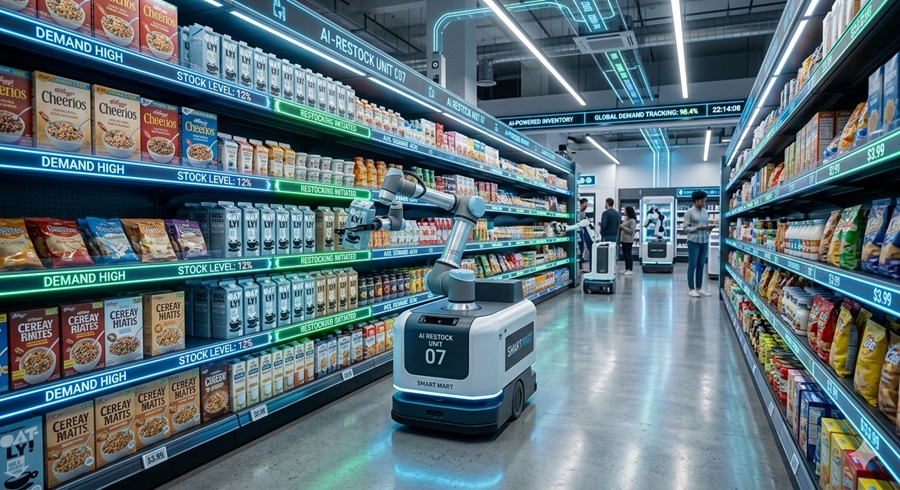
Below are three practical real-world examples of AI in retail that clearly show how AI predictive analytics in retail is transforming the industry.
Example 1: Smart Inventory Systems
One of the most important uses of AI in retail operations is smart inventory management. Retailers use AI systems to monitor stock levels, analyse demand patterns, and automatically reorder products before they run out.
AI-driven inventory systems combine machine learning, computer vision, and predictive analytics to track items in real time. These systems help retailers avoid both stockouts (running out of products) and overstocking, which can cause financial losses.
How AI Smart Inventory Works
AI inventory systems analyse multiple types of data:
- Historical sales data
- Seasonal demand patterns
- Current stock levels
- Supplier delivery times
- Customer purchasing behaviour
Using this data, AI predicts future demand and automatically suggests or triggers product replenishment.
Real Example
Retail giant Walmart uses AI-powered robots and computer vision systems to scan store shelves and detect missing or misplaced products. These robots analyse shelf images and send alerts when items are out of stock or incorrectly placed.
Another example is the shelf-scanning robot Tally, which moves through stores, captures shelf images, and identifies:
- Out-of-stock products
- Incorrect product placement
- Pricing errors
The robot can operate for about 12 hours on a single charge while continuously analysing shelf data.
Impact of AI Inventory Systems
Research shows that AI inventory solutions can deliver major improvements:
- Reduce excess inventory by 20–50%
- Predict demand with up to 90% accuracy
- Reduce inventory costs by up to 25%
These improvements help retailers maintain optimal stock levels and increase profitability.
Example 2: Personalised Shopping Experiences
Another powerful application of AI in retail customer experience is product recommendation and personalised shopping.
AI recommendation engines analyse customer behaviour, including:
- Browsing history
- Previous purchases
- Search queries
- Product ratings
- Shopping cart activity
Based on these signals, AI recommends products that are most relevant to each customer.
Real Example
Global e-commerce company Amazon uses one of the world’s most advanced AI recommendation systems. Its algorithms analyse millions of customer interactions to recommend products under sections like:
- “Customers who bought this also bought”
- “Recommended for you”
- “Frequently bought together”
These AI-driven recommendations significantly increase online sales and improve the shopping experience.
Similarly, platforms like Etsy use machine learning to personalise their homepage and email recommendations. After implementing AI personalisation, Etsy nearly doubled customer engagement, according to retail analytics research.
Impact of AI Personalisation
AI-based retail personalisation delivers measurable business results:
- Customer satisfaction increased by around 35%
- Conversion rates improved significantly
- Cart abandonment reduced by 12%
These improvements show why personalisation is one of the most valuable AI retail strategies today.
Example 3: Predictive Supply Chain Management
Supply chains are complex systems that involve manufacturers, warehouses, transportation, and stores. AI helps retailers optimise these processes using predictive analytics and demand forecasting.
AI supply chain systems analyse:
- Weather patterns
- Market trends
- Sales forecasts
- Supplier performance
- Logistics data
Using these insights, AI can predict supply disruptions and help retailers take action before problems occur.
Real Example
Major retailer Lowe’s uses AI-powered analytics and digital twin technology to analyse store traffic, customer behaviour, and inventory placement. This allows the company to optimise product availability and improve store operations across more than 1,700 stores.
Similarly, companies like Alibaba use AI and automation to optimise warehouse logistics and product distribution. AI systems help the company increase inventory efficiency by up to 70% and reduce inventory errors by around 80%.
Impact of Predictive Supply Chain AI
Retailers using AI predictive supply chain management gain several advantages:
- Early detection of supply disruptions
- Faster replenishment planning
- Reduced transportation costs
- Better product availability across stores
This leads to fewer stock shortages and improved customer satisfaction.
9. AI Retail Use Cases Across Different Retail Segments
Artificial intelligence is transforming every segment of the retail industry. From fashion stores and grocery supermarkets to e-commerce platforms and electronics retailers, AI technologies help businesses understand customer demand, optimise inventory, and improve operational efficiency.
According to industry research, AI adoption in retail increased by about 45% in recent years, and 87% of retailers plan to increase their investment in AI technologies to improve business performance.
Below are some of the most important AI retail use cases across different retail sectors and how they help retailers increase sales, reduce costs, and deliver better customer experiences.
Fashion Retail: Trend Prediction and Demand Forecasting
Fashion retail is one of the fastest-growing sectors adopting AI predictive analytics in retail. Clothing trends change quickly, and predicting what customers will buy is a major challenge for fashion brands.
AI systems analyse large datasets such as:
- Social media trends
- Customer browsing behaviour
- Historical sales data
- Seasonal demand patterns
- Influencer and fashion industry trends
By analysing this data, AI helps fashion retailers predict future trends and plan their product collections more accurately.
Real Example
Many fashion companies now use AI styling and recommendation systems to guide customers during shopping. For example, online fashion retailers use AI models trained on thousands of outfit combinations to recommend clothing items based on customer preferences and purchase history.
Research also shows that AI virtual stylists and recommendation engines can increase conversion rates by around 10% in fashion retail.
In addition, AI-powered fit prediction tools help reduce product returns by 20–30%, which is a major cost problem in online fashion retail.
Key Benefits in Fashion Retail
- Better trend forecasting and product planning
- Reduced overproduction and unsold inventory
- Higher sales through personalised recommendations
- Lower return rates with AI size prediction
Because of these advantages, the AI fashion retail market is expected to reach around $6.8 billion by 2029, showing rapid industry growth.
Grocery Retail: Perishable Inventory Management
Grocery retail deals with perishable products such as fruits, vegetables, dairy, and fresh food, which have a short shelf life. Managing this type of inventory manually is difficult and often leads to food waste or stock shortages.
AI helps grocery retailers manage perishable inventory using predictive demand forecasting and automated stock monitoring.
AI systems analyse factors such as:
- Weather conditions
- Local demand patterns
- Past sales trends
- Expiry dates of products
- Delivery schedules from suppliers
This allows grocery stores to stock the right quantity of products at the right time.
Real Data from Grocery Retail
Industry data shows that 42% of grocery chains already use AI for demand forecasting, which has reduced overstocking of perishable products by around 28%.
AI-powered shelf-scanning robots and computer vision systems can also identify misplaced or missing products with up to 98% accuracy.
Key Benefits in Grocery Retail
- Reduced food waste and product spoilage
- Better demand forecasting for fresh goods
- Faster stock replenishment
- Improved product availability for customers
Some research also shows that AI systems can reduce food waste in grocery stores by up to 20%, which significantly improves profitability and sustainability.
E-commerce Retail: Customer Behaviour Analysis
In the e-commerce industry, AI plays a major role in understanding customer behaviour and purchasing patterns.
Online retailers collect large amounts of customer data, including:
- Website browsing behaviour
- Product searches
- Click patterns
- Purchase history
- Shopping cart activity
AI algorithms analyse this information to predict what customers are most likely to buy.
Real Data from E-commerce Retail
Research shows that around 35% of e-commerce revenue is already influenced by AI-driven technologies, such as recommendation engines and predictive analytics.
Additionally, 77% of e-commerce professionals report using AI tools daily to analyse customer behaviour and improve marketing strategies.
Key Benefits in E-commerce Retail
- Highly personalised product recommendations
- Better targeted advertising campaigns
- Improved customer engagement
- Higher conversion rates and sales
Studies also show that AI-based personalisation can increase customer satisfaction by around 35%, making shopping more convenient and relevant for users.
Electronics Retail: Product Lifecycle Management
Electronics retailers deal with products that have short technology lifecycles. Smartphones, laptops, and gadgets quickly become outdated when new models are released.
AI helps electronics retailers manage the entire product lifecycle, from product launch to end-of-life clearance.
AI systems analyse:
- Product demand trends
- Market competition
- Customer reviews and feedback
- Warranty and repair data
- Technology upgrade cycles
Using these insights, retailers can decide:
- When to launch new products
- When to reduce prices
- When to clear old inventory
Example Use Case
Many electronics retailers now use AI demand forecasting systems to identify when a product’s popularity is declining. This allows them to offer promotions before inventory becomes obsolete.
AI also supports automated pricing strategies, which adjust product prices in real time based on demand, competition, and market conditions.
Key Benefits in Electronics Retail
- Better management of technology product lifecycles
- Reduced losses from outdated inventory
- More accurate demand forecasting
- Smarter pricing strategies
With AI adoption growing rapidly, more than 70% of electronics retailers are expected to integrate AI technologies by 2030 to improve operations and customer experience.
10. Challenges of Implementing AI in Retail (and Practical Solutions)
Artificial intelligence is transforming the retail industry, but implementing AI in retail operations is not always easy. Many retailers face technical, financial, and organisational challenges when adopting AI predictive analytics in retail.
Understanding these challenges is important because it helps businesses plan better and avoid costly mistakes. Below are the most common challenges of implementing AI in retail, along with practical solutions that successful retailers use.
1. Data Quality Issues
One of the biggest challenges in AI retail analytics is poor data quality. Artificial intelligence systems rely heavily on data to learn patterns and make predictions. If the data is incomplete, outdated, or inaccurate, AI systems will produce unreliable results.
Retailers often collect data from multiple sources such as:
- Point-of-sale (POS) systems
- E-commerce platforms
- CRM systems
- Inventory management tools
- Customer loyalty programmes
However, this data is frequently stored in different formats and databases, which creates inconsistencies.
Example of the Problem
For example, if customer data is duplicated across systems or product inventory data is incorrect, AI demand forecasting models may predict wrong stock levels, leading to stockouts or excess inventory.
Solution: Build a Strong Data Foundation
Retailers can solve data quality problems by improving their data management strategy.
Key solutions include:
- Creating centralised data platforms or data warehouses
- Cleaning and standardising data regularly
- Implementing data governance policies
- Using automated data validation tools
- Integrating data from all systems into one platform
Many companies now use cloud-based retail analytics platforms to centralise and clean data before using it for AI models.
By improving data quality, retailers can significantly increase the accuracy of AI demand forecasting and predictive analytics.
2. Integration with Legacy Systems
Many traditional retailers still rely on legacy IT systems that were built years ago. These systems were not designed to support modern technologies such as artificial intelligence, machine learning, or real-time analytics.
Legacy systems may include:
- Old inventory management software
- Outdated POS systems
- Isolated databases
- On-premise infrastructure
Integrating modern AI retail solutions with these systems can be complex and time-consuming.
Example of the Problem
For example, if a retailer wants to implement AI-powered inventory forecasting, the system needs real-time access to sales data, supply chain information, and warehouse inventory. Legacy systems may not support such real-time data integration.
Solution: Gradual Modernisation Strategy
Instead of replacing all systems at once, retailers can adopt a phased approach.
Effective solutions include:
- Using APIs (Application Programming Interfaces) to connect legacy systems with AI platforms
- Migrating gradually to cloud-based infrastructure
- Implementing middleware platforms that allow systems to communicate with each other
- Modernising core systems step-by-step
Many retailers successfully implement AI retail analytics platforms by integrating them with existing systems using cloud technologies and APIs.
This approach reduces disruption while still enabling the benefits of AI-driven retail transformation.
3. High Initial Investment
Another major challenge of adopting AI in retail business operations is the high initial investment required.
Implementing AI solutions often involves costs such as:
- AI software platforms
- Data infrastructure
- Cloud computing resources
- Integration with existing systems
- Hiring AI specialists
For small and medium-sized retailers, these costs can be a major barrier.
Example of the Problem
A retailer implementing AI demand forecasting or AI recommendation engines may need to invest in data infrastructure, analytics tools, and cloud storage before seeing measurable business results.
Solution: Start with Small AI Projects
Retailers can reduce risk by starting with smaller AI initiatives that deliver quick results.
Recommended strategies include:
- Launching pilot AI projects in one department
- Using AI-as-a-Service platforms instead of building systems from scratch
- Implementing AI in high-impact areas such as demand forecasting or product recommendations
- Measuring ROI before scaling AI across the organisation
Cloud-based AI platforms allow retailers to pay only for the computing resources they use, making AI adoption more affordable.
As companies see positive results, they can gradually expand their AI retail capabilities.
4. Skilled Workforce Requirements
Artificial intelligence systems require skilled professionals to design, manage, and maintain them. However, many retailers struggle to find experts in fields such as:
- Data science
- Machine learning
- AI engineering
- Data analytics
- Cloud infrastructure
This shortage of skilled professionals can slow down AI adoption in the retail industry.
Example of the Problem
A retailer implementing AI predictive analytics in retail may need data scientists to build models, engineers to integrate systems, and analysts to interpret AI insights. Without these skills, AI projects may fail to deliver value.
Solution: Upskilling and Strategic Partnerships
Retailers can overcome this challenge by investing in training and partnerships.
Practical solutions include:
- Training existing employees in data analytics and AI tools
- Partnering with AI technology providers
- Outsourcing AI development to specialised companies
- Using low-code or no-code AI platforms
Many companies now offer AI tools that allow business teams to use advanced analytics without deep technical knowledge.
This approach helps retailers adopt AI-powered retail solutions even with limited internal expertise.
11. Future Trends of AI in Retail
Artificial intelligence is rapidly transforming the retail industry. As technology continues to evolve, AI in retail analytics, predictive insights, and automation will become even more powerful. Retailers are increasingly using AI to improve customer experiences, optimise supply chains, and make smarter business decisions.
According to industry research, the AI in retail market was valued at around $14 billion in 2025 and is expected to grow significantly in the coming years, with many retailers expanding AI adoption across their operations.
Below are some of the most important future trends of AI in retail that will shape the industry over the next decade.
1. Hyper-Personalised Shopping Experiences
One of the biggest future trends in AI-driven retail technology is hyper-personalised shopping. Instead of showing the same products to all customers, AI systems will analyse individual preferences and deliver highly customised shopping experiences.
AI algorithms analyse large amounts of customer data such as:
- Browsing behaviour
- Previous purchases
- Search history
- Product reviews
- Social media interactions
Using this information, AI can recommend products that perfectly match a customer’s interests.
Real Data
Research shows that 71% of retailers already use AI for personalisation, and AI recommendation engines are expected to influence around 40% of online purchases by 2030.
Future Benefits
Hyper-personalised retail experiences will enable businesses to:
- Increase customer engagement and loyalty
- Deliver personalised discounts and promotions
- Improve conversion rates
- Provide smarter product recommendations
This trend will make online shopping feel more like having a personal shopping assistant.
2. Autonomous Retail Stores
Another major innovation is the rise of autonomous retail stores, where AI automates the entire shopping process.
In these stores, technologies such as computer vision, AI sensors, and machine learning track the products customers pick up. Customers simply walk into the store, select items, and leave without waiting in a checkout line.
AI automatically processes payment using digital systems.
Real Data
Industry forecasts show that autonomous checkout systems are expected to grow by around 250% by 2027, indicating rapid adoption of cashier-less retail technologies.
Future Benefits
Autonomous stores will help retailers:
- Reduce checkout waiting times
- Improve store efficiency
- Lower operational costs
- Provide faster and more convenient shopping experiences
These AI-powered smart stores represent the future of physical retail.
3. AI-Driven Supply Chains
Supply chain management is becoming smarter with the help of AI predictive analytics in retail. AI systems can analyse complex logistics data to predict demand, manage inventory, and prevent supply disruptions.
AI-driven supply chains analyse factors such as:
- Demand forecasts
- Supplier performance
- Weather patterns
- Shipping delays
- Market trends
Using predictive models, AI can automatically adjust inventory levels and optimise product distribution.
Real Data
Studies show that 75% of retailers plan to expand the use of AI for supply chain optimisation by 2028, highlighting its growing importance in retail operations.
Future Benefits
AI-driven supply chains help retailers:
- Reduce inventory shortages
- Improve logistics efficiency
- Lower operational costs
- Deliver products faster to customers
In the future, fully automated AI supply chains may manage inventory and delivery with minimal human intervention.
4. Predictive Customer Behaviour Modelling
Another powerful future trend is predictive customer behaviour modelling. AI systems analyse historical customer data to predict what customers are likely to buy next.
This technology uses machine learning and predictive analytics to identify patterns in customer behaviour.
For example, AI can predict:
- Which products customers will buy next
- When customers are likely to make a purchase
- Which customers may stop buying from a brand
- What promotions will encourage purchases
Real Data
Research shows that 62% of leading retailers use predictive analytics to better understand customer behaviour, helping them create smarter marketing strategies.
Future Benefits
Predictive customer behaviour modelling helps retailers:
- Create targeted marketing campaigns
- Improve customer retention
- Increase repeat purchases
- Optimise product recommendations
This technology allows retailers to move from reactive marketing to data-driven predictive retail strategies.
5. AI-Powered Visual Search
AI-powered visual search is another exciting innovation transforming online retail. Instead of typing product names, customers can upload a photo to find similar products.
AI uses computer vision and image recognition technology to analyse images and identify products with similar features.
For example, a customer can:
- Upload a picture of a dress they like
- Take a photo of a sofa in a showroom
- Scan a product using a mobile phone
The AI system then shows similar items available in the store or online.
Real Data
Industry reports indicate that AI visual search adoption in retail is expected to grow by around 35% each year, showing strong demand for image-based shopping technology.
Future Benefits
AI-powered visual search will help retailers:
- Improve product discovery
- Increase online sales
- Provide faster shopping experiences
- Reduce search friction for customers
This technology will become especially important for fashion, furniture, and lifestyle retail sectors.
12. Why Retailers Should Invest in Predictive AI Now
The retail industry is changing faster than ever. Customer behaviour, supply chain disruptions, and global competition are forcing businesses to make smarter and faster decisions. In this environment, predictive AI in retail is no longer a luxury—it has become a necessity for survival and growth.
Predictive AI uses technologies such as machine learning, predictive analytics, and real-time data analysis to forecast future demand, optimise inventory, and improve customer experiences. Retailers that invest in these technologies today can stay competitive, reduce operational costs, and deliver better shopping experiences.
Below are the key reasons why retailers should invest in AI-powered predictive analytics in retail right now.
1. Increasing Market Competition
The retail market is becoming extremely competitive due to the rapid growth of e-commerce, digital marketplaces, and global retail chains. Businesses that rely only on traditional decision-making methods struggle to keep up with competitors who use data-driven strategies.
Predictive AI helps retailers stay ahead by analysing large amounts of data such as:
- Past sales trends
- Customer purchasing patterns
- Seasonal demand fluctuations
- Market trends and competitor pricing
With this information, retailers can forecast demand accurately and prepare their inventory in advance.
For example:
- AI-based forecasting systems can reduce overstock and stockouts by up to 30%, helping retailers maintain optimal inventory levels.
- Businesses using machine learning in retail report 5–15% revenue growth and 10–30% operational cost reductions due to smarter decision-making.
Large retailers such as Walmart and Target already use AI-powered inventory systems to predict demand and ensure products are available in stores before shortages occur.
This clearly shows that predictive AI gives retailers a strong competitive advantage.
2. Rising Customer Expectations
Modern customers expect fast service, personalised recommendations, and product availability across both online and offline channels. If a product is out of stock or the shopping experience is poor, customers can easily switch to a competitor.
Predictive AI helps retailers understand customer behaviour and deliver better experiences by analysing:
- Purchase history
- Browsing patterns
- Customer preferences
- Seasonal buying behaviour
Using these insights, retailers can offer:
- Personalised product recommendations
- Targeted promotions
- Dynamic pricing strategies
- Better product availability
Studies show that AI-driven retail systems improve customer satisfaction significantly. For example, AI personalisation strategies have increased customer satisfaction by around 35% in retail environments.
By ensuring the right products are available at the right time, retailers can build stronger customer loyalty and increase repeat purchases.
3. Data-Driven Decision Making
Retail businesses generate huge volumes of data every day—from sales transactions and customer behaviour to supply chain and logistics information. However, without advanced analytics tools, this data often remains unused.
Predictive AI converts raw data into actionable insights, allowing retailers to make smarter business decisions.
Key advantages include:
- Predicting product demand more accurately
- Identifying emerging market trends early
- Optimising marketing campaigns
- Improving pricing strategies
According to industry research:
- Around 80% of retailers use AI analytics to support strategic decisions.
- AI-powered analytics can improve demand forecasting accuracy by up to 50%.
This shift towards data-driven retail decision making allows companies to reduce risks and respond quickly to changing market conditions.
4. Improved Operational Efficiency
Operational efficiency is critical in retail because businesses must manage complex processes such as inventory planning, supply chain logistics, and store operations.
Predictive AI improves efficiency by automating many of these tasks and reducing manual errors.
Key operational benefits include:
- Optimised inventory management
- Automated stock replenishment
- Better warehouse and supply chain planning
- Reduced waste and storage costs
For example:
- AI-driven inventory systems can reduce excess inventory by 20–50% and lower carrying costs significantly.
- Predictive analytics can also reduce supply chain errors by 20–50%, improving overall operational efficiency.
Additionally, AI can analyse external factors such as weather, holidays, and local events to predict demand more accurately and avoid supply chain disruptions.
This helps retailers maintain smooth operations while reducing unnecessary expenses.
AI Adoption Is Becoming a Necessity, Not an Option
Retailers who delay adopting AI risk falling behind competitors that already use predictive analytics and automation. The retail landscape is increasingly driven by real-time data, automation, and intelligent forecasting.
Consider these industry trends:
- The AI in retail market is expected to grow from $14.49 billion in 2025 to $138.3 billion by 2035, showing massive adoption across the industry.
- Businesses that implement predictive analytics can reduce inventory costs, improve forecasting accuracy, and significantly increase operational efficiency.
In short, predictive AI enables retailers to:
- Understand customers better
- Make faster and smarter decisions
- Reduce operational costs
- Increase sales and profitability
Retailers that invest in AI-powered predictive analytics today will be better prepared to handle future market changes and maintain long-term growth.
13. How Cor Advance Solutions Helps Retailers Implement AI
Implementing AI in retail can transform how businesses operate, make decisions, and serve customers. However, many retailers struggle with challenges such as lack of technical expertise, complex data systems, and uncertainty about where to start.
Cor Advance Solutions helps retailers successfully adopt AI-powered retail technologies by combining deep industry knowledge, advanced analytics capabilities, and real-world implementation experience. The company works closely with retailers to design and implement predictive AI solutions, retail analytics platforms, and intelligent automation systems that improve efficiency, increase sales, and enhance customer experiences.
With a strong focus on expertise, experience, and measurable results, Cor Advance Solutions supports retailers at every stage of their AI transformation journey.
AI Strategy Development
A successful AI transformation always begins with a clear strategy. Many retailers invest in technology but fail to see results because they do not have a structured AI implementation roadmap.
Cor Advance Solutions helps retailers build a practical AI strategy for retail businesses based on their specific goals, operations, and data infrastructure.
The AI strategy development process includes:
- analysing current retail operations and digital systems
- identifying high-value AI use cases such as demand forecasting and customer behaviour analysis
- defining a clear AI adoption roadmap
- selecting the most suitable machine learning models and analytics tools
- setting measurable performance indicators
This strategic approach ensures that AI in retail operations is implemented in a way that delivers real business value.
The team at Cor Advance Solutions includes specialists in artificial intelligence, retail analytics, and enterprise software development, allowing them to design AI strategies that align with real retail challenges.
Retail Data Analytics Platforms
Retail businesses generate enormous volumes of data from stores, online platforms, inventory systems, and customer interactions. However, many retailers struggle to turn this data into actionable insights.
Cor Advance Solutions develops advanced retail data analytics platforms that help retailers collect, analyse, and visualise business data in real time.
These platforms enable retailers to:
- monitor sales performance across stores and regions
- analyse customer purchasing patterns
- identify best-selling products and slow-moving inventory
- forecast seasonal demand
- optimise pricing and promotional strategies
By using AI-powered retail analytics, retailers can make smarter decisions based on real-time insights rather than guesswork.
Cor Advance Solutions has worked with retail businesses to build analytics dashboards that simplify complex data and allow managers to quickly understand sales trends and operational performance.
Custom AI Retail Solutions
Every retail business operates differently. A fashion retailer, supermarket, or electronics store will all have different operational needs and customer behaviours.
Cor Advance Solutions develops custom AI retail solutions designed specifically for each retailer’s business model.
These solutions may include:
- personalised product recommendation systems
- intelligent pricing optimisation tools
- customer behaviour prediction models
- AI-powered marketing automation systems
- smart demand forecasting tools
By developing tailored AI solutions for retail, Cor Advance Solutions ensures that retailers can solve real operational challenges and improve customer experiences.
Case study example:
A growing online retail brand implemented a personalised recommendation engine developed by Cor Advance Solutions.
Results achieved:
- increase in product discovery across the online store
- higher customer engagement with recommended products
- improvement in conversion rates and repeat purchases
This example demonstrates how AI-driven personalisation in retail can directly influence sales growth.
Predictive Inventory Systems
Inventory management is one of the biggest operational challenges in the retail industry. Overstocking leads to unnecessary storage costs, while stock shortages result in lost sales and unhappy customers.
Cor Advance Solutions develops predictive inventory management systems powered by artificial intelligence and machine learning.
These systems analyse multiple data sources, including:
- historical sales records
- seasonal shopping patterns
- promotional campaigns
- regional demand trends
Using predictive analytics, the system forecasts future demand and recommends the optimal stock levels for each product.
Case study example:
A multi-store retail client implemented a predictive inventory solution developed by Cor Advance Solutions.
Results achieved:
- significant reduction in stock shortages
- better inventory turnover
- improved product availability during peak sales periods
By using AI-powered predictive inventory systems, retailers can improve supply chain efficiency and ensure customers find the products they need when they need them.
AI Integration with Retail ERP and CRM
Many retailers already rely on ERP and CRM systems to manage operations, supply chains, and customer relationships. However, these systems often lack advanced predictive capabilities.
Cor Advance Solutions specialises in integrating artificial intelligence with existing retail ERP and CRM platforms.
This integration allows retailers to enhance their current systems with AI-powered insights without replacing their existing technology infrastructure.
AI integration enables retailers to:
- analyse customer behaviour data stored in CRM platforms
- predict purchasing patterns and future demand
- automate marketing campaigns based on customer preferences
- improve supply chain forecasting within ERP systems
- gain deeper insights into customer lifetime value
By combining AI technology with enterprise retail systems, Cor Advance Solutions helps businesses unlock the full potential of their existing data.
Proven Expertise, Real Experience, and Measurable Results
Cor Advance Solutions focuses on delivering practical and results-driven AI solutions for retail businesses.
Their approach combines:
- strong expertise in artificial intelligence and machine learning
- real-world experience working with retail organisations
- scalable and customised technology solutions
Retailers who implement AI solutions through Cor Advance Solutions often experience improvements in:
- demand forecasting accuracy
- inventory management efficiency
- customer engagement and personalisation
- operational productivity
- overall revenue performance
14. Conclusion
The retail industry is going through a major transformation, and AI in retail is at the centre of this change. Modern retailers are dealing with complex challenges such as changing customer behaviour, fast-moving market trends, and growing competition from both online and offline stores. In this environment, businesses can no longer rely only on traditional methods. They need smart, data-driven solutions, and this is where artificial intelligence in retail is making a powerful impact.
Today, predictive AI in retail is helping businesses analyse large amounts of data and turn it into valuable insights. Retailers can study past sales patterns, customer preferences, seasonal trends, and market demand to understand what will happen in the future. This ability to predict demand allows retailers to make better business decisions and plan their operations more effectively.
One of the biggest benefits of predictive analytics in retail is that it helps reduce stockouts. When retailers can accurately predict which products customers will buy, they can maintain the right inventory levels. This means customers are more likely to find the products they want when they visit a store or shop online. As a result, retailers avoid lost sales and improve customer satisfaction.
At the same time, AI-powered inventory management systems help retailers avoid overstocking. Keeping too much inventory increases storage costs and often leads to unsold products. With AI-driven demand forecasting, businesses can balance supply and demand more efficiently, which helps reduce waste and improve profitability.
Retailers that adopt AI technology in retail operations also gain a strong competitive advantage. AI systems can quickly analyse market data, customer behaviour, and pricing trends, allowing businesses to respond faster than competitors. From personalised product recommendations to smart pricing strategies, AI-powered retail solutions help create better shopping experiences and stronger customer relationships.
In addition, AI enables retailers to improve many areas of their operations, including supply chain management, marketing strategies, and customer engagement. These improvements lead to higher efficiency, better decision-making, and increased sales growth.
The reality is clear: the future of retail will be driven by artificial intelligence, predictive insights, and data analytics. Retailers that start investing in these technologies today will be better prepared for tomorrow’s market challenges.
Businesses that adopt AI-driven retail solutions early will not only improve their operations but also build stronger brands and loyal customer bases. Over time, these companies will lead the industry while competitors that delay AI adoption may struggle to keep up.
In simple terms, AI is not just transforming retail—it is defining the future of the industry. Retailers that embrace predictive AI, smart data analytics, and intelligent retail technologies today will be the ones that dominate the market in the years ahead.
15. FAQ
What is AI in retail?
AI in retail refers to the use of artificial intelligence technologies such as machine learning, data analytics, and automation to improve retail operations. It helps retailers analyse customer behaviour, predict demand, optimise inventory, and personalise shopping experiences. By using AI-powered retail solutions, businesses can make faster and smarter decisions based on real-time data. This leads to better efficiency, improved customer satisfaction, and increased sales.
How does predictive analytics help retailers?
Predictive analytics in retail uses historical sales data, customer behaviour, and market trends to forecast future demand. This helps retailers understand which products customers are likely to buy and when demand will increase. With these insights, businesses can plan inventory, marketing campaigns, and pricing strategies more effectively. As a result, retailers reduce risks, improve decision-making, and increase overall profitability.
Can AI prevent stockouts?
Yes, AI-powered predictive systems can significantly reduce stockouts by forecasting product demand in advance. AI analyses sales patterns, seasonal trends, and purchasing behaviour to predict when certain products may run out. Retailers can then replenish inventory before shortages occur. This ensures that popular products remain available, improving customer satisfaction and preventing lost sales.
How does AI improve inventory management?
AI improves inventory management in retail by analysing real-time sales data and predicting future demand. It helps retailers maintain the right stock levels by identifying fast-moving and slow-moving products. AI systems can also automate stock replenishment and optimise warehouse management. This reduces excess inventory, lowers storage costs, and ensures products are available when customers need them.
What are the benefits of AI demand forecasting?
AI demand forecasting helps retailers predict future product demand with higher accuracy using machine learning and data analysis. It allows businesses to plan inventory, manage supply chains, and prepare for seasonal sales trends more effectively. Accurate forecasting reduces overstock and stock shortages while improving operational efficiency. Ultimately, it helps retailers increase sales, reduce costs, and deliver a better shopping experience.