Introduction: Why Manufacturing Is Entering the AI Era
Manufacturing is changing faster than ever before. Global competition, rising operational costs, labour shortages, and supply chain disruptions are pushing manufacturers to rethink how factories operate. To stay competitive, manufacturers must produce high-quality products faster while keeping costs under control.
However, many traditional manufacturing systems still rely on manual processes, reactive maintenance, and disconnected data. These limitations often lead to unexpected downtime, inefficient production lines, and poor demand forecasting. When machines fail unexpectedly or production planning is inaccurate, factories lose valuable time and revenue.
This is where AI manufacturing solutions are transforming the industry.
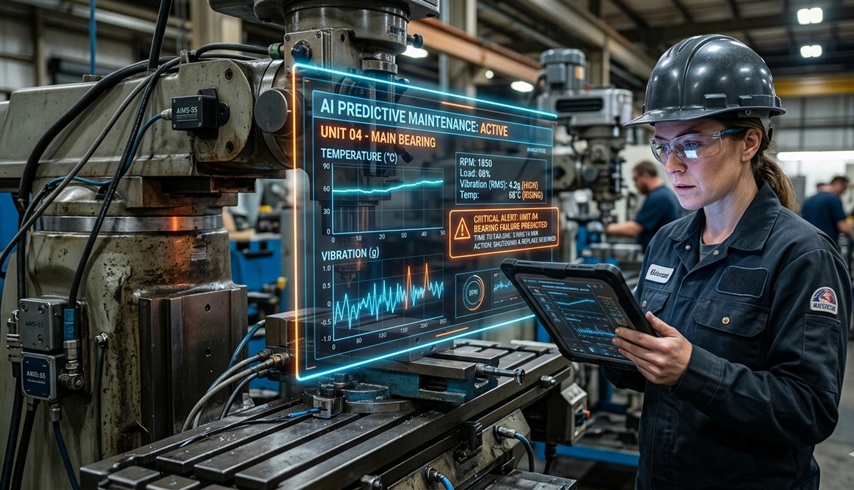
Artificial Intelligence, combined with machine learning and advanced analytics, allows manufacturers to analyse large volumes of production data, detect patterns, and make smarter operational decisions. AI systems can monitor equipment in real time, predict machine failures before they happen, automate repetitive tasks, and optimise production schedules.
Recent industry research shows that around 77% of manufacturers are now using or actively implementing AI solutions across production, inventory management, and operational processes, highlighting how quickly AI is becoming a core technology in modern manufacturing.
Measurable Impact of AI in Manufacturing
The impact of AI manufacturing solutions is not only theoretical—it is measurable and already transforming factories around the world. Modern manufacturers are using artificial intelligence, machine learning, and data analytics to improve efficiency, reduce downtime, and enhance product quality.
Below are some of the most important measurable benefits that explain why smart manufacturing technology has become a strategic investment for forward-thinking manufacturers.
AI Predictive Analytics Can Reduce Machine Downtime by Up to 50%
Machine downtime is one of the most expensive problems in manufacturing. When equipment suddenly stops working, production lines halt, delivery schedules are delayed, and businesses lose revenue.
AI-powered predictive analytics helps manufacturers solve this problem by predicting machine failures before they occur. Sensors collect real-time data from machines—such as vibration, temperature, and operating conditions—and AI models analyse this data to detect early warning signs of failure.
Research by McKinsey & Company shows that AI-based predictive maintenance can reduce equipment downtime by up to 50% and lower maintenance costs by 10–40%.
This allows manufacturers to schedule repairs in advance instead of reacting to unexpected breakdowns.
As a result, companies benefit from:
- More stable production schedules
- Lower repair and maintenance costs
- Longer equipment lifespan
- Reduced risk of emergency shutdowns
Predictive maintenance is now considered one of the most valuable applications of AI in manufacturing.
AI-Driven Process Optimisation Can Increase Production Throughput by 20–30%
Another major advantage of AI manufacturing solutions is process optimisation.
Manufacturing plants generate huge volumes of operational data from machines, sensors, and production systems. AI algorithms can analyse this data in real time to identify inefficiencies and optimise production processes.
For example, AI systems can:
- Adjust machine settings automatically
- Detect bottlenecks in production lines
- Improve workflow coordination
- Optimise energy usage and material consumption
Real-world implementations show that AI-driven optimisation can significantly improve factory performance. For instance, AI-powered manufacturing systems have demonstrated production efficiency improvements of around 20% in real industrial environments.
In many advanced factories, these improvements translate into 20–30% higher production throughput, allowing companies to produce more goods without expanding infrastructure.
For manufacturers, this means:
- Higher productivity
- Faster production cycles
- Lower operational costs
- Greater competitiveness in global markets
AI Vision Systems Can Achieve Over 90% Defect Detection Accuracy
Quality control is another critical area where AI is making a major difference.
Traditional quality inspections rely heavily on human inspection, which can be slow and prone to errors—especially when products must be checked at high speed.
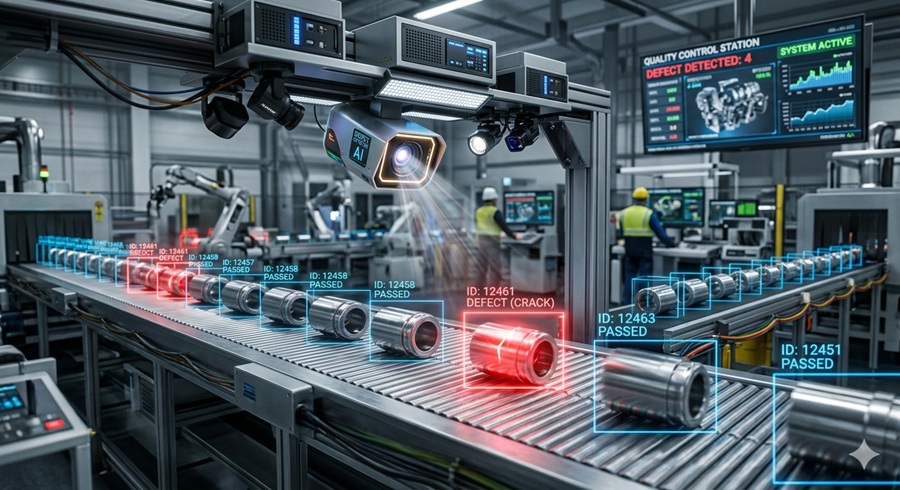
AI-powered computer vision systems use advanced image recognition and deep learning to inspect products automatically during production. These systems analyse images captured by cameras and detect defects such as scratches, misalignments, cracks, or incorrect assembly.
According to industry research and real-world implementations, AI-based inspection systems can achieve defect detection accuracy of around 90% or higher, significantly improving product quality and reducing waste.
With AI quality control, manufacturers can:
- Detect defects instantly during production
- Reduce product recalls
- Minimise material waste
- Maintain consistent product quality
This level of accuracy is difficult to achieve with manual inspections alone.
Why Smart Manufacturing Technology Is Becoming a Strategic Priority
Because of these measurable benefits, smart manufacturing technology has become a strategic priority for many global manufacturers.
Artificial intelligence enables factories to operate more intelligently by connecting machines, data, and analytics into one integrated system. These AI-powered smart factories can predict problems, optimise operations, and continuously improve production performance.
Manufacturers that invest in AI today are better prepared to:
- Handle global supply chain disruptions
- Reduce operational risks
- Improve production efficiency
- Deliver higher-quality products
These capabilities are critical for companies competing in the era of Industry 4.0, where digital technologies are transforming industrial operations.
Manufacturing Leaders See AI as Essential for Future Growth
Industry leaders widely recognise the importance of AI for the future of manufacturing.
Recent industry surveys reveal that 93% of manufacturing executives believe artificial intelligence will play a critical role in future business growth and innovation.
This strong confidence in AI reflects a clear industry trend: manufacturers are moving toward data-driven, automated, and intelligent production systems.
Companies that adopt AI manufacturing solutions early are more likely to gain competitive advantages such as:
- Faster innovation
- Higher productivity
- Better operational resilience
- Stronger global market positioning
However, implementing AI successfully requires more than just technology. Manufacturers need the right strategy, data infrastructure, and expert guidance to integrate AI into real production environments.
This is where Cor Advance Solutions helps manufacturers move forward.
Cor Advance Solutions provides advanced AI and machine learning services designed specifically to solve real business problems. By combining deep technical expertise with practical industry understanding, the company helps manufacturers automate processes, optimise operations, and unlock the full value of their production data.
From predictive maintenance systems to custom AI model development, Cor Advance Solutions builds scalable AI manufacturing solutions that improve efficiency, accelerate innovation, and deliver measurable business results.
For manufacturers aiming to modernise their factories and stay competitive in a rapidly evolving industry, AI is no longer optional — it is becoming a strategic necessity.
What Are AI Manufacturing Solutions?
Artificial intelligence is rapidly transforming the manufacturing industry. Today, factories are becoming smarter, faster, and more efficient through the use of AI manufacturing solutions. These technologies allow manufacturers to analyse large volumes of data, automate complex processes, and make better operational decisions in real time.
According to industry research, around 77% of manufacturers are already using artificial intelligence technologies in their operations, and many more are investing heavily in digital transformation to stay competitive.
In simple terms, AI manufacturing solutions help factories move from traditional manual systems to data-driven, intelligent factory systems that can optimise production, improve quality, reduce costs, and predict problems before they occur.
Definition of AI in Manufacturing
AI manufacturing solutions refer to the use of artificial intelligence technologies to automate, optimise, and improve manufacturing operations. These systems use advanced algorithms and data analysis to support decision-making across the entire production lifecycle.
In modern factories, AI combines several technologies such as machine learning, predictive analytics, industrial Internet of Things (IIoT), automation, and computer vision. Together, these technologies form the foundation of AI-driven manufacturing.
In practical terms, industrial companies use industrial AI solutions to analyse operational data from machines, sensors, and supply chains. AI systems then identify patterns, predict potential issues, and recommend the best actions to improve efficiency.
For example:
- AI can detect machine failures before they happen.
- It can automatically inspect products for defects.
- It can forecast demand and adjust production schedules.
This approach allows companies to move from reactive manufacturing to predictive and intelligent factory systems.
Research shows that AI-powered predictive maintenance alone can reduce equipment downtime by around 23% and significantly improve productivity.
As a result, manufacturers can operate faster, safer, and more efficiently.
Core Technologies Powering Smart Manufacturing
Modern AI manufacturing solutions rely on several advanced technologies that work together to create intelligent production environments.
Machine Learning Models
Machine learning is one of the most important technologies in AI-driven manufacturing. These models learn from historical production data and continuously improve their predictions.
Manufacturers use machine learning to:
- Predict machine failures
- Optimise production schedules
- Improve product quality
- Detect anomalies in operations
Machine learning is widely used in manufacturing, accounting for about 40% of industrial AI applications globally.
This technology allows factories to make smarter decisions automatically.
Predictive Analytics
Predictive analytics helps manufacturers anticipate future events by analysing historical and real-time data.
With predictive analytics, companies can:
- Forecast equipment maintenance needs
- Predict supply chain disruptions
- Estimate product demand
- Prevent production delays
Predictive maintenance powered by AI can reduce maintenance costs by up to 25–30% and minimise unexpected breakdowns.
This significantly improves production reliability and reduces operational risk.
Industrial IoT (IIoT)
The Industrial Internet of Things (IIoT) connects machines, sensors, and equipment across a factory. These devices continuously collect data about performance, temperature, vibration, energy usage, and more.
AI systems analyse this data to provide insights and automate decision-making.
IIoT enables manufacturers to build intelligent factory systems where machines communicate with each other and optimise production automatically.
Key benefits include:
- Real-time monitoring of equipment
- Data-driven process optimisation
- Improved operational visibility
Computer Vision Systems
Computer vision is an AI technology that allows machines to “see” and analyse images or video data.
In manufacturing, computer vision systems are used for:
- Automated quality inspection
- Defect detection
- Assembly verification
- Safety monitoring
Studies show that over 50% of manufacturers use AI-based visual inspection systems to improve product quality.
This technology helps manufacturers detect even the smallest defects that human inspectors might miss.
Intelligent Automation
Intelligent automation combines AI with robotics and automation systems to handle repetitive or complex tasks.
Unlike traditional automation, intelligent automation can adapt and learn from new situations.
Examples include:
- Autonomous robotic assembly lines
- Smart packaging systems
- Automated inventory management
AI-powered robots can perform repetitive tasks up to 40% faster than manual labour, improving production speed and consistency.
Generative AI for Design Optimisation
A newer innovation in manufacturing is Generative AI, which helps engineers design products more efficiently.
Generative AI systems analyse design requirements and automatically create multiple design options that optimise performance, materials, and cost.
Manufacturers use generative AI for:
- Product design optimisation
- Lightweight engineering designs
- Simulation-based manufacturing improvements
Around 44% of manufacturing organisations are already testing or implementing generative AI technologies in their operations.
This technology is expected to play a major role in the future of product innovation.
Key Manufacturing Areas Where AI Is Applied
Today, AI manufacturing solutions are used across many parts of the manufacturing value chain. These applications help companies operate more efficiently and remain competitive in global markets.
Production Planning
AI systems analyse production data, workforce availability, and demand forecasts to optimise manufacturing schedules.
With AI-driven manufacturing, companies can:
- Automatically adjust production schedules
- Reduce delays and bottlenecks
- Improve resource utilisation
This ensures factories run smoothly even when demand fluctuates.
Equipment Monitoring
AI-powered monitoring systems track machine performance in real time using sensor data from IIoT devices.
These systems detect early warning signs of failure such as abnormal vibrations, temperature changes, or unusual operating patterns.
As a result, manufacturers can perform maintenance before breakdowns occur, improving operational reliability.
Predictive maintenance is currently one of the most widely adopted AI applications in manufacturing.
Quality Inspection
Maintaining consistent product quality is critical in manufacturing.
AI-powered inspection systems use computer vision to analyse images of products and detect defects instantly.
This helps manufacturers:
- Reduce defective products
- Improve quality control
- Lower waste and rework costs
Many companies report significant improvements in product quality after implementing AI-driven defect detection systems.
Supply Chain Forecasting
AI helps manufacturers analyse supply chain data, market trends, and historical demand patterns to forecast future demand more accurately.
AI-driven supply chain forecasting enables companies to:
- Reduce inventory shortages
- Prevent overproduction
- Manage supplier risks
Around 41% of manufacturers already use AI for supply chain data management and forecasting.
This improves planning and ensures smoother global supply chain operations.
Energy Optimisation
Energy costs represent a major expense for many manufacturing companies.
AI systems can analyse energy usage patterns across production lines and automatically optimise power consumption.
Benefits include:
- Lower energy costs
- Reduced carbon emissions
- Improved sustainability
Many manufacturers are now using AI to support their sustainability and energy efficiency goals while maintaining high productivity.
Why Smart Manufacturers Are Investing in AI Manufacturing Solutions
Manufacturing is becoming more competitive than ever. Companies must produce high-quality products faster, reduce costs, and respond quickly to changing market demand. To achieve this, many factories are turning to AI manufacturing solutions.
Artificial intelligence helps manufacturers analyse large amounts of production data, automate repetitive processes, and make smarter decisions. In fact, nearly 45% of manufacturing companies have already integrated AI into their production processes, and many more are investing in it to remain competitive.
The shift toward smart manufacturing automation and factory AI optimisation is not just a technology trend—it is becoming a business necessity.
Below are the key reasons why smart manufacturers are investing heavily in AI-driven manufacturing systems.
Increasing Production Efficiency
One of the biggest advantages of AI manufacturing solutions is the ability to improve production efficiency.
Modern factories generate massive amounts of data from machines, sensors, robotics, and production systems. AI algorithms analyse this data in real time to identify inefficiencies, optimise workflows, and improve machine utilisation.
For example:
- AI can automatically adjust production schedules to avoid bottlenecks.
- Machine learning models optimise equipment usage.
- AI-powered robotics can perform repetitive tasks faster and more accurately.
Studies show that AI-driven process optimisation can increase overall equipment effectiveness (OEE) by up to 25–30% and improve production throughput by around 20%.
Through factory AI optimisation, manufacturers can produce more products without significantly increasing labour or operational costs.
Predictive Maintenance to Prevent Downtime
Unplanned machine breakdowns are one of the biggest challenges in manufacturing. When a critical machine fails, production stops, causing huge financial losses.
Research shows that manufacturing downtime can cost around $260,000 per hour in lost production and repairs.
This is where AI manufacturing solutions play a critical role through predictive maintenance.
AI systems analyse data from sensors, vibration patterns, temperature levels, and machine behaviour to detect early signs of equipment failure. Instead of waiting for machines to break down, maintenance teams receive alerts in advance.
Benefits of predictive maintenance include:
- 20–30% reduction in unplanned downtime
- 25–30% reduction in maintenance costs
- 20–30% extension in equipment lifespan
Some advanced AI systems can even predict failures weeks before they happen, allowing companies to schedule repairs without disrupting production.
Improving Product Quality Through AI Inspection
Maintaining consistent product quality is essential for manufacturers, especially in industries such as automotive, electronics, and pharmaceuticals.
Traditional quality inspection often relies on human inspectors, which can lead to errors and inconsistencies. Human inspection accuracy typically ranges between 80% and 90%, meaning defects can sometimes go unnoticed.
AI-powered computer vision systems are transforming quality control.
These systems use cameras and deep learning algorithms to inspect products during production. They can instantly detect defects such as:
- Surface scratches
- Incorrect assembly
- Shape variations
- Packaging errors
AI inspection systems can achieve up to 99% defect detection accuracy, dramatically improving product quality and reducing waste.
As a result, manufacturers can deliver higher-quality products while lowering scrap and rework costs.
Data-Driven Manufacturing Decisions
Factories today collect enormous amounts of operational data—from production machines and supply chains to energy usage and inventory levels.
However, raw data alone does not provide value unless it can be converted into actionable insights.
This is where AI manufacturing solutions help.
AI platforms analyse factory data in real time and provide clear insights to plant managers and decision-makers. These insights help businesses:
- Identify production bottlenecks
- Optimise resource allocation
- Improve supply chain coordination
- Forecast maintenance needs
- Monitor equipment performance
According to industry studies, over 52% of manufacturing managers say AI significantly improves decision-making speed and accuracy.
With smart manufacturing automation, companies can move from reactive decision-making to proactive, data-driven strategies.
Reducing Manufacturing Costs
Cost reduction is one of the main reasons manufacturers invest in AI technologies.
AI-driven automation helps reduce expenses in several areas:
- Lower labour costs through automated processes
- Reduced waste during production
- Lower maintenance and repair costs
- Better energy efficiency
- Reduced product defects and rework
For example, factories implementing AI optimisation systems have reported 15–30% operational cost reductions and significant improvements in production efficiency.
In addition, 78% of factories using AI have reported a reduction in production waste, which directly improves profitability.
By combining factory AI optimisation with automated workflows, manufacturers can operate leaner and more efficiently.
Responding Faster to Market Demand
Today’s markets are highly dynamic. Customer demand can change quickly due to trends, seasonal shifts, or supply chain disruptions.
Traditional manufacturing systems often struggle to respond quickly to these changes. However, AI manufacturing solutions provide powerful forecasting capabilities.
AI systems analyse historical sales data, market trends, supply chain data, and external factors to predict future demand more accurately.
With these insights, manufacturers can:
- Adjust production schedules quickly
- Optimise inventory levels
- Prevent overproduction
- Improve delivery timelines
Companies using AI forecasting tools often see greater production flexibility and improved supply chain visibility, allowing them to respond faster to changing market conditions.
This agility is critical for maintaining competitiveness in modern manufacturing.
Key Benefits of AI Manufacturing Solutions
Artificial intelligence is transforming modern factories. Companies are adopting AI manufacturing solutions because they deliver measurable improvements in productivity, efficiency, quality, and cost reduction.
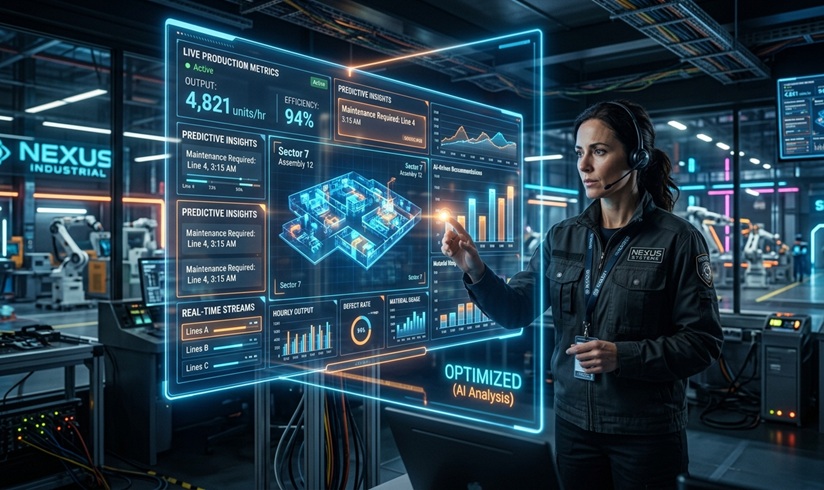
For manufacturing leaders, the benefits of AI in manufacturing go far beyond automation. AI systems analyse production data, optimise factory operations, predict equipment failures, and help businesses make smarter decisions.
Industry research shows that AI implementation in manufacturing can increase production throughput by around 20% and significantly reduce operational costs and downtime.
Below are the most important benefits that explain why manufacturers are investing heavily in AI technologies.
Higher Factory Productivity
One of the biggest benefits of AI in manufacturing is improved productivity across the factory floor.
AI systems analyse real-time production data from machines, sensors, robotics, and software systems. These insights allow manufacturers to optimise workflows, reduce idle time, and increase machine utilisation.
For example, AI-powered scheduling systems can automatically adjust production plans to remove bottlenecks and improve factory efficiency.
Research shows that:
- AI integration can increase production throughput by about 20%.
- AI-driven robotics can perform repetitive tasks up to 40% faster than human workers.
With smarter automation and data analysis, factories can produce more products without increasing labour or infrastructure.
Reduced Machine Downtime
Machine breakdowns can stop production and cause major financial losses. AI helps prevent these disruptions through predictive maintenance.
AI systems monitor machine data such as vibration patterns, temperature, pressure, and operating behaviour. By analysing this information, AI can detect early warning signs of failure.
Studies show that:
- AI predictive maintenance can reduce equipment downtime by up to 50%.
- Some implementations have achieved 70–80% reduction in unplanned downtime.
By fixing issues before machines fail, manufacturers keep production running smoothly and avoid costly delays.
Improved Product Quality Control
Maintaining consistent product quality is essential for manufacturing businesses. AI plays a major role in improving quality inspection.
AI-powered computer vision systems use cameras and machine learning to inspect products during production. These systems detect defects instantly and ensure only high-quality products move forward.
According to industry data:
- AI-powered inspection systems can detect defects with over 97–99% accuracy.
- 67% of manufacturers report improved quality control after implementing AI-based defect detection systems.
Better quality control reduces product defects, improves customer satisfaction, and lowers manufacturing waste.
Faster Production Cycles
Another important benefit of AI in manufacturing is faster production cycles.
AI helps streamline manufacturing processes by optimising machine settings, automating repetitive tasks, and improving production scheduling.
For example, AI-powered systems can automatically adjust machine parameters based on production conditions, ensuring optimal performance.
Industry reports show that AI-driven process optimisation can increase overall equipment effectiveness (OEE) by 25–30%, enabling faster and more efficient production cycles.
This allows manufacturers to produce goods more quickly while maintaining high quality standards.
More Accurate Demand Forecasting
Manufacturers must balance production with market demand. Overproduction leads to excess inventory, while underproduction causes stock shortages.
AI helps solve this problem through advanced demand forecasting.
AI systems analyse:
- Historical sales data
- Market trends
- Supply chain information
- Seasonal patterns
Using this data, AI models can predict demand more accurately than traditional forecasting methods.
Research shows that AI-driven demand forecasting can improve forecasting accuracy to around 85%, helping manufacturers plan production more effectively.
This allows businesses to respond faster to changing market conditions.
Optimised Inventory Management
Inventory management is a major challenge for manufacturers. Holding too much stock increases storage costs, while insufficient stock can disrupt production.
AI helps optimise inventory by predicting demand, analysing supply chain data, and recommending optimal stock levels.
Studies show that AI-based supply chain optimisation can reduce inventory holding costs by around 25%.
With AI-powered inventory planning, manufacturers can maintain the right balance between supply and demand.
Lower Operational Costs
Cost reduction is one of the strongest drivers behind AI adoption in manufacturing.
AI reduces operational costs in several ways:
- Automating repetitive processes
- Reducing product defects
- Minimising raw material waste
- Lowering maintenance expenses
- Improving energy efficiency
Industry research shows that factories implementing AI solutions often achieve an average return on investment (ROI) of about 3.5 times within two years.
These financial benefits make AI a highly attractive investment for manufacturing companies.
Increased Worker Safety
AI technologies also improve safety for factory workers.
AI-powered monitoring systems can detect hazardous conditions, unsafe machine behaviour, and potential equipment failures before accidents occur.
For example:
- Computer vision systems can identify unsafe actions in real time.
- AI sensors can monitor equipment overheating or abnormal vibrations.
- Predictive maintenance prevents dangerous machine failures.
By identifying risks early, AI helps create safer working environments and reduces workplace accidents.
Real-World AI Applications in Manufacturing
Artificial Intelligence (AI) is transforming the manufacturing sector by making factories smarter, faster, and more efficient. Modern manufacturers generate massive amounts of data from machines, sensors, production lines, and supply chains. AI technologies analyse this data to identify patterns, predict problems, and improve decision-making.
According to industry research, around 45% of manufacturing companies have already integrated AI into their production processes, and many more are rapidly adopting it to stay competitive. AI adoption helps manufacturers reduce downtime, improve product quality, and increase productivity across operations.
In addition, the global AI in manufacturing market is expected to grow to more than $16–18 billion within the next few years, driven by the rise of smart factories and Industry 4.0 technologies.
Below are the most important AI use cases in manufacturing that demonstrate the real operational value of AI in modern production environments.
Predictive Maintenance Systems
One of the most impactful AI use cases in manufacturing is predictive maintenance. Traditionally, manufacturing equipment is repaired only after it fails or serviced at fixed intervals. Both approaches can cause unnecessary downtime or unexpected machine breakdowns.
AI-powered predictive maintenance uses machine learning algorithms and sensor data to detect early signs of equipment failure. Sensors installed on machines collect data such as:
- Vibration levels
- Temperature changes
- Pressure readings
- Acoustic signals
- Energy consumption
AI systems continuously analyse this data to identify unusual patterns that indicate potential problems. When the system detects abnormal behaviour, it alerts maintenance teams before a machine fails.
This proactive approach significantly improves operational reliability.
Research shows that AI predictive maintenance can reduce unplanned downtime by up to 30–60% and cut maintenance costs by around 25–30%.
Other studies also show that predictive maintenance can increase equipment lifespan by 20–30% and improve asset utilisation across factories.
For manufacturers, this means:
- Fewer production interruptions
- Lower maintenance costs
- Higher equipment reliability
- Improved overall equipment effectiveness (OEE)
Predictive maintenance is now widely used in industries such as automotive manufacturing, aerospace production, electronics assembly, and heavy machinery.
AI-Powered Quality Inspection
Quality control is essential in manufacturing to ensure that every product meets strict standards. Traditionally, human inspectors visually check products for defects. However, manual inspection is often slow, inconsistent, and prone to human error.
AI-powered computer vision systems are transforming quality inspection by automating this process.
These systems use high-resolution cameras combined with deep learning algorithms to analyse product images on the production line. The AI system is trained using thousands of product images to recognise defects such as:
- Surface scratches
- Cracks and dents
- Incorrect assembly
- Missing components
- Shape or size inconsistencies
Once trained, the system can inspect thousands of products per minute with extremely high accuracy.
Research indicates that AI-based visual inspection can detect defects with up to 90% or higher accuracy, significantly improving manufacturing quality control.
In addition, 67% of manufacturers report improved quality control after implementing AI-driven defect detection systems.
Benefits of AI-powered quality inspection include:
- Faster inspection speeds
- Higher detection accuracy
- Reduced production waste
- Improved product consistency
This technology is widely used in industries such as electronics manufacturing, automotive assembly, semiconductor production, and pharmaceutical manufacturing.
Intelligent Production Planning
Manufacturing operations involve complex decisions about scheduling machines, allocating workers, managing raw materials, and meeting changing customer demand. Traditional planning systems often struggle to handle these variables efficiently.
AI-driven intelligent production planning helps manufacturers optimise their production schedules using advanced data analysis.
AI systems analyse multiple datasets, including:
- Historical sales data
- Demand forecasts
- Machine capacity
- Workforce availability
- Raw material supply
Using machine learning models, AI can generate the most efficient production schedule while balancing demand and available resources.
For example, AI can automatically adjust production schedules when:
- Customer demand suddenly increases
- A machine stops working
- Raw materials arrive late
- Labour availability changes
Studies show that AI-based process optimisation can increase overall equipment effectiveness by up to 15% and significantly improve production efficiency.
Manufacturers using AI for production planning also benefit from:
- Reduced production bottlenecks
- Improved machine utilisation
- Faster response to market demand
- Lower operational costs
As a result, intelligent production planning is becoming a key component of smart manufacturing strategies.
AI-Driven Supply Chain Optimisation
Manufacturing supply chains are complex networks that include suppliers, warehouses, logistics providers, and distribution systems. Managing these networks efficiently is critical for maintaining smooth production operations.
AI is helping manufacturers optimise their supply chains by analysing large amounts of operational data and predicting potential disruptions.
AI systems can perform several important supply chain functions, including:
- Predicting demand fluctuations
- Optimising inventory levels
- Identifying supply chain risks
- Improving supplier performance monitoring
- Automating procurement decisions
Research shows that 85% of manufacturers report improved supply chain visibility after implementing AI technologies.
AI-driven forecasting models can also reduce excess inventory while ensuring that raw materials are available when needed.
This leads to:
- Lower storage costs
- Reduced supply shortages
- Faster delivery times
- More efficient logistics operations
Supply chain optimisation is especially important for industries with global production networks, such as electronics, automotive, and consumer goods manufacturing.
Smart Robotics and Automation
Another powerful example of AI use cases in manufacturing is smart robotics and automation.
Traditional industrial robots follow fixed instructions and repeat the same tasks continuously. However, AI-powered robots are much more flexible because they can learn from data and adapt to new situations.
These intelligent robots use technologies such as:
- Machine learning
- Computer vision
- Sensor-based perception
- Real-time data analysis
AI-powered robots can perform complex tasks with high precision, including:
- Precision assembly
- Welding and machining
- Packaging and palletising
- Material handling
- Collaborative work with human workers (cobots)
Studies show that AI-enabled robots can perform repetitive manufacturing tasks up to 40% faster than human workers, significantly increasing production efficiency.
In many modern factories, robots work alongside human employees to improve productivity and workplace safety.
Smart robotics also allows manufacturers to handle product customisation and small-batch production more efficiently, which is increasingly important in today’s market.
How Generative AI Is Transforming Manufacturing
Generative AI in manufacturing is changing how products are designed, tested, and produced. In simple terms, generative AI is a type of artificial intelligence that can create new ideas, designs, simulations, and plans by analysing large amounts of data. Instead of engineers starting from scratch, AI can generate multiple solutions in seconds.
For manufacturers, this means faster innovation, lower costs, and better product quality. By using generative AI tools, companies can explore thousands of design possibilities, optimise production processes, and automate complex engineering tasks. As a result, product development cycles become shorter and more efficient.
Below are some of the most important ways generative AI in manufacturing is transforming the industry.
Product Design Optimisation
One of the biggest advantages of generative AI for manufacturing is product design optimisation. Traditionally, engineers design a product based on their experience and then test different versions to improve it. This process can take weeks or even months.
Generative AI changes this completely. Engineers simply provide the AI with requirements such as:
- Material type
- Weight limits
- Strength requirements
- Cost targets
- Manufacturing constraints
The AI then generates multiple design options automatically. Some of these designs may even be solutions that human engineers would not normally consider.
For example, generative AI can create lighter yet stronger components by using advanced geometry and structural optimisation. This is especially useful in industries like automotive, aerospace, and electronics where weight reduction is critical.
Because of this, generative AI in product design helps manufacturers build better products faster while reducing material waste and production costs.
Rapid Prototype Generation
Prototyping is an essential part of manufacturing. Before a product goes into full production, companies must test prototypes to ensure performance, safety, and reliability.
Generative AI significantly improves rapid prototype generation by automatically creating different prototype models based on design inputs. Engineers can quickly evaluate these designs without manually building each version.
When combined with 3D printing and digital modelling, generative AI can generate and test multiple prototypes within hours rather than weeks.
This leads to several benefits:
- Faster product development cycles
- Reduced prototype costs
- More design experimentation
- Higher innovation potential
As a result, generative AI in manufacturing allows companies to move from concept to market much faster than traditional methods.
Automated Production Planning
Production planning is another area where generative AI for manufacturing operations provides major advantages. Planning production schedules, resource allocation, and workflow optimisation is complex and often time-consuming.
Generative AI can analyse:
- Production capacity
- Machine availability
- Supply chain data
- Workforce scheduling
- Demand forecasts
Using this information, the AI automatically generates optimised production plans that maximise efficiency and minimise downtime.
For example, the system can suggest the best sequence of manufacturing steps, adjust production schedules based on real-time demand, and identify potential bottlenecks before they happen.
This level of automation helps manufacturers achieve:
- Higher operational efficiency
- Reduced production delays
- Better resource utilisation
- Lower operational costs
Therefore, automated production planning powered by generative AI is becoming a key driver of smart manufacturing systems.
AI-Generated Engineering Simulations
Engineering simulations are essential for testing product performance before manufacturing begins. Traditionally, simulations require significant computing resources and expert input.
With AI-generated engineering simulations, generative AI can automatically create and run simulations based on design parameters. It can evaluate factors such as:
- Structural strength
- Heat resistance
- Material performance
- Stress and load behaviour
- Fluid dynamics
The AI then analyses the results and suggests design improvements.
This approach allows engineers to test thousands of design variations quickly, something that would be impossible using manual simulation processes.
As a result, generative AI in manufacturing improves product reliability while reducing the time needed for engineering validation.
Smart Documentation and Reporting
Manufacturing generates a huge amount of documentation, including technical manuals, production reports, compliance records, and maintenance instructions.
Generative AI can automatically create smart documentation and reporting by analysing operational data and engineering information.
For example, AI can:
- Generate production reports in real time
- Create technical documentation for new products
- Summarise machine performance data
- Produce compliance and quality reports
- Generate maintenance guides for technicians
This reduces the administrative workload for engineers and managers while ensuring accurate and consistent documentation across manufacturing systems.
In addition, AI-generated reports make it easier for teams to understand complex data and make informed decisions.
How Generative AI Accelerates Innovation and Product Development
The biggest impact of generative AI in manufacturing is its ability to accelerate innovation. By automating design exploration, simulation, and planning, AI allows engineers to focus more on creativity and problem solving.
Instead of spending weeks testing a few ideas, manufacturers can explore thousands of design possibilities in a short time. This leads to better products and faster improvements.
Generative AI also supports data-driven product development, where decisions are based on insights from simulations, production data, and market demand.
Key advantages include:
- Faster product design cycles
- Reduced development costs
- Improved product performance
- Increased design creativity
- Shorter time-to-market
In today’s competitive market, companies that adopt generative AI for manufacturing innovation gain a strong advantage. They can develop new products faster, respond quickly to customer needs, and continuously improve their production processes.
As generative AI technology continues to evolve, it will become a core component of next-generation smart manufacturing and Industry 4.0 systems.
Advanced AI & Machine Learning Services by Cor Advance Solutions
Modern manufacturing is becoming more digital, data-driven, and intelligent. To stay competitive, factories need advanced technology that can improve efficiency, reduce downtime, and support smarter decision-making. This is where AI manufacturing consulting becomes essential.
Cor Advance Solutions provides specialised AI and machine learning services for manufacturing companies that want to adopt intelligent technologies across their operations. The company combines strong technical AI expertise with deep understanding of real manufacturing challenges.
Instead of offering generic technology solutions, Cor Advance Solutions focuses on building practical, scalable, and reliable AI systems that work within existing factory environments. From automation and predictive intelligence to custom AI model development, these services help manufacturers unlock the full potential of artificial intelligence.
By using modern AI solutions for manufacturing, companies can optimise production processes, improve operational efficiency, and accelerate their digital transformation journey.
AI Transformation & Intelligent Automation for Manufacturing
For many factories, adopting AI can feel complex. Machines, workflows, and legacy systems must all work together smoothly. This is why AI manufacturing consulting services are critical for successful transformation.
Cor Advance Solutions helps manufacturers introduce AI transformation and intelligent automation in a structured and practical way. The goal is to improve factory operations without disrupting existing processes.
Workflow Automation
Manufacturing operations often involve repetitive manual tasks such as data entry, reporting, quality checks, and production tracking.
With AI-powered workflow automation, these tasks can be automated using intelligent systems that analyse data and trigger actions automatically.
Benefits include:
- Faster operational processes
- Reduced human errors
- Improved productivity
- Lower operational costs
By implementing manufacturing process automation, factories can free their teams to focus on higher-value work such as innovation and problem solving.
Smart Factory Optimisation
A smart factory uses connected machines, sensors, and AI systems to optimise production in real time.
Cor Advance Solutions helps manufacturers build AI-powered smart factory environments where machines and systems continuously analyse operational data. This allows factories to identify inefficiencies, monitor performance, and improve production flow.
For example, AI systems can detect bottlenecks in the production line and recommend adjustments that improve output and reduce delays.
This level of optimisation leads to:
- Higher production efficiency
- Better resource utilisation
- Reduced downtime
- Improved product quality
AI-Driven Operational Intelligence
Manufacturers collect huge amounts of operational data from machines, sensors, and enterprise systems. However, turning this data into meaningful insights is often difficult.
Cor Advance Solutions builds AI-driven operational intelligence systems that analyse factory data and provide clear, actionable insights for managers and engineers.
These systems help teams understand:
- Machine performance
- Production efficiency
- Quality control issues
- Energy usage patterns
With real-time insights, manufacturers can make faster and smarter decisions that improve overall performance.
Manufacturing Process Automation
Manufacturing processes can be complex and involve many interconnected steps. AI helps automate these processes by analysing production data and continuously improving workflows.
Through AI-powered manufacturing process automation, factories can automatically adjust production parameters, optimise machine usage, and improve process consistency.
This enables manufacturers to achieve more reliable and scalable operations while reducing manual intervention.
Overall, this service helps factories move towards full digital transformation in manufacturing, where intelligent systems support every stage of production.
Predictive Intelligence & Decision Optimisation for Factories
One of the most powerful uses of AI in manufacturing is predictive intelligence. Instead of reacting to problems after they occur, factories can use AI to predict and prevent issues before they happen.
Cor Advance Solutions provides advanced predictive analytics solutions for manufacturers that help improve planning, maintenance, and decision-making.
Predictive Maintenance Systems
Machine failures can cause costly downtime and production delays. Traditional maintenance schedules often rely on fixed time intervals, which may not reflect the actual condition of equipment.
With predictive maintenance systems, AI analyses machine sensor data to detect early signs of wear or failure.
These systems monitor factors such as:
- Temperature changes
- Vibration patterns
- Pressure levels
- Operational performance
When unusual behaviour is detected, the system alerts engineers before a breakdown occurs.
This leads to:
- Reduced equipment downtime
- Lower maintenance costs
- Longer machine lifespan
- Improved production reliability
Demand Forecasting Models
Manufacturers must constantly balance production with customer demand. Overproduction leads to wasted resources, while underproduction results in lost sales.
Cor Advance Solutions develops AI-powered demand forecasting models that analyse historical sales data, market trends, and supply chain information.
These models help manufacturers predict future demand more accurately, allowing them to plan production levels efficiently.
Benefits include:
- Better inventory management
- Reduced stock shortages
- Improved supply chain coordination
- Higher customer satisfaction
Production Optimisation Algorithms
AI can also optimise the entire production process by analysing data from multiple systems within the factory.
Cor Advance Solutions develops production optimisation algorithms that identify the most efficient ways to run manufacturing operations.
These algorithms consider factors such as:
- Machine capacity
- Production schedules
- Material availability
- Workforce allocation
The result is a more balanced and efficient production system that maximises output while reducing waste.
Intelligent Decision Support Tools
Factory managers often need to make complex decisions quickly. AI-powered intelligent decision support tools help by analysing operational data and presenting clear recommendations.
For example, the system may suggest:
- Adjusting production schedules
- Reallocating resources
- Modifying maintenance plans
- Optimising supply chain strategies
These tools allow leaders to make data-driven decisions with greater confidence, improving overall factory performance.
Custom AI Model Engineering & ModelOps for Industrial Applications
Every manufacturing environment is unique. Machines, processes, and operational challenges vary from one factory to another. Because of this, many companies require custom AI solutions rather than off-the-shelf tools.
Cor Advance Solutions provides specialised AI manufacturing consulting and custom AI model engineering services designed specifically for industrial applications.
Custom Machine Learning Model Development
The team develops custom machine learning models tailored to each manufacturer’s specific needs. These models can analyse factory data, detect patterns, and generate insights that improve operations.
Common applications include:
- Quality inspection systems
- Equipment performance analysis
- Production forecasting
- Process optimisation
By building tailored solutions, manufacturers gain AI systems that align perfectly with their operational goals.
Production-Grade AI Systems
Many AI prototypes work well in testing environments but struggle in real-world production settings.
Cor Advance Solutions focuses on building production-grade AI systems that are reliable, scalable, and secure. These systems are designed to handle large volumes of industrial data while maintaining high performance.
This ensures that AI solutions can operate smoothly across multiple machines, production lines, and factory locations.
Model Deployment and Lifecycle Management
Developing an AI model is only the first step. It must also be deployed, managed, and updated over time.
Through advanced ModelOps practices, Cor Advance Solutions manages the entire lifecycle of AI systems. This includes:
- Model deployment in production environments
- Integration with factory systems
- Version control and updates
- Performance monitoring
This structured approach ensures that AI systems remain effective as factory conditions change.
Continuous AI Performance Monitoring
AI models must be continuously monitored to ensure they maintain accuracy and reliability.
Cor Advance Solutions provides ongoing AI performance monitoring to track how models behave in real-world manufacturing environments.
If performance drops due to changing data patterns, the models can be retrained and improved. This keeps the AI system aligned with operational needs.
Empowering the Future of Intelligent Manufacturing
By combining AI manufacturing consulting, predictive analytics, intelligent automation, and custom AI model engineering, Cor Advance Solutions helps factories transform into modern data-driven manufacturing environments.
These advanced AI services enable manufacturers to:
- Improve operational efficiency
- Reduce production risks
- Make smarter decisions using data
- Deploy reliable AI systems across factory operations
- Accelerate digital transformation in manufacturing
As the manufacturing industry continues to evolve, companies that invest in advanced AI and machine learning solutions will be better prepared for the future of intelligent and connected factories.
Cor Advance Solutions’ Stepwise Approach to AI Implementation
Adopting artificial intelligence in manufacturing requires more than just installing new software. Successful implementation needs a clear strategy, structured planning, and deep technical expertise. This is why many companies rely on AI manufacturing consulting to guide them through the process.
Cor Advance Solutions follows a stepwise and practical approach to AI implementation in manufacturing. This method ensures that AI systems are reliable, scalable, and aligned with real factory needs. Each step focuses on turning raw data into intelligent systems that improve production efficiency, reduce operational risks, and support smarter decision-making.
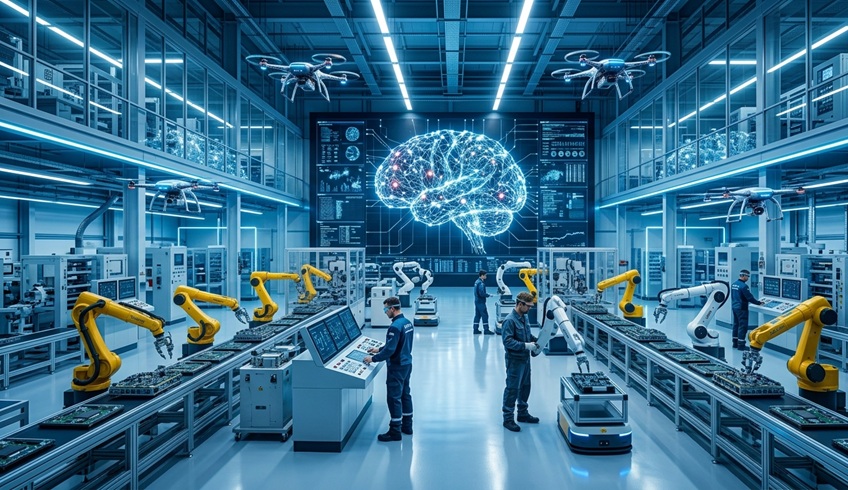
Below is the structured process used by Cor Advance Solutions to help manufacturers successfully adopt AI.
Step 1 – Problem Definition
The first step in any AI implementation for manufacturing is understanding the exact problem that needs to be solved.
Many factories generate large amounts of data but are not always sure how AI can deliver real value. Cor Advance Solutions begins by analysing manufacturing operations to identify specific challenges where artificial intelligence can make a measurable impact.
Common manufacturing problems include:
- Unexpected machine downtime
- Production inefficiencies
- Quality control issues
- Supply chain delays
- High operational costs
By clearly defining these challenges, the team ensures that AI solutions are focused, practical, and aligned with business goals. This step is critical because a well-defined problem leads to more accurate and effective AI models.
Step 2 – Data Strategy & Collection
Artificial intelligence depends heavily on high-quality data. Without the right data, even the most advanced AI systems cannot perform effectively.
During this stage, Cor Advance Solutions develops a comprehensive data strategy for manufacturing AI systems. The goal is to gather the relevant information required to train machine learning models.
Data is collected from various manufacturing sources such as:
- Machine sensors
- Production equipment
- Manufacturing execution systems (MES)
- Enterprise resource planning (ERP) systems
- Quality inspection systems
- Operational logs and reports
This step ensures that the AI solution has access to accurate and relevant manufacturing data that reflects real factory conditions.
Step 3 – Data Preparation
Raw industrial data is often incomplete, inconsistent, or unstructured. Before it can be used in AI systems, the data must be properly prepared.
Cor Advance Solutions performs data preparation and preprocessing for manufacturing datasets to ensure accuracy and reliability.
This process includes:
- Cleaning incorrect or missing data
- Removing duplicate records
- Structuring data into usable formats
- Labelling datasets for machine learning training
- Standardising data across different systems
Proper data preparation for AI in manufacturing is essential because well-organised data significantly improves the performance of machine learning models.
Step 4 – Model Development
Once the data is ready, the next step is building the AI models.
Cor Advance Solutions develops custom machine learning models designed specifically for manufacturing environments. These models analyse patterns in operational data and generate insights that improve factory performance.
Depending on the problem being solved, models may be designed for:
- Predictive maintenance
- Production forecasting
- Quality defect detection
- Process optimisation
- Demand prediction
By creating tailored AI models for manufacturing, the team ensures that the solutions directly address the unique challenges faced by each factory.
Step 5 – Model Training & Optimisation
After the models are built, they must be trained using historical and real-time manufacturing data.
During the model training phase, machine learning algorithms learn to recognise patterns and relationships within the data. The models gradually improve their ability to make predictions or generate insights.
Cor Advance Solutions then performs AI model optimisation to improve:
- Prediction accuracy
- Processing speed
- Model efficiency
- Scalability for large datasets
This stage ensures that the AI systems deliver high-performance results suitable for real industrial environments.
Step 6 – Validation & Testing
Before deploying AI systems in live manufacturing environments, they must be carefully tested.
Cor Advance Solutions conducts extensive validation and testing of machine learning models to ensure reliability and stability.
This step verifies that the AI system can:
- Produce accurate predictions
- Handle real-world production data
- Operate consistently under different conditions
- Integrate with existing factory systems
Industrial environments require high reliability, so testing ensures that the AI system meets strict operational standards before deployment.
Step 7 – AI Deployment
Once the AI models are validated, they are deployed into the factory environment.
Cor Advance Solutions integrates AI systems with existing manufacturing infrastructure, including machines, production software, and monitoring systems.
During AI deployment in manufacturing, the system may be connected to:
- Factory equipment and sensors
- Production management platforms
- Industrial control systems
- Data dashboards for engineers and managers
This integration allows AI models to analyse real-time production data and provide actionable insights directly within factory operations.
Step 8 – Monitoring & Maintenance
AI systems are not static tools. They must be continuously monitored to ensure they maintain high performance over time.
Cor Advance Solutions provides ongoing AI monitoring and maintenance services for manufacturing systems.
This includes:
- Tracking model accuracy and performance
- Identifying performance drift
- Updating models when production conditions change
- Maintaining system reliability and stability
Continuous monitoring ensures that AI solutions remain effective even as factory operations evolve.
Step 9 – Continuous Improvement & Scaling
The final stage focuses on expanding AI capabilities across the organisation.
Once the initial AI systems prove successful, Cor Advance Solutions helps manufacturers scale AI across multiple processes, production lines, and factory locations.
This stage includes:
- Improving existing AI models
- Developing additional AI solutions
- Expanding predictive analytics capabilities
- Integrating AI across supply chain and operations
Through continuous improvement and scaling, manufacturers can build a fully intelligent production ecosystem where AI supports decision-making across the entire organisation.
Building a Strong Foundation for AI in Manufacturing
By following this structured AI implementation framework, Cor Advance Solutions ensures that manufacturers can adopt artificial intelligence with confidence.
This step-by-step approach to AI manufacturing consulting helps companies move from raw data to fully operational AI systems that deliver measurable business value.
The result is a smarter, more efficient, and more resilient manufacturing environment where AI continuously improves productivity, reduces downtime, and supports long-term innovation.
Challenges Manufacturers Face When Adopting AI
Artificial intelligence is transforming modern factories, but many organisations still struggle with AI adoption in manufacturing. While the benefits of AI are clear—such as improved productivity, predictive insights, and smarter automation—the journey to implementation is not always simple.
Manufacturing environments are complex. Many factories operate with older equipment, disconnected systems, and large volumes of unstructured data. Without the right strategy and technical support, introducing AI can become difficult and risky.
This is why many companies seek AI manufacturing consulting services to guide them through the process. Cor Advance Solutions helps manufacturers overcome common barriers and successfully deploy AI-powered manufacturing solutions.
Below are the main challenges manufacturers face when adopting artificial intelligence and how these challenges can be addressed.
Legacy Manufacturing Systems
One of the biggest obstacles in AI adoption in manufacturing is the presence of legacy systems. Many factories still rely on older machines and software that were not designed to work with modern AI technologies.
These systems often operate in isolation, meaning they cannot easily share data with other platforms. As a result, manufacturers may struggle to connect AI tools with existing production infrastructure.
Common issues include:
- Outdated machinery without digital connectivity
- Disconnected operational systems
- Limited compatibility with modern software platforms
Cor Advance Solutions helps manufacturers bridge the gap between legacy manufacturing systems and modern AI platforms. Their experts design integration solutions that allow older equipment to communicate with intelligent systems through sensors, data connectors, and industrial software integration.
This approach allows factories to modernise operations without replacing their entire infrastructure, which saves both time and investment.
Limited Data Infrastructure
Artificial intelligence relies on large amounts of high-quality data. However, many manufacturing companies do not yet have the necessary data infrastructure for AI in manufacturing.
In some cases, production data may exist but is scattered across different systems. In other cases, factories may lack proper data collection tools such as sensors or monitoring systems.
Challenges related to data infrastructure often include:
- Incomplete machine data
- Inconsistent data formats
- Lack of real-time data collection
- Poor data storage and management systems
Cor Advance Solutions helps manufacturers build strong data foundations for AI-driven manufacturing. This includes setting up data pipelines, connecting production systems, and implementing secure data platforms.
By creating a reliable industrial data ecosystem, manufacturers can ensure that AI models receive the accurate information needed to generate valuable insights.
Integration Complexity
Integrating artificial intelligence into a manufacturing environment can be technically complex. Factories often use multiple systems such as production management software, quality control platforms, and supply chain tools.
Ensuring that AI systems work smoothly with these platforms requires careful planning and technical expertise.
Common integration challenges include:
- Connecting AI with factory equipment
- Integrating AI models with enterprise systems
- Managing data flow between platforms
- Ensuring real-time operational insights
Cor Advance Solutions specialises in AI system integration for manufacturing environments. Their team ensures that AI tools connect seamlessly with existing factory technologies.
By building well-designed integration frameworks, they enable manufacturers to create fully connected smart factory systems where machines, data, and AI models work together efficiently.
Workforce Training
Another important challenge in AI adoption in manufacturing is workforce readiness. Employees may feel uncertain about new technologies or lack the skills needed to work with AI-powered systems.
Without proper training, even the best AI solutions may not be fully utilised.
Workforce challenges may include:
- Limited understanding of AI technologies
- Lack of technical skills for data-driven operations
- Concerns about automation replacing human roles
Cor Advance Solutions supports manufacturers by providing training and knowledge transfer programmes. These programmes help employees understand how AI systems work and how they can support daily operations.
The goal is not to replace human expertise but to enhance workforce capabilities using intelligent tools. When employees understand AI systems, they can use them more effectively to improve productivity and decision-making.
Security and Compliance Requirements
Manufacturing companies must also consider data security and regulatory compliance when adopting AI technologies. Industrial environments often handle sensitive production data, intellectual property, and operational information.
AI systems must be designed with strong security measures to protect this data.
Key concerns often include:
- Protecting industrial data from cyber threats
- Ensuring secure AI system deployment
- Meeting industry compliance standards
- Maintaining data privacy and governance
Cor Advance Solutions builds secure and compliant AI systems for manufacturing organisations. Their solutions follow best practices in cybersecurity, data protection, and industrial regulations.
This ensures that manufacturers can confidently deploy AI while maintaining high standards of operational security and compliance.
How Cor Advance Solutions Helps Manufacturers Overcome AI Adoption Barriers
Successfully implementing AI requires the right mix of technology expertise, manufacturing knowledge, and strategic planning. Cor Advance Solutions provides comprehensive AI manufacturing consulting services that guide companies through every stage of the transformation process.
Their approach focuses on:
- Assessing manufacturing readiness for AI
- Building scalable data infrastructure
- Integrating AI with existing factory systems
- Training teams to work with AI tools
- Ensuring secure and compliant deployment
By addressing both technical and operational challenges, Cor Advance Solutions helps manufacturers reduce risks and accelerate AI adoption.
Enabling a Smooth Transition to AI-Powered Manufacturing
While AI adoption in manufacturing presents several challenges, these obstacles can be successfully managed with the right strategy and expert guidance.
With structured implementation, strong data infrastructure, and proper workforce support, manufacturers can unlock the full benefits of artificial intelligence. These benefits include smarter production planning, improved machine performance, and better operational insights.
Cor Advance Solutions plays a key role in helping factories move towards intelligent, connected, and data-driven manufacturing environments, ensuring that AI becomes a practical and valuable tool for long-term industrial growth.
The Future of AI-Driven Manufacturing
The future of AI in manufacturing is shaping a new era of intelligent, connected, and highly automated factories. Artificial intelligence is no longer an experimental technology in industry; it is rapidly becoming the foundation of smart manufacturing and Industry 4.0 transformation.
Recent global studies show that around 77% of manufacturers are already using AI technologies in some form, and adoption continues to increase every year.
At the same time, the global AI in manufacturing market is expected to grow from about $7 billion in 2025 to nearly $35.8 billion by 2030, showing how quickly industries are investing in intelligent production systems.
This rapid growth is driven by several emerging technologies that will define the future of AI-powered manufacturing.
Autonomous Factories
One of the most important developments in the future of AI in manufacturing is the rise of autonomous factories. These are production environments where machines, robots, and AI systems work together to manage manufacturing operations with minimal human intervention.
Autonomous factories rely on technologies such as:
- Artificial intelligence
- Industrial robots
- Industrial Internet of Things (IIoT) sensors
- Real-time data analytics
These technologies allow machines to monitor their own performance, detect faults automatically, and adjust production settings without human input.
AI is already delivering measurable improvements. Research shows that AI-powered automation and process optimisation can reduce manufacturing downtime by about 23% on average.
Autonomous factories will also support:
- Self-optimising production lines
- Automated quality inspection
- Real-time maintenance scheduling
- Continuous 24-hour production
As robotics and AI continue to evolve, autonomous factories will become a central feature of next-generation smart manufacturing systems.
Digital Twins for Manufacturing
Another major trend shaping the future of AI-driven manufacturing is the use of digital twins.
A digital twin is a virtual model of a physical machine, product, or entire factory. Using real-time data from sensors and AI algorithms, manufacturers can simulate operations and test improvements before applying them in the real production environment.
Digital twins help manufacturers:
- Test product designs digitally
- predict equipment failures
- optimise production processes
- improve operational efficiency
This technology is particularly valuable in complex industries such as automotive, aerospace, and electronics, where even small design improvements can significantly affect performance and cost.
Digital twin systems combined with AI allow manufacturers to create virtual factories, where engineers can simulate production changes and predict outcomes before implementing them in real life.
AI-Driven Supply Chain Ecosystems
Modern manufacturing depends heavily on global supply chains. Managing suppliers, logistics, inventory, and production planning is extremely complex. AI is transforming this process by creating AI-driven supply chain ecosystems.
Artificial intelligence can analyse large datasets from suppliers, transportation systems, and market demand patterns. Using this information, AI models can predict disruptions, optimise logistics, and recommend better sourcing strategies.
Recent research shows that 41% of large manufacturers have already integrated AI into their supply chain management systems.
AI-powered supply chain systems can:
- predict demand fluctuations
- optimise inventory levels
- detect supply chain risks
- automate procurement decisions
These capabilities help manufacturers create more resilient and efficient global supply networks.
Hyper-Automation in Factories
Another key development in the future of AI in manufacturing is hyper-automation. Hyper-automation combines multiple technologies—including AI, robotics, machine learning, and advanced analytics—to automate as many industrial processes as possible.
Instead of automating individual tasks, hyper-automation creates fully integrated intelligent production systems.
Manufacturers are already applying AI to several automation processes. Studies show that 75% of companies use AI to optimise production, inventory management, cost control, and quality processes.
Hyper-automation enables factories to automate tasks such as:
- production scheduling
- quality inspection
- machine monitoring
- predictive maintenance
- energy management
This leads to faster production, lower operational costs, and more consistent product quality.
Edge AI in Industrial Environments
Edge AI is another technology that will strongly influence the future of AI-powered manufacturing.
Traditional AI systems often process data in cloud servers. However, industrial environments require extremely fast decision-making. Edge AI solves this problem by running AI algorithms directly on machines or local devices inside the factory.
This allows data to be processed instantly without sending it to remote servers.
Edge AI enables:
- real-time machine monitoring
- instant defect detection
- faster predictive maintenance
- low-latency automation systems
By analysing production data directly at the source, edge AI improves system reliability and ensures that AI systems can respond immediately to operational changes.
The Rapid Growth of AI Investment in Manufacturing
The increasing importance of AI is reflected in industry investment trends. Market research indicates that the global AI in manufacturing market could reach over $62 billion by 2032, growing at more than 35% annually.
This growth is driven by the demand for:
- intelligent automation
- predictive maintenance
- smart factory systems
- advanced robotics
- AI-powered supply chains
Another report highlights that 93% of manufacturing leaders believe AI will play a key role in future growth and innovation.
These numbers clearly show that AI is becoming one of the most important technologies in modern manufacturing.
Why Manufacturers Investing in AI Today Will Lead Tomorrow
The global manufacturing industry is entering a new phase where data, automation, and artificial intelligence work together to create intelligent production systems.
Manufacturers that invest in AI today gain several strategic advantages:
- faster product development
- better production efficiency
- stronger supply chain resilience
- improved predictive decision-making
- lower operational costs
At the same time, AI helps companies respond quickly to changing market demands and global competition.
The Next Generation of Smart Factories
The future of AI in manufacturing will be defined by fully connected industrial ecosystems. Autonomous factories, digital twins, edge AI, and hyper-automation will transform traditional production systems into intelligent, adaptive manufacturing environments.
Companies that adopt AI early will be better prepared to lead the next generation of smart factories, digital manufacturing platforms, and Industry 4.0 innovations.
In the coming decade, artificial intelligence will not just support manufacturing—it will become the core engine driving innovation, efficiency, and industrial growth worldwide.
Why Manufacturers Choose Cor Advance Solutions
In today’s competitive industrial world, manufacturers are looking for partners who can deliver real results with AI in manufacturing. Cor Advance Solutions has become a trusted choice because it combines deep technical expertise with practical, hands-on experience in factories.
They don’t just provide software—they help manufacturers turn data into intelligent automation and achieve measurable business growth. Here’s why companies choose Cor Advance Solutions.
Deep Expertise in AI and Machine Learning
Cor Advance Solutions has world-class knowledge in AI and machine learning. Their team understands the latest technologies and how to apply them in real manufacturing environments.
This expertise ensures that AI solutions are practical, reliable, and focused on results. Whether it’s predictive maintenance, production optimisation, or quality control, their AI models are designed to deliver measurable improvements.
Experience Building Industrial AI Solutions
Experience is crucial when implementing AI in complex industrial environments. Cor Advance Solutions has extensive experience delivering AI solutions for manufacturing operations across industries like automotive, electronics, and heavy machinery.
This experience allows them to understand factory workflows, operational challenges, and safety requirements, ensuring that AI systems work seamlessly with existing processes.
Custom AI Models Tailored to Manufacturing Operations
Every factory is different. Off-the-shelf AI tools often fail to meet the unique requirements of individual manufacturing operations.
Cor Advance Solutions builds custom AI models that match each manufacturer’s specific needs. These models can:
- Predict equipment failures before they happen
- Optimise production schedules and workflows
- Reduce energy and material waste
- Improve product quality
Custom models ensure that AI is aligned with real business goals and drives tangible value.
Scalable Enterprise Solutions
Many manufacturers operate across multiple plants and production lines. AI solutions must scale efficiently without losing performance or reliability.
Cor Advance Solutions designs enterprise-grade AI systems that can expand with your operations. Whether for a single production line or an entire global network, their solutions maintain security, stability, and high performance.
Scalable systems allow manufacturers to grow AI capabilities over time and continuously improve productivity.
End-to-End AI Consulting and Implementation
Cor Advance Solutions provides full-cycle AI consulting and implementation. From identifying opportunities and collecting data to building models, deploying systems, and monitoring performance, they manage the entire AI journey.
This approach ensures:
- Minimal disruption to existing operations
- Faster realisation of AI benefits
- Continuous improvement of AI systems
- Alignment with business goals and KPIs
Manufacturers get more than a tool—they get a long-term strategic partner.
Turning Data into Intelligent Automation and Business Growth
At the heart of Cor Advance Solutions’ value is the ability to transform factory data into actionable intelligence. Their AI systems enable manufacturers to:
- Automate repetitive and manual tasks
- Optimise production processes
- Predict maintenance needs
- Make data-driven operational decisions
The outcome is measurable business growth, including higher efficiency, reduced costs, improved product quality, and a stronger competitive edge.
Conclusion: AI Is the Future of Manufacturing
The future of manufacturing is clearly driven by artificial intelligence. Modern factories are no longer just about machines and workers—they are becoming intelligent, data-driven environments where AI plays a central role.
Key Takeaways:
- AI is transforming modern manufacturing operations by optimising production, reducing downtime, and improving quality.
- Smart manufacturers are investing in AI to increase efficiency, lower costs, and stay ahead in competitive markets.
- AI enables predictive insights, automation, and smarter factory management, helping companies make faster, data-driven decisions.
- Early adoption of AI provides a significant competitive advantage, positioning companies as leaders in innovation and operational excellence.
For manufacturers looking to modernise operations and boost productivity, AI manufacturing solutions with Cor Advance Solutions offer a practical and reliable path forward. Their expertise helps factories turn data into intelligent automation and measurable business growth.
Schedule a Free Consultation today to discover how AI can transform your manufacturing processes and prepare your factory for the future.
FAQs
Why are manufacturers investing in AI solutions in 2026?
Manufacturers are investing in AI solutions in 2026 to stay competitive in a fast-evolving digital landscape. AI enables real-time decision-making, automation, and predictive insights that improve productivity and reduce costs. With rising labor shortages and demand for customization, AI helps companies scale efficiently. It also supports smart factories and Industry 4.0 transformation, making operations more agile and data-driven.
How does AI improve efficiency in manufacturing operations?
AI improves manufacturing efficiency by automating repetitive tasks, optimizing production schedules, and analyzing large datasets in real time. It identifies bottlenecks, predicts machine failures, and ensures smooth workflow across the production line. AI-powered systems reduce manual intervention and increase speed and accuracy. As a result, manufacturers achieve higher output with fewer resources.
What are the key benefits of AI-powered manufacturing systems?
AI-powered manufacturing systems offer benefits like improved productivity, enhanced quality control, and reduced operational costs. They enable predictive maintenance, real-time monitoring, and smarter decision-making. AI also enhances supply chain visibility and demand forecasting. Overall, it helps manufacturers achieve higher efficiency, flexibility, and long-term profitability.
How does AI reduce human error in production processes?
AI reduces human error by automating critical tasks and using machine learning algorithms to ensure precision. Computer vision systems can detect defects that humans might miss, improving quality control. AI systems follow consistent rules without fatigue or distraction. This leads to more accurate production processes and fewer costly mistakes.
Can AI reduce operational costs in manufacturing?
Yes, AI significantly reduces operational costs by optimizing resource usage, minimizing waste, and automating labor-intensive tasks. It improves energy efficiency and streamlines supply chain operations. AI also reduces errors and rework, saving both time and money. Over time, these efficiencies lead to higher profit margins and cost savings.
Does AI help reduce downtime and maintenance costs?
AI helps reduce downtime through predictive maintenance by analyzing machine data to detect potential failures before they occur. This allows manufacturers to schedule maintenance proactively instead of reacting to breakdowns. As a result, unexpected downtime is minimized, and equipment lifespan is extended. This leads to lower maintenance costs and improved productivity.
Is AI worth the investment for traditional manufacturing businesses?
AI is worth the investment for traditional manufacturers as it modernizes operations and improves competitiveness. Even small-scale implementations can deliver significant ROI through efficiency gains and cost reduction. AI helps legacy businesses transition to smart manufacturing without complete system overhauls. In the long run, it ensures sustainability and growth.
Can AI integrate with existing ERP and MES systems?
Yes, modern AI solutions are designed to integrate seamlessly with existing ERP and MES systems. They use APIs and cloud-based platforms to connect with legacy infrastructure. This allows manufacturers to enhance their current systems without replacing them entirely. Integration enables better data flow, real-time insights, and improved decision-making.
How do I choose the best AI manufacturing solution provider?
To choose the best AI manufacturing solution provider, look for industry experience, proven case studies, and customized solutions. Evaluate their technical expertise, scalability, and integration capabilities. A reliable provider should offer ongoing support, clear ROI metrics, and transparent pricing. Always request a demo to assess real-world performance.
What should I look for in an AI consulting company?
When selecting an AI consulting company, focus on domain expertise, innovation capabilities, and a strong portfolio. They should understand your business goals and offer tailored AI strategies. Check for end-to-end services, including development, deployment, and support. A good consultant will also ensure data security, compliance, and measurable business outcomes.