
Key Highlights
- Artificial intelligence is transforming last mile delivery by tackling challenges like high operational costs and inefficiencies.
- AI Powered Last Mile Delivery Solutions for Ecommerce use smart route optimization to analyze real-time data and find the most efficient paths, reducing delivery times and fuel consumption.
- By using predictive analytics, businesses can forecast demand, manage resources better, and improve delivery accuracy.
- These advanced solutions significantly enhance customer satisfaction by providing precise delivery windows and real-time updates.
- Implementing AI helps lower operational costs, leading to substantial cost savings for e-commerce companies.
- The future of logistics includes autonomous vehicles, drones, and robotics, all powered by AI.
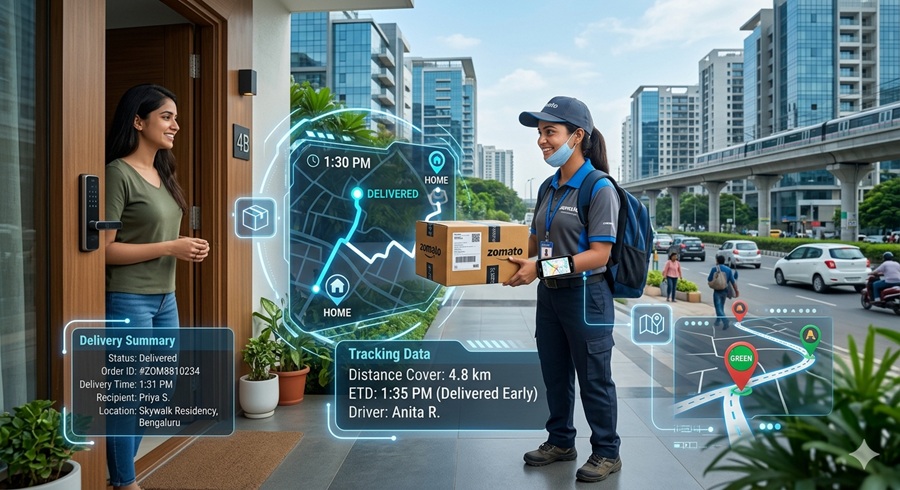
Introduction
Welcome to the new era of e-commerce logistics! As customer demands for faster deliveries grow, the last mile delivery stage has become more critical than ever. Businesses are increasingly adopting AI Powered Last Mile Delivery Solutions for Ecommerce to streamline this final step of the delivery process. AI is not just a buzzword; it is a powerful technology that helps reduce inefficiencies, lower costs, and exceed customer expectations. These intelligent solutions are transforming traditional logistics into smart, data-driven systems that deliver faster and more accurately. This guide explores how AI is revolutionizing last mile delivery and driving ecommerce success.
Understanding Last Mile Delivery in E-commerce
So, what exactly is last mile delivery? It’s the final step of the delivery process, where a package moves from a distribution center to the customer’s doorstep. This stage, also known as the final mile, is crucial in the e-commerce world because it directly impacts the customer’s experience.
High customer expectations for speedy and reliable service make this part of the journey particularly challenging. A smooth and efficient final mile is essential for keeping your customers happy and ensuring they come back for more. Let’s look at what makes this part of logistics unique.
What Makes Last Mile Delivery Unique in the UK E-commerce Market?
The UK e-commerce market presents its own set of challenges for the final mile. Dense urban areas, like London and Manchester, are packed with traffic, which can cause significant delays and drive up delivery costs. Navigating these congested streets requires smart planning to avoid bottlenecks and ensure timely arrivals.
Additionally, customer expectations in the UK are incredibly high. Shoppers now expect fast, often same-day, delivery options and complete transparency throughout the process. This pressure is amplified by fluctuating order volumes, especially during peak shopping seasons like Black Friday or Christmas. Managing these spikes requires a flexible and efficient logistics network.
AI-powered last mile delivery solutions can solve these challenges for e-commerce brands by offering dynamic route optimization to navigate traffic, forecasting demand to manage order volumes, and providing real-time tracking to meet high customer expectations. These systems help brands overcome the complexities of the UK market, ensuring a smoother delivery experience.
Common Challenges for Online Retailers in Final Mile Logistics
Online retailers face numerous hurdles in final mile logistics that can impact their bottom line and customer loyalty. Inefficient delivery routes are a major issue, leading to wasted fuel and time. When you add unpredictable factors like traffic congestion and road closures, ensuring delivery accuracy becomes even more difficult.
These challenges often result in higher shipping costs, which can eat into profit margins. Last mile delivery can account for over 53% of total shipping expenses, making it the most expensive part of the logistics chain. Some of the most common problems include:
- High operational costs due to inefficient routes and fuel consumption.
- Traffic congestion and unpredictable road conditions causing delays.
- Difficulties in maintaining delivery accuracy and meeting customer windows.
- The environmental impact from carbon emissions of delivery vehicles.
Real-world examples of AI enhancing last mile delivery include companies like DHL, which saw a 20% increase in delivery efficiency after implementing AI. Similarly, Amazon’s Prime Air uses AI-guided drones for 30-minute deliveries, showcasing how technology can overcome traditional logistics barriers.
The Role of AI in Last Mile Delivery Solutions
Artificial intelligence is playing a pivotal role in reshaping the supply chain, especially within last mile delivery. By analyzing vast amounts of data in real time, AI makes smart decisions that transform logistics operations. It moves beyond traditional methods, which often struggle with the dynamic nature of modern e-commerce.
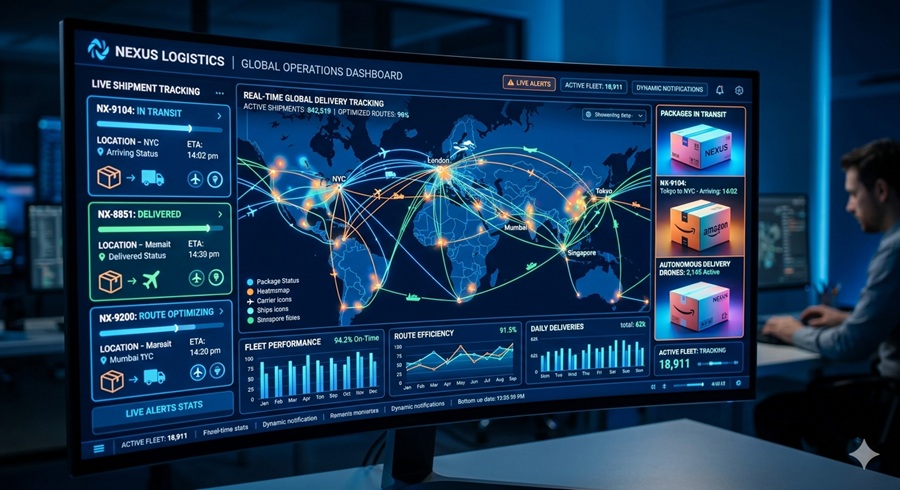
The integration of AI helps companies boost delivery efficiency, reduce operational expenses, and provide a superior customer experience. From optimizing routes to predicting demand, AI is the key to unlocking a more streamlined and effective delivery system. Let’s examine the specific technologies making this happen.
Key AI Technologies Powering Modern Delivery Systems
Several key AI technologies are the driving force behind the improvements in modern delivery systems. Machine learning algorithms, for instance, analyze historical data to improve route planning and demand forecasting over time. This continuous learning process helps logistics companies adapt and become more efficient.
Predictive analytics is another powerful tool. It uses data to foresee future trends, such as spikes in order volume during holidays, allowing businesses to prepare their resources in advance. This proactive approach prevents bottlenecks and ensures smooth operations even during peak times. The most common AI technologies used include:
- Machine learning for dynamic route planning and optimization.
- Predictive analytics for accurate demand forecasting and resource allocation.
- Natural Language Processing (NLP) for chatbots and customer service automation.
- Computer vision for autonomous vehicles and drone navigation.
These technologies, along with the development of autonomous vehicles and drones, are paving the way for a revolutionary shift in how packages are delivered, promising faster, cheaper, and more reliable services.
Why AI Is Transforming E-commerce Logistics
AI is a game-changer for e-commerce logistics because it addresses core challenges with intelligent, data-driven solutions. It enhances operational efficiency by automating and optimizing complex tasks that were previously manual and time-consuming. This allows for better resource allocation, ensuring that drivers, vehicles, and warehouse staff are used effectively.
The ability to process information in real time is one of the main benefits of using AI-powered solutions. For example, AI can instantly adjust a delivery route if there is a sudden traffic jam, ensuring the delivery process remains on schedule. This responsiveness is something traditional systems simply cannot match.
Ultimately, this transformation leads to a better customer service experience. Faster deliveries, accurate tracking, and proactive communication all contribute to happier customers. By streamlining the entire delivery process from the warehouse to the customer’s door, AI helps online stores build a reputation for reliability and efficiency.
AI-Powered Route Optimization for E-commerce Deliveries
One of the most significant impacts of AI in e-commerce is through route optimization. AI algorithms analyze multiple factors to create the most efficient delivery routes for your fleet of delivery vehicles. This goes far beyond just finding the shortest path; it considers variables like traffic, weather, and driver availability.
By starting from the distribution center, AI ensures that every package follows an optimized journey. This not only speeds up deliveries but also reduces fuel consumption and wear and tear on delivery vehicles, leading to significant cost savings. Now, let’s explore how these algorithms work.
How AI Algorithms Optimize Delivery Routes
AI optimizes delivery routes in e-commerce logistics by processing a massive amount of data to find the most efficient paths. Unlike static route planning, AI uses dynamic routing, which allows for real-time adjustments based on changing conditions. The algorithms consider historical data on traffic patterns, delivery times, and even vehicle capacity to make intelligent decisions.
This means that if an unexpected road closure or traffic jam occurs, the system can instantly reroute the driver to avoid delays. This ability to adapt on the fly is what makes AI-powered route optimization so effective. It ensures that delivery drivers are always on the best possible path.
The system evaluates numerous variables to determine the optimal sequence of stops. Here’s a look at what AI considers for route planning:
| Factor | How AI Uses It |
| Traffic Conditions | Analyzes real-time traffic data to avoid congestion and delays. |
| Weather Patterns | Considers weather forecasts to avoid hazardous routes or adjust delivery times. |
| Delivery Windows | Prioritizes stops based on customer-specified delivery windows. |
| Vehicle Capacity | Plans routes that maximize the number of deliveries per vehicle. |
| Driver Availability | Assigns routes based on driver schedules and working hours. |
Real-time Traffic and Weather Integration for Timely Deliveries
Integrating real-time data is crucial for ensuring timely deliveries, and AI excels at this. AI systems connect to live data sources, such as GPS and weather services, to get up-to-the-minute information on traffic conditions and weather forecasts. This allows for proactive adjustments to delivery routes.
How does this help reduce delivery times for e-commerce orders? Instead of a driver getting stuck in an unexpected traffic jam, the AI system will have already identified the issue and provided an alternative route. This dynamic capability is key to avoiding delays and meeting tight delivery windows.
By anticipating potential disruptions, whether from an accident on the highway or a sudden snowstorm, AI helps keep the delivery process moving smoothly. This leads to more accurate estimated delivery times, less frustration for both drivers and customers, and a more reliable service overall.
Enhancing Customer Satisfaction through AI-driven Delivery
A positive delivery experience is a direct driver of customer satisfaction and, ultimately, customer loyalty. When a package arrives on time and the customer is kept informed, it builds trust in your brand. AI-driven delivery solutions are designed to create this seamless customer experience.
By making the entire delivery process more transparent and predictable, AI helps you meet and exceed customer expectations. This not only encourages repeat business but also turns happy customers into advocates for your brand. Let’s look at how AI achieves this through predictive updates and personalization.
Predictive Delivery Windows and Real-time Updates
AI-powered last mile delivery has a massive impact on customer satisfaction by providing transparency and reliability. Using predictive analytics, AI can generate highly accurate delivery windows, giving customers a clear idea of when to expect their package. This eliminates the frustratingly vague “out for delivery” status.
Furthermore, AI enables real-time updates on the order status. Customers can track their package’s journey on a map and receive notifications about any changes or delays. This level of communication helps manage customer expectations and reduces the anxiety associated with waiting for a delivery.
When customers feel informed and in control, their satisfaction soars. They appreciate the transparency and are more likely to be forgiving if a delay does occur, as long as they are notified in advance. This proactive communication builds trust and significantly improves the overall customer experience.
Personalized Delivery Experience and Customer Communication
AI improves the efficiency of last mile delivery by enabling a more personalized experience, which in turn reduces delivery failures and boosts customer satisfaction. By analyzing customer data, AI systems can learn and remember individual customer preferences, such as leaving a package with a neighbor or at a specific location.
Effective customer communication is also streamlined with AI. Automated notifications, chatbots for inquiries, and simple interfaces for rescheduling deliveries all contribute to a smoother process. Another key function is address validation. AI tools can automatically check and correct addresses during the checkout process, significantly reducing the chances of a failed delivery due to incorrect information.
This focus on personalization and clear communication enhances the overall customer experience. It makes customers feel valued and understood. Key benefits include:
- Fewer failed deliveries thanks to address validation and preference management.
- Reduced customer service inquiries through automated updates and chatbots.
- Increased customer loyalty from a tailored and convenient delivery process.
- More efficient use of driver time, as they have clear instructions for each stop.
Operational Benefits of AI in Last Mile Delivery
Beyond improving the customer experience, AI brings substantial operational benefits to last mile delivery. One of the most significant advantages is cost reduction across the board. By optimizing routes, AI directly lowers fuel consumption, which is a major expense for any logistics operation.
Additionally, AI helps manage resources more efficiently, leading to reduced labor costs. With optimized schedules and routes, drivers can complete more deliveries in less time, maximizing productivity. These operational gains make a strong business case for adopting AI. We’ll now explore these benefits in more detail.
Reducing Delivery Times for E-commerce Orders
AI is instrumental in enabling faster deliveries by optimizing every aspect of the final mile. It reduces delivery times primarily through intelligent route planning and demand forecasting. AI algorithms find the quickest routes by considering real-time traffic and weather, ensuring drivers avoid delays. Businesses using AI-driven route optimization have reported an average decrease in delivery times by 20%.
This improved delivery efficiency is especially critical during peak times. AI-powered demand forecasting analyzes historical data to predict surges in order volume, allowing businesses to scale their resources accordingly. This means having enough drivers and vehicles ready to go when they are needed most, preventing backlogs and keeping delivery promises.
By streamlining operations and anticipating challenges, AI ensures that the journey from the warehouse to the customer’s door is as short as possible. This ability to consistently provide faster deliveries gives e-commerce businesses a significant competitive edge in a crowded market.
Unlocking Cost Savings and Resource Optimization
Yes, there are significant cost savings associated with implementing AI in last mile delivery for online retailers. These savings come from multiple areas of improved operational efficiency. Optimized routes lead to lower fuel costs, while better vehicle utilization reduces maintenance and wear. Businesses have reported operational cost reductions of up to 25% after adopting AI.
Resource optimization is another key benefit. AI helps allocate drivers and vehicles more effectively, reducing idle time and unnecessary labor costs. This ensures that you are getting the most out of your existing resources without over- or under-staffing. Accurate demand prediction also aids in better inventory management, preventing stockouts or excess inventory.
By reducing shipping costs and improving overall efficiency, AI directly impacts your bottom line. The initial investment in the technology is often quickly offset by the substantial and ongoing cost savings it generates, making it a financially sound decision for any e-commerce business.
Future Trends and Innovations in AI-Powered Last Mile Delivery
AI-powered last mile delivery is rapidly evolving with innovations such as autonomous vehicles, drones, and smart delivery robots that enable faster and contactless fulfillment. Advanced AI systems use predictive analytics and real-time data to optimize routes, forecast demand, and reduce delivery delays. Businesses are also adopting multi-modal delivery networks that combine human drivers with automated technologies for maximum efficiency. At the same time, AI is driving sustainable logistics by minimizing fuel consumption and lowering carbon emissions. These future-ready innovations are helping ecommerce companies deliver faster, reduce costs, and create a seamless customer experience.
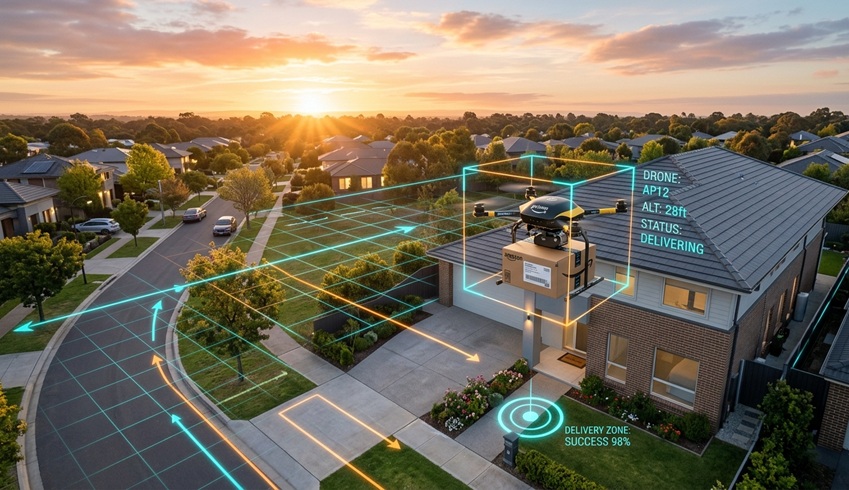
These technologies promise to make deliveries even faster, more cost-effective, and more sustainable. Virtual assistants will streamline ordering and customer service, creating an even more convenient experience. As these technologies mature, they will become more integrated into our daily lives, reshaping the logistics landscape. Let’s look at some of these game-changing innovations.
Autonomous Vehicles, Drones, and Robotics Shaping the Future
Key trends shaping the future of AI in e-commerce last mile delivery are heavily focused on automation. Autonomous vehicles, drones, and robotics are leading this charge, promising to solve some of the final mile’s biggest challenges. For example, AI-guided drones are already being tested by companies like Amazon and UPS to bypass traffic congestion and deliver small packages in under 30 minutes.
Autonomous delivery vehicles and robots offer a solution for ground-based deliveries, especially in urban areas. These machines can operate 24/7, reducing labor costs and providing contactless delivery options. As they become more widespread, they will help reduce carbon emissions by optimizing routes and potentially using electric power.
The future of last mile delivery will likely involve a hybrid model where humans and automated systems work together. The key innovations to watch are:
- Autonomous Vehicles: Self-driving vans and cars for ground deliveries.
- Delivery Drones: For fast, direct-to-doorstep aerial package delivery.
- Sidewalk Robots: Small, automated bots for local and short-distance deliveries.
- AI-driven Fleet Management: Systems that manage a mix of human-driven and autonomous delivery vehicles.
Why Choose Cor Advance Solutions for AI Powered Last Mile Delivery
When it comes to implementing AI powered last mile delivery solutions for ecommerce, choosing the right technology partner is critical. Cor Advance Solutions stands out as a trusted provider that combines advanced AI capabilities with deep logistics expertise to help ecommerce businesses achieve faster, smarter, and more cost-effective deliveries.
🔹 End-to-End AI-Driven Logistics Solutions
Cor Advance Solutions offers complete last mile delivery systems—from intelligent route optimization to real-time tracking and automated dispatching. Their solutions are designed to streamline the entire delivery lifecycle, ensuring maximum efficiency and minimal delays.
🔹 Advanced AI & Predictive Analytics Integration
By leveraging cutting-edge technologies like machine learning and predictive analytics, Cor Advance Solutions helps businesses:
- Forecast demand accurately
- Optimize delivery routes in real time
- Reduce fuel consumption and operational costs
- Improve delivery accuracy and speed
🔹 Customized Ecommerce Delivery Systems
Every ecommerce business has unique logistics challenges. Cor Advance Solutions provides tailored AI delivery solutions that align with your business model, whether you operate in hyperlocal delivery, same-day delivery, or large-scale distribution networks.
🔹 Enhanced Customer Experience
Customer satisfaction is at the core of every successful ecommerce business. With features like:
- Real-time delivery tracking
- Predictive delivery time slots
- Automated notifications and updates
Cor Advance Solutions ensures a seamless and transparent delivery experience that builds trust and boosts customer loyalty.
🔹 Scalable & Future-Ready Technology
As your business grows, your logistics system should scale with you. Cor Advance Solutions provides flexible and scalable platforms that support:
- High order volumes during peak seasons
- Integration with ecommerce platforms (Shopify, Magento, WooCommerce)
- Future technologies like drones, autonomous vehicles, and smart fleet systems
🔹 Proven Cost Reduction & Efficiency Gains
Businesses using Cor Advance Solutions have experienced:
- Up to 20–25% reduction in delivery costs
- Faster delivery turnaround times
- Improved fleet utilization and resource management
🔹 Dedicated Support & Consultation
From initial strategy to deployment and ongoing optimization, Cor Advance Solutions offers expert guidance and dedicated support to ensure your success in AI-driven logistics.
Conclusion
In conclusion, embracing AI-powered last mile delivery solutions is essential for e-commerce success in today’s fast-paced market. By leveraging advanced technologies, businesses can not only overcome common logistical challenges but also enhance customer satisfaction through personalized experiences and timely updates. The future of e-commerce logistics is transforming with innovations like autonomous vehicles and drones, which promise to make deliveries even more efficient and cost-effective. As you explore these exciting advancements, consider how integrating AI into your delivery strategy can drive operational excellence and elevate your brand’s reputation. If you’re ready to optimize your delivery processes, don’t hesitate to get in touch for a free consultation to learn more about how we can help you succeed!
Partner with Cor Advance Solutions and unlock the full potential of AI-powered last mile delivery.
Frequently Asked Questions
What is last mile delivery in ecommerce?
Last mile delivery in ecommerce refers to the final stage of the shipping process where a product is transported from a warehouse or distribution center to the customer’s doorstep. It is the most critical part of logistics because it directly impacts delivery speed, customer satisfaction, and brand trust. This stage is often the most expensive and complex due to traffic, delivery density, and customer expectations. Efficient last mile delivery ensures faster fulfillment and repeat purchases.
What is AI powered last mile delivery?
AI powered last mile delivery uses artificial intelligence technologies like machine learning and predictive analytics to optimize delivery operations. It helps businesses automate route planning, forecast demand, and track deliveries in real time. AI systems analyze large amounts of data to make smarter decisions, reducing delays and improving accuracy. This leads to faster deliveries, lower costs, and better customer experiences in ecommerce logistics.
Why is last mile delivery important in ecommerce?
Last mile delivery is crucial in ecommerce because it directly affects customer experience and satisfaction. Fast, reliable, and transparent delivery builds trust and encourages repeat purchases. It also influences brand reputation and competitive advantage in the market. Since this stage accounts for a major portion of shipping costs, optimizing it is essential for profitability. A smooth last mile ensures timely deliveries and customer loyalty.
What are the biggest challenges in last mile delivery?
The biggest challenges in last mile delivery include high operational costs, traffic congestion, and unpredictable delivery conditions. Managing delivery time windows and ensuring accuracy can also be difficult. Inefficient routes often lead to delays and increased fuel consumption. Additionally, handling high order volumes during peak seasons adds complexity. These challenges make last mile delivery the most expensive and inefficient part of logistics.
How does AI improve last mile delivery?
AI improves last mile delivery by optimizing routes, predicting demand, and automating dispatch processes. It analyzes real-time data such as traffic, weather, and delivery locations to reduce delays. AI also enhances delivery accuracy and minimizes failed deliveries. By improving efficiency and reducing costs, it helps businesses deliver faster and more reliably. This leads to better customer satisfaction and operational performance.
What are AI logistics solutions?
AI logistics solutions are advanced systems that use artificial intelligence to manage and optimize supply chain and delivery operations. These solutions include route optimization, demand forecasting, real-time tracking, and automated dispatching. They help businesses reduce costs, improve efficiency, and enhance visibility across logistics processes. AI logistics solutions are widely used in ecommerce, retail, and transportation industries for smarter operations.
How does AI route optimization work?
AI route optimization works by analyzing multiple variables such as traffic conditions, weather, delivery locations, and time windows. It uses algorithms to determine the fastest and most efficient delivery routes. Unlike traditional planning, AI dynamically adjusts routes in real time based on changing conditions. This reduces delivery time, fuel consumption, and operational costs. It ensures drivers follow the most efficient path for each delivery.
What data does AI use in delivery optimization?
AI uses various types of data for delivery optimization, including real-time traffic updates, weather conditions, customer addresses, and delivery time windows. It also analyzes historical delivery data, order patterns, and driver performance. This combination of data helps AI make accurate decisions for route planning and scheduling. By leveraging data, businesses can improve delivery speed, reduce errors, and enhance overall efficiency.
Can AI adjust delivery routes in real time?
Yes, AI can adjust delivery routes in real time by analyzing live data such as traffic congestion, road closures, and weather changes. If a disruption occurs, the system instantly recalculates the best alternative route. This dynamic routing ensures timely deliveries and minimizes delays. Real-time adjustments help drivers avoid unexpected issues and improve overall delivery performance in ecommerce operations.
How does AI optimize fleet management?
AI optimizes fleet management by efficiently assigning vehicles and drivers based on demand, location, and capacity. It monitors vehicle performance, fuel usage, and delivery schedules in real time. AI also helps reduce idle time and improve vehicle utilization. By automating fleet operations, businesses can lower costs and increase productivity. This results in smoother logistics and faster deliveries.
Can AI integrate with ecommerce platforms?
Yes, AI can easily integrate with popular ecommerce platforms like Shopify, Magento, and WooCommerce. This integration allows seamless data flow between order management and delivery systems. Businesses can automate order processing, tracking, and dispatching. It improves operational efficiency and provides a unified system for managing deliveries. Integration ensures a smooth and scalable ecommerce logistics process.
Can AI reduce delivery costs?
Yes, AI significantly reduces delivery costs by optimizing routes, minimizing fuel consumption, and improving resource utilization. It eliminates inefficiencies such as unnecessary travel and idle time. AI also reduces failed deliveries and operational errors. By automating processes, businesses save on labor and operational expenses. Overall, AI helps improve profitability in ecommerce logistics.
Does AI improve delivery speed?
AI improves delivery speed by identifying the fastest routes and avoiding delays caused by traffic or weather conditions. It uses real-time data to ensure efficient delivery planning. AI also enables better resource allocation, ensuring enough drivers and vehicles are available. Faster deliveries lead to improved customer satisfaction and competitive advantage. This makes AI essential for modern ecommerce logistics.
How does AI increase delivery efficiency?
AI increases delivery efficiency by automating manual tasks and optimizing logistics operations. It improves route planning, demand forecasting, and fleet management. By reducing delays and errors, AI ensures smoother delivery processes. It also enhances coordination between different logistics components. This leads to faster deliveries, lower costs, and better overall performance.
How does AI improve customer satisfaction?
AI improves customer satisfaction by providing accurate delivery estimates, real-time tracking, and timely updates. Customers stay informed about their orders, reducing uncertainty and frustration. AI also minimizes delays and delivery failures, ensuring a reliable experience. Personalized delivery options further enhance convenience. All these factors contribute to higher trust, loyalty, and repeat purchases.