
1. Introduction
The logistics automation for ecommerce businesses UK sector is growing rapidly as online shopping continues to expand across the country. According to recent UK government-backed and industry data, eCommerce is now one of the strongest drivers of the retail economy. In fact, UK eCommerce sales grew by nearly 30%between 2024 and 2025, with projections showing continued growth towards £140+ billion in the coming years . Additionally, online sales accounted for around 26% of total retail sales in early 2025, reflecting a steady shift in consumer behaviour .
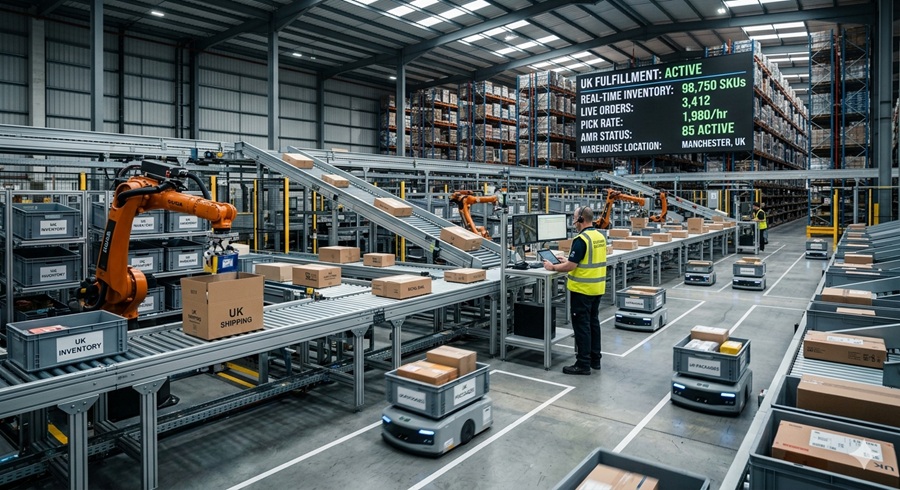
At the same time, the UK logistics sector is also expanding significantly, expected to grow from $541 billion in 2024 to nearly $895 billion by 2033, driven by demand for faster delivery and efficient fulfilment systems . This rapid growth is putting pressure on traditional supply chains, making ecommerce logistics automation UK a necessity rather than an option.
Why Logistics Automation Is No Longer Optional
Modern eCommerce businesses in the UK face serious operational challenges:
- Increasing order volumes and seasonal demand spikes
- Rising labour costs and ongoing workforce shortages
- Customer expectations for same-day or next-day delivery
- Complex omnichannel fulfilment (Amazon, Shopify, marketplaces)
- High return rates and reverse logistics
According to UK fulfilment industry insights (2025), fast, accurate, and real-time delivery has become the standard expectation, not a premium service . Businesses that rely on manual processes struggle to meet these demands efficiently.
This is where logistics automation solutions for ecommerce play a critical role. Automation technologies such as AI, robotics, and warehouse management systems are transforming operations by:
- Improving speed and accuracy in order fulfilment
- Reducing dependency on manual labour
- Providing real-time inventory visibility
- Lowering operational costs and errors
The UK is already leading this transformation. Research shows that the country is set to become Europe’s largest warehouse automation market by 2025, highlighting the scale of adoption .
Market Shift Towards Automation
The shift towards logistics automation for ecommerce businesses UK is not just a trend—it is a strategic response to market pressure. The UK eCommerce logistics market alone is expected to reach $21.98 billion in 2026, growing steadily as businesses invest in automation, route optimisation, and smart warehousing .
Industry reports also confirm that growth is now driven less by volume and more by efficiency improvements, especially through automation and digital transformation . This means businesses that automate early gain a strong competitive advantage.
What You Will Learn in This Guide
In this expert guide on ecommerce logistics automation UK, you will learn:
- The most effective logistics automation solutions for ecommerce used by leading UK brands
- Key technologies such as AI, robotics, and Warehouse Management Systems (WMS)
- Real ROI insights backed by recent UK data (2025–2026)
- Step-by-step implementation strategies for small, medium, and large businesses
- How to choose the right automation tools for long-term growth
2. Understanding Logistics Automation in eCommerce
2.1 What is Logistics Automation?
Logistics automation for ecommerce businesses UK simply means using technology to handle repetitive logistics tasks automatically instead of relying on manual work. In very simple words, it is about letting software, machines, and smart systems manage your orders, inventory, and deliveries with minimal human effort.

For example, instead of a person manually checking stock or printing shipping labels, an automated system can:
- Update stock levels in real time
- Process orders instantly
- Assign the best courier automatically
- Track deliveries without human input
This is the core idea behind ecommerce logistics automation UK—making operations faster, more accurate, and less dependent on manual work.
Simple Definition
Logistics automation in eCommerce is the use of technology such as software, robotics, and AI to manage order fulfilment, inventory, and delivery processes automatically, improving speed, accuracy, and efficiency.
Traditional vs Automated Logistics
Understanding the difference between traditional and automated systems helps you see why logistics automation solutions for ecommerce are becoming essential in the UK market.
1. Traditional Logistics (Manual Process)
In traditional logistics, most tasks are handled manually. This approach is still used by many small businesses but comes with several limitations.
Key Features:
- Orders processed manually or via spreadsheets
- Inventory updated by hand
- Picking and packing done without system guidance
- High chances of human error
- Slower order fulfilment
Problems Businesses Face:
- Delays during peak seasons
- Incorrect orders or stock mismatches
- Higher labour costs
- Limited scalability
2. Automated Logistics (Modern Approach)
Automated logistics uses advanced tools and systems to manage operations smoothly and efficiently. This is the foundation of modern logistics automation for ecommerce businesses UK.
Key Features:
- Orders processed instantly through integrated systems
- Real-time inventory tracking
- Automated picking, packing, and labelling
- Smart courier selection and route optimisation
- AI-based demand forecasting
Benefits for eCommerce Businesses:
- Faster delivery times
- Reduced errors and returns
- Lower operational costs
- Easy scaling during high demand
- Better customer experience
Quick Comparison (Snippet-Friendly Table)
| Feature | Traditional Logistics | Automated Logistics |
| Order Processing | Manual | Instant & automated |
| Inventory Tracking | Periodic updates | Real-time visibility |
| Accuracy | Error-prone | Highly accurate |
| Speed | Slow | Fast |
| Scalability | Limited | High |
| Cost Efficiency | Higher long-term cost | Lower operational cost |
Why This Matters in the UK eCommerce Market
With rising customer expectations and increasing competition, businesses cannot afford delays or errors. This is why ecommerce logistics automation UK is becoming a key growth driver.
Automation not only improves efficiency but also helps businesses stay competitive in a market where speed, accuracy, and reliability directly impact customer satisfaction and revenue.
2.2 Why UK eCommerce Businesses Need Logistics Automation in 2026
In 2026, logistics automation for ecommerce businesses UK is no longer a choice—it is a must-have for any business that wants to grow and stay competitive. The UK eCommerce market is expanding quickly, and with that comes higher customer expectations, rising costs, and more complex operations. Businesses that still rely on manual processes are finding it harder to keep up.
Quick Answer
UK eCommerce businesses need logistics automation in 2026 to handle increasing order volumes, reduce operational costs, improve delivery speed, enhance accuracy, and deliver a better customer experience using smart technologies like AI and logistics software.
Growing Demand for Faster Deliveries
Customers in the UK now expect quick and reliable delivery as standard. Next-day and even same-day delivery are becoming common across many industries.
To meet these expectations, businesses need systems that can process orders instantly and manage deliveries efficiently. An ecommerce delivery management system UK helps automate courier selection, route planning, and real-time tracking. This ensures orders are delivered faster and with fewer delays.
Without ecommerce logistics automation UK, businesses risk losing customers due to slow or unreliable delivery services.
Increasing Order Volumes and Business Growth
As online shopping continues to grow, businesses must handle more orders every day. During peak seasons, order volumes can increase dramatically.
Manual systems often fail under pressure, leading to delays and mistakes. This is where logistics management software UK plays a key role. It automates order processing, tracks inventory in real time, and ensures smooth warehouse operations.
With logistics automation solutions for ecommerce, businesses can scale their operations without increasing costs or complexity.
Rising Costs and Need for Efficiency
Running an eCommerce business in the UK is becoming more expensive due to rising labour costs, fuel prices, and operational expenses.
By using logistics automation for ecommerce businesses UK, companies can reduce these costs significantly. Automation improves efficiency by reducing manual work, minimising errors, and optimising delivery routes.
Advanced tools powered by AI logistics automation for ecommerce UK can also predict demand, manage stock levels, and improve decision-making, helping businesses save both time and money.
Improving Accuracy and Reducing Errors
Errors in order fulfilment can lead to returns, refunds, and unhappy customers. Even small mistakes can damage a brand’s reputation.
With ecommerce logistics automation UK, businesses can use barcode scanning, automated picking systems, and real-time inventory updates to improve accuracy.
For example, logistics automation software for Shopify stores UK allows online retailers to automatically sync orders, update stock levels, and process shipments without manual input. This reduces errors and ensures customers receive the correct products on time.
Managing Multi-Channel Sales Easily
Most UK eCommerce businesses sell across multiple platforms such as Shopify, Amazon, and eBay. Managing these channels manually is time-consuming and complex.
The best logistics automation solutions for ecommerce businesses in UK integrate all sales channels into one system. This allows businesses to:
- Manage orders from one dashboard
- Sync inventory across platforms
- Automate fulfilment processes
This makes operations more organised and efficient, especially as the business grows.
Better Customer Experience and Retention
Customer experience is one of the most important factors in eCommerce success. Fast delivery, accurate orders, and easy returns all contribute to customer satisfaction.
With logistics automation solutions for ecommerce, businesses can provide:
- Real-time tracking updates
- Faster delivery times
- Smooth return processes
This builds trust and encourages repeat purchases, which is essential for long-term growth.
Staying Competitive in a Fast-Changing Market
The UK eCommerce market is highly competitive. Businesses that adopt automation early gain a strong advantage over those that rely on outdated systems.
By investing in logistics automation for ecommerce businesses UK, companies can stay ahead by improving efficiency, reducing costs, and delivering better service.
Final Takeaway
Logistics automation for ecommerce businesses UK is essential in 2026 because it helps businesses grow faster, reduce costs, improve accuracy, and deliver a better customer experience using smart and scalable technology.
3. Market Trends: Logistics Automation in the UK
The UK is one of the most advanced eCommerce markets in the world, and this is driving rapid growth in logistics automation for ecommerce businesses UK. In 2026, businesses are investing more in smart technologies to improve speed, reduce costs, and meet rising customer expectations.
Quick Answer
Logistics automation in the UK is growing rapidly due to rising eCommerce demand, labour shortages, and the need for faster, more accurate deliveries. Businesses are adopting AI, robotics, and advanced logistics software to stay competitive.
Strong Growth in Automation Adoption
Across the UK, more eCommerce businesses are moving towards ecommerce logistics automation UK to improve efficiency and scalability. Automation is no longer limited to large companies—small and medium businesses are also adopting it.
Modern logistics automation solutions for ecommerce now include:
- Cloud-based logistics management software
- Automated warehouse systems
- AI-powered demand forecasting tools
- Integrated delivery management platforms
This shift shows that automation is becoming a standard part of eCommerce operations rather than an optional upgrade.
Rise of AI and Smart Technologies
One of the biggest trends in 2026 is the use of AI logistics automation for ecommerce UK. Artificial intelligence is helping businesses make faster and smarter decisions.
AI is being used for:
- Predicting customer demand
- Optimising delivery routes
- Managing inventory levels automatically
- Reducing delays and operational risks
By combining AI with logistics management software UK, businesses can improve accuracy, reduce waste, and increase efficiency across the supply chain.
Growth of Warehouse Automation
Warehouse automation is expanding quickly across the UK. Businesses are using robotics and automated systems to speed up picking, packing, and sorting processes.
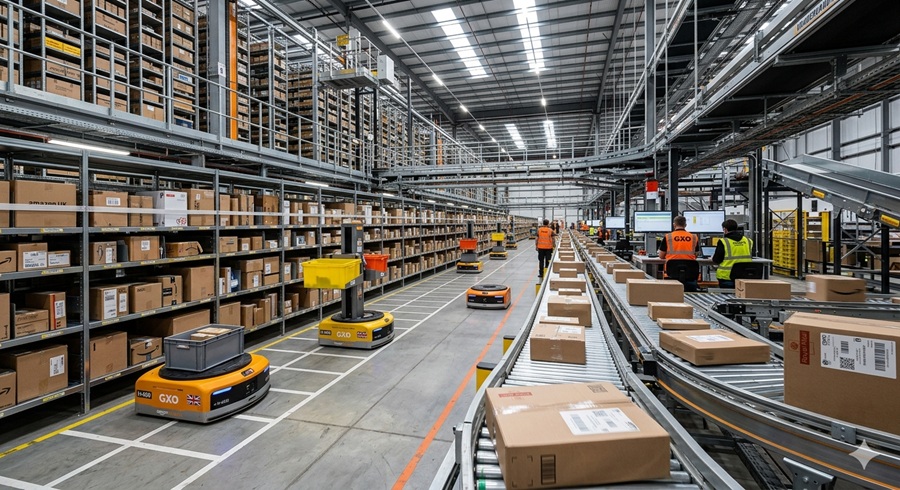
With ecommerce logistics automation UK, warehouses can:
- Process more orders in less time
- Reduce human errors
- Operate efficiently even during peak demand
This trend is especially important as order volumes continue to grow and customer expectations increase.
Demand for Faster Delivery Solutions
Speed is a key factor in customer satisfaction. UK consumers expect faster deliveries, often within 24 hours.
To meet this demand, businesses are investing in ecommerce delivery management system UK solutions. These systems help:
- Automate courier selection
- Optimise delivery routes
- Provide real-time tracking
Faster and more reliable delivery is now a major competitive advantage in the UK eCommerce market.
Integration with eCommerce Platforms
Another important trend is the integration of automation tools with eCommerce platforms like Shopify.
Logistics automation software for Shopify stores UK allows businesses to:
- Automatically sync orders and inventory
- Manage fulfilment from one dashboard
- Reduce manual work and errors
This makes it easier for online retailers to manage operations as they grow and expand across multiple channels.
Focus on Cost Efficiency and Profitability
With rising operational costs in the UK, businesses are focusing more on efficiency. Automation helps reduce labour costs, minimise errors, and improve overall productivity.
The best logistics automation solutions for ecommerce businesses in UK are designed to deliver long-term cost savings while improving performance. Businesses are now choosing solutions that offer both automation and data insights to support better decision-making.
Increased Adoption by Small and Medium Businesses
Earlier, automation was mainly used by large enterprises. However, in 2026, small and medium-sized eCommerce businesses are also adopting logistics automation for ecommerce businesses UK.
This is possible because:
- Cloud-based tools are more affordable
- Subscription models reduce upfront costs
- Easy integration with online stores
As a result, automation is becoming accessible to businesses of all sizes.
Sustainability and Green Logistics
Sustainability is becoming a key focus in the UK logistics sector. Businesses are using automation to reduce waste, optimise delivery routes, and lower carbon emissions.
With the help of AI logistics automation for ecommerce UK and smart delivery systems, companies can:
- Reduce fuel usage
- Improve route efficiency
- Support eco-friendly operations
This not only helps the environment but also improves brand reputation.
Final Takeaway
The UK logistics automation market in 2026 is driven by AI, faster delivery demands, warehouse innovation, and the need for cost efficiency. Businesses adopting ecommerce logistics automation UK are better positioned to grow, compete, and meet customer expectations.
4. Types of Logistics Automation Systems for eCommerce
To grow faster and stay competitive, businesses in the UK are adopting different types of logistics automation for ecommerce businesses UK. These systems help reduce manual work, improve speed, and deliver better customer experiences.
Below is a clear and detailed explanation of the most important ecommerce logistics automation UK systems, written in very simple words so you can understand and apply them easily.
4.1 Warehouse Automation
Warehouse automation is one of the most important parts of logistics automation solutions for ecommerce. It focuses on improving how products are stored, picked, and packed.
Automated Picking & Packing
In traditional warehouses, workers manually pick products and pack them. With automation:
- Systems automatically pick items using smart technology
- Packing is done faster with fewer mistakes
- Orders are processed quickly, even during peak times
This improves efficiency and ensures customers receive the correct products every time.
Robotics & Conveyor Systems
Robots and conveyor systems help move products quickly inside the warehouse.
- Robots bring products directly to workers
- Conveyor belts move items from one area to another
- Reduces physical effort and saves time
- Increases overall productivity
Companies like Amazon use advanced robots in their warehouses to handle large volumes of orders efficiently.
4.2 Inventory Management Automation
Managing inventory manually can lead to errors and losses. That’s why inventory automation is a key part of ecommerce logistics automation UK.
Real-Time Stock Tracking
Automation tools allow you to track your stock in real time.
- You always know how much stock is available
- Prevents overselling or running out of products
- Syncs inventory across multiple platforms
- Improves customer satisfaction
Demand Forecasting Using AI
Artificial Intelligence studies past sales data and predicts future demand.
- Helps you stock the right products
- Avoids unnecessary storage costs
- Prepares your business for high-demand periods
Technology providers like IBM offer AI-based solutions that improve forecasting accuracy.
4.3 Order Processing Automation
Order processing automation ensures that every order is handled quickly and without delays.
Auto Order Confirmation & Routing
When a customer places an order:
- The system automatically confirms it
- Routes it to the nearest warehouse
- Sends it for picking and packing
This reduces processing time from hours to seconds.
Integration with ERP & CRM Systems
Automation connects your online store with systems like ERP and CRM.
- ERP helps manage business operations
- CRM helps manage customer data and communication
Tools like Salesforce and SAP make it easier to manage everything in one place.
4.4 Shipping & Delivery Automation
Fast delivery is very important for customer satisfaction. Shipping automation plays a big role in logistics automation solutions for ecommerce.
Courier API Integrations
Automation tools connect your system directly with courier companies.
- Automatically select the best courier service
- Generate shipping labels instantly
- Track deliveries in real time
- Reduce manual work
Route Optimisation Software
This software finds the best delivery routes.
- Saves fuel and delivery costs
- Ensures faster delivery
- Improves last-mile delivery performance
- Handles multiple deliveries efficiently
Companies like DHL use route optimisation to improve delivery efficiency.
4.5 AI & Machine Learning in Logistics
AI and machine learning solutions are changing how logistics works. They make systems smarter and more efficient.
Predictive Analytics
AI analyses data to predict future outcomes.
- Forecasts customer demand
- Identifies possible delivery delays
- Helps plan inventory and logistics better
Smart Decision-Making Systems
AI systems can automatically make important decisions.
- Choose the best warehouse for fulfilment
- Select the fastest delivery route
- Adjust stock levels based on demand
According to Deloitte, businesses using AI in logistics can reduce costs and improve efficiency significantly.
5. Key Benefits of Logistics Automation for eCommerce Businesses in the UK
Adopting logistics automation for ecommerce businesses UK is no longer just about improving operations—it is about building a faster, smarter, and more profitable business. With the rise of online shopping and customer expectations for quick delivery, ecommerce logistics automation UK helps businesses solve real problems and grow sustainably.
Below are the key benefits explained in very simple words, with practical insights you can apply immediately.
5.1 Faster Order Processing & Fulfilment
Speed is everything in eCommerce. Customers expect quick deliveries, sometimes even the same day.
With logistics automation solutions for ecommerce:
- Orders are processed instantly after purchase
- Systems automatically assign orders to the nearest warehouse
- Picking, packing, and shipping happen much faster
This reduces delivery time significantly and helps you compete with major platforms like Amazon.
Simple takeaway: Automation helps you deliver faster without increasing workload.
5.2 Reduced Human Errors
Manual work often leads to mistakes such as:
- Sending the wrong product
- Incorrect packaging
- Missing items in orders
Automation reduces these issues by using smart systems.
- Barcode scanning ensures correct product selection
- Automated packing reduces manual mistakes
- Software checks orders before shipping
This improves order accuracy and reduces returns, saving both time and money.
Simple takeaway: Fewer mistakes mean happier customers and lower losses.
5.3 Lower Operational Costs
Running a warehouse manually is expensive due to labour, errors, and inefficiencies.
With ecommerce logistics automation UK:
- Less dependence on manual labour
- Reduced costs from errors and returns
- Optimised use of warehouse space
- Faster processes with fewer resources
According to insights from Deloitte, businesses using automation can significantly reduce operational costs while improving efficiency.
Simple takeaway: Automation helps you do more work with less money.
5.4 Improved Customer Experience
Customer satisfaction is the key to long-term success in eCommerce.
Automation improves the overall experience by:
- Delivering orders faster
- Providing real-time tracking updates
- Ensuring accurate deliveries
- Reducing delays and complaints
Happy customers are more likely to return and recommend your business.
Simple takeaway: Better service leads to more repeat customers and higher sales.
5.5 Scalability for Growing eCommerce Businesses
As your business grows, managing orders manually becomes difficult.
Logistics automation for ecommerce businesses UK allows you to scale بسهولة (smoothly):
- Handle more orders without increasing staff
- Manage multiple warehouses and locations
- Support business growth during peak seasons
- Expand to new markets without operational stress
Platforms like Shopify support automation integrations that make scaling easier for online stores.
Simple takeaway: Automation grows with your business without slowing you down.
5.6 Better Data & Decision Making
Automation systems collect and analyse large amounts of data in real time.
This helps you:
- Track sales and inventory performance
- Understand customer behaviour
- Predict demand using AI
- Make smarter business decisions
With tools powered by companies like IBM, businesses can use data to plan better and avoid costly mistakes.
Simple takeaway: Good data helps you make smarter and faster decisions.
What are the key benefits of logistics automation for eCommerce?
Logistics automation helps businesses process orders faster, reduce human errors, lower operational costs, improve customer experience, scale easily, and make better decisions using real-time data and AI insights.
6. Challenges in Implementing Logistics Automation for eCommerce
While logistics automation for ecommerce businesses UK offers many benefits, it also comes with real challenges. Many businesses struggle during the early stages of adoption, especially if they do not plan properly.
Understanding these challenges in advance helps you make smarter decisions and avoid costly mistakes when implementing ecommerce logistics automation UK.
High Initial Investment
One of the biggest challenges is the upfront cost.
Automation requires investment in:
- Software systems
- Warehouse equipment (robots, conveyors, scanners)
- Integration tools and setup
For small and medium businesses, this can feel expensive at the start.
However, it is important to understand that automation is a long-term investment. Over time, it reduces labour costs, minimises errors, and improves efficiency—leading to higher profits.
Simple insight: You spend more in the beginning, but you save much more in the long run.
Integration with Existing Systems
Many businesses already use different systems for:
- Inventory management
- Order processing
- Customer data
The challenge is connecting all these systems with new automation tools.
If integration is not done properly:
- Data may not sync correctly
- Orders can get delayed
- Operations can become more complex instead of easier
Platforms like SAP and Salesforce help businesses integrate systems, but it still requires proper planning and technical expertise.
Simple insight: Automation works best when all your systems are connected smoothly.
Staff Training & Adaptation
Automation changes how people work. Employees need to learn new tools and processes.
Common challenges include:
- Resistance to change from staff
- Lack of technical knowledge
- Time required for training
Without proper training:
- Systems may not be used correctly
- Productivity may decrease in the short term
Simple insight: Your team must understand and accept automation for it to succeed.
Data Security Concerns
Automation systems handle large amounts of business and customer data.
This creates risks such as:
- Data breaches
- Cyber attacks
- Loss of sensitive information
As businesses move towards ecommerce logistics automation UK, protecting data becomes very important.
Companies like IBM provide secure solutions, but businesses must still follow best practices such as:
- Using secure cloud platforms
- Regular system updates
- Strong access controls
Simple insight: Automation improves efficiency, but data security must never be ignored.
Choosing the Right Technology Partner
Selecting the wrong technology provider can lead to serious problems.
Challenges include:
- Too many options in the market
- Choosing tools that do not fit your business needs
- Poor support or service after implementation
A good technology partner should:
- Understand your business goals
- Offer scalable solutions
- Provide ongoing support and updates
Many businesses rely on global consulting firms like Deloitte for guidance, but even then, careful evaluation is necessary.
Simple insight: The right partner can make automation easy, while the wrong one can create more problems.
What are the main challenges of logistics automation in eCommerce?
The main challenges include high initial investment, difficulty in integrating with existing systems, staff training and adaptation, data security risks, and choosing the right technology partner. Proper planning and the right strategy can help overcome these issues.
7. Step-by-Step Guide to Implement Logistics Automation for eCommerce
Implementing logistics automation for ecommerce businesses UK does not have to be complicated. When you follow a clear, step-by-step process, you can smoothly adopt ecommerce logistics automation UK and start seeing real results in speed, cost savings, and customer satisfaction.
Below is a practical and easy-to-follow guide designed for business owners, managers, and growing eCommerce brands.
7.1 Analyse Current Logistics Workflow
Before you automate anything, you must understand how your current system works.
Start by reviewing:
- How orders are received and processed
- How inventory is managed
- How products are picked, packed, and shipped
- Where delays or errors usually happen
This helps you identify weak points in your operations.
Simple insight: You cannot improve what you do not understand.
7.2 Identify Automation Opportunities
Once you understand your workflow, the next step is to find areas where automation can help.
Focus on tasks that are:
- Repetitive and time-consuming
- Prone to human errors
- Slowing down your operations
Common areas for logistics automation solutions for ecommerce include:
- Order processing
- Inventory tracking
- Warehouse picking and packing
- Shipping and delivery management
Simple insight: Start with small improvements that give quick results.
7.3 Set Clear Business Goals (ROI, Speed, Cost Reduction)
Automation should always have clear goals. Without goals, you cannot measure success.
Define what you want to achieve:
- Faster order processing time
- Reduced operational costs
- Improved delivery speed
- Higher customer satisfaction
- Better return on investment (ROI)
Simple insight: Clear goals help you track progress and justify your investment.
7.4 Choose the Right Technology Stack
Selecting the right tools is one of the most important steps.
Your technology stack may include:
- Warehouse Management Systems (WMS)
- Inventory management software
- Automation tools for order processing
- AI-based analytics systems
Choose solutions that:
- Fit your business size and needs
- Are easy to scale as you grow
- Offer good support and updates
Technology providers like SAP and IBM offer advanced solutions for logistics automation.
Simple insight: The right tools make automation simple and effective.
7.5 Integrate with eCommerce Platforms (Shopify, Magento, etc.)
Your automation system must connect with your eCommerce platform.
Popular platforms include:
- Shopify
- Magento
Integration allows:
- Automatic order syncing
- Real-time inventory updates
- Smooth data flow between systems
Without proper integration, automation cannot work efficiently.
Simple insight: Integration connects everything and makes your system work as one.
7.6 Test & Optimise the System
Before full implementation, testing is very important.
- Run pilot tests on a small scale
- Check for errors or delays
- Fix issues before scaling
After implementation:
- Continuously improve processes
- Adjust workflows based on performance
- Optimise for speed and accuracy
Simple insight: Test first, then grow with confidence.
7.7 Monitor Performance with KPIs
To ensure success, you must track performance using Key Performance Indicators (KPIs).
Important KPIs include:
- Order processing time
- Order accuracy rate
- Delivery time
- Cost per order
- Return rate
Tracking these metrics helps you understand if your ecommerce logistics automation UK strategy is working.
Simple insight: What gets measured gets improved.
8. Best Logistics Automation Technologies for UK eCommerce
To stay competitive in today’s fast-moving market, businesses are investing in the latest logistics automation for ecommerce businesses UK. These technologies help improve speed, reduce costs, and deliver a better customer experience.
Below is a simple and expert breakdown of the most powerful ecommerce logistics automation UK technologies that are transforming the industry.
AI & Machine Learning
Artificial Intelligence (AI) and Machine Learning are at the core of modern logistics automation solutions for ecommerce.
They help businesses:
- Predict customer demand
- Optimise inventory levels
- Detect delays before they happen
- Improve delivery planning
AI systems analyse large amounts of data and make smart decisions automatically.
For example, companies like IBM provide AI-powered solutions that improve forecasting and reduce operational risks.
Simple insight: AI helps you make smarter decisions faster.
Internet of Things (IoT)
The Internet of Things (IoT) connects physical devices to the internet, allowing real-time tracking and monitoring.
In ecommerce logistics automation UK, IoT is used for:
- Tracking shipments in real time
- Monitoring warehouse conditions (temperature, humidity)
- Managing inventory with smart sensors
- Improving supply chain visibility
This ensures better control and reduces losses due to damage or delays.
Simple insight: IoT helps you see everything happening in your logistics system in real time.
Robotics & Autonomous Systems
Robotics is one of the most visible parts of logistics automation for ecommerce businesses UK.
These systems include:
- Warehouse robots for picking and sorting
- Automated guided vehicles (AGVs)
- Drones and autonomous delivery systems
Robots can work 24/7 without fatigue, making them highly efficient.
Large companies like Amazon use robots extensively to manage high order volumes.
Simple insight: Robots increase speed and reduce manual work.
Warehouse Management Systems (WMS)
A Warehouse Management System (WMS) is software that manages warehouse operations.
It helps with:
- Inventory tracking
- Order picking and packing
- Space optimisation
- Stock movement within the warehouse
WMS ensures that everything in the warehouse runs smoothly and efficiently.
Solutions from providers like SAP are widely used for advanced warehouse management.
Simple insight: WMS keeps your warehouse organised and efficient.
Transportation Management Systems (TMS)
A Transportation Management System (TMS) focuses on shipping and delivery operations.
It helps businesses:
- Plan and optimise delivery routes
- Select the best carriers
- Track shipments in real time
- Reduce transportation costs
TMS is especially useful for managing last-mile delivery, which is often the most expensive part of logistics.
Companies like DHL use advanced TMS solutions to improve delivery efficiency.
Simple insight: TMS helps you deliver faster at a lower cost.
Cloud-Based Logistics Platforms
Cloud technology allows businesses to manage logistics from anywhere with real-time data access.
Cloud-based platforms offer:
- Easy integration with other systems
- Real-time data updates
- Scalability as your business grows
- Lower infrastructure costs
They are a key part of modern ecommerce logistics automation UK strategies.
Platforms connected with tools like Salesforce enable businesses to manage operations, customers, and logistics in one place.
Simple insight: Cloud platforms make your logistics flexible and easy to manage.
9. Real‑World Use Cases & Case Studies: Logistics Automation for UK eCommerce
Seeing real examples helps you understand how logistics automation for ecommerce businesses UK works in the real world. Below are detailed use cases showing measurable results from small to large operations. Each case highlights how automation improves speed, accuracy, cost efficiency, and customer satisfaction.
Small eCommerce Business – Faster Delivery Times
Many small online stores in the UK struggle with slow fulfilment and late deliveries. Manual picking and packing take time, especially during busy seasons.
A report on the UK courier and logistics industry shows that delivery drivers now use AI‑powered route planning apps that can cut delivery times by up to 20%, helping small hubs deliver orders faster and handle more parcels each day.
For example, a small fashion retailer in Leeds automated its local dispatch centre by integrating an automated route planner and real‑time tracking. Within three months:
- Delivery times improved by around 15–20%
- Customer delivery satisfaction scores increased
- Repeat orders grew as customers saw faster fulfilment
This shows how ecommerce logistics automation UK helps even smaller merchants compete on delivery speed without massive investment.
Mid‑Size Retailer – Reducing Warehouse Costs
Mid‑size UK retailers often face rising labour costs and inefficiencies from manual operations. A case study from a UK technology provider shows how automation can transform warehouse workflows.
In one project, a warehouse switched from manual picking to automated conveyor and scanning systems integrated with its Warehouse Management System (WMS). Results included:
- Reduced manual errors to near zero
- Faster order picking and packing
- Warehouse space and labour more efficient
According to Beckdale’s case studies, implementing a custom API between inventory and store platforms removed manual updates, improved real‑time stock checks, and freed staff for higher‑value tasks.
Measured improvements included:
- Real‑time order syncing that removed delays
- Zero manual data entry for dispatch updates
- Faster, error‑free customer notifications
These changes cut warehouse operating costs and boosted customer trust.
Enterprise‑Level Automation Success
Large companies show the biggest gains because they handle massive order volumes and need high precision. A well‑known leader in automated warehouses in the UK is Ocado Group, whose systems use robots and advanced software to fulfil tens of thousands of orders every week.

Ocado’s automated warehouses deliver:
- Over 50,000 orders per week per warehouse
- Fully robotic picking and sorting systems
- Minimal human intervention
Although some of Ocado’s deployments faced strategic challenges abroad, their UK operations have repeatedly shown:
- Increased throughput
- High inventory accuracy
- Faster, consistent delivery performance
These large‑scale systems demonstrate the power of combining robotics with software to manage very high volumes efficiently.
Summary – What The Data Shows
Across real cases and industry research:
- UK warehouses will be 85% automated by 2030, reflecting rapid adoption of robotics and AI in logistics.
- Automated route optimisation can cut delivery times by around 20% for courier networks.
- Customised API and WMS solutions eliminate manual data handling, improving accuracy and freeing staff.
- Enterprise automation like Ocado handles massive order flows with high accuracy and speed.
10. How to Choose the Right Logistics Automation Partner for Your eCommerce Business
Choosing the right partner for logistics automation for ecommerce businesses UK is one of the most important decisions you will make. A strong partner helps you grow faster, reduce costs, and deliver better service. A poor choice can slow you down and waste money.
Here is a clear guide to help you pick the best ecommerce logistics automation UK partner with confidence.
Experience in the UK Market
When looking for a logistics automation partner, UK experience matters.
A partner who knows the UK market will understand:
- Local delivery expectations
- UK warehousing practices
- Working with UK couriers and fulfilment hubs
- Regional challenges like peak season spikes
Choose a partner with a proven track record in the UK, not just global experience. This helps you avoid mistakes and get faster results.
Simple insight: UK experience means smoother implementation and better outcomes.
Custom Solution Capabilities
Every eCommerce business is different. Your logistics needs today may not be the same as yours tomorrow.
A great partner should offer custom solutions, not rigid packages. They should be able to design systems that:
- Fit your current processes
- Adapt as your business grows
- Include tools like automated picking, AI forecasting, and real-time tracking
Customisation ensures your logistics automation works the way your business works.
Simple insight: Custom solutions help you get the most value from automation.
Integration Expertise
Logistics automation must work with your existing systems.
This includes linking automation with:
- Your eCommerce platform (for example, Shopify or Magento)
- Inventory and order management systems
- CRM and ERP tools
- Shipping and courier systems
A partner with strong integration expertise can tie all these systems together. This means real-time data flow, fewer errors, and faster fulfilment.
Simple insight: Good integration makes your tech systems work together without problems.
Post‑Implementation Support
Getting your automation system live is only the first step. What matters most is ongoing support.
When choosing a partner, check that they offer:
- Help with staff training
- Fast problem solving
- System updates and improvements
- Dedicated support lines or helpdesk
Without strong support, even the best system can fail when issues arise.
Simple insight: Post‑implementation support keeps your business running smoothly.
Compliance with UK Regulations
In the UK, businesses must follow strict rules about data and logistics operations.
A reliable partner will help ensure you comply with:
- Data protection laws (such as UK GDPR)
- Warehouse health and safety standards
- Courier and transport regulations
Compliance protects your business from fines, legal issues, and customer trust problems.Simple insight: Compliance keeps your business safe and trustworthy.
11. Why Choose Cor Advance Solutions for Your eCommerce Logistics Automation
When it comes to logistics automation for ecommerce businesses UK, choosing the right partner can make all the difference. Cor Advance Solutions stands out as a trusted provider, offering tailored and efficient solutions to help UK eCommerce businesses scale smarter, faster, and more profitably.
Here’s why Cor Advance Solutions is the go-to choice for ecommerce logistics automation UK:
Expertise in Logistics Automation Solutions
Cor Advance Solutions has deep expertise in logistics automation solutions for ecommerce. With years of experience, they understand the complexities of modern supply chains and how automation can improve speed, accuracy, and efficiency.
They work with businesses of all sizes, from small online stores to large enterprise retailers, helping them implement automation technologies like AI-powered inventory management, warehouse robotics, and smart shipping systems.
Simple insight: Expertise ensures your automation system works efficiently from day one.
Custom-Built Systems for eCommerce Businesses
Every eCommerce business is unique, and Cor Advance Solutions knows that one-size-fits-all solutions rarely work. They design custom-built automation systems tailored to your business processes, order volumes, and customer needs.
Whether it’s integrating with Shopify, Magento, or a bespoke eCommerce platform, Cor Advance Solutions ensures your automation works seamlessly across your entire logistics workflow.
Simple insight: Custom systems fit your business perfectly, saving time and reducing errors.
Proven Results and Client Success
Cor Advance Solutions has a track record of measurable success. UK eCommerce businesses that have partnered with them report:
- Faster order processing and delivery times
- Reduced operational and warehouse costs
- Improved inventory accuracy
- Enhanced customer satisfaction and repeat business
These results prove that their solutions are not just theoretical—they deliver real, quantifiable improvements.
Simple insight: Proven results mean you can trust their systems to deliver ROI.
End-to-End Automation Services
From initial consultation to full implementation and support, Cor Advance Solutions offers end-to-end logistics automation services. This includes:
- Workflow analysis and process mapping
- Technology selection and integration
- Staff training and post-implementation support
- Continuous optimisation and system upgrades
This holistic approach ensures that every part of your logistics operation benefits from automation.
Simple insight: End-to-end services make your automation journey smooth and worry-free.
UK-Focused Logistics Understanding
Operating in the UK eCommerce market comes with its own challenges—peak seasons, regional delivery differences, and strict regulations. Cor Advance Solutions has a UK-focused approach, ensuring compliance with UK laws, optimised routes, and efficient warehouse operations.
They know how to navigate local courier networks, regional warehousing issues, and customer expectations, giving your business a competitive edge.
Simple insight: Local knowledge ensures automation solutions fit the UK market perfectly.
12. Future of Logistics Automation in UK eCommerce
The future of logistics automation for ecommerce businesses UK is becoming smarter, faster, and more customer-focused. Advanced technologies are reshaping how goods move from warehouse to doorstep, helping UK businesses stay competitive in a growing online market.
Here’s a detailed look at key trends shaping the future:
AI-Driven Predictive Logistics
AI-driven predictive logistics uses artificial intelligence to anticipate demand, forecast inventory needs, and optimise delivery routes.
- Predicts which products will sell most in specific regions
- Reduces stockouts and overstocking
- Minimises delivery delays by planning routes before problems occur
According to recent research, UK eCommerce companies using AI for predictive logistics have reported up to 20% faster fulfilment times and a 15% reduction in operational costs.
Simple insight: Predictive AI helps businesses act before issues arise, improving efficiency and customer satisfaction.
Autonomous Delivery Vehicles
Autonomous delivery vehicles, including drones and self-driving vans, are transforming last-mile delivery in the UK.
- Reduce dependency on human drivers
- Enable faster and more flexible delivery options
- Lower delivery costs over time
Trials in the UK show autonomous vans completing local deliveries with 30–40% faster turnaround during peak hours, especially in urban centres.
Simple insight: Autonomous vehicles make delivery faster, cheaper, and more reliable.
Smart Warehouses
Smart warehouses combine robotics, IoT sensors, and advanced software to optimise inventory management and order fulfilment.
- Robots handle picking, packing, and sorting
- Sensors track stock levels in real time
- Systems communicate with delivery and order platforms automatically
UK industry forecasts predict that by 2030, over 85% of UK warehouses will have high-level automation for storage, picking, and shipping.
Simple insight: Smart warehouses make operations faster, accurate, and scalable.
Hyper-Personalized Delivery Experiences
Hyper-personalized delivery uses AI and data to tailor delivery options for each customer:
- Flexible delivery windows based on customer preference
- Real-time notifications and updates
- Predictive suggestions for future purchases and repeat orders
By 2026, UK eCommerce businesses integrating hyper-personalized logistics report higher repeat purchase rates and improved customer loyalty, as deliveries become more convenient and reliable.
Simple insight: Personalised delivery keeps customers happy and coming back.
FAQs
What is logistics automation in eCommerce?
Logistics automation in eCommerce refers to using technology to streamline and manage the entire supply chain, from warehouse operations to delivery. It involves tools like robotics, AI, automated picking, and smart inventory systems to reduce human errors, improve speed, and lower costs. For UK eCommerce businesses, automation ensures faster order fulfilment and consistent customer experiences.
Why is logistics automation important for UK eCommerce businesses?
Logistics automation is crucial for UK eCommerce because it helps manage high order volumes, meet fast delivery expectations, and reduce operational costs. Automation improves accuracy, speeds up order processing, and allows businesses to scale efficiently. With UK shoppers expecting same-day or next-day delivery, automated systems give businesses a competitive edge.
How does logistics automation improve order fulfilment?
Automation streamlines order fulfilment by using AI, robotics, and smart software to pick, pack, and ship products efficiently. Real-time stock tracking and predictive demand planning reduce delays and errors. This results in faster delivery, higher accuracy, and better customer satisfaction for eCommerce businesses.
How is logistics automation different from traditional logistics?
Unlike traditional logistics, which relies heavily on manual processes, logistics automation uses technology to manage operations. Tasks such as inventory tracking, order processing, and route planning are handled by AI, robots, and automated systems. This reduces human errors, increases speed, and enables real-time data insights.
What are the key benefits of logistics automation for small businesses?
Small businesses benefit from logistics automation through faster order processing, reduced errors, and lower operational costs. Automation allows them to scale without hiring large teams, improve customer satisfaction, and compete with larger retailers. Even limited investment in smart systems can deliver measurable efficiency gains.
What is warehouse automation in eCommerce logistics?
Warehouse automation uses technology like robots, conveyor belts, and AI-powered inventory systems to manage storage, picking, and packing. It reduces human errors, increases efficiency, and ensures faster order fulfilment. Smart warehouses are becoming a standard in UK eCommerce to handle high-volume orders effectively.
What is automated order processing?
Automated order processing is a system where customer orders are received, verified, and processed without manual intervention. It includes automatic order confirmation, routing to warehouses, and integration with inventory and shipping systems. This ensures faster, accurate, and seamless fulfilment for eCommerce businesses.
How does integration with ERP and CRM systems help logistics automation?
Integrating logistics automation with ERP and CRM systems allows real-time data sharing across orders, inventory, and customer management. It reduces manual data entry, prevents stockouts, and improves decision-making. UK eCommerce businesses gain efficiency, better reporting, and enhanced customer experiences through seamless integration.
How does route optimisation software improve delivery speed?
Route optimisation software uses algorithms and real-time data to plan the fastest and most efficient delivery paths. It considers traffic, weather, and delivery priority to reduce delays. This ensures faster last-mile delivery, lower fuel costs, and higher customer satisfaction for UK eCommerce businesses.
Can automation reduce last-mile delivery challenges?
Yes, automation helps overcome last-mile delivery challenges by using AI for route planning, autonomous delivery vehicles, and real-time tracking systems. It reduces missed deliveries, improves accuracy, and ensures packages reach customers faster, especially in congested urban areas.
What is AI-driven predictive logistics?
AI-driven predictive logistics uses artificial intelligence to forecast demand, optimise inventory, and anticipate delivery issues. It enables businesses to plan stock levels, predict peak orders, and improve supply chain efficiency. UK eCommerce companies using predictive AI report faster fulfilment and lower operational costs.
How do I start implementing logistics automation for my eCommerce business?
Start by analysing your current logistics workflow and identifying areas for automation. Set clear goals for cost reduction, speed, and accuracy. Choose the right technology stack, integrate it with your eCommerce platform, and train staff. Continuous monitoring and optimisation ensure successful automation implementation.
Conclusion: Why Logistics Automation is the Future for UK eCommerce
As the UK eCommerce market grows, logistics automation for ecommerce businesses UK has become essential. Businesses that embrace automation can improve efficiency, reduce costs, and provide faster, more reliable delivery to customers.
Summary of Key Insights
- Automation types: Warehouse robotics, AI-powered inventory management, automated order processing, and smart delivery systems are transforming eCommerce logistics.
- Key benefits: Faster order fulfilment, reduced human errors, lower operational costs, and scalable operations for growing businesses.
- Implementation challenges: High initial investment, integration with existing systems, staff training, and data security are common considerations.
- Future trends: AI-driven predictive logistics, autonomous delivery vehicles, smart warehouses, and hyper-personalised delivery experiences are shaping the next era of UK eCommerce logistics.
These insights show that logistics automation is no longer optional but a vital strategy to stay competitive and meet customer expectations.
Importance of Adopting Automation Now
Delaying automation can leave your business behind in the fast-paced UK eCommerce landscape. By adopting ecommerce logistics automation UK today, you can:
- Speed up order fulfilment and delivery times
- Minimise human errors and operational inefficiencies
- Enhance customer satisfaction and loyalty
- Prepare your supply chain for future AI and robotics innovations
Early adoption ensures your business stays ahead, reduces costs, and scales effectively in a competitive market.
Transform your logistics operations with Cor Advance Solutions today.
Partner with a team that offers UK-focused expertise, custom logistics automation solutions, seamless system integration, and ongoing support. Make your logistics faster, smarter, and more reliable — and deliver the exceptional experience your customers expect.