Introduction
In 2026, businesses across the world are rapidly adopting Real-Time Delivery Tracking Systems to manage modern logistics and meet rising customer expectations. The global eCommerce industry has grown dramatically in recent years, and the logistics sector is evolving to support this demand. For example, the UK e-commerce logistics market was valued at $12.8 billion in 2025 and is expected to reach $34.9 billion by 2035, driven by fast online shopping growth and increasing demand for advanced delivery technologies.
At the same time, customer expectations are changing quickly. Modern shoppers want fast, reliable, and transparent deliveries. Many consumers now prefer same-day or next-day delivery, which is becoming a standard service rather than a premium option.
This shift has made delivery visibility more important than ever. According to a 2025 eCommerce study by DHL, 80% of online shoppers abandon their carts if their preferred delivery options are not available, showing how crucial delivery experience is in the buying journey.
To solve these challenges, companies are investing in smart delivery tracking systems. The technologies allow businesses to monitor shipments live, optimise routes, reduce delivery delays, and provide accurate updates to customers.
As a result, AI powered delivery management software is no longer optional — it has become a critical tool for improving operational efficiency, reducing costs, and delivering a better customer experience in today’s competitive eCommerce landscape.
What Are Real-Time Delivery Tracking Systems?
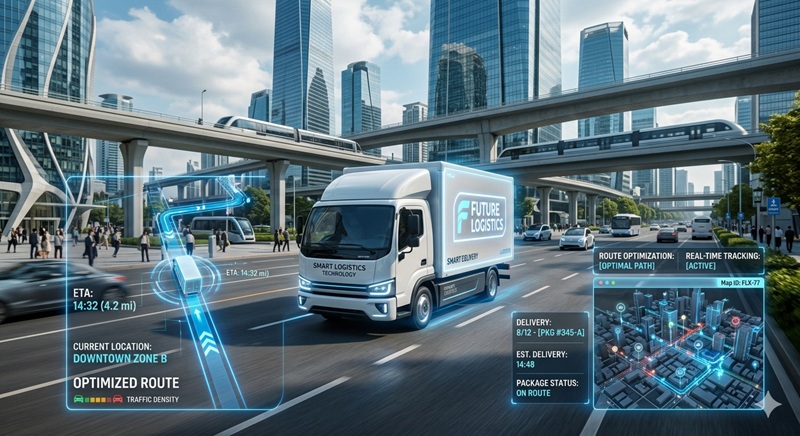
Real-time delivery tracking systems are digital technologies that allow businesses and customers to track the exact location and delivery status of a package while it is moving from the warehouse to the final destination. These systems provide live delivery updates, helping companies monitor shipments and ensuring customers know exactly when their orders will arrive.
In simple words, a real-time delivery tracking system shows where a delivery is right now, where it is going, and when it will reach the customer. Instead of waiting for manual updates, businesses and customers can see the delivery journey instantly through a tracking dashboard, website, or mobile app.
Today, real-time delivery tracking has become a critical part of modern logistics management and supply chain operations, especially in industries such as eCommerce, courier services, retail logistics, food delivery, and last-mile delivery services.
A real-time delivery tracking system is a technology that allows businesses and customers to monitor the live location, delivery progress, and estimated arrival time of shipments using GPS, mobile applications, and cloud-based logistics software.
How Real-Time Delivery Tracking Systems Work
Real-time delivery tracking systems work by collecting and sharing live data from delivery vehicles, drivers, and logistics platforms.
Here is a simple step-by-step process:
1. GPS Location Tracking
Delivery drivers use GPS-enabled smartphones or vehicle tracking devices that send their location data continuously.
2. Cloud-Based Logistics Platform
The delivery location data is sent to a cloud-based delivery management system, where the information is processed and stored.
3. Route Monitoring and Data Analysis
The system analyses factors such as delivery routes, traffic conditions, driver location, and order details to calculate the most accurate delivery time.
4. Live Delivery Updates
Customers and businesses receive real-time shipment tracking updates, including the driver’s location, delivery status, and estimated time of arrival (ETA).
This process allows companies to maintain full delivery visibility across the supply chain.
Key Features of Real-Time Delivery Tracking Systems
Modern delivery tracking software includes several powerful features that help businesses manage logistics more efficiently.
Live GPS Shipment Tracking
Businesses can see the exact location of delivery vehicles on a digital map in real time.
Accurate Estimated Time of Arrival (ETA)
The system calculates delivery time based on driver location, traffic patterns, and route optimisation algorithms.
Automated Delivery Notifications
Customers receive automatic updates through SMS, email, or mobile notifications about order dispatch, delivery progress, and expected arrival time.
Proof of Delivery (POD)
Drivers can collect digital signatures, photos, or barcode confirmations when a delivery is completed.
Delivery Route Monitoring
Companies can track driver routes and ensure faster and more efficient last-mile delivery operations.
Why Real-Time Delivery Tracking Systems Are Important
In today’s fast-moving logistics industry, customers expect complete transparency and fast deliveries. Real-time delivery tracking systems help businesses meet these expectations.
Improved Delivery Transparency
Customers can see exactly where their package is, which increases trust and satisfaction.
Better Logistics Efficiency
Businesses can track deliveries, optimise routes, and reduce delays in the last-mile delivery process.
Enhanced Customer Experience
Providing live tracking improves the overall delivery experience and keeps customers informed.
Reduced Customer Support Requests
When customers can track their orders themselves, businesses receive fewer support calls asking about delivery status.
Higher Delivery Success Rates
Drivers can communicate better with customers, which helps reduce missed or failed deliveries.
Industries That Use Real-Time Delivery Tracking Systems
Many industries rely on real-time logistics tracking systems to improve delivery performance and supply chain visibility.
Some of the major industries include:
- eCommerce and online retail
- Courier and parcel delivery services
- Food and grocery delivery platforms
- Healthcare and pharmaceutical logistics
- Manufacturing and supply chain distribution
As global commerce continues to grow, more companies are adopting real-time shipment tracking solutions to improve delivery speed, efficiency, and customer satisfaction.
How Real-Time Delivery Tracking Systems Work
A real-time delivery tracking system works by collecting live location and delivery data from drivers, vehicles, and logistics software, and then showing this information instantly on a digital platform. It allows businesses and customers to track deliveries in real time, monitor delivery progress, and know the estimated time of arrival (ETA).
In modern logistics and supply chain management, these systems combine technologies such as GPS tracking, mobile applications, cloud-based delivery software, and route optimisation tools to provide full visibility of shipments from dispatch to final delivery.
Below is a simple explanation of how real-time delivery tracking systems work in the delivery process.
1. Order Dispatch and Tracking Activation
The process begins when an order is prepared and dispatched from a warehouse, fulfilment centre, or store. Once the package is assigned to a driver or delivery vehicle, the delivery tracking system automatically activates the shipment tracking process.
The system generates a unique tracking ID or tracking link that allows businesses and customers to monitor the delivery in real time. This tracking information is stored in the delivery management software and connected to the driver’s mobile device.
2. GPS Location Tracking
Real-time delivery tracking systems rely heavily on GPS technology to determine the exact location of the delivery vehicle.
Drivers typically use GPS-enabled smartphones or vehicle tracking devices that continuously send their location to the central delivery platform. This allows logistics managers to see the live movement of drivers and vehicles on a digital map.
Because GPS updates happen frequently, the system can provide accurate real-time shipment tracking and route monitoring.
3. Data Transmission to Cloud-Based Platforms
Once the GPS location and delivery status are captured, the data is transmitted to a cloud-based logistics platform. This platform collects and processes all tracking information, including:
- Driver location
- Order details
- Delivery route
- Traffic conditions
- Delivery progress
The cloud system ensures that the real-time delivery tracking data is instantly available to businesses, dispatch teams, and customers.
4. Route Monitoring and Intelligent ETA Calculation
Advanced delivery tracking software uses algorithms and route optimisation tools to calculate the estimated time of arrival (ETA) for each delivery.
The system analyses several factors, including:
- Current driver location
- Distance to the delivery address
- Traffic conditions
- Route efficiency
- Number of deliveries in the queue
This helps businesses provide more accurate delivery time predictions and improve last-mile delivery efficiency.
5. Live Delivery Updates for Customers
One of the biggest benefits of real-time delivery tracking systems is that customers receive live delivery updates.
Customers can track their packages through:
- Tracking links
- Delivery mobile apps
- SMS notifications
- Email updates
These updates inform customers when the order is dispatched, out for delivery, nearby, or successfully delivered. This level of transparency significantly improves the customer delivery experience.
6. Proof of Delivery Confirmation
When the package reaches the customer, the driver confirms the delivery using a proof of delivery (POD) system.
This may include:
- Digital signatures
- Delivery photos
- QR code scans
- OTP verification
The delivery confirmation is instantly recorded in the real-time delivery tracking system, ensuring accurate delivery records and reducing disputes.
Why This Process Matters
By using real-time delivery tracking technology, businesses gain complete visibility over their delivery operations. This helps companies optimise delivery routes, reduce delays, improve driver performance, and enhance customer satisfaction.
At the same time, customers benefit from accurate shipment tracking, live delivery updates, and reliable delivery times, which are now essential expectations in modern eCommerce and logistics services.
Why Real-Time Delivery Tracking Systems Are Critical for Businesses in 2026
In 2026, real-time delivery tracking systems have become a critical technology for businesses that manage deliveries, logistics operations, or online orders. With the rapid growth of eCommerce, same-day delivery services, and global supply chains, customers now expect complete visibility and fast updates about their orders.

A real-time delivery tracking system allows businesses to monitor deliveries live, improve delivery accuracy, and provide customers with transparent shipment updates. Companies that use advanced delivery tracking software can manage their logistics operations more efficiently while also improving customer trust and satisfaction.
For many industries, especially eCommerce, retail, courier services, and food delivery platforms, real-time tracking is no longer a luxury feature — it is a business necessity.
1. Rising Customer Expectations for Delivery Transparency
Modern customers want to know exactly where their package is and when it will arrive. Simply providing a delivery date is no longer enough.
A real-time shipment tracking system gives customers live updates about their order status, driver location, and estimated delivery time. Customers can follow their package journey from dispatch to delivery, which creates a more reliable and transparent delivery experience.
Businesses that offer live delivery tracking build greater customer confidence and improve overall satisfaction.
2. Growth of eCommerce and Faster Delivery Demand
The rapid expansion of online shopping and digital marketplaces has significantly increased the number of daily deliveries worldwide. Customers now expect same-day delivery, next-day delivery, and faster last-mile delivery services.
Real-time delivery tracking systems help businesses manage this growing demand by allowing them to track drivers, monitor routes, and coordinate deliveries more efficiently.
With better delivery visibility, companies can ensure that orders reach customers quickly and without unnecessary delays.
3. Improved Logistics Visibility and Operational Control
One of the biggest advantages of real-time logistics tracking systems is improved operational visibility.
Businesses can monitor:
- Driver locations in real time
- Delivery progress and order status
- Vehicle movement and delivery routes
- Potential delays or route issues
This level of visibility allows logistics managers to make faster decisions and quickly respond to problems. As a result, businesses can maintain smooth and efficient delivery operations.
4. Better Route Optimisation and Delivery Efficiency
Modern delivery tracking platforms often include route optimisation tools that analyse traffic conditions, delivery addresses, and driver locations.
This technology helps businesses identify the fastest and most cost-effective delivery routes, which leads to:
- Reduced fuel consumption
- Shorter delivery times
- Lower operational costs
- Higher driver productivity
Efficient route planning is especially important for companies handling large delivery volumes in urban areas.
5. Enhanced Customer Experience and Brand Trust
Providing real-time delivery updates significantly improves the customer experience. Customers feel more confident when they can track their orders and receive updates about delivery progress.
Features such as live delivery maps, arrival notifications, and automated SMS alerts help keep customers informed throughout the delivery journey.
Businesses that prioritise delivery transparency often see higher customer satisfaction, repeat purchases, and stronger brand loyalty.
6. Reduced Customer Support Workload
Without real-time tracking, customers often contact support teams to ask questions like:
- Where is my order?
- When will my package arrive?
- Has my delivery been dispatched?
A real-time delivery tracking system reduces these queries by allowing customers to check delivery status themselves. This helps businesses reduce customer support workload and operational costs.
7. Higher Delivery Success Rates
Real-time tracking also improves last-mile delivery success rates. Drivers can communicate with customers more effectively and provide accurate arrival times.
Customers can prepare to receive their packages, which reduces:
- Failed delivery attempts
- Missed deliveries
- Delivery rescheduling
As a result, businesses can complete more deliveries successfully on the first attempt.
8. Competitive Advantage in Modern Logistics
In today’s highly competitive logistics and eCommerce market, businesses must adopt advanced technologies to stay ahead. Companies that implement real-time delivery tracking solutions gain a clear competitive advantage.
These systems help organisations deliver faster, smarter, and more reliable logistics services, which improves both operational performance and customer satisfaction.
Top Reasons Businesses Are Investing Heavily in Real-Time Delivery Tracking Systems
In today’s fast-moving digital economy, businesses must deliver products quickly, accurately, and transparently. As online shopping continues to grow and customers expect faster deliveries, companies are increasingly investing in real-time delivery tracking systems to improve their logistics operations.
A real-time delivery tracking system allows businesses to monitor shipments live, track delivery vehicles, and provide customers with instant updates about their orders. This technology plays a crucial role in modern logistics, supply chain management, and last-mile delivery operations.
Because of these advantages, organisations across industries such as eCommerce, retail, courier services, and food delivery are heavily investing in delivery tracking software and logistics tracking solutions.
Below are the key reasons why businesses are adopting real-time shipment tracking systems at a rapid pace.
1. Growing Customer Expectations for Delivery Transparency
Modern customers expect complete visibility during the delivery process. They want to know where their package is, when it will arrive, and whether there are any delays.
A real-time delivery tracking system provides live updates on delivery progress, including the driver’s location and the estimated time of arrival (ETA). Customers can track their order through a tracking link, mobile app, or delivery notification system.
Providing live delivery tracking builds trust and improves the overall customer experience, which is why businesses are investing in advanced tracking technology.
2. Rapid Growth of eCommerce and Online Orders
The rapid growth of eCommerce and digital marketplaces has significantly increased the number of daily deliveries worldwide. Businesses must now handle large volumes of orders while maintaining fast delivery speeds.
Real-time delivery tracking systems help businesses manage this growth by providing better visibility into shipments, delivery routes, and driver activities.
With improved logistics monitoring, companies can ensure that orders are delivered quickly and efficiently, even during peak demand periods.
3. Better Last-Mile Delivery Management
The last-mile delivery stage, which is the final step of the delivery journey, is often the most complex and expensive part of the logistics process.
Real-time delivery tracking systems allow businesses to monitor driver routes, optimise delivery schedules, and track vehicle movement in real time. This improves delivery coordination and reduces delays.
As a result, businesses can complete deliveries faster while lowering operational costs.
4. Improved Logistics Visibility and Operational Control
One of the biggest advantages of real-time logistics tracking systems is complete operational visibility.
Businesses can track:
- Delivery vehicles in real time
- Driver performance and route efficiency
- Shipment status and delivery progress
- Potential delays or route disruptions
This information helps logistics managers make quick decisions and improve delivery efficiency across the supply chain.
5. Enhanced Customer Experience
Customer experience has become a major competitive factor in the logistics and eCommerce industries.
By offering live shipment tracking and automated delivery notifications, businesses keep customers informed throughout the delivery journey.
Customers receive updates such as:
- Order dispatched
- Out for delivery
- Driver nearby
- Delivery completed
These updates create a more reliable and transparent delivery experience, leading to higher customer satisfaction and repeat purchases.
6. Reduction in Customer Support Requests
When customers cannot track their orders, they often contact support teams to ask about delivery status.
A real-time delivery tracking platform allows customers to check delivery progress themselves. This reduces common queries like:
- Where is my order?
- When will my package arrive?
- Has my delivery been dispatched?
As a result, businesses can reduce the workload on customer service teams and lower operational costs.
7. Higher Delivery Success Rates
Failed deliveries can create extra costs and operational challenges for businesses.
Real-time delivery tracking systems provide accurate delivery updates and arrival notifications, allowing customers to prepare for delivery.
Drivers can also communicate more effectively with customers when needed. This helps reduce:
- Missed deliveries
- Delivery rescheduling
- Return shipments
Higher delivery success rates improve both efficiency and customer satisfaction.
8. Data Insights for Better Logistics Decisions
Modern delivery tracking software collects valuable data about delivery operations. Businesses can analyse this data to improve their logistics strategies.
For example, companies can track:
- Average delivery times
- Route performance
- Driver productivity
- Delivery delays
These insights help businesses optimise delivery routes, improve driver efficiency, and make data-driven logistics decisions.
9. Competitive Advantage in the Modern Delivery Market
The logistics and eCommerce industries are becoming increasingly competitive. Businesses must adopt advanced logistics technology to stay ahead.
Companies that invest in real-time delivery tracking systems can provide faster deliveries, better transparency, and a superior customer experience.
This helps businesses build stronger customer relationships, improve brand reputation, and gain a competitive advantage in the market.
Key Features of Modern Real-Time Delivery Tracking Systems
Modern real-time delivery tracking systems have become an essential part of logistics management, supply chain visibility, and last-mile delivery operations. These systems are designed to help businesses monitor shipments, track delivery vehicles, and provide customers with accurate delivery updates.
Unlike traditional tracking tools, modern delivery tracking software uses advanced technologies such as GPS tracking, cloud-based logistics platforms, mobile applications, and data analytics. These features allow businesses to manage deliveries more efficiently while also improving the customer experience.
Below are the most important features of modern real-time delivery tracking systems that make them powerful tools for today’s logistics and eCommerce businesses.
Live GPS Tracking of Delivery Vehicles
One of the most important features of a real-time delivery tracking system is live GPS tracking. This technology allows businesses to monitor the exact location of delivery vehicles and drivers in real time.
Using GPS-enabled smartphones or vehicle tracking devices, the system continuously sends location data to a central platform. Logistics managers can see all deliveries on a digital map dashboard, making it easier to track driver movement and delivery progress.

Live GPS tracking improves delivery visibility, route monitoring, and operational control, which are essential for efficient logistics management.
Accurate Estimated Time of Arrival (ETA)
Another key feature of modern delivery tracking systems is the ability to calculate an accurate estimated time of arrival (ETA).
The system uses data such as:
- Current driver location
- Traffic conditions
- Delivery route distance
- Number of deliveries on the route
By analysing these factors, the system can predict when the package will arrive. This helps businesses provide reliable delivery timelines and real-time shipment updates to customers.
Accurate ETA predictions improve the customer delivery experience and reduce uncertainty.
Automated Customer Notifications
Modern real-time delivery tracking software automatically sends delivery updates to customers at every stage of the delivery journey.
Customers may receive notifications when:
- The order is dispatched
- The package is out for delivery
- The driver is nearby
- The delivery is completed
These updates can be sent through SMS, email, mobile apps, or push notifications. Automated communication keeps customers informed and reduces the need for manual customer support.
Delivery Route Monitoring and Optimisation
Efficient route planning is essential for businesses that manage multiple deliveries daily. Modern delivery tracking systems include route monitoring and optimisation tools that help drivers take the fastest and most efficient routes.
The system analyses real-time traffic data, delivery addresses, and driver location to recommend the best routes. This feature helps businesses:
- Reduce delivery delays
- Lower fuel costs
- Increase driver productivity
- Improve last-mile delivery efficiency
Route optimisation plays a major role in improving overall logistics performance.
Proof of Delivery (POD)
Proof of Delivery (POD) is another important feature of modern real-time shipment tracking systems. It allows drivers to confirm that a package has been successfully delivered.
Delivery confirmation may include:
- Digital signatures from customers
- Delivery photos
- QR code scans
- One-time password (OTP) verification
This information is instantly recorded in the delivery tracking platform, providing secure and accurate delivery records.
Proof of delivery helps businesses reduce disputes and ensures reliable delivery documentation.
Centralised Delivery Management Dashboard
Most modern delivery tracking platforms provide a central dashboard where businesses can manage all delivery operations in one place.
From this dashboard, logistics managers can:
- Monitor active deliveries
- Track driver locations
- View delivery status updates
- Analyse delivery performance
A centralised dashboard improves logistics visibility and operational efficiency, allowing businesses to manage large delivery networks effectively.
Data Analytics and Performance Insights
Modern real-time delivery tracking systems also provide valuable data and insights about delivery operations.
Businesses can analyse metrics such as:
- Average delivery times
- Driver performance
- Delivery delays
- Route efficiency
- Successful delivery rates
These insights help businesses identify problems, optimise logistics processes, and make data-driven decisions to improve delivery performance.
Seamless Integration with Logistics Software
Another important feature of modern delivery tracking systems is the ability to integrate with other business tools.
Many systems can connect with:
- Order management systems
- warehouse management systems
- eCommerce platforms
- customer relationship management (CRM) software
This integration ensures smooth communication between different logistics systems and improves overall supply chain efficiency.
How Real-Time Tracking Improves Last-Mile Delivery
Last-mile delivery is the final stage of the logistics process, where a product moves from the distribution centre or local warehouse to the customer’s doorstep. Although it is the shortest part of the delivery journey, it is often the most expensive and complex stage of the entire supply chain.
Today, with the rapid growth of eCommerce, customers expect same-day delivery, accurate delivery times, and full shipment visibility. Because of this, businesses are increasingly investing in real-time delivery tracking systems to improve last-mile delivery performance and customer satisfaction.
Real-time tracking allows logistics companies to monitor delivery vehicles, drivers, and shipments live on a digital map, helping them manage deliveries more efficiently and solve problems quickly.
Why Last-Mile Delivery Is Important in Logistics
Last-mile delivery plays a critical role in the overall customer experience and operational efficiency of logistics operations.
Here are the main reasons why it matters:
1. Direct impact on customer satisfaction
Customers judge a business based on the final delivery experience. Late deliveries, missing packages, or poor communication can damage brand trust.
With fast online shopping becoming the norm, customers expect:
- accurate delivery updates
- real-time delivery notifications
- reliable estimated arrival times
A smooth last-mile delivery process ensures customers receive their orders on time and without confusion.
2. A large portion of logistics costs
According to logistics research, last-mile delivery can account for up to 53% of total shipping costs. This happens because deliveries often involve:
- multiple stops
- urban traffic
- fuel costs
- labour costs
- route inefficiencies
Businesses therefore focus heavily on improving this stage to reduce operational expenses.
3. Competitive advantage for businesses
Companies that provide fast and transparent deliveries often gain a strong competitive edge. Real-time delivery tracking helps businesses offer better services such as:
- live delivery updates
- accurate ETAs
- delivery notifications
This improves customer trust and repeat purchases.
Common Challenges in Last-Mile Delivery
Despite its importance, last-mile delivery faces several operational challenges.
Traffic congestion and route delays
Urban deliveries often face heavy traffic, road closures, and unexpected delays. Without proper route visibility, drivers may take inefficient routes that increase delivery time and fuel consumption.
Lack of delivery visibility
Traditional delivery systems often provide limited tracking information. Customers may only see updates like:
- “Order shipped”
- “Out for delivery”
This lack of transparency can lead to customer frustration and support calls.
Failed deliveries
A major challenge in last-mile logistics is failed delivery attempts. This happens when:
- customers are not available at home
- addresses are incorrect
- drivers cannot locate the delivery location
Failed deliveries increase delivery costs and operational inefficiencies.
Poor communication with customers
Without real-time tracking tools, businesses struggle to keep customers informed about their deliveries. Customers may not know:
- when the driver will arrive
- whether the package is delayed
- if the delivery has been rescheduled
This often leads to poor delivery experiences.
How Real-Time Tracking Improves Last-Mile Delivery
Real-time tracking technology solves many of these challenges by providing live delivery visibility and smarter logistics management.
1. Live vehicle and shipment visibility
Real-time delivery tracking systems allow businesses to monitor delivery vehicles and shipments in real time using GPS technology.
Logistics managers can see:
- driver location
- delivery progress
- route performance
- delivery completion status
This level of real-time logistics visibility helps companies quickly detect delays and take corrective actions.
2. Smarter route optimisation
Real-time tracking works together with route optimisation software to ensure drivers follow the most efficient routes.
The system can automatically adjust routes based on:
- traffic conditions
- road closures
- delivery priorities
- driver availability
This improves:
- delivery speed
- fuel efficiency
- driver productivity
As a result, businesses can complete more deliveries in less time.
3. Accurate estimated delivery times (ETA)
One of the biggest benefits of real-time delivery tracking is the ability to provide accurate estimated arrival times (ETAs).
Customers can track their packages and see:
- where the delivery driver is
- how far the vehicle is from their location
- the expected delivery time
Accurate ETAs reduce uncertainty and improve the overall customer experience.
4. Reduced failed delivery attempts
Real-time tracking systems send automated delivery alerts and notifications to customers.
Customers receive updates such as:
- order dispatched
- driver on the way
- delivery arriving soon
These notifications help customers prepare for delivery, which significantly reduces failed delivery attempts.
5. Faster issue resolution
If something goes wrong during delivery, logistics managers can detect problems immediately through the tracking dashboard.
For example:
- vehicle delays
- route disruptions
- missed deliveries
Managers can quickly reroute drivers, contact customers, or adjust schedules to prevent larger problems.
This improves overall delivery reliability and operational efficiency.
6. Better customer experience and trust
Modern customers expect delivery transparency. Real-time tracking provides customers with complete visibility of their order journey.
Customers feel more confident when they can:
- track deliveries live
- receive accurate updates
- know exactly when their order will arrive
This leads to higher customer satisfaction, better reviews, and stronger brand loyalty.
Industries That Benefit the Most from Real-Time Delivery Tracking
Real-time delivery tracking has become a key technology in modern logistics and supply chain management. Businesses today need faster deliveries, better shipment visibility, and clear communication with customers. Real-time delivery tracking systems help companies monitor shipments, track vehicles, and provide live updates during the delivery journey.
With the rapid growth of eCommerce, same-day delivery services, and global supply chains, many industries now rely heavily on real-time shipment tracking and logistics visibility to improve efficiency and customer satisfaction.
Below are the industries that benefit the most from real-time delivery tracking systems.
eCommerce and Online Retail
The eCommerce and online retail industry is one of the biggest users of real-time delivery tracking. As online shopping continues to grow, customers expect fast deliveries and full order visibility.
Real-time delivery tracking allows online retailers to provide live order tracking and delivery updates from the moment an order is shipped until it reaches the customer.
Key benefits for eCommerce businesses include:
- Improved order tracking transparency
Customers can see exactly where their package is during transit, which reduces uncertainty and builds trust. - Better customer communication
Automated notifications inform customers when their order is dispatched, out for delivery, and arriving soon. - Reduced customer support queries
When customers can track their orders themselves, businesses receive fewer “Where is my order?” enquiries. - Higher customer satisfaction
Real-time delivery updates improve the overall shopping experience and encourage repeat purchases.
Because delivery experience strongly affects brand reputation, real-time tracking has become essential for modern eCommerce logistics.
Logistics and Transportation Companies
For logistics and transportation companies, real-time delivery tracking provides complete visibility into fleet operations, shipments, and driver activity.
Delivery managers can monitor vehicles and shipments through a centralised tracking dashboard, allowing them to track delivery progress in real time.
Major advantages include:
- Full fleet visibility
Managers can see the live location of delivery vehicles and monitor route performance. - Improved route management
Real-time data helps companies optimise routes based on traffic conditions and delivery priorities. - Better operational efficiency
Businesses can quickly detect delays, missed deliveries, or route disruptions. - Enhanced driver productivity
Logistics teams can assign tasks and adjust delivery schedules based on real-time information.
These capabilities allow logistics providers to deliver faster, reduce operational costs, and improve service reliability.
Food Delivery Services
The food delivery industry relies heavily on real-time tracking because deliveries must be fast, accurate, and time-sensitive.
Customers ordering meals through food delivery platforms expect to know exactly when their food will arrive. Real-time delivery tracking provides live updates that show the progress of the delivery driver.
Benefits for food delivery services include:
- Live driver tracking
Customers can see the driver’s location and estimated arrival time. - Faster and more efficient deliveries
Delivery platforms can optimise routes to reduce travel time. - Improved order accuracy and coordination
Restaurants and delivery drivers can synchronise preparation and pickup times. - Better customer experience
Customers feel more confident when they can monitor their order in real time.
For food delivery companies, real-time tracking improves delivery speed, reduces delays, and increases customer trust.
Retail Supply Chains
Retail businesses operate complex supply chains where products must move efficiently between suppliers, warehouses, distribution centres, and retail stores.
Real-time delivery tracking helps retailers manage inventory movement and delivery coordination across multiple locations.
Important benefits include:
- Improved inventory visibility
Retailers can track goods in transit and know when products will arrive. - Better stock planning
Accurate delivery data helps businesses avoid stock shortages or overstocking. - Faster store replenishment
Retailers can ensure that popular products are delivered to stores quickly. - Improved supply chain coordination
Managers can monitor shipments across warehouses, suppliers, and stores.
By improving supply chain visibility, real-time logistics tracking helps retailers maintain efficient inventory flow and avoid disruptions.
Healthcare and Pharmaceutical Logistics
In the healthcare and pharmaceutical industry, delivery accuracy and reliability are extremely important. Many shipments include sensitive medical supplies, medicines, vaccines, and laboratory samples.
Real-time delivery tracking plays a critical role in ensuring that these items reach their destination safely and on time.
Key advantages include:
- Tracking sensitive medical shipments
Healthcare providers can monitor the location of medicines and medical equipment during transit. - Ensuring delivery reliability
Hospitals and pharmacies can prepare for incoming medical supplies based on accurate delivery times. - Improved supply chain safety
Tracking systems help prevent loss, theft, or mishandling of critical medical products. - Regulatory compliance and transparency
Real-time tracking records help healthcare organisations maintain proper shipment documentation.
For pharmaceutical logistics, shipment visibility and accurate delivery tracking are essential for protecting patient safety and maintaining supply chain integrity.
Real-Time Delivery Tracking vs Traditional Delivery Tracking
Delivery tracking plays a major role in modern logistics and supply chain management. Businesses need to know where their shipments are, when they will arrive, and whether there are any delays during transportation. At the same time, customers want clear and reliable updates about their orders.
For many years, companies used traditional delivery tracking systems, which provided only limited updates about shipment status. However, with the growth of eCommerce logistics, same-day delivery, and last-mile delivery services, businesses now require more advanced solutions.
This is where real-time delivery tracking systems have become essential. These systems provide live shipment visibility, accurate delivery updates, and improved communication between businesses, drivers, and customers.
Understanding the difference between real-time delivery tracking and traditional delivery tracking helps businesses choose the right solution for efficient delivery operations.
What Is Traditional Delivery Tracking?
Traditional delivery tracking is a basic shipment tracking method that provides status updates only at certain points during the delivery journey.
In this system, packages are scanned when they reach specific locations such as:
- warehouses
- sorting centres
- distribution hubs
- delivery stations
Each scan generates a tracking update for the customer.
Typical tracking messages in traditional delivery tracking include:
- Order shipped
- Arrived at sorting facility
- Out for delivery
- Delivered
Although this system provides basic information, it does not show the exact location of the delivery vehicle or shipment in real time.
Limitations of Traditional Delivery Tracking
While traditional tracking helped logistics companies manage deliveries in the past, it has several limitations in today’s fast-moving delivery environment.
Limited shipment visibility
Businesses and customers only receive updates when a package is scanned at a checkpoint. Between these points, the shipment location remains unknown.
Inaccurate delivery estimates
Because the system does not track deliveries live, estimated delivery times are often broad and may change unexpectedly.
Slow response to delays
If traffic, weather, or route disruptions occur, logistics teams may not know about the delay until the shipment reaches the next scanning location.
Poor delivery transparency
Customers often feel uncertain about their order status because they cannot track their package continuously.
What Is Real-Time Delivery Tracking?
Real-time delivery tracking is an advanced logistics technology that allows businesses to monitor deliveries live from dispatch to final delivery.
These systems use technologies such as:
- GPS tracking
- cloud-based logistics platforms
- mobile driver applications
- Internet of Things (IoT) devices
This technology enables logistics managers and customers to track the exact location of delivery vehicles and shipments in real time.
Real-time delivery tracking systems provide features such as:
- live vehicle tracking on digital maps
- accurate estimated delivery times (ETA)
- automated delivery notifications
- real-time route updates
This creates complete logistics visibility and better control over delivery operations.
Key Differences Between Real-Time Delivery Tracking and Traditional Delivery Tracking
Although both systems aim to track shipments, they differ greatly in terms of visibility, efficiency, and customer experience.
1. Shipment Visibility
Traditional delivery tracking offers limited visibility, as updates are only provided when a package is scanned at certain checkpoints.
Real-time delivery tracking provides continuous live tracking, allowing businesses and customers to monitor deliveries at any moment.
This improved shipment visibility helps logistics teams manage operations more effectively.
2. Delivery Time Accuracy
Traditional tracking systems often provide general delivery windows, which may change due to unexpected delays.
Real-time delivery tracking systems calculate dynamic estimated arrival times (ETA) based on live factors such as:
- driver location
- traffic conditions
- route progress
This leads to more accurate and reliable delivery updates.
3. Customer Experience
In traditional delivery tracking, customers only receive basic status updates during the delivery process.
Real-time tracking improves the customer experience by allowing customers to:
- track their package live
- receive instant delivery notifications
- know when the driver is approaching their location
This level of transparency builds customer trust and satisfaction.
4. Operational Efficiency
Traditional systems provide limited operational insights for logistics managers.
Real-time delivery tracking provides detailed logistics data, including:
- vehicle location
- route performance
- delivery completion status
- driver activity
This data helps companies optimise delivery routes, reduce fuel costs, and improve fleet management.
5. Problem Detection and Resolution
With traditional delivery tracking, delivery issues may only be noticed after delays occur.
Real-time tracking systems allow businesses to identify problems immediately, such as:
- route disruptions
- delivery delays
- driver issues
Logistics teams can quickly adjust routes or schedules to keep deliveries on track.
Why Modern Businesses Prefer Real-Time Delivery Tracking
As customer expectations for fast and transparent delivery continue to grow, businesses are increasingly adopting real-time delivery tracking technology.
Key reasons include:
- increasing demand for delivery transparency
- growth of same-day and next-day delivery services
- need for better last-mile delivery management
- pressure to improve logistics efficiency and fleet operations
Real-time tracking allows companies to deliver faster, communicate better with customers, and maintain full control over their logistics operations.
How Businesses Can Choose the Right Delivery Tracking System
Choosing the right delivery tracking system is an important decision for businesses that manage shipments, deliveries, and logistics operations. As customer expectations for fast, transparent, and reliable deliveries continue to grow, companies must invest in a tracking solution that improves both operational efficiency and customer experience.
A good real-time delivery tracking system allows businesses to monitor shipments, optimise delivery routes, manage drivers, and provide accurate delivery updates to customers. However, not all tracking systems offer the same features or performance. Businesses should carefully evaluate their needs before selecting the right solution.
Below are the key factors businesses should consider when choosing the best delivery tracking software for their logistics operations.
Understand Your Business Delivery Needs
Before selecting a delivery tracking solution, businesses must first understand their delivery operations and logistics requirements.
Different industries and companies have different delivery models. For example:
- eCommerce businesses may require last-mile delivery tracking and customer notifications.
- Logistics companies may need fleet tracking and route optimisation tools.
- Retail supply chains may focus on shipment visibility and inventory movement.
By identifying delivery challenges such as delays, route inefficiencies, or poor tracking visibility, businesses can choose a system that directly solves those problems.
Look for Real-Time Tracking Capabilities
One of the most important features of a modern delivery tracking system is real-time shipment tracking.
Real-time delivery tracking allows businesses to monitor:
- delivery vehicle locations
- driver routes
- shipment progress
- estimated delivery times
This live visibility helps logistics managers respond quickly to unexpected issues such as traffic delays or route disruptions.
For customers, real-time tracking provides accurate delivery updates and live package tracking, which significantly improves the delivery experience.
Check Integration with Existing Systems
A reliable delivery tracking system should easily integrate with existing business systems such as:
- warehouse management systems (WMS)
- order management systems (OMS)
- eCommerce platforms
- enterprise resource planning (ERP) software
Integration allows delivery tracking data to flow smoothly between systems. This helps businesses manage orders, inventory, and deliveries from a single platform.
Without proper integration, businesses may face data gaps, manual processes, and operational inefficiencies.
Evaluate Route Optimisation Features
Efficient route planning is essential for improving last-mile delivery performance.
Many advanced delivery tracking systems include route optimisation software that helps drivers find the fastest and most efficient routes.
These tools analyse factors such as:
- traffic conditions
- delivery locations
- delivery priority
- fuel efficiency
Route optimisation improves delivery speed, reduces fuel costs, and increases driver productivity.
Consider Customer Communication Features
Modern delivery tracking systems should include strong customer communication tools.
Customers today expect to receive delivery notifications and real-time order updates. A good tracking system should provide automated alerts such as:
- order dispatched
- driver on the way
- delivery arriving soon
- order delivered
Some platforms also allow customers to track deliveries on a live map, which increases delivery transparency and reduces customer support enquiries.
Ensure Scalability for Future Growth
Businesses should choose a delivery tracking system that can scale with their growth.
As companies expand their operations, they may need to handle:
- more delivery vehicles
- larger shipment volumes
- additional warehouses or locations
A scalable delivery tracking platform ensures the system can support increased logistics operations without performance issues.
Cloud-based tracking solutions are often preferred because they allow businesses to expand their delivery capabilities easily.
Review Data Analytics and Reporting
Advanced delivery tracking systems provide data analytics and reporting tools that help businesses improve logistics performance.
These reports may include insights such as:
- delivery success rates
- route efficiency
- driver performance
- average delivery time
- failed delivery attempts
Using this data, businesses can identify operational weaknesses and make improvements that increase delivery efficiency and customer satisfaction.
Prioritise System Reliability and Security
Delivery tracking systems manage important logistics data, including shipment details, driver locations, and customer information.
Therefore, businesses must ensure the system offers strong data security and reliable performance.
A trustworthy tracking platform should provide:
- secure cloud infrastructure
- reliable system uptime
- data protection measures
- regular software updates
Reliable systems ensure delivery operations continue smoothly without technical disruptions.
Selecting the right delivery tracking system is essential for businesses that want to improve logistics operations and meet modern delivery expectations.
A powerful real-time delivery tracking solution provides live shipment visibility, route optimisation, automated customer notifications, and detailed performance insights.
Future Trends in Real-Time Delivery Tracking Technology
Real-time delivery tracking technology is evolving rapidly as logistics companies try to meet rising customer expectations for faster and more transparent deliveries. In 2026, businesses are no longer satisfied with simply knowing where a parcel is located. Instead, they want to understand how the shipment is moving, when it will arrive, and whether any risks could affect the delivery.
Recent research shows that demand for real-time package tracking systems is growing strongly, with the global market expected to grow at around 12% annually, driven by e-commerce expansion and increasing customer expectations for delivery visibility.
Below are the most important future trends shaping real-time delivery tracking technology. These trends will define the next generation of logistics tracking systems.
1. Artificial Intelligence (AI) and Predictive Delivery Tracking
Artificial Intelligence (AI) is becoming the backbone of modern real-time logistics tracking systems. Instead of simply showing the current location of a shipment, AI can predict delivery times, detect delays, and optimise routes automatically.
AI algorithms analyse multiple data sources, including:
- GPS tracking data
- traffic conditions
- weather patterns
- vehicle performance
- historical delivery data
Using this information, AI can generate highly accurate Estimated Time of Arrival (ETA) predictions and adjust delivery routes in real time.
For example, advanced AI routing systems use machine learning to analyse traffic congestion and delivery patterns, allowing logistics companies to avoid delays and reduce fuel consumption.
Key Benefits
- More accurate delivery predictions
- Faster response to delays or disruptions
- Reduced fuel and operational costs
- Better customer experience
2. Internet of Things (IoT) and Smart Sensor Tracking
The next generation of real-time delivery tracking technology will rely heavily on the Internet of Things (IoT). IoT devices allow logistics companies to track not only the location of shipments but also their condition during transport.
Modern logistics platforms are now integrating sensors that monitor:
- temperature
- humidity
- shock or vibration
- light exposure
- door openings
This means businesses can detect problems before the shipment arrives, rather than after damage has already occurred.
For example, pharmaceutical or food companies require strict environmental control during delivery. IoT sensors ensure that products remain within safe temperature ranges during transport.
Key Benefits
- Better cargo protection
- Reduced product damage
- Improved supply chain visibility
- Real-time alerts for potential risks
3. Digital Twins for Real-Time Supply Chain Simulation
One of the most advanced innovations in logistics is the use of digital twins. A digital twin is a virtual replica of a real-world logistics network.
This technology allows companies to simulate and analyse:
- delivery routes
- warehouse operations
- shipment flows
- traffic patterns
By combining digital twins with real-time tracking data, businesses can predict disruptions and optimise delivery networks before problems occur.
According to supply chain technology research, digital twins are becoming a major part of next-generation logistics systems, helping companies improve planning and operational efficiency.
Key Benefits
- Better delivery planning
- Reduced operational risks
- Faster decision-making
- Improved logistics efficiency
4. Autonomous Vehicles and Drone Delivery Tracking
Autonomous delivery technology is another trend shaping the future of real-time tracking systems. Delivery drones and autonomous vehicles are already being tested by major logistics companies.
These systems will require advanced tracking platforms capable of monitoring:
- autonomous vehicle routes
- drone flight paths
- battery performance
- delivery confirmation
Autonomous delivery systems can significantly reduce delivery times, particularly in urban areas and last-mile delivery operations.
Key Benefits
- Faster deliveries
- Lower labour costs
- Efficient last-mile logistics
- Reduced traffic congestion
5. Blockchain for Secure and Transparent Tracking
Security and transparency are becoming increasingly important in global logistics. Blockchain technology is emerging as a solution for secure shipment tracking and supply chain transparency.
Blockchain enables every shipment update to be recorded in a tamper-proof digital ledger, ensuring that all parties involved in the delivery process have access to the same verified information.
This technology is particularly useful for:
- international shipping
- high-value goods
- pharmaceuticals
- regulated industries
Key Benefits
- Improved data security
- Reduced fraud and shipment manipulation
- Greater transparency in logistics networks
- Stronger trust between supply chain partners
6. Sustainable and Green Logistics Tracking
Sustainability is becoming a major priority for logistics companies. Freight transport currently contributes around 7–8% of global greenhouse gas emissions, which is pushing businesses to adopt greener logistics solutions.
Real-time delivery tracking systems will play an important role in reducing environmental impact by:
- optimising delivery routes
- reducing empty miles
- improving vehicle utilisation
- enabling electric delivery fleets
AI-powered logistics systems can reduce emissions by 10–15% through route optimisation and better load planning.
Key Benefits
- Lower carbon emissions
- Better fleet efficiency
- Compliance with environmental regulations
- Sustainable logistics operations
7. Hyper-Accurate ETA and Customer Experience Platforms
Customer expectations for delivery transparency are increasing rapidly. Today’s consumers expect:
- real-time order tracking
- precise delivery windows
- instant delay notifications
- live driver location tracking
Future tracking platforms will combine AI, IoT, and big data analytics to provide hyper-accurate delivery predictions.
These systems will also include advanced features such as:
- live delivery maps
- automated SMS updates
- AI customer support chatbots
- delivery rescheduling options
This will significantly improve the overall delivery experience.
Why Choose Cor Advance Solutions for Smart Delivery Tracking Systems
In today’s fast-moving logistics industry, businesses must deliver goods quickly, accurately, and transparently. Customers now expect real-time updates, faster delivery, and clear communication throughout the shipping process. This is why many companies are adopting smart delivery tracking systems powered by modern logistics technology.
Cor Advance Solutions helps businesses implement advanced delivery tracking platforms that improve efficiency, reduce delays, and give full visibility across the entire supply chain.
Logistics Technology Expertise
One of the biggest advantages of working with Cor Advance Solutions is their strong expertise in logistics technology and digital supply chain systems.
The company helps businesses modernise their logistics operations using technologies such as:
- Real-time GPS delivery tracking
- Cloud-based logistics management platforms
- Route optimisation systems
- AI-powered delivery analytics
- IoT-enabled shipment monitoring
These technologies allow businesses to track shipments in real time, monitor driver locations, and identify potential delivery delays before they happen.
With the help of smart delivery tracking software, companies can provide customers with accurate delivery updates, estimated arrival times, and instant notifications. This improves customer trust and reduces the number of support queries related to shipment status.
For logistics managers, these systems also provide powerful dashboards that show delivery performance, route efficiency, and operational insights.
Scalable Delivery Tracking Solutions
Every logistics company has different needs. A small e-commerce business may only manage a few daily deliveries, while a large logistics provider may handle thousands of shipments across multiple regions.
Cor Advance Solutions offers scalable delivery tracking solutions that grow with your business.
Their platforms are designed to support:
- Small delivery teams
- Growing e-commerce businesses
- Large logistics companies
- Multi-warehouse distribution networks
As a business grows, the delivery tracking system can easily scale to manage more vehicles, drivers, shipments, and customers.
This flexibility ensures that companies do not need to replace their systems every few years. Instead, they can simply expand their existing smart logistics platform.
Scalable delivery tracking systems also support integrations with:
- Warehouse management systems (WMS)
- Transport management systems (TMS)
- E-commerce platforms
- Customer notification tools
This creates a fully connected digital logistics ecosystem that improves operational efficiency and decision-making.
Automation-Driven Logistics Platforms
Manual logistics processes often lead to errors, delays, and high operational costs. To solve this problem, Cor Advance Solutions builds automation-driven logistics platforms that streamline delivery operations.
Automation helps businesses manage logistics processes such as:
- Automatic delivery scheduling
- Smart route optimisation
- Real-time driver updates
- Automated customer notifications
- Delivery status tracking
- Proof of delivery management
For example, when a delivery is dispatched, the system can automatically send tracking updates to customers through SMS, email, or mobile apps. Customers can monitor their shipment location and estimated delivery time without contacting support.
Automation also helps logistics managers assign drivers, optimise delivery routes, and monitor delivery performance in real time.
These automation-driven logistics platforms reduce human errors and improve last-mile delivery efficiency, which is one of the most challenging parts of the logistics process.
Improved Delivery Efficiency
Using smart real-time delivery tracking systems, businesses can significantly improve delivery performance.
Cor Advance Solutions enables companies to:
- Reduce delivery delays
- Improve route planning
- Track driver performance
- Monitor delivery status instantly
- Optimise fleet management
With better visibility and data insights, businesses can quickly identify operational problems and fix them before they affect customers.
This leads to faster deliveries, lower transportation costs, and higher customer satisfaction.
Better Supply Chain Visibility
One of the most valuable benefits of modern logistics tracking systems is full supply chain visibility.
Cor Advance Solutions provides centralised dashboards where businesses can track shipments, vehicles, and delivery progress in real time.
Supply chain managers can easily see:
- Shipment locations
- Delivery progress
- Traffic delays
- Fleet performance
- Warehouse dispatch status
This level of transparency helps businesses make faster and smarter decisions. If a delay occurs, the system can immediately alert managers so they can take corrective action.
Better supply chain visibility also helps improve coordination between warehouses, transport teams, and delivery drivers.
Future-Ready Smart Logistics Solutions
The logistics industry is rapidly evolving, with technologies like AI, IoT, predictive analytics, and cloud logistics platforms transforming delivery operations.
Cor Advance Solutions focuses on building future-ready smart delivery tracking systems that help businesses stay competitive in a digital logistics environment.
By combining real-time delivery tracking, automation-driven logistics platforms, and scalable logistics technology, Cor Advance Solutions helps companies deliver faster, operate more efficiently, and provide a better customer experience.
For businesses looking to modernise their logistics operations, investing in a smart delivery tracking system from Cor Advance Solutions can be a powerful step towards building a more efficient, transparent, and scalable supply chain.
Conclusion
Modern logistics is evolving rapidly, and businesses can no longer depend on traditional delivery management methods. Today, real-time delivery tracking systems have become a critical component of modern logistics operations. These systems allow companies to track shipments, monitor drivers, and manage deliveries with greater accuracy, efficiency, and control.
Growing Need for Transparency and Efficiency
One of the main reasons businesses are adopting delivery tracking technology is the increasing demand for transparency and efficiency in logistics. Customers now expect to know exactly where their orders are and when they will arrive.
At the same time, businesses require better visibility into their logistics operations to:
- Reduce delivery delays
- Lower operational costs
- Improve delivery performance
- Manage fleets more effectively
This need for visibility and operational control is driving the widespread adoption of real-time logistics tracking solutions.
Role of Smart Delivery Tracking Technology
Modern smart delivery tracking technology helps businesses monitor and manage deliveries more effectively. Advanced tools now allow logistics teams to track shipments and analyse delivery performance in real time.
Key technologies used in modern logistics tracking include:
- GPS-based shipment tracking
- Cloud-based logistics management platforms
- Route optimisation software
- Automated delivery notifications
- Digital fleet management systems
These technologies provide real-time insights that help businesses optimise logistics operations and improve delivery efficiency.
Key Benefits of Delivery Tracking Systems
By using modern delivery tracking systems, businesses can achieve several important operational benefits:
- Improve last-mile delivery efficiency
- Reduce delivery delays and operational errors
- Optimise fleet and route management
- Provide real-time delivery updates to customers
- Improve overall supply chain visibility
These advantages help logistics teams operate more efficiently while also improving delivery reliability.
Improved Customer Experience
Beyond operational improvements, real-time delivery tracking significantly enhances the customer experience. When customers can track their orders in real time and receive accurate delivery updates, they feel more confident and satisfied with the service.
Clear communication, accurate delivery times, and shipment transparency build stronger trust between businesses and customers.
The Future of Smart Logistics
As logistics networks expand and e-commerce demand continues to grow, businesses will need more advanced tools to manage increasingly complex delivery operations.
This is why smart logistics solutions, real-time tracking technology, and supply chain automation are becoming the foundation of modern logistics systems.
Looking ahead, technologies such as:
- AI-driven logistics platforms
- IoT-based shipment monitoring
- Predictive delivery analytics
- Automated supply chain management systems
will continue to transform how goods move across global supply chains.
Businesses that invest in smart delivery tracking systems and logistics automation today will be better prepared for the future—where faster deliveries, complete supply chain visibility, and seamless digital logistics will define success in the modern logistics industry.
FAQs
Why are businesses rushing to adopt real-time delivery tracking systems in 2026?
Businesses are adopting real-time delivery tracking systems in 2026 to meet growing customer expectations for faster, more transparent deliveries. These systems provide live updates on shipments, improve route efficiency, and reduce operational delays. With e-commerce demand surging, companies can monitor every delivery in real time, cut costs, and enhance overall supply chain performance. Real-time tracking also supports smarter decision-making, making it a must-have for competitive logistics operations.
What makes real-time delivery tracking a game-changer for modern logistics?
Real-time delivery tracking transforms logistics by providing complete visibility into the supply chain. Companies can monitor shipments, optimise routes, and automate notifications, reducing delays and errors. It enables proactive management, allowing businesses to respond instantly to disruptions. By integrating with AI and cloud platforms, real-time tracking increases efficiency, lowers operational costs, and delivers a superior customer experience, making it a game-changer in modern logistics.
How does real-time delivery tracking improve last-mile delivery?
Real-time delivery tracking enhances last-mile delivery by providing accurate location data, optimised routes, and instant updates for drivers and customers. It reduces missed deliveries, delays, and fuel costs while improving driver productivity. Customers receive live updates on estimated arrival times, boosting satisfaction and trust. For businesses, last-mile tracking helps streamline operations, monitor performance, and ensure timely delivery, which is critical in today’s competitive e-commerce landscape.
What logistics problems do businesses solve with real-time tracking?
Real-time tracking solves key logistics challenges such as late deliveries, route inefficiencies, lost shipments, and poor visibility across the supply chain. It enables companies to monitor fleet performance, manage multiple warehouses, and predict potential delays before they occur. By automating updates and optimising routes, businesses can reduce operational errors, lower costs, and improve overall delivery reliability. This technology ensures smoother logistics operations and a more satisfied customer base.
How does real-time delivery tracking boost customer trust?
Real-time tracking boosts customer trust by providing transparency and accurate delivery information. Customers can see where their order is at every stage and receive notifications if delays occur. This transparency reduces uncertainty, improves communication, and enhances the overall shopping experience. Businesses that offer live tracking demonstrate reliability and professionalism, leading to higher customer satisfaction, repeat purchases, and long-term loyalty.
Can real-time tracking increase profit margins for logistics firms?
Yes, real-time tracking can significantly increase profit margins by reducing delivery delays, fuel costs, and operational errors. Optimised routes and automated workflows improve efficiency, allowing companies to handle more deliveries with the same resources. Enhanced customer satisfaction also drives repeat business, while fewer lost or delayed shipments lower compensation costs. Overall, real-time tracking maximises productivity, cuts expenses, and boosts profitability for logistics firms.
Why is investing in smart delivery tracking essential in 2026?
Investing in smart delivery tracking is essential in 2026 due to rising e-commerce demand and increasing customer expectations for fast, transparent deliveries. These systems provide complete supply chain visibility, optimise operations, and reduce costs. With AI-powered analytics and automation, businesses can predict delays, improve last-mile delivery, and offer real-time updates. Companies that invest in smart tracking stay competitive, deliver exceptional service, and build long-term customer trust.