Real Growth Case Study by Cor Advance Solutions
How did the e-commerce store increase sales by 65%?
By implementing AI automation for ecommerce across customer segmentation, personalized product recommendations, abandoned cart recovery, predictive analytics, and ad optimization, the store significantly improved conversions, reduced wasted ad spend, and achieved scalable revenue growth within 90 days.
Executive Summary
In today’s hyper-competitive digital landscape, simply driving traffic to an e-commerce store is no longer enough. The real challenge lies in converting visitors into paying customers and maximizing their lifetime value.
This case study highlights how an e-commerce brand partnered with Cor Advance Solutions to implement a data-driven AI automation strategy, resulting in:
- 🚀 65% increase in total revenue
- 📈 42% improvement in conversion rate
- 💸 30% reduction in wasted ad spend
- 🔁 2.3X increase in ROI
All of this was achieved within just 90 days—without increasing ad budgets.
About the Client
The client is a fast-growing D2C e-commerce brand operating in the fashion and lifestyle segment. Despite having strong brand visibility and consistent traffic, the business was struggling with low conversions and inconsistent sales growth.
Business Snapshot:
- Platform: Shopify
- Monthly Traffic: 50,000+ users
- Primary Markets: USA, Canada
- Revenue Before AI: ~$35,000/month
- Customer Acquisition Channels: Paid Ads + Organic Search
The Core Problem
The brand wasn’t struggling with visibility—it was struggling with conversion efficiency. Traffic was flowing in from multiple channels, campaigns were active, and user interest was evident. Yet, revenue growth remained stagnant.
👉 High traffic, but low revenue conversion
This disconnect revealed a deeper issue: the store lacked the systems, personalization, and optimization needed to convert attention into action. In other words, the brand was attracting visitors—but failing to monetize them effectively.
Key Challenges
📉 1. Low Conversion Rate
Despite consistent traffic inflow, the store’s conversion rate was below 2%, significantly underperforming industry standards. This indicated that users were not finding enough value, trust, or urgency to complete purchases. Key friction points likely included unclear messaging, weak product positioning, or a suboptimal checkout experience. As a result, the majority of visitors exited without taking action—leading to substantial revenue loss.
🛒 2. High Cart Abandonment
A major red flag was the 70%+ cart abandonment rate, meaning most high-intent users dropped off before completing their purchase. This suggested issues such as lack of follow-up, unexpected costs, or insufficient trust signals. Without a recovery system in place, these nearly-converted customers were simply lost. Each abandoned cart represented missed revenue that could have been recovered with the right strategy.
🎯 3. Lack of Personalization
The store delivered a generic, one-size-fits-all experience to every visitor. Whether a new user or a returning customer, everyone saw the same products, offers, and messaging. This lack of relevance reduced engagement and failed to guide users toward purchase decisions. In a competitive market, personalization is no longer optional—it’s essential for capturing attention and driving conversions.
💸 4. Inefficient Marketing Spend
While the brand was investing in paid campaigns, the results did not justify the spend. Traffic was being generated, but without precise targeting or optimization, much of it lacked purchase intent. This led to wasted ad budget and low ROI. Instead of attracting qualified buyers, campaigns were bringing in users who were unlikely to convert.
🔁 5. No Automated Retention Strategy
Perhaps the most critical gap was the absence of a retention system. There were no automated workflows to re-engage visitors who left without purchasing or to nurture existing customers. No email sequences, no cart recovery, no loyalty campaigns. This meant the brand was constantly chasing new traffic while ignoring the highest-value opportunity—repeat customers and lifetime value.
Deep Audit & Data Analysis
Before implementing any solution, Cor Advance Solutions conducted a comprehensive audit of the client’s entire sales funnel.
Funnel Breakdown:
- Traffic → Product Page → Add to Cart → Checkout → Purchase
Key Insights:
- 78% of users dropped off at product pages
- Checkout process had friction (slow loading, distractions)
- Returning customers contributed only 18% of total revenue
- No behavioral segmentation or targeting existed
Tools Used:
- Google Analytics 4
- Heatmaps & session recordings
- CRM data analysis
- Funnel tracking systems
The AI Automation Strategy
To solve these challenges, a multi-layered AI automation framework was implemented.
🔹 Phase 1: AI-Based Customer Segmentation
Instead of treating all users equally, AI was used to segment customers based on:
- Browsing behavior
- Purchase history
- Engagement patterns
- Intent signals
Result:
Highly targeted campaigns with improved relevance and engagement.
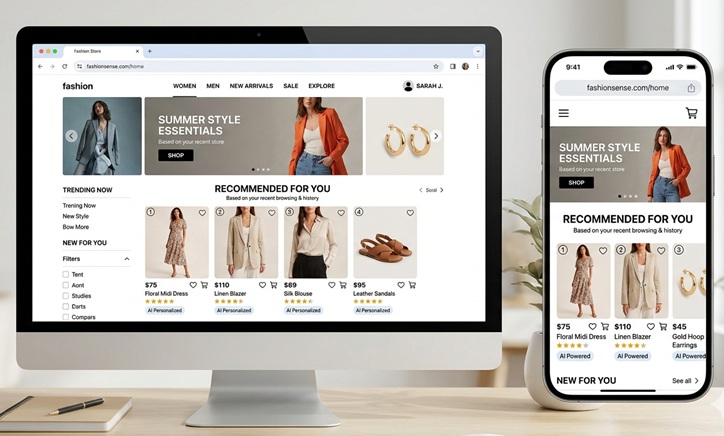
🔹 Phase 2: Hyper-Personalized Shopping Experience
AI dynamically personalized:
- Homepage content
- Product recommendations
- Offers and discounts
Each user experienced a customized shopping journey.
Result:
- Increased session duration
- Higher product engagement
- Improved conversion intent
🔹 Phase 3: AI-Powered Cart Recovery System
A fully automated system was implemented to recover abandoned carts.
Channels Used:
- SMS
Features:
- Real-time triggers
- Behavioral-based messaging
- Urgency-driven offers
Result:
👉 Recovered 25–30% of lost sales
🔹 Phase 4: Predictive Analytics & Buyer Intent Modeling
AI analyzed data to predict:
- Which users are most likely to convert
- Which products will perform best
- When users are ready to purchase
Result:
- Smarter targeting
- Reduced ad spend wastage
- Improved campaign efficiency
🔹 Phase 5: AI-Powered Ad Optimization
AI was used to optimize paid campaigns:
- Smart bidding strategies
- Audience refinement
- Automated A/B testing
Result:
- Higher ROAS
- Lower cost per acquisition
🔹 Phase 6: Lifecycle Automation & Retention Funnels
Automated workflows were created for:
- Welcome sequences
- Post-purchase engagement
- Re-engagement campaigns
- Upsell and cross-sell funnels
Result:
👉 Significant increase in repeat purchases
Technology Stack
To ensure scalability and performance, a robust tech ecosystem was used:
- Platform: Shopify
- AI Tools: Recommendation engines, predictive analytics tools
- Automation Tools: Email & SMS platforms
- Analytics: GA4, CRM dashboards
- Integration: API-based real-time automation
Results & Performance Breakdown
🚀 Overall Growth (90 Days)
- Revenue: +65% increase
- Conversion Rate: 1.8% → 3.4%
- Cart Abandonment: 72% → 42%
- Average Order Value: +28%
- ROI: 2.3X improvement
SEO & Organic Growth Impact
AI didn’t just improve conversions—it also enhanced SEO performance.
Key SEO Improvements:
- Increased dwell time due to personalization
- Reduced bounce rate
- AI-optimized product descriptions
- Improved internal linking structure
- Better keyword targeting using user intent
Result:
👉 Higher rankings + better traffic quality
Client Testimonial
“We were struggling with conversions despite high traffic. AI automation changed everything. Now we have predictable growth, better ROI, and a scalable system.”
— Founder, D2C Brand
Key Insights & Learnings
1. Personalization Drives Revenue
Generic experiences don’t convert. AI personalization is the biggest growth lever.
2. Automation Increases Efficiency
Manual processes limit scalability. Automation unlocks growth.
3. Data Beats Guesswork
AI-driven insights outperform traditional marketing strategies.
4. Retention is More Profitable Than Acquisition
Repeat customers generate higher ROI than new customers.
How to Replicate This Success
Scaling an e-commerce store with AI isn’t about using random tools—it’s about following a structured, data-driven framework that compounds results over time. Below is the exact step-by-step system used to transform underperforming traffic into consistent revenue growth.
Step-by-Step Framework
🔍 Step 1: Audit Your Funnel
Before making any changes, you need complete clarity on where you’re losing customers. Analyze your entire funnel—from landing page to checkout—and identify exact drop-off points. Look at metrics like bounce rate, add-to-cart rate, and checkout completion. This step reveals hidden leaks in your revenue pipeline. Without fixing these gaps, even increased traffic won’t improve sales.
🧠 Step 2: Implement AI Segmentation
Not all visitors are the same, and treating them equally is a costly mistake. AI segmentation groups users based on behavior, intent, purchase history, and engagement patterns. This allows you to identify high-value customers, window shoppers, and at-risk users. With deeper audience insights, your marketing becomes precise instead of generic. The result is better targeting and higher conversion potential.
🎯 Step 3: Personalize User Experience
Once you understand your audience, the next step is delivering highly relevant experiences. AI enables dynamic personalization—showing the right products, offers, and content to each user. From homepage layouts to product recommendations, everything adapts in real time. This reduces decision fatigue and increases engagement. Personalized experiences consistently outperform generic ones in driving conversions.
🛒 Step 4: Automate Cart Recovery
Cart abandonment is one of the biggest revenue leaks in e-commerce, but it’s also one of the easiest to fix with AI. Set up automated email and SMS sequences that trigger when a user leaves without completing a purchase. AI optimizes timing, messaging, and incentives to maximize recovery rates. This turns lost opportunities into recovered sales—without manual effort. It’s like having a 24/7 sales recovery system running in the background.
💸 Step 5: Optimize Campaigns with AI
Driving traffic is only valuable if it converts. AI improves your ad performance by refining audience targeting, adjusting bids, and optimizing creatives in real time. It identifies which campaigns generate high-quality traffic and eliminates wasted spend. Instead of guessing, you rely on data-backed decisions. This leads to higher ROI and more efficient scaling.
📈 Step 6: Continuously Improve
AI is not a one-time setup—it’s a continuous optimization engine. Monitor performance data regularly and let AI identify trends, patterns, and new opportunities. Test different strategies, refine messaging, and improve user flows based on insights. The more data you feed the system, the smarter it becomes. This ongoing improvement is what turns short-term gains into long-term growth.
FAQs
What is AI automation in e-commerce?
AI automation in e-commerce refers to using artificial intelligence to handle repetitive tasks like customer segmentation, product recommendations, email marketing, and ad optimization. It analyzes user behavior in real time and makes data-driven decisions without manual effort. This allows online stores to operate more efficiently while delivering personalized experiences. Ultimately, it helps businesses scale faster with less human intervention.
How does AI automation increase e-commerce sales?
AI automation boosts sales by delivering the right product to the right customer at the right time. It improves targeting, personalizes recommendations, and automates follow-ups like abandoned cart recovery. By reducing friction in the buying journey, it increases conversions and average order value. The result is higher revenue without proportional increases in effort or cost.
Can AI really improve conversion rates in online stores?
Yes, AI can significantly improve conversion rates by analyzing user behavior and optimizing the shopping experience in real time. It personalizes content, predicts intent, and removes decision fatigue for customers. AI also identifies drop-off points and fixes them automatically. Many stores see conversion increases of 20%–50% after implementation.
What are the most effective AI strategies for e-commerce growth?
The most effective AI strategies include personalized product recommendations, predictive analytics, automated email/SMS marketing, and smart ad targeting. AI-powered chatbots and dynamic pricing also drive engagement and conversions. These strategies work together to optimize the entire customer journey. The key is using data to make every interaction more relevant.
How can I increase my e-commerce sales without increasing ad spend?
You can increase sales by optimizing conversions rather than traffic. AI helps improve product recommendations, recover abandoned carts, and personalize user experiences. It also enhances email marketing and upselling strategies. This means you generate more revenue from the same visitors without spending more on ads.
Can AI integrate with Shopify or WooCommerce?
Yes, AI tools easily integrate with platforms like Shopify and WooCommerce. Most AI solutions offer plug-and-play integrations or APIs for seamless setup. This allows store owners to implement automation without technical complexity. Integration ensures real-time data syncing and smooth performance.
How secure is AI automation for customer data?
AI automation systems are built with strong security protocols, including encryption and compliance with data protection standards. Reputable tools follow regulations like GDPR to protect customer information. Data is processed securely and used only for improving user experience. Choosing trusted platforms ensures both safety and reliability.
How does AI personalize marketing campaigns?
AI analyzes user behavior, preferences, and purchase history to create highly targeted campaigns. It segments audiences automatically and delivers personalized messages across email, ads, and websites. Each user sees content tailored to their interests and intent. This increases engagement and significantly improves conversion rates.
Does AI improve email marketing performance?
Yes, AI enhances email marketing by optimizing subject lines, send times, and content personalization. It ensures emails reach users when they are most likely to engage. AI also automates follow-ups like cart recovery and product recommendations. This leads to higher open rates, click-through rates, and conversions.
How does AI improve website user experience?
AI improves user experience by making websites faster, smarter, and more intuitive. It personalizes layouts, recommends relevant products, and reduces unnecessary steps in the buying process. AI also uses chatbots to provide instant support. This creates a seamless and engaging shopping journey for users.
Can AI optimize product pages automatically?
Yes, AI can continuously optimize product pages by testing layouts, headlines, images, and pricing strategies. It uses real-time data to identify what works best for conversions. AI also updates recommendations and content dynamically. This ensures each product page performs at its highest potential.
Can AI predict customer behavior?
AI uses predictive analytics to forecast customer actions based on past behavior and trends. It can identify which users are likely to buy, churn, or abandon carts. This allows businesses to take proactive actions like targeted offers or reminders. Predictive insights help maximize conversions and retention.
Does AI improve customer satisfaction?
Yes, AI improves customer satisfaction by delivering faster responses, personalized experiences, and relevant recommendations. It reduces wait times through automation and ensures customers find what they need easily. A smoother and more tailored experience leads to higher trust and loyalty.
How do I implement AI automation in my e-commerce store?
Start by identifying key areas like marketing, customer experience, and retention where automation can help. Choose AI tools that integrate with your platform and align with your goals. Begin with simple automations like email workflows or product recommendations, then scale gradually. Partnering with experts can accelerate implementation and deliver faster, more effective results.
Why should I invest in AI for my e-commerce business?
AI gives you a competitive advantage by improving efficiency, personalization, and decision-making. It helps you scale operations without increasing workload or costs. Businesses using AI often see higher ROI and faster growth. Investing early positions your brand ahead of competitors.
Is AI better than traditional marketing?
AI is not a replacement but an evolution of traditional marketing. It enhances strategies by adding data-driven precision and automation. While traditional marketing relies on assumptions, AI uses real-time insights. This makes campaigns more effective, scalable, and measurable.
Do you offer a free AI audit?
Yes, Cor Advance Solutions offers a free AI audit to analyze your e-commerce store’s performance and identify growth opportunities. The audit highlights gaps in conversion, automation, and marketing efficiency. It also provides actionable recommendations tailored to your business. This is the first step toward scaling with AI.
Conclusion
This case study proves one thing clearly:
👉 AI is not optional—it’s essential for scalable growth in e-commerce.
By leveraging AI automation, businesses can:
- Increase conversions
- Reduce costs
- Improve customer experience
- Achieve predictable growth
If you want similar results for your business: