
Logistics companies are increasing profits by up to 200% using AI automation.
This is not just a trend—it is a major shift in how modern supply chains work. Companies that once struggled with high costs and delays are now improving speed, accuracy, and profit margins with smart AI systems.
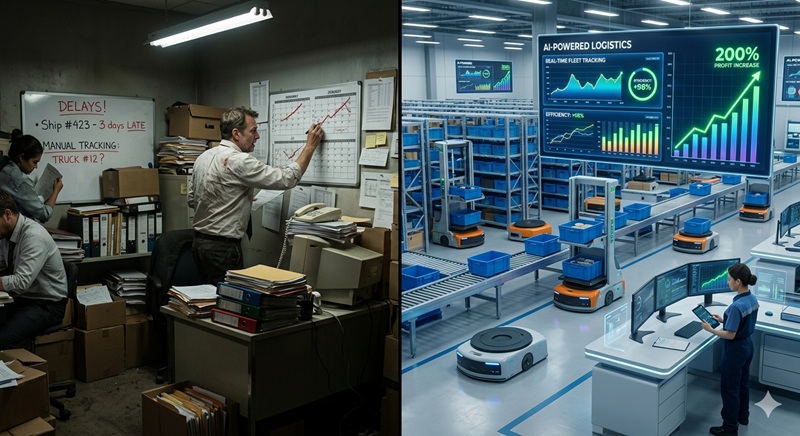
The Real Problems in Logistics Today
Most logistics businesses face serious daily challenges that directly reduce profit:
- Rising fuel costs – Transportation expenses keep increasing and reduce overall margins
- Delivery delays – Poor route planning and traffic issues slow down shipments
- Human errors – Manual work leads to mistakes in orders, tracking, and documentation
- Inefficient inventory management – Stock mismanagement causes overstocking or shortages
These problems make operations slow, expensive, and unpredictable.
AI Automation as the Game-Changing Solution
AI automation is changing the entire logistics industry. It helps companies make faster and smarter decisions without relying only on manual work.
With AI systems, logistics companies can:
- Optimize delivery routes in real time
- Predict demand and manage inventory better
- Reduce fuel consumption and operational waste
- Minimize human errors with automated processes
What You Will Learn in This Guide
In this guide, you’ll learn exactly how AI transforms logistics profit. You will understand how companies are using automation to cut costs, improve delivery speed, and increase efficiency—leading to much higher profits. If you want to stay competitive in today’s logistics industry, understanding AI automation is no longer optional—it is essential.
What Is AI Automation in Logistics?
AI automation in logistics is the use of artificial intelligence (AI), machine learning, and automation tools to manage and improve supply chain, transportation, warehousing, and delivery operations with minimal human effort.
In simple words, it means smart systems that automatically plan, track, and optimize how goods are stored and delivered—faster, cheaper, and more accurately than traditional manual processes.
AI automation in logistics is a technology-driven process where AI systems automate supply chain tasks like route planning, inventory management, warehouse operations, and shipment tracking to improve speed, reduce costs, and increase efficiency.
How AI Automation Works in Logistics
AI automation in logistics uses real-time data and smart algorithms to make decisions without constant human input. It learns from past data and continuously improves performance.
For example:
- It chooses the fastest delivery routes based on traffic and weather
- It predicts future demand so warehouses can stock the right products
- It tracks shipments in real time to avoid delays
- It automates warehouse operations like sorting and packing
Key Components of AI Automation in Logistics
To understand it better, here are the main systems involved:
1. Machine Learning in Logistics
Helps systems learn from delivery patterns and improve decision-making over time.
2. Predictive Analytics
Forecasts demand, delays, and supply needs before they happen.
3. Route Optimization Systems
Finds the most efficient delivery paths to save time and fuel costs.
4. Warehouse Automation Systems
Uses robots and smart software to handle storage, picking, and packing.
5. Real-Time Tracking Systems
Provides live updates of shipments for better visibility and control.
Why AI Automation in Logistics Is Important
AI automation in logistics is transforming the supply chain industry because it solves major problems like delays, high costs, and human errors.
It helps businesses:
- Speed up delivery times
- Reduce operational costs
- Improve supply chain efficiency
- Minimize manual errors
- Increase customer satisfaction
- Handle large-scale operations easily
Why Traditional Logistics Systems Fail to Maximize Profit
Traditional logistics systems were built on manual work, disconnected tools, and slow decision-making. In today’s fast-moving supply chain environment, these outdated methods directly reduce logistics profitability, operational efficiency, and supply chain performance. Because of this, companies often face hidden losses that slowly damage overall profit margins.
Common Challenges
Traditional logistics systems struggle to deliver consistent profit because they rely heavily on manual processes and outdated planning methods. These challenges increase costs and reduce efficiency across the entire supply chain.
• Manual processes increase errors
Most traditional logistics operations depend on manual data entry, paperwork, and human coordination. This leads to frequent mistakes in orders, billing, inventory tracking, and shipment updates. Even small errors can create delays, customer dissatisfaction, and financial losses.
• Poor demand forecasting
Without advanced analytics or AI-based forecasting, businesses often misjudge customer demand. This results in either excess inventory or stock shortages. Both situations reduce profit—either by increasing storage costs or missing sales opportunities.
• Inefficient route planning
Routes are often planned based on experience rather than real-time traffic data or optimization tools. This leads to longer delivery times, higher fuel usage, and increased vehicle wear and tear, directly impacting logistics cost efficiency.
• High operational costs
Traditional systems involve multiple manual processes, paper-based tracking, and inefficient resource usage. This increases labor costs, administrative overhead, and transportation expenses, reducing overall profit margins.
• Lack of real-time data
Without real-time tracking systems, businesses cannot monitor shipments, delays, or inventory movement effectively. This lack of visibility leads to poor decision-making and slow response to issues in the supply chain.
Profit Leakage Points
In traditional logistics, profit does not disappear in one place—it leaks across multiple small inefficiencies. Over time, these small losses become major financial damage.
• Fuel wastage
Poor route planning, traffic delays, and unoptimized delivery schedules lead to unnecessary fuel consumption. This is one of the biggest hidden costs in logistics operations.
• Delivery delays
Late deliveries reduce customer satisfaction and may lead to penalties or lost contracts. Delays also increase operational pressure, requiring additional trips or overtime costs.
• Overstocking / understocking
Without accurate demand forecasting, companies either store too much inventory or run out of stock. Overstocking increases warehousing costs, while understocking results in missed sales opportunities.
• Labor inefficiency
Manual coordination and lack of automation reduce worker productivity. Employees spend more time on repetitive tasks instead of focusing on high-value operations, increasing overall labor cost per delivery.
How AI Automation Systems Increase Logistics Profit by 200%
AI automation in logistics is changing how supply chains work. It uses smart systems, machine learning, and real-time data to improve every step of delivery and warehouse operations. Compared to traditional methods, AI logistics automation helps companies reduce costs, improve speed, and increase overall profit margins—sometimes up to 200%.
Below are the key ways AI-driven logistics systems improve efficiency and boost profit.
1. Intelligent Route Optimization
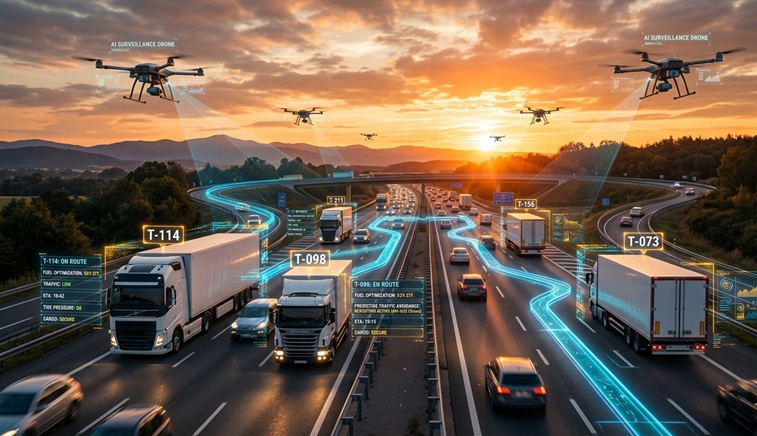
AI-powered route optimization is one of the biggest profit boosters in modern logistics. Instead of manual planning, AI systems automatically choose the fastest and cheapest delivery routes.
- AI analyzes real-time traffic, weather conditions, and delivery schedules
- It selects the most fuel-efficient and time-saving routes
- Reduces fuel costs by 20–30%
- Improves on-time delivery performance
This leads to lower transportation costs and faster deliveries, directly increasing logistics profit and operational efficiency.
2. Predictive Demand Forecasting
AI improves inventory planning through advanced demand forecasting. It studies historical sales data, market trends, and real-time customer behavior to predict future demand.
- Uses AI models to analyze past and current data
- Prevents overstocking and stock shortages
- Improves inventory turnover rate
- Reduces storage and wastage costs
This ensures businesses always have the right products at the right time, improving cash flow and profit margins.
3. Warehouse Automation
AI-powered warehouses use robotics and smart systems to handle daily operations faster and more accurately.
- Robots manage picking, packing, and sorting tasks
- Reduces labor costs by up to 50%
- Minimizes human errors in order processing
- Increases warehouse speed and productivity
This automation reduces dependency on manual labor and increases operational efficiency, leading to higher profit output.
4. Real-Time Tracking & Visibility
AI combined with GPS tracking gives full visibility of shipments across the supply chain.
- Live tracking of vehicles and deliveries using AI systems
- Improves customer satisfaction with accurate updates
- Reduces chances of lost or delayed shipments
- Enables faster problem-solving in case of disruptions
Better visibility builds trust, reduces losses, and improves overall logistics performance.
5. Automated Customer Support (AI Chatbots)
AI chatbots help logistics companies handle customer queries quickly and efficiently.
- Provides 24/7 customer support without human agents
- Gives instant answers to delivery updates and order issues
- Reduces customer service workload and costs
- Improves response time and customer experience
This reduces operational expenses while increasing customer satisfaction and retention.
6. Predictive Maintenance
AI systems also help maintain vehicles and equipment by predicting failures before they happen.
- AI monitors vehicle performance and usage patterns
- Predicts possible breakdowns in advance
- Reduces unexpected downtime
- Saves heavy repair and emergency maintenance costs
This ensures smoother operations and prevents costly delivery disruptions.
AI automation systems increase logistics profit by optimizing routes, improving demand forecasting, automating warehouses, providing real-time tracking, enhancing customer support, and enabling predictive maintenance. Together, these technologies reduce costs, eliminate inefficiencies, and can increase overall logistics profitability by up to 200%, making supply chains faster, smarter, and more scalable.
Key Benefits of AI Automation in Logistics
AI automation is changing the logistics industry by making supply chains faster, smarter, and more cost-efficient. Unlike traditional systems, AI-powered logistics automation uses real-time data, machine learning, and predictive analytics to improve every step of operations. The result is higher efficiency, lower costs, and stronger business growth.
Below are the most important benefits of using AI in logistics and supply chain management.
1. Lower Operational Costs
One of the biggest benefits of AI automation in logistics is cost reduction. AI reduces waste in fuel, labor, and warehouse operations.
- Optimizes delivery routes to save fuel
- Reduces unnecessary manual work
- Improves resource utilization
This helps companies significantly lower logistics operational costs and increase profit margins.
2. Faster and More Accurate Deliveries
AI improves delivery speed by removing delays caused by manual planning.
- Real-time route optimization
- Smart scheduling of deliveries
- Reduced human errors in dispatching
As a result, businesses achieve faster deliveries and improved supply chain efficiency.
3. Improved Inventory Management
AI helps businesses maintain the right stock levels at all times using smart forecasting.
- Predicts customer demand accurately
- Avoids overstocking and stockouts
- Improves warehouse efficiency
This leads to better inventory control and reduced storage costs.
4. Better Decision-Making with Real-Time Data
AI systems provide instant insights into logistics operations.
- Live tracking of shipments and vehicles
- Real-time performance monitoring
- Data-driven decision-making
This improves visibility and helps managers make faster, smarter decisions in the logistics supply chain.
5. Higher Customer Satisfaction
AI improves the customer experience by making deliveries more reliable and communication more transparent.
- Accurate delivery time predictions
- Real-time order tracking updates
- Faster issue resolution through automation
Happy customers lead to better retention and long-term business growth.
6. Reduced Human Errors
Manual logistics systems often face mistakes in planning, documentation, and tracking. AI reduces these risks.
- Automates repetitive tasks
- Ensures accurate data processing
- Minimizes errors in orders and billing
This increases operational accuracy and improves overall logistics performance.
7. Scalable Business Growth
AI automation allows logistics companies to grow without increasing costs at the same rate.
- Handles higher shipment volumes easily
- Supports expansion into new markets
- Maintains efficiency during scaling
This makes logistics businesses more flexible and ready for long-term growth.

The key benefits of AI automation in logistics include lower costs, faster deliveries, better inventory management, real-time decision-making, improved customer satisfaction, fewer errors, and scalable growth. Overall, AI transforms traditional logistics systems into efficient, data-driven, and high-profit supply chains.
Top AI Technologies Used in Logistics
Modern logistics is no longer based only on manual work and guesswork. Today, companies use advanced AI technologies in logistics and supply chain management to improve speed, reduce costs, and increase accuracy. These technologies help businesses move from traditional operations to fully smart, automated systems.
Below are the most important AI technologies that are transforming the logistics industry.
1. Machine Learning (ML)
Machine Learning is the core technology behind most AI logistics systems. It helps computers learn from data and improve decisions over time.
- Analyzes past delivery and sales data
- Improves demand forecasting accuracy
- Optimizes routes and delivery schedules
- Reduces operational errors over time
ML makes logistics systems smarter with every new dataset, improving overall supply chain efficiency.
2. Predictive Analytics
Predictive analytics uses data, statistics, and AI models to predict future outcomes in logistics operations.
- Forecasts customer demand more accurately
- Predicts delays in shipments and deliveries
- Helps manage inventory levels efficiently
- Reduces stockouts and overstocking issues
This technology helps businesses make proactive decisions instead of reacting to problems.
3. Internet of Things (IoT)
IoT connects physical devices like trucks, containers, and warehouses to the internet for real-time data sharing.
- Live tracking of shipments and vehicles
- Monitoring temperature, location, and condition of goods
- Improves visibility across the supply chain
- Reduces chances of lost or damaged shipments
IoT plays a key role in building a transparent and connected logistics system.
4. Robotic Process Automation (RPA)
RPA uses software robots to handle repetitive and time-consuming tasks in logistics operations.
- Automates order processing and billing
- Reduces manual paperwork
- Speeds up warehouse operations
- Minimizes human errors
This technology improves efficiency and lowers operational costs in logistics companies.
5. Computer Vision
Computer vision allows machines to “see” and analyze images or videos in real time.
- Scans packages for damage or errors
- Automates barcode and label reading
- Supports warehouse automation systems
- Improves quality control in logistics processes
It increases accuracy and reduces manual inspection work.
6. Natural Language Processing (NLP)
NLP helps computers understand and respond to human language.
- Powers AI chatbots for customer support
- Automates communication with customers and drivers
- Processes emails, complaints, and queries faster
- Improves customer service experience
This reduces workload on support teams and improves response time.
7. AI-Powered Route Optimization Systems
These systems use AI algorithms to find the best delivery routes in real time.
- Avoids traffic congestion and delays
- Reduces fuel consumption
- Improves delivery speed and efficiency
- Supports dynamic route changes
This is one of the most powerful tools for improving logistics cost efficiency.
Step-by-Step Guide to Implement AI in Logistics
Implementing AI in logistics and supply chain management is not difficult if you follow a clear process. The goal is to replace manual inefficiencies with smart automation that improves speed, reduces cost, and increases profit. Below is a simple step-by-step guide used by modern logistics companies.
Step 1: Identify Bottlenecks
The first step is to understand where your logistics system is losing time and money.
- Analyze current operations in transportation, warehousing, and delivery
- Identify delays, errors, and high-cost areas
- Check where manual work is slowing down processes
- Find issues in inventory, routing, and tracking systems
This step helps you clearly see where logistics inefficiencies are hurting your business.
Step 2: Choose the Right AI Tools
After identifying problems, the next step is selecting the right AI-powered tools based on your needs.
- Route optimization software for faster and cheaper deliveries
- AI-based inventory management systems for better stock control
- Predictive analytics tools for demand forecasting
- AI tracking systems for real-time visibility
Choosing the right tools ensures your AI logistics automation system delivers real results.
Step 3: Integrate with Existing Systems
AI tools must work smoothly with your current systems to avoid disruption.
- Connect AI with ERP systems for better data management
- Integrate with CRM tools for improved customer communication
- Link with warehouse management systems for faster operations
- Ensure smooth data flow between all platforms
This integration creates a fully connected and efficient supply chain ecosystem.
Step 4: Train Your Team
Even the best AI system will fail without proper training. Your team must understand how to use new tools.
- Provide training on AI-based dashboards and tools
- Upskill employees to handle automated systems
- Teach teams how to interpret AI insights
- Encourage adaptation to new workflows
A trained team ensures smooth adoption of AI-driven logistics processes.
Step 5: Monitor & Optimize
After implementation, continuous monitoring is important to improve performance over time.
- Use AI analytics dashboards to track performance
- Monitor delivery speed, costs, and efficiency
- Identify new bottlenecks and fix them quickly
- Continuously optimize routes, inventory, and operations
This step ensures your logistics system keeps improving and delivering higher profits.
To implement AI in logistics, businesses must first identify operational bottlenecks, choose the right AI tools, integrate them with existing systems, train their teams, and continuously monitor performance. This step-by-step approach helps companies build a smart, automated, and highly efficient AI-powered logistics system that reduces costs and increases profit.
Challenges of AI Adoption (And Solutions)
Adopting AI in logistics and supply chain management brings huge benefits, but it also comes with real challenges. Many companies face difficulties in cost, skills, integration, and trust. The good news is that every challenge has a practical solution. Understanding both helps businesses successfully move toward AI-powered logistics automation.
1. High Initial Investment
One of the biggest challenges is the cost of implementing AI systems.
- AI tools, software, and infrastructure can be expensive
- Small and mid-sized logistics companies may struggle with budgets
- ROI (return on investment) may take time
Solution:
Start small with one area like route optimization or inventory management. Use scalable AI tools so you can expand step by step without heavy upfront costs.
2. Lack of Skilled Workforce
Many logistics teams are not trained to work with AI systems.
- Employees may not understand AI dashboards or tools
- Resistance to new technology is common
- Lack of technical expertise slows adoption
Solution:
Invest in training programs and upskilling. Provide hands-on learning so employees can easily adapt to AI-driven logistics systems.
3. Integration with Existing Systems
Older logistics systems are often not built for modern AI tools.
- Difficulty connecting AI with ERP, CRM, and warehouse systems
- Data mismatch between old and new platforms
- Risk of system downtime during integration
Solution:
Use AI tools that offer easy API integration. Work with systems that support smooth data flow between all logistics platforms.
4. Data Quality Issues
AI systems depend on accurate and clean data to work properly.
- Poor or incomplete data leads to wrong predictions
- Manual data entry increases errors
- Unorganized databases reduce AI performance
Solution:
Clean and standardize your data before implementing AI. Use automated data collection systems like IoT devices and real-time tracking tools.
5. Security and Privacy Concerns
AI systems handle large amounts of sensitive business and customer data.
- Risk of cyberattacks and data breaches
- Concerns about data privacy compliance
- Lack of proper security infrastructure
Solution:
Use strong encryption, secure cloud platforms, and regular security audits. Follow data protection standards to build trust in your AI logistics system.
6. Resistance to Change
Employees and managers may be hesitant to adopt AI technology.
- Fear of job loss due to automation
- Lack of trust in AI decision-making
- Comfort with traditional manual systems
Solution:
Communicate clearly that AI is a support tool, not a replacement. Show real benefits like reduced workload, faster operations, and improved accuracy.
The main challenges of AI adoption in logistics include high initial costs, lack of skilled workers, system integration issues, poor data quality, security risks, and resistance to change. However, these challenges can be solved with step-by-step implementation, employee training, strong data management, and secure scalable AI tools. This makes AI logistics transformation practical, safe, and highly profitable for businesses.
Future of AI in Logistics
The future of AI in logistics and supply chain management is moving toward full automation, real-time intelligence, and self-learning systems. In simple words, logistics will become faster, cheaper, and almost fully automated. Companies that adopt AI-powered logistics automation early will stay ahead in cost control, delivery speed, and customer satisfaction.
1. Fully Autonomous Supply Chains
In the future, logistics systems will make decisions on their own with very little human involvement.
- AI will automatically plan routes, schedules, and deliveries
- Systems will adjust in real time based on traffic, demand, and weather
- Warehouses will run with minimal manual control
This will create a fully connected and intelligent end-to-end supply chain.
2. Self-Driving Delivery Vehicles and Drones
Transportation will become smarter with automation and robotics.
- Self-driving trucks will handle long-distance deliveries
- Drones will be used for fast last-mile delivery
- AI will manage vehicle coordination and traffic optimization
This will significantly reduce delivery time and transportation costs.
3. Hyper-Accurate Predictive Analytics
Future AI systems will become even more accurate in forecasting demand and operations.
- Predict customer demand with near-perfect accuracy
- Reduce inventory waste to almost zero
- Improve stock planning across global markets
This will make logistics demand forecasting more reliable than ever.
4. Smart Warehouses with Robotics
Warehouses will become fully automated centers powered by AI and robotics.
- Robots will handle all picking, packing, and sorting tasks
- AI will manage inventory in real time
- Human involvement will be limited to supervision only
This will increase speed and reduce operational costs dramatically.
5. Real-Time Global Visibility
Future logistics systems will offer complete visibility across the supply chain.
- Track shipments globally in real time
- Predict delays before they happen
- Automatically suggest solutions to problems
This will improve transparency and strengthen customer trust.
6. AI-Driven Sustainability in Logistics
Sustainability will become a major focus of future logistics systems.
- AI will optimize fuel usage and reduce carbon emissions
- Smarter route planning will reduce environmental impact
- Energy-efficient warehouses will become standard
This will help companies meet global sustainability goals while saving costs.
The future of AI in logistics will be fully automated, highly intelligent, and globally connected. It will include autonomous supply chains, self-driving delivery systems, smart warehouses, predictive analytics, real-time tracking, and sustainable operations. Overall, AI will transform logistics into a faster, cheaper, and fully data-driven industry with maximum efficiency and profit growth.
FAQs
What is AI in logistics?
AI in logistics means using artificial intelligence to improve supply chain operations like delivery, warehousing, and transportation. It helps analyze data, predict demand, and automate decisions. This makes logistics faster, cheaper, and more accurate. AI improves overall efficiency and reduces human errors.
How does AI automation work in logistics?
AI automation in logistics works by using smart algorithms, machine learning, and real-time data. It automates tasks like route planning, inventory tracking, and demand forecasting. Systems learn from data and improve decisions over time. This reduces manual work and increases efficiency.
Why is AI important in supply chain management?
AI is important because it improves speed, accuracy, and cost control in supply chains. It helps businesses predict demand and manage inventory better. AI also reduces delays and errors in operations. Overall, it makes the supply chain more efficient and profitable.
What problems does AI solve in logistics?
AI solves problems like delivery delays, poor demand forecasting, and high operational costs. It also reduces human errors and improves route planning. AI provides real-time tracking and better decision-making. This leads to smoother and faster logistics operations.
How does AI increase logistics profit?
AI increases logistics profit by reducing costs and improving efficiency. It optimizes routes, reduces fuel usage, and improves warehouse management. AI also prevents inventory losses and delays. All these improvements directly increase profit margins.
Can AI reduce logistics costs?
Yes, AI can significantly reduce logistics costs. It lowers fuel expenses, labor costs, and warehouse expenses. AI also reduces mistakes and improves resource usage. Many companies save up to 20–40% in operational costs using AI.
How does AI reduce fuel expenses?
AI reduces fuel expenses by optimizing delivery routes and avoiding traffic delays. It selects the shortest and most efficient paths. AI also adjusts routes in real time based on traffic and weather. This reduces unnecessary fuel consumption.
Does AI help in reducing warehouse costs?
Yes, AI helps reduce warehouse costs by automating storage and handling processes. Robots and AI systems reduce the need for manual labor. It also improves inventory accuracy and space utilization. This leads to lower operational costs.
How does AI improve profit margins in logistics?
AI improves profit margins by reducing waste, delays, and inefficiencies. It increases delivery speed and reduces operational costs. AI also improves inventory control and demand forecasting. This leads to higher overall business profit.
Why do companies lose profit in traditional logistics?
Companies lose profit due to manual processes, poor planning, and inefficient routes. They also face high fuel costs, delays, and inventory mistakes. Lack of real-time data causes bad decisions. All these factors reduce profitability.
What is AI route optimization in logistics?
AI route optimization is a system that finds the fastest and most cost-efficient delivery routes. It uses real-time traffic, weather, and delivery data. This reduces fuel usage and delivery time. It improves overall logistics performance.
How does AI improve delivery speed?
AI improves delivery speed by selecting better routes and reducing delays. It uses real-time traffic updates for faster decision-making. It also automates scheduling and dispatching. This results in quicker and more reliable deliveries.
Can AI reduce delivery delays?
Yes, AI can reduce delivery delays by predicting traffic issues and rerouting vehicles in real time. It improves planning and scheduling accuracy. AI also helps avoid unexpected disruptions. This ensures timely deliveries.
How does AI find the best delivery routes?
AI finds the best delivery routes using data from traffic, distance, weather, and delivery time. It continuously analyzes and updates route options. Machine learning helps improve accuracy over time. This ensures faster and cheaper deliveries.
Does AI help in traffic-based route planning?
Yes, AI helps in traffic-based route planning by analyzing real-time traffic data. It automatically avoids congested roads and delays. AI updates routes instantly during travel. This improves delivery speed and efficiency.
What is AI demand forecasting in logistics?
AI demand forecasting predicts future product demand using historical and real-time data. It helps businesses plan inventory better. This reduces overstocking and shortages. It improves supply chain efficiency and profit.
How do AI chatbots help logistics companies?
AI chatbots help logistics companies by providing 24/7 customer support. They answer delivery queries and track shipments instantly. Chatbots reduce workload on human agents. This improves customer satisfaction and reduces support costs.
Conclusion
The logistics industry is changing fast, and businesses that do not adopt AI automation in logistics and supply chain management will continue to lose money through inefficiency, delays, and high operational costs. On the other hand, companies that move to AI-powered systems are already seeing faster deliveries, lower costs, and higher profit margins.
AI is no longer just an option—it is becoming a necessity for survival and growth in modern logistics.
Ready to Increase Your Logistics Profit by 200%?
If you want to transform your logistics operations into a high-performance, data-driven system, now is the right time to act. AI logistics automation can help you reduce costs, improve delivery speed, and unlock massive profit growth.
Contact Cor Advance Solutions today to implement powerful AI automation systems tailored specifically for your logistics business.