
The healthcare industry is growing fast, but many hospitals still struggle with daily operational challenges. Every day, hospitals receive hundreds or even thousands of patient inquiries through phone calls, websites, emails, and walk-ins. Managing these requests manually often creates delays, confusion, and pressure on hospital staff.
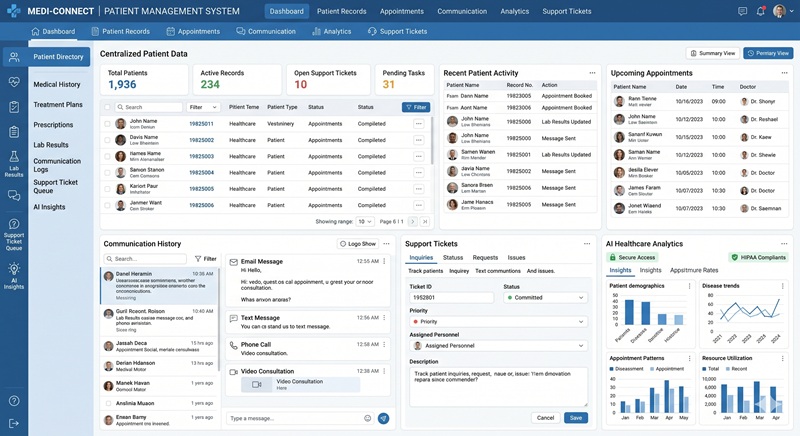
One of the biggest problems hospitals face today is the high volume of patient inquiries. Patients constantly ask about appointment availability, doctor schedules, treatment information, billing support, medical reports, and emergency assistance. Handling all these requests manually takes a lot of time and resources.
Long waiting times are another major challenge. Patients often spend several minutes or even hours waiting for responses from hospital support teams. Delayed communication affects patient experience and reduces trust in healthcare services.
At the same time, hospital staff members are already overloaded with administrative tasks. Reception teams, support executives, and appointment coordinators must manage calls, patient records, scheduling, follow-ups, and emergency requests simultaneously. This workload increases stress, reduces efficiency, and leaves less time for patient care.
Appointment management also becomes difficult when hospitals rely on traditional systems. Double bookings, missed appointments, scheduling conflicts, and manual data entry errors can create operational problems and patient frustration.
As a result, many hospitals experience growing patient dissatisfaction. Patients now expect quick responses, smooth appointment booking, personalized communication, and 24/7 support. Hospitals that cannot provide these experiences risk losing patient trust and operational efficiency.
This is where Artificial Intelligence is transforming modern healthcare operations.
AI-powered healthcare solutions are helping hospitals automate patient communication, improve response times, reduce staff workload, and streamline hospital management processes. Intelligent AI systems can answer patient questions instantly, schedule appointments automatically, send reminders, manage patient data, and provide support around the clock.
Today, AI in healthcare is no longer just a future trend. It has become a practical solution for improving hospital operations, enhancing patient engagement, and delivering better healthcare experiences.
To solve these challenges, Cor Advance Solutions developed an advanced AI-powered patient support system specifically designed for hospitals and healthcare organizations.
As a trusted technology partner, Cor Advance Solutions focused on building an intelligent healthcare automation platform that could simplify patient communication, reduce operational pressure, and improve overall hospital efficiency.
The main objective behind developing this AI-powered patient support system was to:
- Automate patient support operations
- Reduce waiting times for patients
- Improve appointment scheduling efficiency
- Minimize staff workload
- Deliver 24/7 patient assistance
- Enhance patient satisfaction and engagement
- Improve healthcare operational productivity
- Create a seamless digital healthcare experience
The final solution combined AI automation, smart patient communication, appointment management, and real-time support features into one centralized healthcare system. This helped hospitals improve patient service quality while allowing medical staff to focus more on patient care instead of repetitive administrative tasks.
Today, the AI-powered patient support system is helping hospitals deliver faster, smarter, and more efficient healthcare support experiences while improving operational performance across departments.
About the Client
Hospital Background
Our client is a rapidly growing multi-specialty healthcare hospital that serves thousands of patients every month. The hospital provides a wide range of medical services, including general medicine, cardiology, orthopedics, pediatrics, gynecology, emergency care, diagnostics, radiology, and laboratory services.
With a strong reputation for quality healthcare and patient care, the hospital experienced a significant increase in patient inquiries and appointment requests over the past few years. On average, the hospital handled more than 25,000+ patient interactions and inquiries every month through phone calls, website forms, emails, and walk-in visits.
As the number of patients increased, managing daily hospital operations became more difficult for the administrative and support teams.
The hospital operated multiple departments and specialized healthcare services, which required constant communication between patients, doctors, support staff, and appointment coordinators. While the hospital had experienced medical professionals and healthcare infrastructure, their existing patient support system was largely manual and outdated.
This created several operational challenges that directly affected patient experience, staff productivity, and overall hospital efficiency.
The hospital management approached Cor Advance Solutions with the goal of developing a smart AI-powered patient support system that could automate communication, improve patient engagement, simplify appointment management, and reduce administrative workload.
The main objective was to create a centralized healthcare automation platform that could provide faster patient support, improve operational efficiency, and deliver a better healthcare experience for patients.
Challenges Faced by the Hospital
Patient Communication Problems
One of the biggest challenges the hospital faced was handling a large volume of patient communication every day.
The hospital support team received hundreds of calls related to:
- Appointment booking
- Doctor availability
- Treatment inquiries
- Emergency support
- Test report updates
- Billing questions
- Follow-up consultations
Because the communication process was completely manual, many patient calls went unanswered during busy hours. Missed calls became a serious issue, especially during peak times and emergencies.
Patients also experienced delayed responses from the support team. In many cases, patients had to wait a long time to receive basic information or appointment confirmations. This negatively affected patient satisfaction and trust.
Another major problem was repetitive patient queries. Support staff spent a large amount of time answering the same common questions repeatedly, such as:
- Doctor timings
- Appointment availability
- Consultation fees
- Hospital location
- Medical test procedures
- Prescription follow-ups
This reduced the productivity of the hospital support team and increased operational pressure on front desk employees.
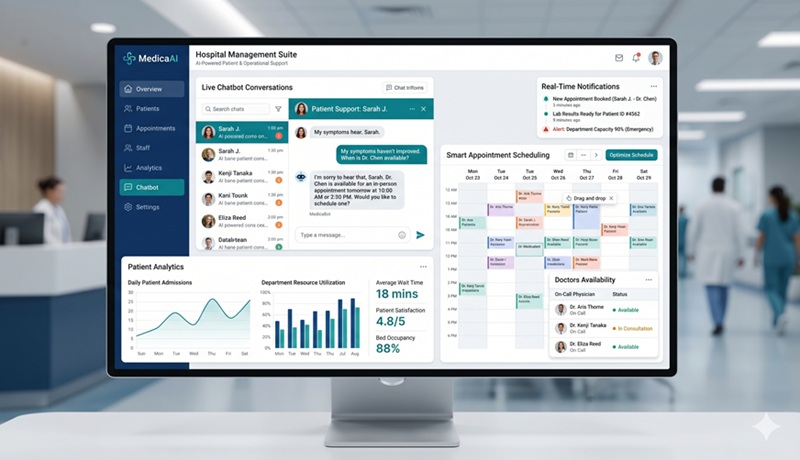
The hospital needed an intelligent healthcare communication system that could automate patient responses and provide instant support 24/7.
Appointment Management Issues
The hospital was also struggling with inefficient appointment management processes.
Most appointments were managed manually through phone calls and spreadsheets. This created several problems, including:
- Double bookings
- Scheduling conflicts
- Human errors
- Missed appointments
- Delayed appointment confirmations
The hospital staff spent many hours every day coordinating appointments between patients and doctors. Manual scheduling made the entire process slow and difficult to manage.
Another major challenge was the high cancellation and no-show rate. Since the hospital did not have an automated reminder system, many patients forgot their appointments or canceled at the last minute.
This affected doctor schedules, reduced operational efficiency, and created unnecessary gaps in patient management.
The hospital wanted an AI-powered appointment scheduling system that could:
- Automate appointment booking
- Send instant confirmations
- Provide automated reminders
- Reduce missed appointments
- Improve scheduling accuracy
- Simplify doctor availability management
Staff Workload Challenges
The growing number of patients also increased pressure on hospital staff and support teams.
The front desk team was constantly overloaded with patient inquiries, appointment coordination, billing support, and administrative tasks. Employees had to manage multiple communication channels at the same time, including phone calls, emails, and in-person support requests.
Because of the high workload, support team efficiency started decreasing. Staff members struggled to handle patient requests quickly and accurately.
This resulted in:
- Slow response times
- Increased staff stress
- Reduced productivity
- Communication errors
- Poor patient experience
Long patient waiting times became another serious issue. Patients often had to wait several minutes just to speak with a support executive or confirm an appointment.
The hospital management realized that their staff was spending too much time on repetitive administrative work instead of focusing on patient care and critical healthcare operations.
They needed a healthcare automation solution that could reduce manual tasks, improve workflow efficiency, and support hospital staff with intelligent AI assistance.
Data Management Problems
The hospital also faced major data management and patient information challenges.
Patient communication records were scattered across different systems, spreadsheets, emails, and phone logs. There was no centralized healthcare support system to manage all patient interactions in one place.
This created difficulties in:
- Tracking patient communication history
- Managing follow-up conversations
- Accessing patient inquiry records
- Monitoring appointment updates
- Coordinating between departments
Because patient information was not properly centralized, support teams often struggled to provide personalized and accurate assistance.
In many cases, staff members had to manually search through records to find previous patient conversations or appointment details. This slowed down operations and increased the risk of errors.
The hospital needed a centralized AI-powered patient management system that could:
- Store patient interactions securely
- Track communication history
- Manage appointments in real time
- Improve team collaboration
- Provide faster access to patient information
- Streamline hospital support operations
To solve all these operational challenges, the hospital partnered with Cor Advance Solutions to develop a fully automated AI-powered patient support platform designed specifically for modern healthcare operations.
Project Goals & Objectives
Main Objectives
- Automate patient support operations
- Improve patient engagement
- Reduce administrative workload
- Enhance appointment scheduling
- Provide 24/7 patient assistance
- Improve hospital operational efficiency
Business Goals
- Increase patient satisfaction
- Reduce response time
- Improve appointment conversion rates
- Reduce operational costs
- Enhance digital healthcare experience
Why the Hospital Needed an AI-Powered Patient Support System
The healthcare industry is changing rapidly. Modern patients now expect faster communication, better healthcare experiences, and instant access to medical support services. Hospitals that still rely on traditional patient support methods often struggle to meet these growing expectations.
Our client hospital was facing multiple operational and communication challenges that were affecting patient satisfaction, staff productivity, and overall healthcare efficiency.
The hospital realized that its traditional support system could no longer handle the increasing demand for modern digital healthcare services. To improve patient experience and streamline hospital operations, the organization needed a smarter, faster, and more scalable solution.
This is why the hospital decided to invest in an AI-powered patient support system developed by Cor Advance Solutions.
The goal was to automate patient communication, improve appointment management, reduce operational costs, and provide 24/7 healthcare support using advanced AI healthcare technology.
Healthcare Industry Challenges
Rising Patient Expectations
Today’s healthcare patients expect the same level of convenience and speed they receive from modern digital services in banking, eCommerce, and customer support industries.
Patients no longer want to:
- Wait on hold for long periods
- Visit hospitals for small inquiries
- Repeat the same information multiple times
- Face delays in appointment confirmations
- Wait hours for support responses
Modern patients expect:
- Instant replies
- Online appointment booking
- Quick doctor availability updates
- Automated reminders
- Personalized healthcare communication
- 24/7 support access
As patient expectations continued to rise, the hospital’s manual support system started creating frustration among patients.
The hospital management understood that improving patient engagement and communication was now essential for maintaining patient trust and healthcare service quality.
An AI-powered healthcare support system offered the ability to provide faster, smarter, and more personalized patient experiences at scale.
Increasing Operational Costs
Managing hospital support operations manually was becoming expensive and difficult.
The hospital had to maintain large front desk and support teams to handle:
- Phone calls
- Appointment scheduling
- Follow-up communication
- Billing inquiries
- Patient assistance
- Administrative coordination
As patient inquiries increased, the hospital needed more staff members to manage daily operations. This significantly increased operational costs.
Manual processes also created inefficiencies such as:
- Staff overtime
- Repetitive administrative work
- Communication delays
- Human errors
- Increased workload pressure
The hospital needed a cost-effective healthcare automation solution that could reduce manual work while improving operational efficiency.
By implementing AI automation in healthcare, the hospital aimed to:
- Reduce administrative expenses
- Improve workflow automation
- Optimize staff productivity
- Minimize repetitive tasks
- Lower support management costs
The AI-powered patient support system provided a scalable solution that could handle large patient volumes without continuously increasing operational expenses.
Need for Faster Communication
In healthcare, fast communication is extremely important. Delayed responses can negatively affect patient experience and sometimes even impact medical outcomes.
The hospital faced several communication-related issues, including:
- Missed patient calls
- Delayed support responses
- Long waiting queues
- Slow appointment confirmations
- Inefficient follow-up management
Patients often contacted the hospital multiple times just to receive basic information. This created frustration for both patients and support teams.
The hospital needed a real-time patient communication system that could respond instantly and provide accurate information anytime.
An AI-powered patient support platform allowed the hospital to automate communication through:
- AI chat support
- Automated responses
- Smart appointment scheduling
- Instant notifications
- Real-time patient assistance
- Automated reminders
This significantly improved response speed and reduced communication delays across departments.
Growing Demand for Digital Healthcare Services
The healthcare industry is rapidly moving toward digital transformation.
Patients now prefer digital healthcare services because they offer:
- Convenience
- Faster access
- Online support
- Better communication
- Reduced waiting times
- Remote healthcare assistance
The hospital recognized that traditional healthcare operations were no longer enough to compete in the modern healthcare market.
There was a growing need for:
- Digital patient engagement
- AI healthcare automation
- Online appointment systems
- Intelligent patient support
- Centralized healthcare management
- Automated patient communication
Without digital transformation, hospitals risk falling behind competitors that provide faster and more advanced healthcare experiences.
The hospital wanted to modernize its operations by implementing an AI-powered healthcare solution that could support long-term growth and improve patient satisfaction.
This led to the development of a centralized AI patient support system by Cor Advance Solutions.
Why Traditional Support Systems Failed
Human Dependency
The hospital’s existing support process depended heavily on manual human operations.
Almost every task required staff involvement, including:
- Appointment scheduling
- Call handling
- Patient inquiry management
- Follow-up communication
- Data updates
- Support coordination
This created several problems:
- Delays during busy hours
- Increased human errors
- Inconsistent patient experiences
- Difficulty scaling operations
- Staff burnout
As patient volume increased, the hospital realized that relying only on human support teams was no longer sustainable.
The hospital needed intelligent healthcare automation that could reduce dependency on manual processes while improving efficiency and consistency.
Limited Working Hours
Traditional hospital support systems only worked during standard office hours.
Outside working hours:
- Patient calls remained unanswered
- Appointment requests were delayed
- Emergency inquiries faced response gaps
- Patients had no instant support access
However, healthcare needs can arise anytime — during nights, weekends, or holidays.
Patients today expect hospitals to provide 24/7 support availability.
The hospital needed an AI-powered patient support system capable of delivering round-the-clock healthcare assistance without requiring a large overnight support team.
AI automation allowed the hospital to provide continuous patient engagement and instant support at any time of day.
Slow Response Times
Manual patient communication processes made response times very slow.
Support teams often struggled to handle multiple patient requests simultaneously. As a result:
- Patients waited longer for responses
- Support queues increased
- Appointment processing became delayed
- Communication quality decreased
Slow response times negatively affected patient satisfaction and hospital reputation.
The hospital needed a smart AI healthcare communication platform that could instantly answer common patient queries and automate repetitive tasks.
The AI-powered system helped reduce response times dramatically by providing:
- Instant automated replies
- AI chatbot support
- Smart query handling
- Faster appointment processing
- Automated follow-up communication
This improved both operational speed and patient experience.
Higher Operational Expenses
Traditional support systems required large teams, manual coordination, and continuous administrative management.
As the hospital expanded, operational expenses continued increasing due to:
- Staffing costs
- Administrative overhead
- Manual scheduling management
- Training expenses
- Support infrastructure costs
At the same time, manual systems still failed to deliver the speed and efficiency patients expected.
The hospital needed a scalable healthcare support solution that could improve performance while reducing operational costs.
By implementing an AI-powered patient support system, the hospital successfully moved toward:
- Healthcare process automation
- Reduced administrative workload
- Better resource utilization
- Improved operational efficiency
- Lower long-term support costs
With the support of Cor Advance Solutions, the hospital transformed its outdated patient communication process into a modern AI-driven healthcare support system designed for the future of digital healthcare.
Features of the AI-Powered Patient Support System
To solve the hospital’s growing operational challenges, Cor Advance Solutions developed a powerful AI-powered patient support system designed specifically for modern healthcare organizations.
The platform combined healthcare automation, artificial intelligence, smart communication tools, and centralized patient management into one intelligent solution.
The goal was not only to improve patient support but also to simplify hospital operations, reduce staff workload, and enhance the overall patient experience.
The system included several advanced AI healthcare features that helped the hospital improve efficiency, speed, communication, and patient engagement.
AI Chatbot for Patients
One of the most important features of the system was the AI-powered healthcare chatbot.
The AI chatbot was designed to provide instant patient support 24/7 without requiring manual staff involvement for every inquiry.
Patients could communicate with the chatbot anytime through the hospital website, mobile application, or messaging platforms.
24/7 Instant Responses
The AI chatbot provided immediate answers to patient questions at any time of the day or night.
Patients no longer needed to wait for office hours to receive support.
The chatbot instantly handled inquiries related to:
- Doctor availability
- Appointment booking
- Department information
- Consultation timings
- Billing support
- Medical services
- Emergency guidance
This significantly reduced patient waiting time and improved response speed.
FAQs Automation
The hospital received thousands of repetitive patient questions every month.
The AI-powered patient support system automated frequently asked questions (FAQs), allowing the chatbot to instantly answer common patient inquiries without human involvement.
This reduced pressure on hospital support teams and improved operational efficiency.
Examples of automated FAQ support included:
- Consultation fees
- Hospital timings
- Insurance support
- Medical test procedures
- Doctor schedules
- Prescription guidance
Department Guidance
The AI system also helped patients find the correct hospital department quickly.
Instead of transferring calls multiple times, the chatbot guided patients directly to the appropriate department based on their needs.
For example:
- Cardiology
- Orthopedics
- Pediatrics
- Emergency care
- Gynecology
- Diagnostics
- Radiology
This improved patient navigation and reduced confusion during the support process.
Treatment-Related Assistance
The AI chatbot also provided basic treatment-related assistance and healthcare information.
Patients could receive guidance about:
- Treatment procedures
- Pre-appointment instructions
- Diagnostic tests
- Follow-up care
- Medication schedules
- Health-related queries
This improved patient communication and enhanced the digital healthcare experience.
Smart Appointment Scheduling
Managing appointments manually was one of the hospital’s biggest operational challenges. To solve this problem, the system included a smart AI-powered appointment scheduling feature.
The automated scheduling system simplified the entire appointment management process for both patients and hospital staff.
Automated Appointment Booking
Patients could book appointments online within seconds without needing to call the hospital.
The AI system automatically:
- Checked doctor availability
- Suggested available time slots
- Confirmed appointments instantly
- Updated schedules in real time
This improved appointment booking efficiency and reduced manual administrative work.
Doctor Availability Management
The platform included intelligent doctor availability management.
The system automatically updated:
- Doctor schedules
- Consultation timings
- Leave management
- Slot availability
- Emergency schedule changes
This helped prevent scheduling conflicts and double bookings.
Appointment Reminders
One of the major reasons for missed appointments was the lack of reminder systems.
The AI-powered healthcare platform automatically sent appointment reminders through:
- SMS
- Push notifications
Patients received reminders before their scheduled appointments, reducing no-show rates significantly.
Rescheduling Support
Patients could also easily reschedule appointments through the AI system without calling the hospital support team.
The platform allowed patients to:
- Change appointment dates
- Select new time slots
- Cancel appointments
- Receive updated confirmations instantly
This improved patient convenience and reduced support team workload.
Patient Query Management
The hospital needed a centralized patient communication system capable of managing large volumes of patient inquiries efficiently.
The AI-powered patient support system included advanced query management features to streamline communication workflows.
Real-Time Support
The platform provided real-time patient support across multiple channels.
Patients received immediate assistance through:
- Website chat
- Mobile app support
- Email communication
- WhatsApp support
- Online inquiry forms
This improved response speed and patient engagement.
Ticket Management System
The system automatically converted complex patient issues into support tickets for hospital staff.
Each ticket included:
- Patient details
- Communication history
- Department assignment
- Priority level
- Status tracking
This helped support teams manage patient inquiries more efficiently.
Priority-Based Responses
Not all patient inquiries required the same level of urgency.
The AI-powered support platform intelligently prioritized patient requests based on urgency and category.
For example:
- Emergency inquiries received immediate attention
- Critical follow-up requests were prioritized
- General inquiries were automated
This improved response management and support efficiency.
Multi-Channel Communication
Modern patients use different communication channels.
The system supported multi-channel healthcare communication through:
- Website chatbot
- Mobile application
- SMS
- Phone integration
This created a seamless patient communication experience across all platforms.
AI-Powered Notifications
The platform included an intelligent notification system designed to improve patient engagement and healthcare communication.
Appointment Reminders
The system automatically reminded patients about upcoming appointments to reduce missed visits.
Patients received reminders through their preferred communication channels before the appointment date.
Medication Reminders
The AI healthcare platform also helped patients stay on track with medication schedules.
Automated medication reminders improved patient compliance and follow-up care management.
Follow-Up Alerts
The system automatically generated follow-up alerts for:
- Post-treatment checkups
- Diagnostic reports
- Consultation reviews
- Ongoing treatment monitoring
This improved patient retention and long-term healthcare engagement.
Health Campaign Notifications
The hospital could also send health awareness campaigns and announcements through the platform.
Examples included:
- Vaccination campaigns
- Health checkup programs
- Seasonal healthcare alerts
- Wellness initiatives
- Preventive healthcare tips
This improved patient outreach and healthcare awareness.
Patient Data Management
Managing patient information securely and efficiently was another important requirement.
The AI-powered patient support system included centralized patient data management features that simplified healthcare operations.
Centralized Patient Records
All patient information was stored in one centralized system.
This included:
- Appointment history
- Communication records
- Support tickets
- Medical interactions
- Follow-up data
Centralized healthcare records improved operational efficiency and coordination between departments.
Secure Information Handling
Patient data security was a top priority.
The platform used secure healthcare data management practices to protect sensitive patient information and maintain privacy standards.
Quick Access to History
Hospital staff could instantly access previous patient communication history and appointment records.
This helped teams provide faster and more personalized patient support.
Integrated Communication Logs
Every patient interaction was automatically recorded inside the system.
This included:
- Chat conversations
- Emails
- Appointment updates
- Support requests
- Notification history
Integrated communication logs improved tracking and support accuracy.
Multilingual Support
The hospital served patients from different language backgrounds. To improve accessibility, the AI-powered healthcare platform included multilingual support features.
Support for Multiple Languages
Patients could communicate with the system in multiple languages, making healthcare support easier and more accessible.
This improved communication for patients who were not comfortable using English.
Improved Accessibility
Multilingual healthcare support helped patients:
- Understand instructions clearly
- Book appointments easily
- Ask questions comfortably
- Access healthcare services faster
This improved overall healthcare accessibility.
Better Patient Communication Experience
Language barriers often create confusion and frustration in healthcare environments.
The multilingual AI support system improved patient satisfaction by delivering more personalized and comfortable communication experiences.
Analytics Dashboard
The platform also included a powerful healthcare analytics dashboard that helped hospital management monitor performance and make data-driven decisions.
Patient Engagement Reports
The dashboard provided detailed patient engagement reports, including:
- Number of inquiries
- Communication trends
- Response rates
- Patient interaction patterns
This helped the hospital understand patient behavior more effectively.
Query Tracking
The system tracked all patient inquiries in real time.
Hospital administrators could monitor:
- Open support tickets
- Pending inquiries
- Resolution times
- Department performance
This improved support management and operational visibility.
Support Performance Monitoring
The analytics dashboard measured support team performance through:
- Average response times
- Ticket resolution rates
- Staff productivity metrics
- Patient satisfaction indicators
This helped improve healthcare support efficiency.
Appointment Analytics
The system also provided advanced appointment analytics, including:
- Booking trends
- Cancellation rates
- Doctor utilization
- Peak appointment hours
- No-show reports
These insights helped the hospital optimize scheduling and improve operational planning.
With the help of Cor Advance Solutions, the hospital successfully implemented a modern AI-powered patient support system that transformed healthcare communication, improved patient satisfaction, and streamlined hospital operations through intelligent healthcare automation.
Development Process
Step 1: Discovery & Research
- Hospital workflow analysis
- Patient communication research
- Competitor analysis
Step 2: UI/UX Design
- Patient-friendly dashboard
- Responsive healthcare interface
- Accessibility optimization
Step 3: AI Model Development
- NLP training
- Conversation flow optimization
- AI response improvement
Step 4: System Integration
- CRM integration
- Appointment software integration
- API connections
Step 5: Testing & Quality Assurance
- AI accuracy testing
- Security testing
- User testing
- Performance optimization
Step 6: Deployment & Support
- Cloud deployment
- Staff training
- Ongoing monitoring
- Continuous AI improvement
Key Challenges We Solved
When the hospital partnered with Cor Advance Solutions, they were facing multiple operational, communication, and patient management challenges that were slowing down healthcare services and affecting patient satisfaction.
The hospital needed a smart healthcare automation solution that could improve efficiency, reduce manual workload, and deliver a faster and more personalized patient support experience.
Our team carefully analyzed the hospital’s existing workflow, patient communication process, appointment management system, and operational bottlenecks. Based on this analysis, we developed an AI-powered patient support system designed to solve the hospital’s most critical challenges.
Below are the major healthcare challenges we successfully solved through AI automation and intelligent healthcare technology.
Reducing Missed Patient Calls
One of the biggest problems the hospital faced was handling a massive number of incoming patient calls every day.
During busy hours, many calls went unanswered because the front desk and support staff could not manage the increasing inquiry volume efficiently.
Missed calls created several problems, including:
- Lost appointment opportunities
- Delayed patient communication
- Poor patient experience
- Increased frustration among patients
- Lower patient engagement
Many patients had to call multiple times just to receive simple information about appointments, doctors, or treatments.
To solve this issue, we implemented an AI-powered healthcare chatbot and automated patient communication system.
The AI support system provided:
- Instant automated responses
- 24/7 patient assistance
- Smart call handling
- Automated inquiry management
- Multi-channel communication support
As a result, the hospital significantly reduced missed patient inquiries and improved response availability across all departments.
Eliminating Slow Response Times
Before implementing the AI-powered patient support system, the hospital relied heavily on manual communication processes.
Patients often waited a long time for:
- Appointment confirmations
- Doctor availability updates
- Support responses
- Follow-up communication
- Basic healthcare information
Slow response times negatively affected patient trust and satisfaction.
We solved this challenge by developing a real-time AI healthcare support platform capable of delivering immediate responses.
The system automated:
- Frequently asked questions
- Appointment inquiries
- Department guidance
- Support ticket routing
- Follow-up notifications
Patients could now receive support instantly through website chat, WhatsApp, mobile apps, and automated messaging systems.
This dramatically improved communication speed and patient experience.
Simplifying Appointment Management
The hospital’s traditional appointment management process was fully manual and highly inefficient.
The support staff had to:
- Schedule appointments manually
- Coordinate doctor availability
- Handle cancellations
- Manage rescheduling requests
- Confirm appointments individually
This process consumed a large amount of administrative time and often resulted in scheduling errors.
We solved this challenge by implementing a smart AI-powered appointment scheduling system.
The automated system allowed patients to:
- Book appointments online
- Check doctor availability instantly
- Receive automated confirmations
- Reschedule appointments easily
- Get reminder notifications automatically
The AI-powered scheduling platform reduced human errors, improved scheduling accuracy, and simplified the entire patient booking process.
Reducing Front Desk Workload
The hospital’s front desk staff was overloaded with repetitive tasks and patient communication responsibilities.
Employees spent hours every day answering the same questions repeatedly, including:
- Doctor timings
- Appointment availability
- Consultation fees
- Department locations
- Test procedures
- Follow-up schedules
This reduced productivity and increased operational pressure.
To solve this problem, we automated repetitive patient interactions using AI healthcare automation technology.
The AI chatbot handled thousands of common patient queries automatically, reducing the burden on front desk teams.
This allowed hospital staff to focus more on critical healthcare operations and patient care instead of repetitive administrative tasks.
Improving Patient Waiting Time
Long patient waiting times were affecting overall patient satisfaction.
Patients often experienced delays while:
- Booking appointments
- Waiting for support responses
- Confirming schedules
- Receiving follow-up updates
The lack of automation created communication bottlenecks throughout the hospital.
We solved this challenge by implementing:
- Automated support workflows
- Instant response systems
- Smart patient routing
- AI-powered communication management
- Automated notifications
As a result, patients received faster support, quicker appointment confirmations, and better healthcare communication experiences.
This significantly improved patient satisfaction and engagement.
Centralizing Patient Information
The hospital previously stored patient information across multiple systems, spreadsheets, and communication channels.
This made it difficult for support teams to:
- Access patient history
- Track communication records
- Manage follow-up conversations
- Coordinate between departments
- Provide personalized support
The lack of a centralized healthcare management system slowed down operations and increased the risk of communication errors.
We solved this issue by building a centralized AI-powered patient data management system.
The platform unified:
- Patient records
- Appointment history
- Communication logs
- Support tickets
- Follow-up activities
- Notification history
This gave hospital staff quick access to complete patient information in one secure location.
Improving Multi-Department Coordination
The hospital operated multiple departments and specialized healthcare services. However, communication between departments was not always smooth.
Patients were often transferred between teams multiple times before receiving proper assistance.
This created:
- Communication delays
- Patient frustration
- Inefficient workflows
- Poor support coordination
We solved this challenge by implementing intelligent department routing inside the AI-powered healthcare support platform.
The system automatically directed patient inquiries to the correct department based on:
- Inquiry type
- Medical category
- Appointment request
- Support priority
This improved internal coordination and created a more organized patient support workflow.
Automating Patient Follow-Ups
Manual follow-up management was another major challenge for the hospital.
Support staff had to manually contact patients regarding:
- Upcoming appointments
- Medication schedules
- Follow-up consultations
- Diagnostic reports
- Treatment reviews
This process was time-consuming and inconsistent.
We automated the entire follow-up communication process using AI-powered healthcare notifications.
The system automatically sent:
- Appointment reminders
- Medication alerts
- Follow-up notifications
- Health check reminders
- Treatment updates
This improved patient engagement and reduced missed follow-up appointments.
Supporting Multiple Languages
The hospital served patients from different language backgrounds, making communication difficult in some cases.
Language barriers often created confusion during appointments and patient support interactions.
To improve accessibility, we implemented multilingual AI healthcare support features.
Patients could communicate with the system in multiple languages, making the healthcare experience more comfortable and user-friendly.
This significantly improved communication quality and patient satisfaction.
Reducing Operational Costs
The hospital’s manual support system required large administrative teams and continuous operational management.
As patient inquiries increased, operational expenses continued growing.
We helped the hospital reduce operational costs through healthcare process automation.
The AI-powered patient support system reduced:
- Manual administrative workload
- Repetitive support tasks
- Appointment management costs
- Communication delays
- Staffing pressure
At the same time, the hospital improved operational efficiency and patient service quality.
Delivering 24/7 Patient Support
Traditional hospital support systems only operated during business hours, which limited patient access to healthcare support.
Patients often struggled to receive assistance during nights, weekends, or emergencies.
We solved this problem by implementing a 24/7 AI-powered healthcare support system.
The platform provided continuous patient assistance through:
- AI chatbots
- Automated responses
- Smart notifications
- Online support channels
Patients could now access healthcare information and support anytime, improving convenience and patient trust.
Creating a Scalable Healthcare Support System
As the hospital continued growing, its traditional support system could no longer handle increasing patient demand efficiently.
The hospital needed a scalable healthcare automation platform capable of supporting future growth.
We developed a flexible AI-powered patient support system that could easily scale with:
- Increasing patient inquiries
- Additional departments
- Higher appointment volumes
- Multi-location operations
- Expanding healthcare services
This gave the hospital a future-ready digital healthcare infrastructure designed for long-term growth and operational success.
With the help of Cor Advance Solutions, the hospital successfully transformed its outdated support process into a modern AI-driven healthcare communication system that improved efficiency, enhanced patient experience, and streamlined hospital operations through intelligent healthcare automation.
Results Achieved
Operational Improvements
- Faster patient support
- Reduced manual work
- Improved appointment handling
Patient Experience Improvements
- Higher satisfaction rates
- Faster response times
- Better communication
Business Impact
- Reduced operational costs
- Increased efficiency
- Improved hospital workflow
AI Performance Metrics
Example Metrics
- 70% reduction in response time
- 60% reduction in support workload
- 45% increase in appointment efficiency
- 24/7 automated patient support
Before vs After Implementation
| Before AI System | After AI System |
| Manual support | AI automated support |
| Long wait times | Instant responses |
| Missed appointments | Automated reminders |
| Staff overload | Reduced workload |
| Limited support hours | 24/7 support |
Client Feedback & Testimonial
The hospital management was highly satisfied with the AI-powered patient support system developed by Cor Advance Solutions. The platform helped improve patient communication, automate appointment management, and reduce staff workload.
Hospital Management Feedback
“The AI-powered healthcare system improved our operational efficiency and patient support experience significantly. Response times became faster, and our administrative workload reduced greatly.”
Staff Experience
Hospital staff reported better productivity and smoother workflow management after automation.
“The AI chatbot and automated appointment system saved our team a lot of time and reduced repetitive work.”
Patient Satisfaction
Patients appreciated the faster communication and easy appointment booking process.
“The support system is quick, simple, and very helpful. Appointment reminders and instant responses improved our experience.”
Operational Improvement Review
After implementation, the hospital achieved:
- Faster patient response times
- Better appointment management
- Reduced missed inquiries
- Improved patient satisfaction
- Lower operational workload
- Enhanced healthcare communication
The AI-powered healthcare automation platform helped the hospital build a more efficient, scalable, and patient-friendly healthcare support system.
Why AI-Powered Patient Support Systems Are the Future of Healthcare
Benefits of AI in Hospitals
- Faster operations
- Improved patient care
- Better communication
- Reduced costs
- Smart automation
Future Scope
- AI voice assistants
- Predictive healthcare analytics
- AI diagnosis assistance
- Smart healthcare ecosystems
Why Choose Cor Advance Solutions for Healthcare AI Development
Cor Advance Solutions specializes in building advanced AI-powered healthcare solutions that help hospitals, clinics, and healthcare organizations improve patient care, automate operations, and enhance communication systems.
Our team understands the real challenges healthcare providers face, including patient management, appointment scheduling, staff workload, and operational efficiency. We develop smart healthcare automation solutions designed to simplify hospital operations and improve patient experience.
Healthcare Industry Expertise
We have strong experience in developing healthcare software solutions, including:
- AI-powered patient support systems
- Healthcare chatbots
- Appointment management systems
- Hospital management software
- Patient communication platforms
- Healthcare automation solutions
Our healthcare AI systems are designed to improve efficiency, reduce manual work, and support digital healthcare transformation.
Customized AI Healthcare Solutions
Every hospital has different operational requirements. That is why we build customized healthcare AI solutions based on the client’s workflow, departments, patient volume, and business goals.
We create scalable and flexible systems that fit the unique needs of healthcare organizations.
Advanced AI Automation
Our AI-powered healthcare platforms include intelligent features such as:
- AI chatbots
- Automated patient support
- Smart appointment scheduling
- Real-time notifications
- Patient query management
- Multilingual communication
- Analytics dashboards
These features help hospitals deliver faster and smarter healthcare services.
Secure & Scalable Technology
Healthcare data security is extremely important. Our healthcare AI development solutions focus on:
- Secure patient data management
- Centralized healthcare records
- Safe communication systems
- Scalable cloud infrastructure
- Reliable system performance
We build future-ready healthcare platforms designed for long-term growth.
Improved Patient Experience
Our goal is to help healthcare organizations provide better patient experiences through intelligent healthcare automation.
Our AI-powered healthcare systems help hospitals:
- Reduce waiting times
- Improve communication
- Automate repetitive tasks
- Increase patient satisfaction
- Enhance operational efficiency
End-to-End Development Support
From planning and UI/UX design to development, integration, testing, and deployment, Cor Advance Solutions provides complete healthcare AI development services.
We work closely with healthcare organizations to deliver reliable, user-friendly, and high-performance AI healthcare solutions that support long-term digital transformation goals.
FAQ
What is an AI-powered patient support system?
An AI-powered patient support system is a healthcare software solution that uses artificial intelligence to automate patient communication, appointment scheduling, and support services. It helps hospitals provide instant responses, 24/7 patient assistance, automated reminders, and real-time healthcare support. AI healthcare systems improve operational efficiency, reduce waiting times, and enhance the overall patient experience.
How does AI help hospitals improve patient support?
AI helps hospitals improve patient support by automating repetitive communication tasks and providing instant patient assistance. AI-powered healthcare chatbots can answer common patient questions, schedule appointments, send reminders, and guide patients to the correct department. This improves response speed, reduces delays, and increases patient satisfaction while helping hospital staff work more efficiently.
Can AI automate hospital appointment scheduling?
Yes, AI can fully automate hospital appointment scheduling by managing doctor availability, booking appointments, sending confirmations, and handling rescheduling requests automatically. AI-powered appointment systems reduce manual errors, improve scheduling accuracy, and minimize missed appointments through automated reminders. This helps hospitals streamline operations and improve patient convenience.
Is AI healthcare software secure?
Modern AI healthcare software is designed with advanced security features to protect sensitive patient information and healthcare records. Secure AI healthcare systems use encrypted data storage, controlled access management, and secure communication protocols to maintain patient privacy. Hospitals can safely manage patient records, communication history, and appointment data through centralized and protected healthcare platforms.
What are the benefits of AI automation in hospitals?
AI automation in hospitals helps improve patient communication, reduce operational workload, automate appointment management, and enhance healthcare efficiency. AI-powered healthcare systems provide faster responses, better patient engagement, real-time support, and improved workflow management. Hospitals also benefit from reduced operational costs, better resource utilization, and improved patient satisfaction.
Can AI reduce hospital staff workload?
Yes, AI can significantly reduce hospital staff workload by automating repetitive administrative tasks such as patient inquiries, appointment booking, reminders, and follow-up communication. AI-powered healthcare support systems allow hospital employees to focus more on patient care instead of manual coordination work. This improves staff productivity, reduces stress, and enhances operational efficiency.
Why are hospitals investing in AI-powered solutions?
Hospitals are investing in AI-powered healthcare solutions to improve patient experience, automate operations, reduce costs, and support digital healthcare transformation. AI helps hospitals provide faster communication, 24/7 patient support, smarter appointment management, and better operational efficiency. As patient expectations continue growing, AI healthcare technology helps hospitals deliver modern, scalable, and future-ready healthcare services.