
Introduction: The Rise of AI Automation in Healthcare
Healthcare is changing fast, and AI automation in healthcare is leading this transformation. Hospitals, clinics, and healthcare providers are now using artificial intelligence to improve how they diagnose diseases, manage patient data, and deliver care. From smart systems that read medical reports to tools that help doctors make faster decisions, AI is making healthcare more accurate, efficient, and patient-focused.
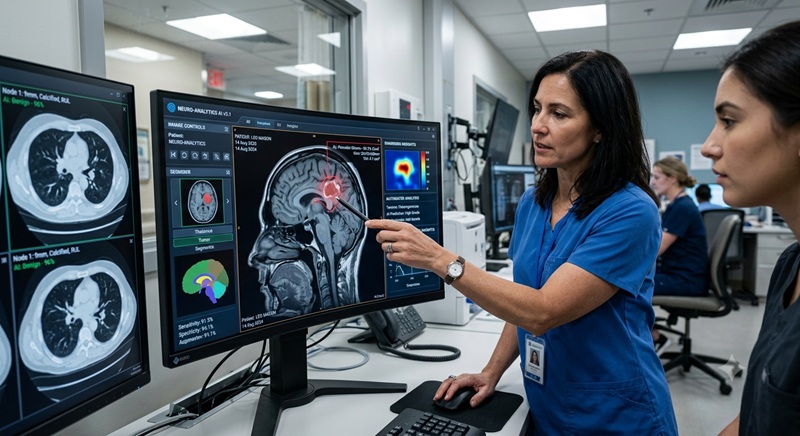
At its core, AI in healthcare uses technologies like machine learning, data analysis, and automation to handle tasks that once required a lot of manual effort. This includes everything from scheduling appointments and managing records to detecting serious diseases at an early stage. As a result, healthcare professionals can spend more time focusing on patients instead of paperwork.
Why AI Automation is Critical in Modern Healthcare
The need for healthcare automation solutions is growing rapidly. There are several reasons behind this shift:
- Rising patient demand: More people need medical care, but the number of healthcare professionals is limited.
- Data overload: Hospitals generate massive amounts of data daily, which is difficult to manage without AI.
- Need for faster diagnosis: Early and accurate diagnosis can save lives, and AI helps doctors make quicker decisions.
- Operational inefficiencies: Manual processes slow down workflows and increase the risk of errors.
AI solves these challenges by automating repetitive tasks, analyzing large datasets, and providing real-time insights. This leads to better patient outcomes and smoother healthcare operations.
Market Growth and Future Outlook (2026 and Beyond)
The global adoption of AI healthcare technology is growing at an incredible pace. By 2026 and beyond, AI is expected to become a core part of every healthcare system. Industry reports suggest that the AI healthcare market will reach hundreds of billions of dollars, driven by demand for smarter, faster, and more cost-effective solutions.
Key trends shaping the future include:
- Increased use of predictive analytics in healthcare
- Growth of AI-powered virtual assistants
- Expansion of remote patient monitoring through wearable devices
- Wider adoption of automation in hospitals and clinics
As technology continues to evolve, AI healthcare use cases will expand even further, making healthcare more accessible and personalized.
How AI is Reducing Costs, Saving Lives, and Improving Efficiency
One of the biggest advantages of AI automation in healthcare is its real-world impact:
- Reducing costs: AI minimizes manual work, cuts administrative expenses, and improves resource management.
- Saving lives: Early detection of diseases like cancer and heart conditions increases survival rates.
- Improving efficiency: Automated systems speed up processes like patient registration, diagnosis, and treatment planning.
In simple terms, AI is helping healthcare providers do more with less—delivering better care while reducing pressure on the system.
What is AI Automation in Healthcare?
AI automation in healthcare means using artificial intelligence to do medical and administrative tasks automatically, with little human effort. It helps hospitals and doctors work faster, reduce mistakes, and provide better patient care by using smart data analysis and decision-making.
Quick Answer
AI automation in healthcare uses technologies like machine learning, natural language processing, and robotic process automation to handle tasks such as diagnosis, patient data management, scheduling, and treatment planning. It improves accuracy, reduces costs, and enhances patient outcomes.

AI Automation in Healthcare Explained in Simple Words
Think of AI in healthcare as a smart digital assistant that can learn and improve over time. It can:
- Analyze patient records in seconds
- Detect diseases early
- Suggest treatment options
- Automate repetitive work like billing and scheduling
This allows healthcare providers to focus more on patient care instead of manual tasks.
How AI Automation Works in Healthcare Systems
Healthcare automation solutions collect large amounts of data from sources like electronic health records, lab results, and wearable devices. AI systems then:
- Process and organize this data
- Identify patterns and risks
- Provide real-time insights
- Support doctors in decision-making
For example, AI can quickly review thousands of X-rays and highlight possible health issues, helping doctors make faster and more accurate diagnoses.
Difference Between Traditional Automation and AI Automation
- Traditional automation: Works on fixed rules and performs simple repetitive tasks
- AI automation: Learns from data, adapts to new situations, and makes intelligent decisions
This is why AI healthcare technology is more advanced and valuable than basic automation tools.
Key Technologies Behind AI in Healthcare
1. Machine Learning (ML)
Learns from historical data to predict diseases and patient outcomes.
2. Natural Language Processing (NLP)
Understands and processes human language, such as doctor notes and medical records.
3. Computer Vision
Analyzes medical images like MRIs and CT scans to detect abnormalities.
4. Robotic Process Automation (RPA)
Handles repetitive administrative tasks like billing, claims, and scheduling.
Why AI Automation is Important in Healthcare
The healthcare industry is under constant pressure. There is massive patient data, rising costs, and a growing number of patients who need faster and better care. This is where AI automation in healthcare becomes essential. It helps hospitals and clinics work smarter, not harder, by using data-driven technology to improve every part of the system.
Quick Answer
AI automation in healthcare is important because it improves efficiency, reduces human errors, enhances diagnosis accuracy, and delivers personalized patient care. It helps healthcare providers manage large data, reduce costs, and provide faster, more reliable treatment.
1. Improving Efficiency and Speed
One of the biggest benefits of AI in healthcare is speed. Many tasks in hospitals—like data entry, appointment scheduling, and report analysis—take a lot of time when done manually.
With healthcare automation solutions:
- Patient records are updated instantly
- Appointments are scheduled automatically
- Reports are generated in seconds
This reduces delays and helps doctors treat more patients in less time. Faster processes mean better care and improved hospital performance.
2. Reducing Human Errors
Healthcare requires high accuracy, but humans can make mistakes, especially when handling large amounts of data. Even small errors in diagnosis or records can lead to serious problems.
AI healthcare technology helps reduce these risks by:
- Automating data entry and processing
- Cross-checking medical information
- Providing consistent and error-free outputs
This leads to safer treatments and better patient outcomes.
3. Enhancing Diagnosis Accuracy
Accurate diagnosis is critical in saving lives. AI healthcare use cases show that AI can analyze medical data much faster and often more accurately than humans.
For example:
- AI can detect diseases like cancer at an early stage
- It can analyze X-rays, MRIs, and lab results quickly
- It supports doctors with data-backed insights
This improves decision-making and ensures patients get the right treatment at the right time.
4. Delivering Personalized Patient Care
Every patient is different, and personalized care is the future of healthcare. AI automation in healthcare makes this possible by analyzing individual patient data.
With AI:
- Treatment plans are tailored to each patient
- Doctors can predict health risks in advance
- Patients receive more targeted and effective care
This improves patient satisfaction and long-term health outcomes.
Why This Matters More Than Ever
As healthcare systems grow more complex, the need for AI-powered healthcare systems continues to increase. AI helps manage large-scale operations while maintaining high-quality care.
In simple terms, AI automation in healthcare is making medical systems smarter, faster, and more reliable—helping save time, reduce costs, and improve lives.
Why Healthcare Needs AI Automation in 2026
Healthcare is changing quickly, and the pressure on hospitals and clinics is higher than ever. In 2026, providers must handle more patients, more data, and higher costs—often with limited staff. This is why AI automation in healthcare is no longer optional. It’s a practical solution that helps systems run smoothly, make better decisions, and deliver faster, safer care.
Quick Answer
Healthcare needs AI automation in 2026 to manage rising patient demand, reduce operational costs, enable faster and more accurate diagnosis, handle large volumes of medical data, and meet strict compliance standards. AI helps improve efficiency, accuracy, and patient outcomes across the system.
1. Rising Patient Demand vs Limited Healthcare Workforce
The number of patients is growing, but the healthcare workforce is not increasing at the same pace. Doctors and nurses are often overworked, which can affect care quality.
AI in healthcare helps bridge this gap by:
- Automating routine tasks like scheduling and documentation
- Supporting doctors with faster data analysis
- Allowing staff to focus more on patient care
With healthcare automation solutions, one team can handle more patients without compromising quality.
2. Increasing Operational Costs
Running a healthcare facility is expensive. Costs include staffing, equipment, administration, and daily operations. Without automation, these costs keep rising.
AI automation in healthcare reduces expenses by:
- Automating administrative tasks like billing and claims
- Improving resource management
- Reducing unnecessary tests and procedures through better insights
This makes healthcare more cost-effective for both providers and patients.
3. Need for Faster Diagnosis and Personalized Treatment
In many cases, speed is critical. Delayed diagnosis can lead to serious health risks. Patients also expect treatments tailored to their specific needs.
AI healthcare technology helps by:
- Analyzing medical data quickly
- Detecting diseases at an early stage
- Recommending personalized treatment plans
This leads to faster decisions and better outcomes.
4. Data Overload in Healthcare Systems
Hospitals generate huge amounts of data every day—from patient records to lab results and imaging reports. Managing this data manually is almost impossible.
AI healthcare use cases solve this problem by:
- Organizing and processing large datasets
- Finding patterns and insights in real time
- Helping doctors make data-driven decisions
AI turns complex data into useful information that improves care.
5. Compliance and Accuracy Challenges
Healthcare providers must follow strict regulations related to patient data, privacy, and treatment standards. Manual processes increase the risk of errors and non-compliance.
AI automation in healthcare improves compliance by:
- Ensuring accurate data handling
- Maintaining proper records automatically
- Reducing human errors in documentation
This helps healthcare organizations stay compliant while delivering safe and reliable care.
Top Use Cases of AI Automation in Healthcare
AI automation in healthcare is changing how doctors diagnose diseases, treat patients, and manage hospitals. It helps save time, reduce human errors, and improve patient outcomes. Below are the most important and practical use cases of AI in healthcare, explained in simple words.
AI in Medical Diagnosis
AI in medical diagnosis helps doctors detect diseases earlier and more accurately.
- Early disease detection (cancer, heart disease, etc.)
AI can analyze medical data and spot early signs of serious diseases like cancer or heart problems—sometimes even before symptoms appear. This helps start treatment sooner and improves survival rates. - AI-powered imaging and radiology
AI tools can read X-rays, MRIs, and CT scans faster than humans. They can highlight small issues that doctors might miss, making diagnosis more reliable. - Faster and more accurate diagnostics
AI reduces the time needed to diagnose a condition. What used to take hours or days can now be done in minutes, with higher accuracy and fewer mistakes.
Predictive Analytics for Patient Care
Predictive analytics uses AI to study patient data and predict future health outcomes.
- Predicting patient outcomes
AI can estimate how a patient’s condition will change over time, helping doctors plan better treatments. - Preventing hospital readmissions
AI identifies patients who are likely to return to the hospital. Doctors can take preventive steps to avoid readmissions and improve care quality. - Risk assessment models
AI evaluates risk factors like age, lifestyle, and medical history to predict diseases early and guide preventive care.
Robotic Process Automation (RPA) in Administration
RPA helps automate routine administrative tasks in hospitals.
- Automating billing and claims processing
AI systems handle insurance claims, billing, and payments quickly and with fewer errors. - Appointment scheduling and patient records management
AI can automatically schedule appointments, send reminders, and manage patient data efficiently. - Reducing administrative burden
By handling repetitive tasks, AI frees up staff time so they can focus more on patient care.
AI in Drug Discovery & Development
AI is speeding up the process of finding and developing new medicines.
- Accelerating drug research
AI analyzes huge datasets to identify potential drug candidates much faster than traditional methods. - Reducing time and cost of clinical trials
AI helps design smarter clinical trials, reducing both time and expenses. - Identifying potential compounds faster
AI can quickly test and predict which chemical compounds may work as effective drugs.
Virtual Health Assistants & Chatbots
AI-powered assistants provide support to patients anytime.
- 24/7 patient support
Virtual assistants are available all day and night to answer health-related questions. - Symptom checking
Patients can enter symptoms, and AI suggests possible conditions and next steps. - Appointment booking
Chatbots can schedule doctor visits, send reminders, and reduce waiting time.
AI in Personalized Treatment
AI helps create treatment plans tailored to each patient.
- Tailored treatment plans based on patient data
AI studies patient history, lifestyle, and medical data to suggest the most effective treatment. - Genomics and precision medicine
AI analyzes genetic information to design treatments that work best for an individual’s unique biology.
Remote Patient Monitoring
AI allows doctors to monitor patients even when they are at home.
- Wearable devices integration
Devices like smartwatches track heart rate, activity, and other health data in real time. - Real-time health tracking
AI continuously monitors patient data and alerts doctors if something is wrong.
Chronic disease management
Patients with long-term conditions like diabetes or hypertension can be monitored remotely, reducing hospital visits and improving quality of life.
Key Benefits of AI Automation in Healthcare
AI automation in healthcare is helping hospitals, clinics, and doctors deliver faster, smarter, and more reliable care. It improves accuracy, reduces costs, and enhances the overall patient experience. Below are the key benefits explained in simple words for better understanding.
Improved Accuracy and Diagnosis
AI helps doctors make better and more precise decisions.
- Reduction in human errors
AI systems analyze large amounts of medical data without getting tired or distracted. This reduces common human errors in diagnosis and treatment. - Better clinical decision-making
AI provides data-driven insights, helping doctors choose the right treatment plan based on facts, patterns, and patient history. This leads to more accurate diagnoses and better health outcomes.
Cost Reduction
AI automation helps healthcare organizations save money while improving services.
- Lower operational expenses
By automating tasks like billing, scheduling, and data entry, hospitals reduce the need for manual work, which lowers overall costs. - Efficient resource utilization
AI ensures that staff, equipment, and hospital resources are used in the most effective way, avoiding waste and improving productivity.
Enhanced Patient Experience
AI makes healthcare faster, smoother, and more personalized for patients.
- Faster services
AI speeds up diagnosis, appointment booking, and treatment processes, so patients get care quickly. - Personalized care
AI analyzes patient data to provide customized treatment plans based on individual needs, lifestyle, and medical history. - Reduced waiting times
Automated systems manage appointments and patient flow efficiently, reducing long waiting hours in hospitals and clinics.
Increased Efficiency
AI improves how healthcare systems work on a daily basis.
- Automation of repetitive tasks
Routine tasks like data entry, report generation, and record management are handled by AI, saving time and effort. - Streamlined workflows
AI connects different systems and processes, making workflows smoother and more organized across departments.
Better Data Management & Insights
AI helps healthcare providers manage and use data more effectively.
- Handling large volumes of medical data
Healthcare generates huge amounts of data every day. AI can store, organize, and process this data quickly and accurately. - Real-time analytics for better decisions
AI provides instant insights from patient data, helping doctors and administrators make faster and smarter decisions.
Challenges of AI Automation in Healthcare
AI automation in healthcare offers many benefits, but it also comes with real challenges. Healthcare providers must address these issues to use AI safely, effectively, and at scale. Below are the most important challenges explained in simple words.
Data Privacy and Security Concerns
Healthcare data is highly sensitive. It includes patient records, medical history, and personal details.
- Risk of data breaches
If AI systems are not properly secured, hackers can access confidential patient information. This can lead to serious legal and financial problems. - Compliance with regulations
Hospitals must follow strict data protection laws (like HIPAA in the U.S.). Managing AI systems while staying compliant can be complex. - Patient trust issues
Patients may worry about how their data is used and stored. Without strong privacy measures, trust can be lost.
High Implementation Cost
Adopting AI in healthcare requires a large initial investment.
- Expensive technology and infrastructure
AI tools, software, and hardware can be costly, especially for small clinics or hospitals. - Training and maintenance costs
Healthcare staff need proper training to use AI systems. Ongoing maintenance and updates also add to the cost. - Uncertain ROI in early stages
Some organizations may not see immediate returns, making it harder to justify the investment at the beginning.
Integration with Existing Systems
Many healthcare systems still use older technologies.
- Compatibility issues
Integrating AI with legacy systems can be difficult and time-consuming. - Data silos
Patient data is often stored in different systems that don’t communicate well with each other. AI needs connected data to work effectively. - Workflow disruption
Introducing AI can change existing processes, which may slow down operations during the transition period.
Lack of Skilled Professionals
AI in healthcare requires both technical and medical expertise.
- Shortage of AI experts
There are not enough professionals who understand both AI technology and healthcare systems. - Training gaps
Doctors and staff may not be fully trained to use AI tools effectively, leading to underutilization. - Dependence on specialists
Organizations may need to rely on external experts, increasing costs and complexity.
Ethical Concerns and Bias in AI
AI must be used responsibly to ensure fair and safe outcomes.
- Bias in AI algorithms
If AI is trained on limited or biased data, it may give unfair or incorrect results for certain groups of patients. - Lack of transparency
Some AI systems work like “black boxes,” making it hard to understand how decisions are made. This can reduce trust among doctors and patients. - Accountability issues
When AI makes a mistake, it can be unclear who is responsible—the doctor, the developer, or the system itself.
Future Trends of AI in Healthcare (2026 & Beyond)
AI in healthcare is growing fast, and the next few years will bring major changes in how care is delivered, managed, and experienced. From smarter diagnosis to fully connected care systems, AI automation in healthcare will become more powerful, more accurate, and more patient-focused. Below are the key future trends explained in simple words.
1. AI-Powered Early Detection Will Become Standard
In the future, AI will not just help diagnose diseases—it will predict them before they happen.
- Earlier disease prediction
AI will analyze patient history, lifestyle, and genetic data to detect risks for diseases like cancer, diabetes, and heart conditions at a very early stage. - Preventive healthcare focus
Healthcare will shift from “treatment” to “prevention,” helping patients stay healthy instead of treating them after they get sick.
2. Hyper-Personalized Treatment Plans
AI will take personalized care to the next level.
- Data-driven treatment
AI will combine medical history, genetics, and real-time health data to create highly customized treatment plans. - Precision medicine growth
Doctors will use AI to select treatments that work best for each individual, reducing trial-and-error and improving success rates.
3. Expansion of Remote Patient Monitoring
Remote care will become more common and advanced.
- Smart wearable devices
Devices like smartwatches and health trackers will continuously monitor vital signs such as heart rate, blood pressure, and oxygen levels. - Real-time alerts
AI will instantly alert doctors and patients if any abnormal patterns are detected, allowing quick action. - Hospital-at-home model
More patients will receive care at home instead of hospitals, reducing costs and improving comfort.
4. AI-Driven Virtual Healthcare Assistants
Virtual assistants and chatbots will become smarter and more human-like.
- 24/7 intelligent support
AI assistants will answer questions, guide patients, and even provide basic medical advice anytime. - Voice-enabled healthcare
Patients will interact with AI using voice commands, making healthcare more accessible, especially for elderly users.
5. Faster and Smarter Drug Discovery
AI will continue to transform how new medicines are developed.
- Rapid drug development
AI will analyze millions of data points to identify potential drugs much faster than traditional methods. - Lower research costs
Pharmaceutical companies will reduce the time and cost needed to bring new drugs to market. - Personalized drugs
Future medicines may be designed specifically for individual patients based on their genetic profile.
6. AI Integration with Robotics and Surgery
AI and robotics will work together to improve surgical procedures.
- Robot-assisted surgeries
AI-powered robots will assist doctors in performing highly precise and minimally invasive surgeries. - Better outcomes and faster recovery
Patients will experience less pain, fewer complications, and quicker recovery times.
7. Advanced Predictive Analytics for Healthcare Systems
AI will help hospitals make smarter decisions at every level.
- Patient flow optimization
Hospitals will use AI to manage patient flow, reduce overcrowding, and improve efficiency. - Resource planning
AI will predict demand for beds, staff, and equipment, helping hospitals prepare in advance.
8. Stronger Focus on Data Security and Ethical AI
As AI grows, so will the focus on safety and trust.
- Improved data protection
Advanced security systems will protect patient data from cyber threats. - Transparent AI systems
Future AI models will be more explainable, helping doctors understand how decisions are made. - Bias reduction
Efforts will be made to train AI on diverse datasets to ensure fair and accurate results for all patients.
9. Seamless Integration Across Healthcare Systems
AI will connect different parts of the healthcare ecosystem.
- Unified patient records
All patient data will be connected across hospitals, clinics, and labs for better coordination. - Smooth workflows
AI will automate and streamline processes, reducing delays and improving care delivery.
How Cor Advance Solutions Helps Healthcare Businesses
Healthcare organizations need smart, reliable, and secure technology to grow in today’s digital world. Cor Advance Solutions helps hospitals, clinics, and healthcare startups use AI automation in healthcare to improve patient care, reduce costs, and increase efficiency. Here’s how they deliver real results.
Overview of Services Offered
Cor Advance Solutions provides end-to-end healthcare technology services designed for modern needs.
- AI automation solutions for healthcare
They build intelligent systems that automate diagnosis support, patient management, and daily operations. - Healthcare software development
From hospital management systems to patient portals, they create custom software tailored to each business. - Data analytics and insights
They turn complex medical data into clear insights that help doctors and administrators make better decisions. - Cloud-based healthcare solutions
Secure cloud systems that store and manage patient data with easy access and high performance.
Custom AI Healthcare Solutions
Every healthcare business is different, and Cor Advance Solutions understands that.
- Tailored AI models
They design AI systems based on your specific needs—whether it’s diagnosis support, predictive analytics, or workflow automation. - Personalized patient care tools
Their AI solutions help create customized treatment plans using patient data, improving outcomes and satisfaction. - Integration with existing systems
They ensure AI tools work smoothly with your current software and hospital systems without disruption.
Scalable and Secure Automation Systems
Growth and security are critical in healthcare, and Cor Advance Solutions focuses on both.
- Scalable technology
Their solutions grow with your business—whether you are a small clinic or a large hospital network. - High-level data security
They follow strict data protection standards to keep patient information safe and compliant with regulations. - Reliable automation
From billing to patient records, their systems reduce manual work and improve operational efficiency.
Real-World Case Studies / Success Stories
Cor Advance Solutions has helped many healthcare providers achieve measurable success.
- Improved diagnosis speed
A healthcare client used their AI tools to reduce diagnosis time by over 40%, leading to faster treatment. - Reduced operational costs
Automation of billing and administrative tasks helped clinics cut costs and improve staff productivity. - Better patient engagement
AI-powered chatbots and patient apps increased appointment bookings and patient satisfaction.
Why Choose Cor Advance Solutions (USP)
Cor Advance Solutions stands out as a trusted partner for AI in healthcare solutions.
- Industry-focused expertise
They specialize in healthcare technology, understanding real challenges and needs. - End-to-end solutions
From strategy to development and support, they handle everything in one place. - Innovation-driven approach
They use the latest AI technologies to deliver modern, future-ready solutions. - Client-first mindset
Their solutions are designed to solve real problems, improve ROI, and deliver long-term value. - Proven results
They focus on measurable outcomes like cost savings, improved efficiency, and better patient care.
If you want to transform your healthcare business with AI automation, Cor Advance Solutions offers the expertise, technology, and support you need. Their customized, secure, and scalable solutions help you stay ahead in a fast-changing healthcare industry while delivering better care to your patients.
FAQs
What is AI automation in healthcare?
AI automation in healthcare means using artificial intelligence to perform tasks without human effort. It helps automate diagnosis, patient care, and administrative work. AI systems analyze data, make decisions, and improve efficiency. This reduces errors and saves time. Overall, it makes healthcare faster, smarter, and more accurate.
How is AI used in hospitals?
AI in healthcare is used in hospitals for diagnosis, patient monitoring, and automation of daily tasks. It helps doctors analyze reports, manage patient records, and schedule appointments. AI also powers chatbots and virtual assistants. Hospitals use it to improve efficiency and reduce workload. This leads to better patient care and faster services.
What are the benefits of AI in healthcare?
AI automation in healthcare improves accuracy, reduces costs, and saves time. It helps doctors make better decisions using data-driven insights. AI also enhances patient experience with faster services and personalized care. It reduces human errors and increases efficiency. Overall, it improves both patient outcomes and hospital performance.
How does AI help in medical diagnosis?
AI helps in medical diagnosis by analyzing patient data and medical images quickly. It detects patterns that may not be visible to humans. AI tools assist doctors in identifying diseases accurately. This leads to faster and more reliable diagnoses. It also reduces the chances of misdiagnosis.
Can AI detect diseases early?
Yes, AI in healthcare can detect diseases at an early stage by analyzing medical history and data. It identifies risk factors and warning signs before symptoms appear. Early detection helps in faster treatment and better outcomes. AI is especially useful for diseases like cancer and heart conditions. This improves survival rates significantly.
How accurate is AI in diagnosing diseases?
AI can be highly accurate in diagnosing diseases when trained with quality data. In some cases, it performs as well as or better than human doctors. It reduces human errors and provides consistent results. However, it works best when combined with medical expertise. Doctors and AI together improve diagnosis accuracy.
What is AI-powered medical imaging?
AI-powered medical imaging uses artificial intelligence to analyze X-rays, MRIs, and CT scans. It helps detect abnormalities quickly and accurately. AI highlights areas of concern for doctors to review. This speeds up diagnosis and reduces workload. It also improves accuracy in identifying diseases.
Can AI replace doctors in diagnosis?
No, AI cannot replace doctors in diagnosis, but it can support them. AI provides data-driven insights and recommendations. Doctors use this information to make final decisions. Human judgment and experience are still essential. AI works as a powerful assistant, not a replacement.
What is remote patient monitoring using AI?
Remote patient monitoring uses AI to track patients’ health outside hospitals. Devices like wearables collect real-time data such as heart rate and blood pressure. AI analyzes this data and alerts doctors if needed. It helps manage chronic diseases and reduces hospital visits. This makes healthcare more convenient and accessible.
How does AI automate hospital administration?
AI automation in healthcare simplifies administrative tasks like billing, data entry, and record management. It reduces manual work and human errors. AI systems can process claims and manage documents efficiently. This saves time for staff and improves productivity. Hospitals can focus more on patient care.
How does AI help in appointment scheduling?
AI automates appointment scheduling by booking, rescheduling, and sending reminders. It reduces manual effort and avoids double bookings. Patients can easily schedule appointments online or through chatbots. This improves convenience and reduces waiting time. It also helps hospitals manage patient flow efficiently.
Can AI reduce hospital operational costs?
Yes, AI in healthcare helps reduce operational costs by automating tasks and improving efficiency. It minimizes the need for manual work and reduces errors. AI also optimizes resource usage like staff and equipment. This leads to better cost management. Hospitals can save money while improving services.
How does AI predict patient outcomes?
AI uses predictive analytics to study patient data and medical history. It identifies patterns and predicts how a patient’s condition may change. This helps doctors plan better treatments. Early predictions improve patient care and reduce risks. It also supports preventive healthcare.
Can AI prevent hospital readmissions?
Yes, AI can help prevent hospital readmissions by identifying high-risk patients. It analyzes health data and predicts who may need extra care. Doctors can take preventive steps before conditions worsen. This improves patient outcomes and reduces repeat visits. It also lowers healthcare costs.
How does AI handle large healthcare data?
AI can process and analyze large volumes of healthcare data quickly and accurately. It organizes patient records, medical reports, and clinical data. AI finds patterns and insights that help in decision-making. This improves efficiency and reduces data management challenges. It makes healthcare data more useful and actionable.
What is real-time analytics in healthcare?
Real-time analytics in healthcare means analyzing patient data instantly using AI. It provides immediate insights for faster decision-making. Doctors can monitor patient conditions and respond quickly. This is useful in emergencies and critical care. It improves accuracy and patient safety.
How can healthcare businesses implement AI automation?
Healthcare businesses can implement AI automation by identifying key areas for improvement. They should choose the right AI tools and ensure data readiness. Starting with small pilot projects is important. After success, they can scale gradually across operations. Continuous monitoring and optimization ensure long-term success.
Conclusion: Transforming Healthcare with AI Automation
AI automation in healthcare is no longer optional—it is becoming essential for modern healthcare systems. From early disease detection and accurate medical diagnosis to remote patient monitoring and automated administration, AI in healthcare is improving every part of the patient journey. It helps reduce human errors, lower operational costs, and deliver faster, more personalized care. These real-world use cases show how healthcare AI solutions are making hospitals smarter, more efficient, and more patient-focused.
Adopting AI automation in healthcare early gives healthcare businesses a strong competitive advantage. Organizations that invest in AI now can improve efficiency, enhance patient satisfaction, and stay ahead of future challenges. As technology continues to evolve, early adopters will be better prepared to scale, innovate, and deliver high-quality care. Waiting too long can lead to missed opportunities and slower growth in an increasingly digital healthcare landscape.
If you want to unlock the full potential of AI in healthcare, the right technology partner makes all the difference. Cor Advance Solutions provides custom, scalable, and secure AI-driven healthcare solutions designed to meet your unique business needs. From strategy to implementation, they help you transform operations, improve patient outcomes, and achieve long-term success. Partner with Cor Advance Solutions today and take the first step toward a smarter, AI-powered healthcare future.