Introduction: Logistics Automation Solutions for Small Businesses in the UK
Small businesses across the UK are under more pressure than ever before. Customers now expect fast delivery, low prices, and real-time updates as standard. Whether you run an eCommerce store, a retail shop, or a distribution business, meeting these expectations while keeping costs low is becoming increasingly difficult.
The rise of online shopping has made logistics far more complex. Orders are higher, delivery areas are wider, and customers want everything quicker. Managing stock, processing orders, and planning deliveries manually is no longer enough. This growing demand has made logistics automation solutions in the UK a necessity rather than a choice.
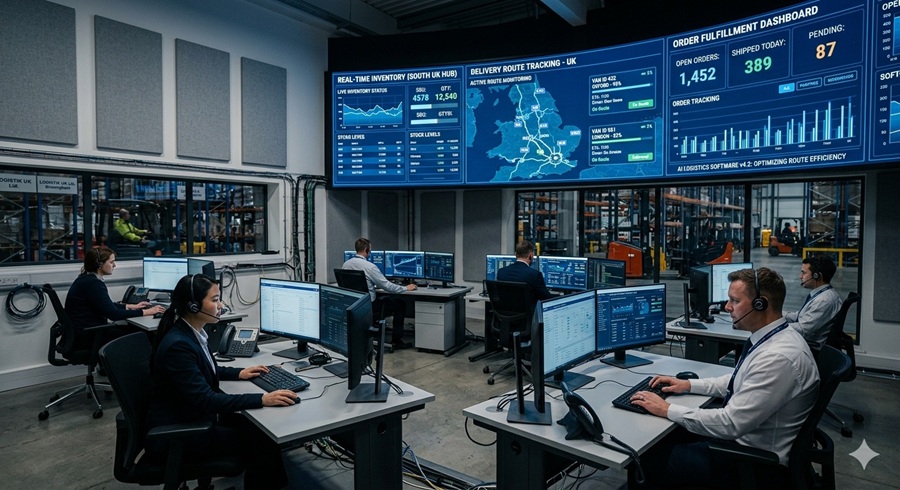
Many small businesses still depend on spreadsheets, manual tracking, or disconnected systems. These outdated methods often lead to late deliveries, wrong orders, stock issues, and wasted time. Even small mistakes can result in unhappy customers, negative reviews, and lost revenue. Over time, these problems slow down business growth.
This is where logistics automation for small businesses in the UK can make a real difference. By using smart tools like inventory management systems, warehouse automation, and route optimisation software, businesses can automate daily operations and remove manual errors.
With the right logistics automation solutions, you can:
- Cut down operational and delivery costs
- Speed up order processing and fulfilment
- Improve accuracy and reduce human errors
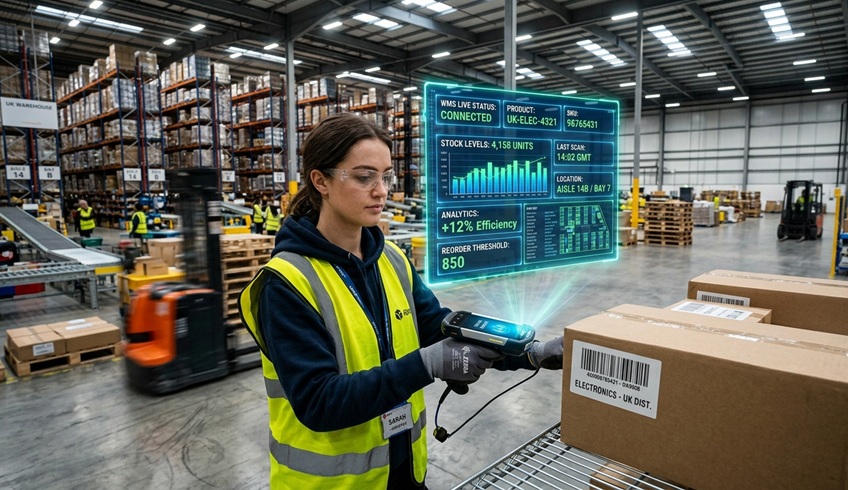
- Track inventory and deliveries in real time
- Scale your business without increasing workload
In simple terms, automation helps you work smarter, not harder. In this guide, you will learn how logistics automation solutions in the UK can help your small business save money, improve efficiency, and grow faster with confidence.
2. What Are Logistics Automation Solutions?
Logistics automation solutions are modern digital systems that help businesses manage their supply chain automatically with minimal manual work. These solutions use advanced technologies like AI, machine learning, and logistics software to handle everyday tasks such as inventory management, order processing, warehouse operations, and delivery planning.
For small businesses in the UK, this means operations become faster, more accurate, and easier to manage. Instead of relying on manual methods, logistics automation solutions in the UK work in real time to reduce errors, avoid delays, and improve overall efficiency. They also help lower operational costs by saving time, reducing labour, and optimising resources.
In simple terms, logistics automation for small businesses in the UK allows you to run your logistics smoothly, improve customer satisfaction, and scale your business without extra stress.
Core Components of Logistics Automation
- Inventory Automation
Keeps track of stock levels in real time and helps avoid overstocking or running out of products - Warehouse Automation
Uses smart systems to improve picking, packing, and storage processes - Order Processing Systems
Automatically manages orders from placement to delivery, reducing manual work - Route Optimisation Software
Finds the fastest and most cost-effective delivery routes using smart data - Delivery Tracking Systems
Provides real-time delivery updates to both businesses and customers for better transparency
3. Why Logistics Automation is Essential for Small Businesses in the UK
Small businesses in the UK are operating in a fast-changing environment where customer expectations, operational costs, and competition are all increasing at the same time. Managing logistics manually is no longer practical if you want to grow and stay competitive. This is why logistics automation solutions in the UK have become a critical part of modern business operations.

Current Challenges for Small Businesses
High Labour and Operational Costs
One of the biggest challenges for small businesses is rising costs. Hiring staff for order processing, inventory management, and delivery coordination can be expensive. On top of that, costs like fuel, storage, and transportation are also increasing.
Without logistics automation, businesses often spend more time and money on repetitive tasks that could easily be automated. This reduces profitability and limits growth.
Inefficient Delivery Systems
Many small businesses still plan deliveries manually or use basic tools. This often results in:
- Poor route planning
- Delayed deliveries
- Increased fuel consumption
- Missed delivery windows
Without route optimisation software, it becomes difficult to deliver orders quickly and efficiently. Late deliveries not only increase costs but also damage customer trust.
Inventory Mismanagement
Managing inventory manually can lead to serious problems such as:
- Overstocking (wasting money on extra stock)
- Stockouts (losing sales due to unavailable products)
- Lack of real-time visibility
Without inventory automation systems, businesses cannot accurately track stock levels. This creates confusion, delays, and poor decision-making.
Increasing Customer Expectations
Today’s UK customers expect:
- Next-day or same-day delivery
- Real-time order tracking
- Fast and error-free service
If a business fails to meet these expectations, customers quickly switch to competitors. Manual logistics systems simply cannot keep up with these demands.
Market Trends Driving Logistics Automation in the UK
Rapid Growth of UK eCommerce
The UK is one of the largest eCommerce markets in the world. Online sales reached over £127 billion in 2024, and the market is expected to grow significantly in the coming years .
This growth means more orders, more deliveries, and more pressure on logistics systems.
Shift Towards Digital Supply Chains
Around 28% of total retail sales in the UK now happen online . Businesses are moving from manual processes to digital systems to handle this demand efficiently.
Demand for Real-Time Tracking
Customers now want to track their orders in real time. Businesses that cannot provide live updates risk losing trust and credibility.
Shift Towards Digital Supply Chains
Modern businesses are moving towards fully digital supply chains. Instead of using manual processes, they are adopting logistics software, AI tools, and automation systems to manage operations in real time.
Small businesses that do not adapt to this shift risk falling behind competitors who are already using smart automation.
Demand for Real-Time Tracking and Transparency
Customers now expect full visibility of their orders. They want to know:
- When their order is shipped
- Where it is in transit
- When it will arrive
Without delivery tracking systems, businesses cannot provide this level of transparency. This can reduce customer trust and satisfaction.
Why Logistics Automation is the Smart Solution
To overcome these challenges, small businesses are turning to logistics automation solutions in the UK. These solutions replace manual processes with smart, automated systems that improve efficiency and accuracy.
With the right logistics automation for small businesses in the UK, you can:
- ✅ Reduce operational costs by minimising manual work
- ✅ Improve delivery efficiency using route optimisation tools
- ✅ Manage inventory in real time with automated tracking
- ✅ Increase accuracy and reduce human errors
- ✅ Meet customer expectations with faster and reliable delivery
- ✅ Scale your business easily without increasing workload
Final Thought
In today’s competitive UK market, relying on manual logistics is no longer sustainable. Businesses that adopt logistics automation solutions can operate faster, smarter, and more efficiently.
Simply put, automation is not just a technology upgrade—it is a growth strategy that helps small businesses reduce costs, improve service, and stay ahead of the competition.
4. Key Logistics Automation Solutions (Deep Breakdown)
To grow in today’s competitive market, small businesses need more than basic tools. They need smart systems that can handle complex logistics automatically and accurately. This is where logistics automation solutions in the UK make a real difference.
By using the right combination of tools, small businesses can manage inventory, process orders faster, optimise deliveries, and handle returns smoothly. Below is a detailed breakdown of the most important logistics automation solutions for small businesses in the UK.
4.1 Inventory Management Automation
Inventory is one of the most critical parts of any logistics operation. Poor inventory control can lead to lost sales, wasted stock, and unhappy customers. Inventory automation systems help solve these problems by giving complete control and visibility.
Real-Time Stock Visibility
With automated systems, you can track stock levels instantly across warehouses, stores, and online platforms. This helps you:
- Avoid stock shortages
- Prevent overstocking
- Make better purchasing decisions
You always know what is available, what is selling fast, and what needs attention.
AI-Based Demand Forecasting
Modern logistics automation solutions UK use AI to analyse past sales data, seasonal trends, and customer behaviour. This allows businesses to:
- Predict future demand
- Plan inventory more accurately
- Reduce waste and storage costs
This is especially useful for eCommerce businesses with changing demand patterns.
Automated Stock Alerts
The system automatically sends alerts when stock levels are too low or too high. This removes the need for constant manual checking and ensures you never miss an important update.
Overall, inventory automation improves accuracy, reduces costs, and ensures smooth operations.
4.2 Warehouse Automation
Warehouse operations involve multiple tasks such as storing, picking, packing, and dispatching goods. When done manually, these tasks are slow and prone to errors. Warehouse automation makes these processes faster and more reliable.
Smart Picking Systems
Automated picking systems guide workers to the exact location of products in the warehouse. This:
- Reduces picking time
- Minimises errors
- Increases productivity
Barcode & RFID Integration
Barcode scanners and RFID technology allow real-time tracking of products. Every item is scanned at each stage, ensuring:
- Accurate stock records
- Better traceability
- Faster processing
Automated Storage Systems
Smart storage systems organise products efficiently using data-driven layouts. This helps:
- Save warehouse space
- Improve accessibility
- Speed up operations
With warehouse automation UK, small businesses can handle more orders with fewer resources.
4.3 Order Processing Automation
Order processing is the heart of logistics. If this step is slow or inaccurate, it affects the entire operation. Order processing automation ensures that every order is handled quickly and correctly.
Auto Order Confirmation
As soon as a customer places an order, the system automatically sends confirmation messages via email or SMS. This improves trust and provides instant reassurance.
Seamless Order-to-Fulfilment Workflow
The system automatically:
- Receives the order
- Updates inventory
- Sends the order to the warehouse
- Prepares it for dispatch
This removes delays and ensures a smooth workflow from start to finish.
Reduced Manual Intervention
Automation reduces the need for human involvement in repetitive tasks. This leads to:
- Fewer errors
- Faster processing
- Better efficiency
Logistics automation for small businesses in the UK makes order handling simple, fast, and reliable.
4.4 Delivery Route Optimisation
Delivery is one of the most expensive and time-sensitive parts of logistics. Poor planning can increase costs and delay orders. Route optimisation software helps businesses deliver faster and more efficiently.
AI-Powered Route Planning
The system uses AI to calculate the best delivery routes based on multiple factors such as distance, delivery time, and order priority.
Traffic-Based Dynamic Routing
Routes are updated in real time based on traffic conditions. This helps drivers avoid delays and reach customers on time.
Fuel Cost Reduction
Optimised routes reduce unnecessary travel, which lowers fuel consumption and transportation costs.
With delivery automation solutions UK, businesses can improve delivery speed while saving money.
4.5 Returns & Reverse Logistics Automation
Returns are a normal part of business, especially in online retail. However, managing returns manually can be slow and frustrating. Reverse logistics automation simplifies this process.
Automated Return Workflows
Customers can easily request returns through an online system. The process is handled automatically, including approvals and instructions.
Faster Refunds
Automation speeds up the refund process, ensuring customers receive their money quickly. This builds trust and improves brand reputation.
Better Customer Satisfaction
A smooth and hassle-free return process creates a positive experience, encouraging customers to buy again.
Efficient returns management is a key advantage of logistics automation solutions in the UK.
Final Insight
All these solutions work together to create a powerful and efficient logistics system. When small businesses adopt logistics automation for small businesses in the UK, they can:
- Reduce operational costs
- Improve speed and accuracy
- Minimise errors
- Enhance customer satisfaction
- Scale their business without increasing workload
In simple terms, logistics automation solutions UK turn complex and time-consuming tasks into smooth, automated processes—helping small businesses grow faster and compete with larger companies.
5. How AI is Transforming Logistics Automation
Artificial Intelligence (AI) is changing how businesses manage logistics. For small businesses, it brings speed, accuracy, and better decision-making without adding extra workload. When combined with logistics automation solutions in the UK, AI helps turn complex operations into simple, smart processes that run smoothly in real time.
Below are the key ways AI is improving logistics automation for small businesses in the UK:
Predictive Analytics for Demand Forecasting
AI studies past sales data, seasonal trends, and customer behaviour to predict future demand.
This helps businesses:
- Stock the right products at the right time
- Avoid overstocking and stock shortages
- Plan purchases more accurately
With predictive analytics, businesses can reduce waste and improve profitability.
Machine Learning for Route Optimisation
AI-powered systems use machine learning to find the best delivery routes based on:
- Traffic conditions
- Delivery locations
- Time constraints
Routes are updated in real time, helping drivers avoid delays and complete more deliveries in less time.
This improves delivery speed and reduces fuel costs, making delivery automation solutions more efficient.
Smart Inventory Recommendations
AI systems provide intelligent suggestions based on data analysis. For example:
- Which products to restock
- When to reorder items
- Which products are slow-moving
This helps businesses make better decisions without guesswork, improving overall inventory management.
AI-Powered Customer Support Systems
AI chatbots and automated systems can handle customer queries instantly, such as:
- Order status updates
- Delivery tracking
- Return requests
These systems work 24/7, improving customer experience and reducing the need for support staff.
Final Insight
AI is a powerful part of modern logistics automation solutions UK. It helps small businesses:
- Make smarter decisions
- Improve efficiency
- Reduce costs
- Deliver better customer service
In simple words, AI does the hard thinking for you, so your business can run faster, smoother, and more profitably.
6. Benefits of Logistics Automation for Small Businesses
For small businesses, every minute and every pound matters. This is why more companies are investing in logistics automation solutions in the UK. These systems are designed to simplify operations, reduce costs, and improve overall performance.
With the right logistics automation for small businesses in the UK, you can run your business faster, smarter, and more efficiently without increasing your workload.
Cost Efficiency
One of the biggest advantages of logistics automation solutions UK is cost savings.
Reduced Labour Costs
Automation removes the need for manual work in tasks like order processing, inventory tracking, and reporting. This means:
- Fewer staff needed for repetitive tasks
- Lower payroll expenses
- More focus on important business activities
Lower Fuel Consumption
With route optimisation software, delivery routes are planned more efficiently. This helps:
- Reduce unnecessary travel
- Save fuel costs
- Improve delivery performance
Over time, these savings can significantly increase your profit margins.
Operational Efficiency
Automation improves how your business operates daily.
Faster Processing Times
Orders are processed automatically without delays. From order placement to dispatch, everything moves quickly and smoothly.
Real-Time Decision-Making
With real-time data from logistics automation solutions, you can:
- Monitor inventory instantly
- Track deliveries live
- Make quick and informed decisions
This helps your business stay responsive and efficient at all times.
Accuracy & Reliability
Manual systems often lead to mistakes. Automation improves accuracy across all operations.
Fewer Human Errors
Automated systems reduce errors in:
- Order processing
- Inventory tracking
- Delivery management
Improved Order Accuracy
Customers receive the correct products on time, which reduces returns and complaints.
This builds trust and improves your brand reputation.
Better Customer Experience
Customer satisfaction is key to business growth. Logistics automation for small businesses in the UK helps deliver a better experience.
Faster Deliveries
Optimised systems ensure orders are processed and delivered quickly, meeting customer expectations.
Real-Time Tracking Updates
Customers can track their orders at every stage. This:
- Builds transparency
- Reduces customer queries
- Increases trust
Happy customers are more likely to return and recommend your business.
Scalability
Growth is the goal of every business, and automation makes it easier.
Easily Handle Business Growth
As your orders increase, automated systems can handle higher volumes without extra effort. You don’t need to:
- Hire more staff immediately
- Change your entire system
- Worry about operational delays
Logistics automation solutions in the UK allow your business to scale smoothly and efficiently.
7. Challenges & Limitations of Logistics Automation
While logistics automation solutions in the UK offer many benefits, it is also important to understand the challenges before implementing them. Being aware of these limitations helps small businesses make better decisions and plan a smooth transition. It also builds trust, which is key for long-term success.
High Initial Setup Cost
One of the biggest concerns for small businesses is the upfront investment. Setting up logistics automation solutions UK may require:
- Software purchase or subscription
- System setup and integration
- Hardware like scanners or tracking devices
For small businesses, this cost can feel high at the beginning. However, it is important to see automation as a long-term investment. Over time, the savings from reduced labour, fewer errors, and improved efficiency often outweigh the initial cost.
Integration with Existing Systems
Many small businesses already use tools for accounting, inventory, or order management. Integrating new logistics automation software with these existing systems can be challenging.
Common issues include:
- Compatibility problems
- Data transfer errors
- System downtime during setup
Choosing the right provider for logistics automation for small businesses in the UK can help reduce these challenges and ensure smooth integration.
Employee Training Requirements
Switching from manual processes to automated systems requires proper training. Employees need time to learn:
- How to use new software
- How to manage automated workflows
- How to solve basic system issues
At the start, this may slow down operations slightly. However, once the team is trained, productivity increases significantly, and daily tasks become much easier.
Data Security Concerns
Automation systems handle important business data such as:
- Customer information
- Order details
- Payment and delivery data
This creates concerns about data privacy and security. Businesses must ensure that their logistics automation solutions UK include:
- Secure data storage
- Strong access controls
- Regular system updates
Working with trusted providers helps protect sensitive information and maintain customer trust.
8. How to Choose the Right Logistics Automation Solution in the UK
Choosing the right system can make a big difference to your business. The right logistics automation solutions in the UK will save time, reduce costs, and improve your daily operations. The wrong choice can slow you down and create more problems.
If you are a small business owner, you need a solution that is simple, reliable, and built for your needs. Below is a clear and practical guide to help you choose the best logistics automation for small businesses in the UK.
Understand Your Business Needs First
Before choosing any system, take time to understand your own requirements.
Ask yourself:
- How many orders do you handle daily?
- Do you manage your own warehouse?
- Do you deliver locally or across the UK?
- What problems are you facing right now?
This helps you choose logistics automation solutions UK that solve your real problems, not just add features you don’t need.
Choose Based on Your Business Size & Industry
Not all solutions are suitable for every business. A small eCommerce business will have different needs compared to a wholesaler or retailer.
Make sure the system is designed for:
- Small or growing businesses
- Your specific industry
- Your order and delivery volume
A well-matched solution will be easier to use and more effective.
Focus on Value, Not Just Price
Many businesses choose the cheapest option, but that is not always the best decision.
Instead, focus on:
- How much time it will save
- How much cost it will reduce
- How it will improve efficiency
The best logistics automation solutions in the UK give strong return on investment (ROI), even if the initial cost is higher.
Check Integration with Your Existing Systems
When choosing logistics automation solutions in the UK, integration is one of the most important factors. Your new system should work smoothly with the tools you already use. If systems do not connect properly, it can create confusion, errors, and extra work.
A good logistics automation solution UK should easily integrate with:
- eCommerce platforms like Shopify, WooCommerce, or Magento
- Accounting software for billing, invoices, and financial tracking
- Inventory management systems to keep stock data accurate
Why Integration Matters
When your systems are fully connected, your business runs much more efficiently:
- ✔No duplicate work – You don’t need to enter the same data again and again
- ✔Accurate data flow – All systems update automatically in real time
- ✔Faster operations – Orders, inventory, and deliveries move smoothly without delays
In simple words, strong integration makes your logistics automation for small businesses in the UK simple, fast, and error-free.
Look for Scalability
Your business will not stay the same forever. As you grow, your logistics needs will also increase. This is why scalability is essential when choosing logistics automation solutions UK.
A scalable system allows you to:
- Handle a higher number of daily orders
- Add new products and categories easily
- Expand your delivery areas across the UK or internationally
The biggest advantage is that you won’t need to change your system again in the future. This saves both time and money.
Choose a Provider with Strong Expertise
Technology alone is not enough. The company behind the solution plays a very important role.
When selecting a provider for logistics automation solutions in the UK, make sure they:
- Have proven experience in logistics automation
- Understand the real challenges faced by small businesses
- Offer proper support, onboarding, and training
A reliable provider will not just sell you software—they will help you implement it successfully and support your business as it grows.
Check Key Features Before Final Decision
Before finalising your choice, make sure the system includes all the essential features required for smooth operations.
Must-Have Features:
- Real-time tracking of orders and inventory
- Route optimisation for faster and cost-effective deliveries
- Automated order processing from order placement to dispatch
- AI-based insights and reporting for better decision-making
These features are the foundation of effective logistics automation for small businesses in the UK.
9. Why Choose Cor Advance Solutions?
Choosing the right partner is just as important as choosing the right technology. With so many providers in the market, small businesses need a company they can trust—one that understands their challenges and delivers real results.
Cor Advance Solutions stands out as a trusted provider of logistics automation solutions in the UK, helping small businesses simplify operations, reduce costs, and grow with confidence.
Expertise & Experience
Cor Advance Solutions has strong experience in delivering logistics automation solutions UK for different industries.
- Proven track record of successful implementations
- Deep understanding of supply chain and logistics challenges
- Practical solutions based on real business needs
This means you are not just getting software—you are getting expert guidance that works in real-world situations.
AI-Powered Solutions
Modern logistics requires smart technology. Cor Advance Solutions uses advanced tools like AI and machine learning to improve efficiency.
- Smart automation systems for faster operations
- AI-based insights for better decision-making
- Intelligent route planning and demand forecasting
These features help small businesses stay competitive and future-ready with logistics automation for small businesses in the UK.
Custom Development
Every business is different, and one solution does not fit all. Cor Advance Solutions offers customised systems based on your specific needs.
- Tailored solutions for small businesses in the UK
- Flexible features based on your operations
- Easy integration with your existing systems
This ensures your logistics automation solution UK fits perfectly with your business processes.
Results-Driven Approach
The main goal of automation is to deliver real results. Cor Advance Solutions focuses on outcomes that matter.
- ROI-focused implementation
- Cost reduction and efficiency improvement
- Better delivery performance and customer satisfaction
Their approach ensures that your investment in logistics automation solutions in the UK delivers measurable business growth.
10. Real-Life Use Cases / Case Studies
Understanding how logistics automation solutions in the UK work in real businesses makes it easier to see their true value. Below are simple, real-life examples of how small businesses have improved their operations using logistics automation for small businesses in the UK.
eCommerce Business – Reduced Delivery Costs by 30%
A small UK-based eCommerce company was struggling with high delivery expenses and delayed shipments. They were planning routes manually, which caused:
- Longer delivery times
- Higher fuel costs
- Missed delivery slots
After implementing logistics automation solutions UK, including route optimisation software, the business was able to:
- Automatically plan the fastest delivery routes
- Reduce unnecessary travel and fuel usage
- Deliver orders on time consistently
Result: Delivery costs reduced by 30%, and customer satisfaction improved significantly.
Retail Business – Improved Inventory Accuracy by 95%
A retail business managing both online and offline sales faced constant inventory issues. They often had:
- Incorrect stock levels
- Overstocking of slow-moving products
- Stockouts of high-demand items
By adopting inventory automation systems as part of their logistics automation solution UK, they achieved:
- Real-time stock tracking across all channels
- Automated updates for every sale and restock
- Better demand forecasting
Result: Inventory accuracy improved by 95%, reducing losses and improving sales performance.
Startup Growth – Scaled Operations Without Increasing Workforce
A growing startup in the UK experienced rapid order growth but had limited staff. Manual processes were slowing them down and increasing errors.
After switching to logistics automation for small businesses in the UK, including order processing automation and warehouse automation, they were able to:
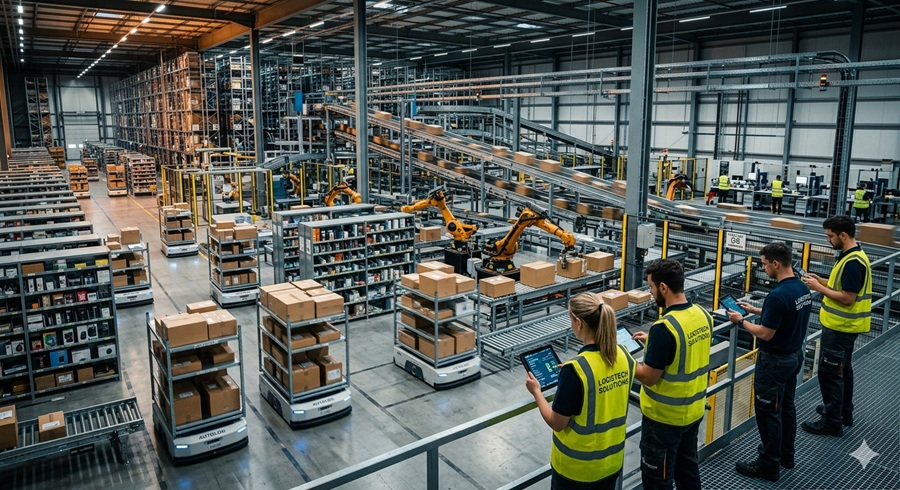
- Automate order handling from placement to dispatch
- Reduce manual work and human errors
- Handle a higher number of orders without hiring more staff
Result: The business scaled smoothly and managed growth without increasing operational costs.
Final Insight
These examples clearly show how logistics automation solutions in the UK can solve real business problems.
Whether it is:
- Reducing delivery costs
- Improving inventory accuracy
- Scaling operations efficiently
Logistics automation solutions UK help small businesses achieve better results with less effort.
In simple words, automation turns everyday challenges into growth opportunities and helps businesses succeed in a competitive market.
11. Future Trends in Logistics Automation
The future of logistics in the UK is changing very fast. New technologies like AI, IoT, and smart automation are not just improving logistics—they are completely transforming how businesses operate.
The UK is already investing heavily in this space. The logistics automation market in the UK reached over $1.6 billion in 2025 and is expected to grow rapidly at over 18% annually . This shows that automation is becoming essential for every business, especially small businesses.
Below are the most important future trends shaping logistics automation solutions in the UK.
AI-Driven Logistics Ecosystems
AI is no longer just a tool—it is becoming the brain of logistics systems.
- AI connects inventory, warehouse, and delivery systems into one platform
- It analyses data and makes decisions automatically
- It improves demand forecasting and reduces waste
According to recent industry insights, 90% of UK retail leaders are already exploring AI in operations, but the real value comes when AI is used across the full logistics process .
This means future logistics automation solutions UK will not work in parts—they will work as one intelligent system.
Autonomous Delivery Systems
Delivery is moving towards automation with minimal human involvement.
- Self-driving delivery vehicles and robots are being tested
- Electric and automated fleets are reducing costs and emissions
- Faster and more efficient last-mile delivery
For example, companies in the UK are already investing in automated and electric delivery fleets to improve efficiency and sustainability .
In the future, delivery automation solutions UK will focus on speed, cost-saving, and eco-friendly logistics.
IoT-Enabled Supply Chains
The Internet of Things (IoT) is making logistics more connected and transparent.
- Devices track goods in real time
- Businesses can monitor location, condition, and movement of products
- Better visibility reduces delays and losses
The UK IoT market is expected to grow by $25.7 billion between 2024 and 2029, showing strong adoption across industries .
This makes logistics automation for small businesses in the UK more data-driven and reliable.
Smart Warehouses
Warehouses are becoming fully automated with advanced technologies.
- Robots handle picking, packing, and sorting
- Automated systems manage storage and inventory
- AI improves warehouse efficiency and accuracy
Major UK companies are already investing in large automated warehouses with robotics to improve operations and reduce costs .
Smart warehouses are becoming a key part of warehouse automation UK, helping businesses process more orders with fewer errors.
Final Insight
The future of logistics automation solutions in the UK is built on smart, connected, and automated systems.
These trends will help small businesses:
- Reduce operational costs
- Improve speed and accuracy
- Make better decisions using data
- Scale operations easily
In simple words, the future of logistics is automated, intelligent, and fully connected—and businesses that adopt these trends early will grow faster and stay ahead in the UK market.
FAQs
What are logistics automation solutions?
Logistics automation solutions are digital systems that use software, AI, and smart tools to manage supply chain tasks automatically. These include inventory management, order processing, warehouse operations, and delivery planning. Instead of manual work, everything runs in real time with better accuracy and speed. For small businesses in the UK, this means fewer errors and lower costs. In simple terms, automation helps businesses run logistics smoothly and efficiently.
How does logistics automation work for small businesses?
Logistics automation for small businesses in the UK works by connecting all operations into one system. When an order is placed, the system updates inventory, processes the order, and schedules delivery automatically. It removes manual tasks and reduces delays. Real-time tracking and data help business owners make quick decisions. This improves efficiency, accuracy, and overall productivity.
Why is logistics automation important in the UK?
Logistics automation solutions in the UK are important because customer expectations are growing fast. People want quick delivery, accurate orders, and live tracking. At the same time, labour and delivery costs are increasing. Automation helps businesses reduce costs and improve service quality. It also allows small businesses to compete with larger companies in a fast-moving market.
What are the main components of logistics automation?
The main components of logistics automation solutions UK include inventory automation, warehouse automation, order processing systems, route optimisation software, and delivery tracking tools. These systems work together to manage the full supply chain. They help track stock, process orders, and plan deliveries efficiently. Each component improves speed, accuracy, and overall business performance.
How is AI used in logistics automation?
AI is widely used in logistics automation solutions in the UK to analyse data and improve decision-making. It helps predict demand, optimise delivery routes, and manage inventory levels. AI can also automate customer support and provide real-time insights. This reduces manual effort and improves efficiency. In simple words, AI makes logistics smarter and faster.
What is AI-driven logistics automation?
AI-driven logistics automation uses artificial intelligence to control and improve logistics processes automatically. It learns from data and improves performance over time. For example, it can adjust delivery routes, predict demand, and recommend stock levels. This reduces costs and increases efficiency. For UK businesses, it is a powerful way to stay competitive.
What are the benefits of logistics automation for small businesses in the UK?
Logistics automation for small businesses in the UK offers many benefits such as cost savings, faster operations, and improved accuracy. It helps manage inventory in real time, reduces human errors, and speeds up order processing. Businesses can also provide better customer service with tracking updates. Overall, automation supports growth and efficiency.
Does logistics automation improve customer satisfaction?
Yes, logistics automation solutions UK improve customer satisfaction by ensuring fast and accurate service. Customers receive real-time tracking updates and timely deliveries. Automated systems reduce errors and delays. This creates a smooth and reliable experience. Happy customers are more likely to return and recommend your business.
How does automation improve delivery speed?
Automation improves delivery speed by using route optimisation software and real-time data. It selects the fastest routes and avoids traffic delays. Orders are processed instantly, reducing waiting time. Delivery planning becomes more efficient and organised. This makes logistics automation solutions in the UK essential for faster deliveries.
Can logistics automation integrate with my existing systems?
Yes, most logistics automation solutions UK can easily integrate with existing tools like eCommerce platforms, accounting software, and inventory systems. This allows smooth data flow across all systems. It removes duplicate work and reduces errors. Integration improves efficiency and saves time in daily operations.
Is logistics automation suitable for growing startups?
Yes, logistics automation for small businesses in the UK is ideal for startups. It helps manage increasing orders without hiring more staff. Automated systems handle operations efficiently and reduce workload. This allows startups to scale smoothly and focus on growth. It also improves accuracy and performance.
Is logistics automation useful for eCommerce businesses?
Yes, logistics automation solutions in the UK are highly useful for eCommerce businesses. They help manage large order volumes, track inventory in real time, and ensure fast deliveries. Automation reduces errors and improves customer experience. It also supports multi-channel selling and smooth fulfilment.
Can retail businesses benefit from logistics automation?
Yes, retail businesses can benefit greatly from logistics automation solutions UK. Automation improves stock management, reduces losses, and ensures accurate inventory across stores and online channels. It also speeds up order processing and delivery. This leads to better efficiency and improved customer satisfaction.
Conclusion: Transform Your Business with Logistics Automation
In today’s fast-moving market, small businesses cannot rely on manual processes anymore. As we have seen, logistics automation solutions in the UK help reduce costs, improve efficiency, and simplify daily operations. From inventory management and order processing to delivery optimisation, automation makes every step faster and more accurate.
With the right logistics automation for small businesses in the UK, you can:
- Lower operational and delivery costs
- Improve order accuracy and speed
- Manage inventory in real time
- Deliver a better customer experience
- Scale your business without increasing workload
Most importantly, automation gives you control, visibility, and the ability to grow confidently in a competitive UK market. Businesses that adopt logistics automation solutions UK early are able to stay ahead, serve customers better, and achieve long-term success.
Take the Next Step
If you want to save time, reduce costs, and grow your business faster, now is the right time to act.
Ready to automate your logistics? Contact Cor Advance Solutions today and transform your business operations.