
Introduction
Modern businesses face constant pressure to deliver faster, reduce costs, and stay competitive. However, traditional logistics systems often struggle with delays, poor visibility, rising fuel costs, and inefficient planning. This is where AI logistics solutions are making a real difference.
AI in supply chain management is no longer a future idea—it is already helping businesses automate routine tasks, predict demand, and improve decision-making. With the help of AI-powered logistics solutions, companies can turn complex data into clear actions, making operations smoother and more reliable.
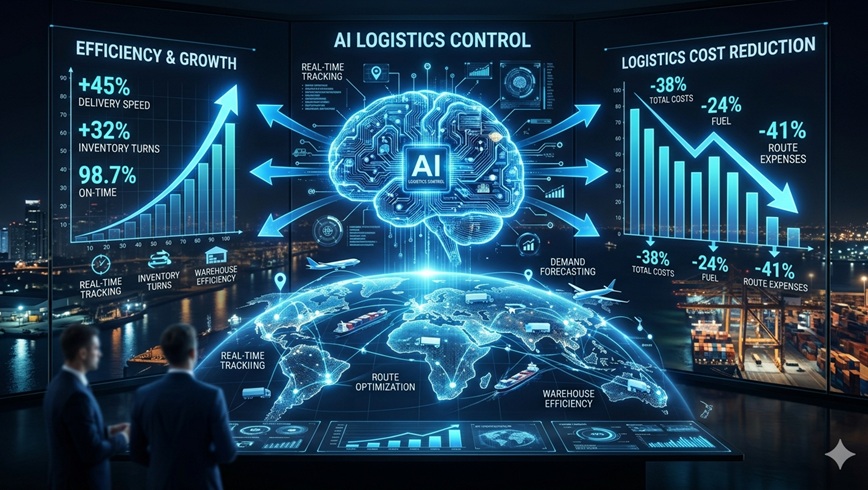
Today, smart logistics solutions for businesses use advanced technologies such as machine learning and predictive analytics to manage inventory, optimise routes, and reduce human errors. These AI powered logistics systems are designed to handle large volumes of data quickly, helping businesses respond to changes in real time.
If you are still relying on manual processes, you may be missing out on major growth opportunities. In fact, AI in logistics and supply chain management is now a key factor in building efficient and scalable operations.
Discover how AI logistics solutions are transforming businesses globally.
At the forefront of this transformation is Cor Advance Solutions, a trusted name known for delivering innovative and reliable AI-driven logistics systems. Their expertise helps businesses move from outdated processes to smart, data-driven logistics that deliver real results.
Understanding AI in Logistics
What is AI in Logistics?
Artificial intelligence in logistics means using advanced digital systems that can learn from data, think logically, and make decisions to improve how goods are stored, managed, and delivered. It helps businesses reduce manual work, avoid costly mistakes, and run operations in a more organised and efficient way.
In today’s fast-moving market, traditional logistics methods often struggle to keep up with demand, delays, and rising costs. This is where an AI-powered supply chain becomes essential. It uses data-driven technology to plan, predict, and automate key logistics activities.
An AI-powered supply chain is mainly built on three important technologies:
- Machine learning:
This allows systems to learn from past data and continuously improve performance. For example, it can study previous delivery patterns and predict possible delays. It can also analyse customer buying behaviour to forecast demand more accurately. Over time, the system becomes smarter and more reliable without constant human input. - Predictive analytics:
This technology uses historical data and patterns to predict future outcomes. Businesses can know in advance when stock levels may drop, when demand may rise, or when supply chain disruptions could occur. This helps in better planning and reduces unexpected problems. - Automation:
AI automates routine and repetitive tasks such as order processing, shipment scheduling, invoice generation, and stock updates. This not only saves time but also reduces human errors, ensuring smoother and faster operations.
In simple words, smart logistics technology transforms complex data into clear and actionable insights. It helps businesses make faster, smarter decisions and improves overall efficiency across logistics operations.
How AI Integrates with Supply Chains
AI is not limited to one part of logistics—it connects and improves the entire supply chain from start to finish. By integrating with different systems, it creates a smooth flow of information and operations.
Here is how an AI-powered supply chain works in real business environments:
- Warehousing:
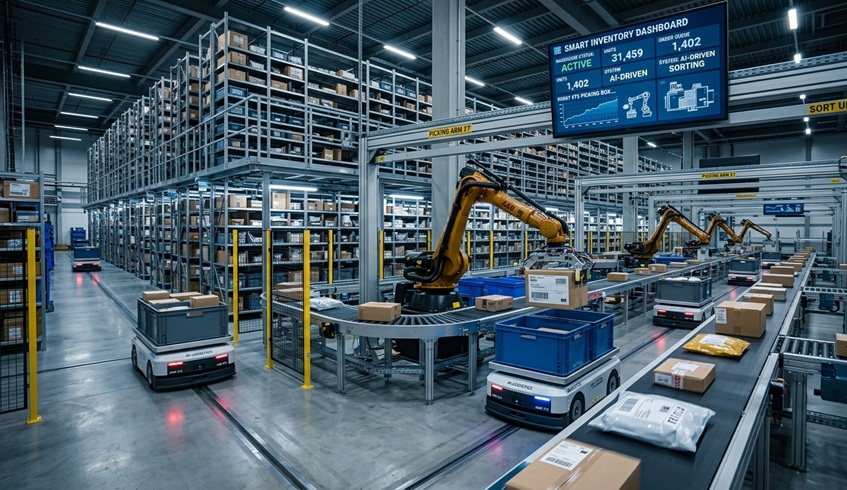
AI systems manage warehouse operations by tracking goods in real time and organising storage space efficiently. They can guide automated machines or robots to pick, pack, and move products quickly and accurately. This reduces processing time and increases productivity. - Inventory management:
AI analyses sales data, seasonal trends, and market demand to maintain the right stock levels. It helps businesses avoid overstocking, which increases costs, and stock shortages, which lead to lost sales. This ensures better balance and improved cash flow. - Fleet tracking:
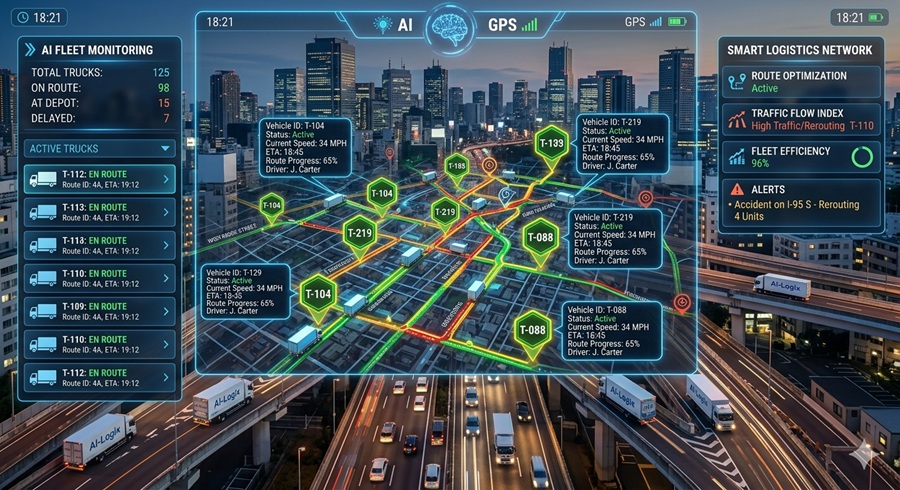
AI monitors delivery vehicles using real-time data. It selects the most efficient routes, avoids traffic congestion, and adjusts delivery plans instantly if there are delays. This reduces fuel consumption, shortens delivery times, and improves reliability.
With artificial intelligence in logistics, businesses gain complete visibility and control over their supply chain. Every process becomes more transparent, connected, and efficient.
As a result, companies can deliver products faster, reduce operational costs, and provide a better experience to their customers—all while staying competitive in a rapidly evolving market.
Role of Cor Advance Solutions in AI Logistics
Implementing smart logistics technology requires expertise and the right strategy. Cor Advance Solutions is a trusted provider that helps businesses successfully adopt AI in their logistics operations.
They design and deliver AI-powered supply chain solutions that are tailored to business needs, ensuring smooth integration and measurable results.
Case example:
A growing e-commerce business faced issues with delayed deliveries and inaccurate inventory tracking. After working with Cor Advance Solutions:
- Inventory accuracy improved significantly
- Delivery times became faster and more reliable
- Operational efficiency increased with automated processes
This example clearly shows how artificial intelligence in logistics can create real business value when implemented correctly.
Cor Advance Solutions continues to support organisations in building modern, efficient, and data-driven logistics systems that are ready for long-term growth.
Benefits of AI Logistics Solutions for Businesses
In today’s fast-paced business world, AI is revolutionising logistics. Companies are increasingly adopting AI logistics solutions to streamline operations, reduce costs, and boost customer satisfaction. Here’s a detailed look at the key benefits of AI in logistics that businesses can leverage.
1. Improved Operational Efficiency
AI dramatically improves operational efficiency across logistics operations.
- Real-time tracking of shipments: AI systems provide instant updates on goods in transit, helping businesses monitor deliveries and reduce delays.
- AI-powered route optimization: Smart algorithms calculate the fastest and most cost-effective routes, saving both time and money.
- Automation of repetitive tasks: Processes like order processing, scheduling, and documentation can be automated, allowing staff to focus on higher-value tasks.
These solutions significantly enhance AI logistics efficiency, ensuring smoother day-to-day operations.
2. Cost Reduction and Resource Optimization
AI helps businesses reduce costs while making the most of available resources.
- Predictive analytics for inventory management: AI forecasts demand and prevents overstocking or stock-outs.
- Lower fuel consumption: Optimised fleet routing reduces unnecessary journeys, saving on fuel costs.
- Reduced labour costs: Automation of repetitive and manual tasks cuts down on staffing needs without compromising efficiency.
Investing in AI logistics solutions allows businesses to achieve AI supply chain optimization, cutting expenses while improving performance.
3. Enhanced Accuracy and Reduced Errors
Errors in logistics can be expensive. AI minimises mistakes, improving accuracy.
- AI-driven forecasting: Predictive analytics help maintain optimal inventory levels and prevent shortages or excess stock.
- Automated documentation: AI reduces human errors in paperwork, invoices, and order entries.
- Error detection in shipments and orders: Intelligent systems can flag inconsistencies before they affect customers.
These improvements lead to smoother operations and greater reliability.
4. Better Decision-Making with Predictive Analytics
AI provides valuable insights to make informed business decisions.
- Demand forecasting: Anticipating customer needs helps with precise inventory planning.
- Risk mitigation: AI identifies potential disruptions in supply chains and suggests solutions in advance.
- Real-time insights: Managers can make strategic decisions quickly based on accurate data.
By leveraging AI, businesses gain a competitive edge in logistics strategy.
5. Improved Customer Experience
Customer expectations are higher than ever, and AI helps meet them.
- Accurate delivery timelines: Customers receive precise updates on expected delivery times.
- Personalised logistics solutions: AI can tailor services to individual client needs, enhancing satisfaction.
- Real-time tracking and updates: Continuous updates keep customers informed, improving trust and loyalty.
A smoother, more predictable logistics process enhances overall customer experience.
6. Scalability and Adaptability
As businesses grow, AI scales effortlessly to meet new demands.
- Grows with business needs: AI solutions can handle increased order volumes and complex operations.
- Easy integration: Modern AI systems integrate seamlessly with existing logistics platforms.
- Handles high-volume data: AI processes large datasets to support smarter decision-making.
This flexibility ensures that businesses remain agile in a fast-changing market.
7. Sustainability and Green Logistics
AI also supports environmental goals while optimising operations.
- Reduced carbon footprint: Optimised routing decreases unnecessary fuel consumption.
- Energy-efficient warehouse operations: Smart AI systems improve energy use and reduce waste.
- Aligns with ESG goals: AI solutions help businesses meet sustainability and governance targets.
Sustainable logistics not only benefits the planet but also enhances brand reputation.
Real-World Examples and Case Studies
Understanding the real-world impact of AI in business logistics helps companies see the tangible value these technologies bring. Let’s explore how AI is transforming operations, reducing costs, and improving delivery efficiency with concrete examples and metrics.
Global Leaders Using AI to Transform Logistics
AI isn’t a future idea — it’s already improving logistics for major companies around the world. In a 2025 research overview, global logistics giants such as Amazon, UPS, and Ocado show significant results by applying AI technologies like predictive analytics, real‑time route planning and warehouse automation.
Amazon – Dynamic Routing and Predictive Logistics
- Amazon uses AI to adjust delivery routes in real time by analysing traffic, weather, and package priorities.
- This smart routing has reduced delivery times and fuel consumption, reducing operating costs and improving delivery reliability.
- Research shows early adopters of AI in logistics can achieve around 15% cost reduction and 35% improvement in inventory management.
Cor Advance Solutions Success Story
At Cor Advance Solutions, we have helped numerous clients achieve remarkable results through AI logistics solutions.
- Client Example 1: A mid-sized logistics company partnered with us to implement AI-powered fleet management. Within six months, the client observed a 15% reduction in fuel costs and a 20% improvement in on-time deliveries.
- Client Example 2: An international retail client integrated our AI supply chain optimisation tools, which improved warehouse efficiency by 25% and reduced manual errors by 30%, ensuring faster, more reliable order fulfilment.
- Client Example 3: Another client utilised our AI-enabled predictive analytics to plan for seasonal demand surges. This proactive approach avoided stock shortages during peak periods, resulting in a 10% increase in sales and enhanced customer satisfaction.
These examples demonstrate how AI not only improves efficiency but also directly contributes to measurable business results. By leveraging data-driven insights, companies can make smarter decisions, cut costs, and elevate their logistics operations to a competitive level.
Key Metrics from AI Implementations
- Cost Savings: Fuel consumption reduced by 10–20%, labour costs cut by 15–25% through automation.
- Efficiency Improvements: Faster order processing and optimised routes led to 20–30% operational improvements.
- Delivery Optimisation: On-time delivery rates increased by up to 20%, improving client satisfaction and retention.
Common Challenges in Implementing AI Logistics Solutions
Implementing AI in logistics can transform your supply chain, but businesses often face a few common hurdles. Understanding these AI logistics challenges helps organisations plan better and avoid costly mistakes.

1. Integration with Legacy Systems
One of the biggest obstacles when implementing AI in logistics is connecting new AI tools with existing legacy systems. Older software may not support advanced analytics or real-time data processing. This can lead to delays, errors, or system incompatibility. Without careful planning, AI solutions may not perform as expected, reducing their overall value.
Recommendation: Cor Advance Solutions advises performing a thorough system audit before AI integration. Gradual migration and the use of middleware can ensure smooth communication between old and new systems.
2. Data Quality and Cybersecurity
AI thrives on data, but poor-quality or inconsistent data can cause incorrect predictions and operational errors. Additionally, AI systems are vulnerable to cybersecurity risks. Data breaches or manipulation can compromise the supply chain, leading to financial and reputational damage.
Recommendation: Ensure robust data cleaning processes and invest in secure cloud-based platforms. Regular cybersecurity audits and access controls are essential to safeguard your AI logistics systems.
3. Initial Investment and Training Requirements
Implementing AI logistics solutions often requires significant upfront investment. This includes software, hardware, and infrastructure costs. On top of that, staff training is essential. Employees need to understand how AI tools function to leverage their full potential, which can take time and resources.
Recommendation: Cor Advance Solutions suggests a phased approach. Start with pilot projects to evaluate ROI and gradually expand AI usage. Comprehensive training programmes ensure staff can operate AI tools confidently and effectively.
4. Solutions and Recommendations from Cor Advance Solutions
Despite these challenges, successful implementation is possible with expert guidance. Cor Advance Solutions helps businesses navigate AI supply chain risks by offering tailored solutions:
- System Compatibility Checks: Ensuring AI works seamlessly with existing infrastructure.
- Data Management Services: Improving data accuracy and security.
- Phased Implementation: Minimising risk and managing costs.
- Training Programmes: Empowering teams to use AI tools effectively.
By addressing these challenges head-on, businesses can unlock the full potential of AI, improving efficiency, reducing costs, and gaining a competitive edge in logistics operations.
Future of AI in Logistics (2026 and Beyond)
The future of AI in logistics is no longer a theory—it is already happening. Across the UK and globally, companies are moving from testing AI to using it in daily operations. In fact, UK interest in “AI in logistics” reached a record high in early 2026, showing how quickly businesses are adopting these technologies.
At the same time, the global AI logistics market is expected to grow from $26.33 billion in 2025 to $38.68 billion in 2026, highlighting strong and rapid expansion.
Let’s explore what the smart logistics future looks like in simple words.
1. Emerging Technologies Transforming Logistics
Internet of Things (IoT): Real-Time Visibility
IoT means connected devices like sensors and GPS trackers. These tools help businesses track goods in real time.
- Companies can monitor temperature, location, and condition of goods
- Faster decisions reduce delays and losses
- Better visibility improves customer trust
This is especially important as supply chains become more complex and global.
Robotics: Smart Warehouses and Automation
Modern warehouses are becoming “smart warehouses” powered by AI and robotics.
- Robots pick, pack, and move goods faster than humans
- AI systems reduce errors and improve accuracy
- Businesses save costs and increase productivity
Recent UK data shows AI-driven warehouse systems are improving efficiency, safety, and scalability at a rapid pace.
Blockchain: Secure and Transparent Supply Chains
Blockchain helps record every step of the supply chain securely.
- Prevents fraud and data tampering
- Improves trust between suppliers and buyers
- Enables faster and safer cross-border trade
In the future of AI logistics, blockchain will work with AI to create fully transparent supply chains.
2. AI-Driven Autonomous Delivery & Predictive Maintenance
Autonomous Delivery (Robots, Drones, Vehicles)
AI is making deliveries faster and smarter.
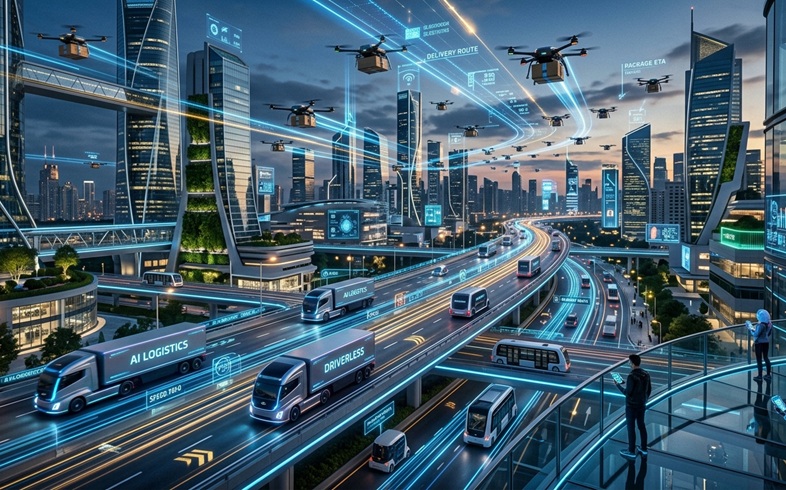
- Self-driving delivery vehicles and robots are being tested in UK cities
- AI chooses the best routes based on traffic and weather
- Reduces delivery time and fuel costs
For example, AI-powered delivery robots are already being trialled in the UK to handle last-mile delivery challenges.
Predictive Maintenance: Fix Before It Breaks
AI can predict when a vehicle or machine will fail.
- Uses sensors and data to detect problems early
- Reduces downtime by up to 50%
- Extends the life of vehicles and equipment
This is a game-changer for logistics companies that rely on fleets and heavy machinery.
AI-Powered Route Optimisation
AI analyses traffic, weather, and delivery schedules.
- Finds the fastest and cheapest routes
- Reduces fuel consumption
- Improves delivery speed and customer satisfaction
In the UK, AI is already helping logistics providers plan routes more efficiently and reduce delays.
3. Key AI Supply Chain Trends Shaping the Future
Smarter Demand Forecasting
AI uses data (sales, trends, behaviour) to predict demand.
- Reduces overstock and stockouts
- Improves inventory accuracy by up to 50%
- Saves costs and boosts profits
Rise of “Self-Learning” Supply Chains
Future supply chains will be:
- Automated
- Data-driven
- Self-improving
AI systems can learn from past data and improve decisions without human input.
Digital Twins and Simulation
AI can create digital copies of supply chains.
- Businesses test scenarios before real changes
- Helps manage risks like delays or disruptions
- Improves planning and resilience
Sustainability and Green Logistics
AI helps reduce carbon emissions by:
- Optimising routes
- Reducing fuel usage
- Improving energy efficiency
This is important as UK consumers increasingly prefer sustainable delivery options.
4. What This Means for Global Supply Chains
AI is making global supply chains:
✔ More Resilient
- AI predicts disruptions (weather, strikes, demand changes)
- Businesses can react faster
✔ Faster and More Connected
- Real-time data sharing across countries
- Better coordination between suppliers and distributors
✔ More Cost-Efficient
- Lower operational costs
- Better use of resources
AI is becoming essential as supply chains face challenges like labour shortages and rising costs.
5. How SMEs Can Benefit from AI in Logistics
AI is not just for big companies. Small and medium businesses (SMEs) can also benefit.
Affordable AI Tools
- Cloud-based AI solutions are becoming cheaper
- SMEs can automate tasks without heavy investment
Better Customer Experience
- Faster deliveries
- Real-time tracking
- Personalised services
Competitive Advantage
- SMEs can compete with larger companies
- Faster decision-making and improved efficiency
Why Businesses Should Choose Cor Advance Solutions
In today’s fast‑moving logistics world, selecting the right AI partner can make all the difference. Cor Advance Solutions stands out as a trusted leader in helping businesses implement AI logistics solutions efficiently and effectively. Here’s why forward‑thinking companies choose us:
1. Expertise in AI Logistics Implementation
With years of experience in implementing AI in logistics, Cor Advance Solutions understands the unique challenges companies face, from AI supply chain risks to system integration issues. Our team ensures AI tools are seamlessly embedded into your operations, maximising efficiency while minimising disruption.
Benefit: Faster, smoother AI adoption with proven results.
2. Customised, Data‑Driven Solutions
We know that no two supply chains are identical. Cor Advance Solutions leverages real-time data, predictive analytics, and advanced AI algorithms to provide solutions tailored to your specific logistics needs. This approach reduces costs, improves accuracy, and enhances overall supply chain visibility.
Benefit: Intelligent solutions that grow with your business.
3. Cutting‑Edge Technology Integration
From IoT‑enabled tracking to AI-powered predictive maintenance and autonomous delivery systems, we help businesses harness the future of AI logistics. Our experts ensure that emerging technologies are applied in a practical, cost-effective manner, keeping your business ahead in the smart logistics future.
Benefit: Access to the latest AI tools without the headache of managing complex tech yourself.
4. End-to-End Support and Training
AI is powerful, but only if your team knows how to use it. Cor Advance Solutions offers complete support, including staff training and ongoing guidance. We empower your employees to make the most of AI logistics solutions while addressing concerns around cybersecurity, data quality, and operational efficiency.
Benefit: Confident teams, fewer errors, and smoother operations.
5. Proven Results and Client Trust
Companies partnering with Cor Advance Solutions have seen measurable improvements in delivery efficiency, predictive maintenance, and overall supply chain resilience. Our clients trust us for our reliable, transparent, and expert-driven approach to AI logistics challenges.
Benefit: Peace of mind knowing your supply chain is optimised by industry experts.
Key Takeaways
- Expertise in AI logistics implementation ensures seamless integration.
- Tailored, data-driven solutions improve efficiency and reduce costs.
- Integration of emerging technologies like IoT, robotics, and AI keeps businesses competitive.
- End-to-end support and training empower your team to leverage AI effectively.
- Proven results and trustworthiness make us a preferred partner for SMEs and global enterprises alike.
By choosing Cor Advance Solutions, businesses not only overcome AI logistics challenges but also position themselves at the forefront of innovation in the AI supply chain landscape.
Conclusion
Adopting AI logistics solutions is a smart move for any business aiming to stay competitive in today’s fast-paced market. These solutions help improve efficiency, reduce costs, and enhance customer satisfaction by streamlining operations, optimising routes, and enabling predictive maintenance.
For businesses seeking growth, leveraging AI in logistics is no longer optional – it is essential. The future of AI logistics promises smarter, faster, and more resilient supply chains that adapt to evolving market demands.
Contact Cor Advance Solutions today to transform your logistics operations with AI and unlock the full potential of intelligent, efficient, and reliable supply chain management.
FAQs
What are AI logistics solutions?
AI logistics solutions use artificial intelligence to optimise supply chain processes, including transportation, warehousing, and delivery. They analyse large amounts of data in real time to improve efficiency, reduce costs, and enhance decision-making. These solutions combine technologies like machine learning, IoT, and predictive analytics to make logistics smarter and more responsive to changing business needs.
How does AI improve logistics operations?
AI improves logistics by automating tasks, predicting demand, and optimising routes and inventory. It enables real-time tracking, reduces delays, and provides actionable insights for decision-making. By analysing patterns and historical data, AI can forecast disruptions, streamline workflows, and ensure resources are used efficiently, making the entire supply chain faster and more reliable.
Why are AI logistics solutions important for businesses?
AI logistics solutions are crucial because they help businesses stay competitive in a fast-moving market. They enhance operational efficiency, cut costs, and improve delivery performance. With smarter decision-making, predictive maintenance, and better inventory management, companies can respond quickly to customer demands and maintain high service standards, giving them a strong competitive edge.
What is the future of AI logistics?
The future of AI logistics is focused on smart, fully connected supply chains. Emerging trends include autonomous delivery systems, predictive maintenance, warehouse robotics, and IoT-enabled real-time tracking. Businesses of all sizes will benefit from faster, more efficient, and resilient operations. AI will increasingly drive strategic decisions, making logistics smarter, greener, and more reliable.
How do AI logistics solutions differ from traditional logistics?
Unlike traditional logistics, which relies on manual processes and static planning, AI logistics solutions leverage real-time data, predictive analytics, and automation. They provide dynamic route optimisation, intelligent inventory management, and risk prediction. This makes operations faster, more accurate, and cost-efficient, while traditional methods often face delays, errors, and limited visibility across the supply chain.
Can AI logistics solutions enhance customer satisfaction?
Yes, AI logistics solutions enhance customer satisfaction by ensuring faster deliveries, accurate tracking, and fewer errors. They allow businesses to anticipate demand, respond quickly to delays, and offer better communication. By improving service reliability and efficiency, AI helps build trust and loyalty among customers while creating a smoother delivery experience.
Can AI help businesses reduce delivery times?
AI significantly reduces delivery times by analysing traffic, weather, and route conditions in real time. Smart routing algorithms optimise the fastest and most cost-efficient paths. Combined with predictive demand forecasting and warehouse automation, AI ensures goods move quickly from suppliers to customers, improving efficiency and overall supply chain performance.
How does AI improve inventory management?
AI improves inventory management by predicting demand, monitoring stock levels, and automating replenishment. It identifies slow-moving or overstocked items and reduces wastage. By analysing historical data and market trends, AI ensures the right products are available at the right time, cutting costs and keeping customers satisfied.
How do AI logistics solutions reduce human error?
AI reduces human error by automating repetitive and complex logistics tasks. Processes like order picking, route planning, and data entry are handled by intelligent systems that follow precise algorithms. This minimises mistakes, increases operational accuracy, and frees employees to focus on higher-value strategic work.
Can AI logistics solutions improve forecasting accuracy?
Yes, AI enhances forecasting by analysing historical sales data, seasonal trends, and market variables. Machine learning models identify patterns and predict future demand more accurately than traditional methods. Improved forecasting helps businesses maintain optimal inventory, prevent stockouts, and reduce operational costs.
How do businesses start implementing AI in logistics?
Businesses can start by assessing their current supply chain processes and identifying pain points. Choosing the right AI solution provider, like Cor Advance Solutions, and starting with pilot projects is a practical approach. Gradual integration, staff training, and data quality management ensure smooth adoption and measurable results.
How can AI reduce logistics costs?
AI reduces logistics costs by optimising routes, automating warehouses, predicting demand, and preventing equipment downtime. It minimises human errors and reduces fuel, storage, and operational expenses. Over time, AI enables businesses to streamline operations and maximise efficiency, delivering a strong return on investment.
Is AI in logistics suitable for small businesses?
Yes, AI is increasingly accessible for small businesses through cloud-based platforms and pay-as-you-go services. Even SMEs can benefit from smarter inventory management, route optimisation, and predictive analytics without large upfront investments. This levels the playing field, allowing smaller companies to compete with larger logistics operators.
Why should businesses choose Cor Advance Solutions for AI logistics?
Businesses choose Cor Advance Solutions because of our proven expertise in implementing AI in logistics and tackling AI supply chain risks. We provide customised, data-driven solutions, integrate emerging technologies, and offer end-to-end support including staff training. Our approach ensures faster adoption, measurable results, and smarter, more reliable supply chains.