
Over 70% of modern warehouses are now using AI automation to improve speed, reduce costs, and remove human errors. This shift is not just a trend—it’s becoming the standard for companies that want to stay competitive in today’s fast-moving supply chain environment.
Traditional warehouse management systems (WMS) often struggle to keep up with growing demands. Businesses face common problems like incorrect inventory counts, delayed order processing, poor demand forecasting, and rising labor costs. Manual processes and outdated systems slow everything down and increase the risk of mistakes, which directly impacts customer satisfaction and profits.
AI automation for warehouse management systems solves these challenges in a smarter and faster way. It uses real-time data, predictive analytics, and intelligent decision-making to optimize every part of warehouse operations. From accurate inventory tracking and automated stock replenishment to faster picking and packing, AI helps businesses run warehouses with higher efficiency and fewer errors. It can even predict demand trends, reduce overstocking, and prevent stockouts before they happen.
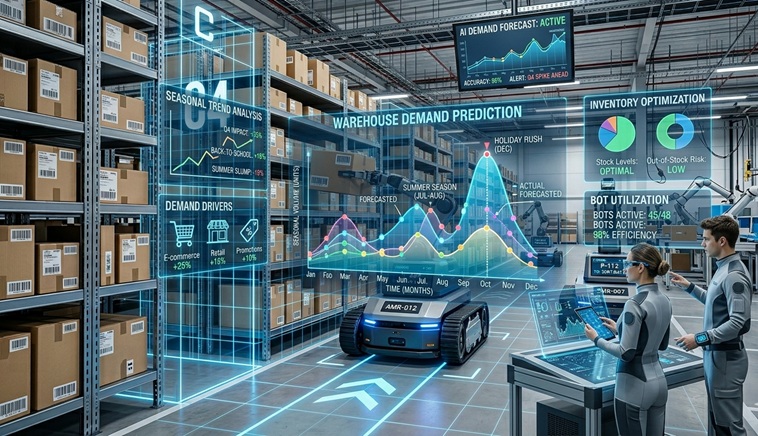
Cor Advance Solutions brings powerful AI-driven warehouse automation designed for modern supply chains. Their solutions help businesses streamline operations, cut unnecessary costs, and improve overall performance. By combining advanced technology with practical industry knowledge, Cor Advance Solutions enables companies to transform traditional warehouses into smart, automated systems that deliver faster results and better customer experiences.
What is AI Automation in Warehouse Management Systems?
AI automation in warehouse management systems (WMS) is the use of artificial intelligence to automate inventory tracking, order processing, demand forecasting, and warehouse operations in real time. It helps businesses improve accuracy, reduce costs, and increase operational efficiency with minimal manual work.
Detailed Explanation
AI automation in warehouse management systems is a smart way to run a warehouse using data and technology instead of manual effort. A traditional WMS depends heavily on people to manage inventory, track orders, and plan stock levels. This often leads to delays, errors, and higher labor costs.
With AI-powered warehouse management systems, everything becomes faster and more accurate. The system collects real-time data from different sources like inventory levels, customer orders, and supply chain activity. Then it uses artificial intelligence and machine learning to make quick and smart decisions.
For example, AI can automatically track stock levels, identify fast-moving products, and predict future demand. It can also suggest the best time to reorder products and the most efficient way to store items inside the warehouse. This reduces waste, avoids stock shortages, and improves overall performance.
How AI Automation Works in WMS
AI automation works by analyzing large amounts of data and turning it into useful actions. Instead of reacting to problems, the system predicts and prevents them.
Here’s how it helps in daily warehouse operations:
- Real-time inventory tracking: AI updates stock levels instantly without manual checks
- Smart order management: Orders are processed faster with fewer errors
- Demand forecasting: AI predicts future sales based on past data and trends
- Warehouse optimization: It suggests the best storage locations to save time and space
- Automated workflows: Repetitive tasks like picking, packing, and sorting are automated
Key Technologies Behind AI Warehouse Automation
AI automation in WMS uses a combination of modern technologies to improve performance:
- Machine Learning (ML): Learns from past data to improve accuracy over time
- Predictive Analytics: Helps forecast demand and inventory needs
- Computer Vision: Identifies products and reduces scanning errors
- Robotics Process Automation (RPA): Automates routine warehouse tasks
- IoT (Internet of Things): Connects devices to track goods in real time
Why AI Automation is Important for Modern Warehouses
In today’s fast-moving supply chain, speed and accuracy are critical. Traditional warehouse systems can’t keep up with growing demand and complex operations.
AI automation solves these problems by making warehouse management smarter and more efficient. It reduces human errors, lowers operational costs, and speeds up order fulfillment. Businesses can also make better decisions because they have access to real-time insights and predictive data.
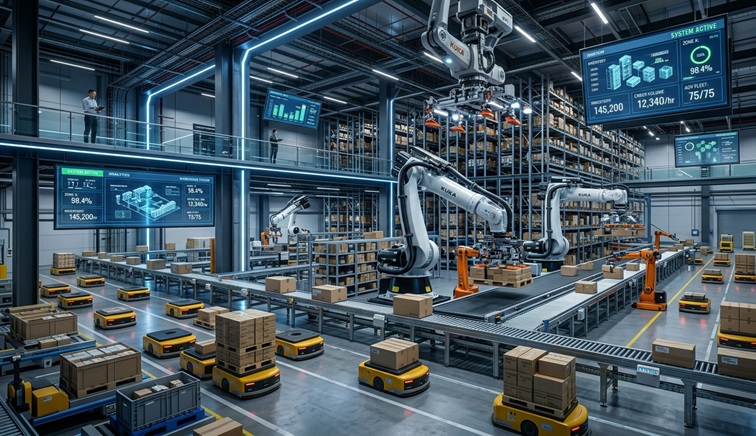
Simple Example
Imagine a warehouse handling thousands of orders every day. Without AI, workers manually check inventory and process orders, which takes time and increases the chance of mistakes.
With AI automation, the system knows exactly where every product is, predicts what will be needed next, and ensures orders are processed quickly and correctly. This leads to faster delivery and better customer satisfaction.
AI automation in warehouse management systems is transforming how warehouses operate. It is not just about automation—it is about making smarter decisions, improving efficiency, and scaling operations easily. Businesses that adopt AI-powered WMS can stay ahead of the competition and build a more reliable and cost-effective supply chain.
Why Businesses Need AI Automation in WMS (Problem–Solution)
Businesses need AI automation in warehouse management systems (WMS) because traditional systems cause inventory errors, slow operations, high labor costs, and poor demand planning. AI-powered WMS solves these problems by using real-time data, predictive analytics, and automation to improve accuracy, speed, and efficiency across all warehouse operations.
The Core Problem: Why Traditional WMS Fails Modern Businesses
As businesses grow, their warehouse operations become more complex. Orders increase, product variety expands, and customer expectations become higher. Traditional warehouse management systems are not designed to handle this level of complexity.
1. Inventory Inaccuracy and Stock Mismatch
One of the biggest challenges in warehouse management is incorrect inventory data. Manual entry, delayed updates, and human errors lead to mismatched stock levels.
- Businesses may think products are available when they are actually out of stock
- Overstocking ties up capital and increases storage costs
- Stockouts lead to missed sales and unhappy customers
This problem directly impacts revenue and customer trust.
2. Slow and Inefficient Order Fulfillment
Traditional systems rely heavily on manual processes for picking, packing, and shipping. This slows down operations, especially during peak demand.
- Workers spend more time locating products
- Picking routes are not optimized
- Orders take longer to process and ship
As a result, delivery delays increase and customer satisfaction drops.
3. High Labor Dependency and Rising Costs
Warehouses often depend on a large workforce to handle repetitive tasks like scanning, sorting, and inventory checks.
- More labor means higher operational costs
- Human errors increase rework and waste
- Productivity depends on workforce availability
This makes it difficult for businesses to scale efficiently.
4. Lack of Real-Time Visibility
Traditional WMS does not provide real-time updates, which creates a major gap in decision-making.
- Managers don’t know exact stock levels at any moment
- Delays in reporting affect planning
- Businesses react to problems instead of preventing them
Without real-time insights, operations become reactive instead of proactive.
5. Poor Demand Forecasting and Planning
Most traditional systems cannot analyze large datasets or predict future demand accurately.
- Businesses fail to identify fast-moving products
- Seasonal demand patterns are missed
- Inventory planning becomes guesswork
This leads to either excess inventory or frequent shortages.
The Solution: How AI Automation Transforms WMS
AI automation in warehouse management systems solves these challenges by introducing intelligence, speed, and accuracy into operations.
1. Real-Time and Accurate Inventory Management
AI continuously tracks inventory using real-time data from multiple sources.
- Stock levels are updated automatically
- Errors caused by manual entry are eliminated
- Businesses always know what is available
This ensures better control over inventory and reduces losses.
2. Faster and Smarter Order Fulfillment
AI optimizes the entire order processing workflow.
- Suggests the fastest picking routes
- Automates sorting and packing processes
- Reduces delays and improves delivery speed
Orders are processed quickly and accurately, improving customer experience.
3. Cost Reduction Through Automation
AI reduces the need for manual work by automating repetitive tasks.
- Fewer workers are needed for routine operations
- Labor costs decrease significantly
- Productivity increases without increasing workforce
Businesses can scale operations without increasing expenses.
4. Real-Time Insights and Data-Driven Decisions
AI-powered WMS provides live data dashboards and actionable insights.
- Managers can monitor operations in real time
- Quick decisions can be made based on accurate data
- Problems are identified and solved before they grow
This improves overall operational efficiency.
5. Predictive Analytics for Demand Forecasting
AI uses historical data and market trends to predict future demand.
- Identifies high-demand products in advance
- Suggests optimal stock levels
- Prevents overstocking and stockouts
This leads to better planning and higher profitability.
6. Optimized Warehouse Space Utilization
AI analyzes product movement and suggests the best storage locations.
- Fast-moving items are placed closer to packing areas
- Storage space is used more efficiently
- Travel time inside the warehouse is reduced
This improves speed and reduces operational costs.
Key Benefits of AI Automation in Warehouse Management Systems
Businesses that adopt AI-powered WMS experience significant improvements:
- Higher inventory accuracy
- Faster order processing and delivery
- Lower labor and operational costs
- Improved warehouse efficiency
- Better customer satisfaction
- Smarter decision-making using real-time data
Real-World Scenario
Consider an eCommerce company handling thousands of daily orders. With a traditional system, they face frequent inventory errors, delayed shipments, and rising labor costs.
After implementing AI automation in their warehouse management system:
- Inventory becomes fully accurate in real time
- Order processing time reduces by up to 50%
- Labor costs decrease due to automation
- Customers receive orders faster and with fewer errors
This transformation leads to higher profits and stronger customer loyalty.
AI automation in warehouse management systems is no longer a luxury—it is a necessity for modern businesses. As competition increases and customer expectations grow, companies must adopt smarter solutions to stay ahead.
AI-powered WMS not only solves existing problems but also prepares businesses for future growth. It brings speed, accuracy, and intelligence into warehouse operations, helping companies reduce costs, improve efficiency, and deliver better customer experiences.
Key Benefits of AI Automation in Warehouse Management
AI automation in warehouse management improves real-time inventory accuracy, speeds up order fulfillment, reduces operational costs, enables predictive analytics, and powers smart robotics. It helps businesses run faster, smarter, and more efficient warehouse operations with fewer errors and better decision-making.
Real-Time Inventory Accuracy
One of the biggest benefits of AI automation in warehouse management systems is accurate inventory tracking in real time.
Traditional systems often rely on manual updates, which leads to errors and delays. AI-powered WMS solves this by combining artificial intelligence with IoT (Internet of Things) devices like sensors, scanners, and RFID tags.
How it helps:
- Tracks every product movement instantly
- Updates stock levels automatically without manual input
- Detects mismatches and errors in real time
- Provides full visibility of inventory across the warehouse
Result:
Businesses can reduce stock discrepancies, avoid overstocking or stockouts, and maintain perfect inventory control.
Faster Order Fulfillment
Speed is critical in modern supply chains. AI automation helps warehouses process orders much faster and with higher accuracy.
AI analyzes warehouse layouts, product locations, and order patterns to optimize picking and packing processes.
How it helps:
- Suggests the fastest picking routes for workers or robots
- Groups similar orders to save time
- Automates packing and sorting workflows
- Reduces delays during high-demand periods
Route optimization inside the warehouse:
AI ensures that workers take the shortest and most efficient paths, reducing travel time and increasing productivity.
Result:
Orders are processed quickly, delivery times improve, and customer satisfaction increases.
Cost Reduction
AI automation significantly reduces operational costs by minimizing manual work and improving efficiency.
Warehouses often spend a large portion of their budget on labor and operational waste. AI helps cut these unnecessary expenses.
How it helps:
- Reduces dependency on manual labor for repetitive tasks
- Minimizes human errors and rework costs
- Optimizes resource utilization (space, time, and workforce)
- Reduces energy and operational waste
Result:
Businesses can scale operations without increasing costs, leading to higher profit margins.
Predictive Analytics
AI-powered warehouse management systems use predictive analytics to make smarter business decisions.
Instead of reacting to problems, AI predicts them in advance using historical data and trends.
How it helps:
- Forecasts future demand accurately
- Identifies fast-moving and slow-moving products
- Suggests optimal inventory levels
- Prevents stockouts and overstocking
Result:
Businesses can plan better, reduce risks, and improve inventory efficiency.
Smart Warehouse Robotics
AI automation brings advanced robotics into warehouse operations, making processes faster and more reliable.
Automated Guided Vehicles (AGVs):
These are smart robots that move goods inside the warehouse without human intervention. They follow optimized paths and handle material transport efficiently.
Robotic Picking Systems:
AI-powered robots can identify, pick, and sort products with high speed and precision.
How it helps:
- Automates material handling and product movement
- Increases picking speed and accuracy
- Reduces physical workload on workers
- Operates 24/7 without fatigue
Result:
Warehouses become highly efficient, scalable, and capable of handling large volumes of orders.
The key benefits of AI automation in warehouse management go beyond simple automation. It brings intelligence, speed, and accuracy to every process—from inventory tracking to order fulfillment and demand planning.
Businesses that adopt AI-powered warehouse management systems gain a strong competitive advantage by reducing costs, improving efficiency, and delivering faster, more reliable service to customers.
Core AI Technologies Used in Warehouse Automation
The core AI technologies used in warehouse automation include machine learning, computer vision, natural language processing (NLP), robotics, and digital twins. These technologies help warehouses improve demand forecasting, automate operations, reduce errors, and make faster, data-driven decisions.
Modern warehouse automation is powered by a combination of advanced AI technologies that work together to make operations faster, smarter, and more accurate. These technologies are the backbone of any AI-powered warehouse management system (WMS) and play a key role in improving efficiency, reducing costs, and scaling operations.
Let’s understand each core technology in simple words.
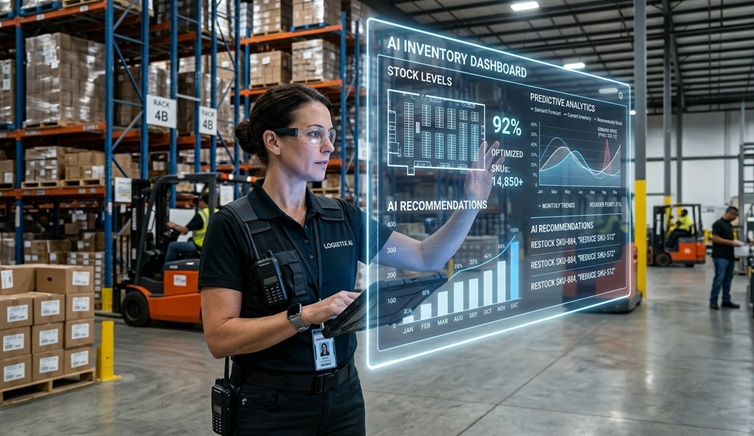
Machine Learning (ML): Smart Demand Prediction & Inventory Planning
Machine learning is one of the most important technologies in AI warehouse automation. It allows systems to learn from past data and improve decisions over time.
How it works:
ML analyzes historical sales data, order patterns, seasonal trends, and customer behavior to predict future demand.
Key uses in warehouse management:
- Accurate demand forecasting
- Smart inventory planning
- Identifying fast-moving and slow-moving products
- Optimizing stock levels
Result:
Businesses can avoid overstocking and stockouts, leading to better inventory control and higher profits.
Computer Vision: Barcode Scanning & Defect Detection
Computer vision allows machines to “see” and understand images, just like humans—but faster and more accurately.
How it works:
Cameras and AI algorithms scan products, barcodes, and warehouse shelves in real time.
Key uses in warehouse automation:
- Automatic barcode and QR code scanning
- Product identification without manual input
- Detecting damaged or defective items
- Reducing picking and packing errors
Result:
Higher accuracy, fewer mistakes, and faster processing of goods.
Natural Language Processing (NLP): Voice Picking Systems
Natural Language Processing (NLP) enables machines to understand and respond to human language.
How it works:
Warehouse workers use voice commands to interact with the system instead of handheld devices or paper lists.
Key uses in warehouse management:
- Voice-guided picking systems
- Hands-free operations for workers
- Real-time communication between workers and systems
- Faster and more efficient task execution
Result:
Improved productivity, reduced errors, and better worker efficiency.
Robotics & Automation: Autonomous Warehouse Operations
Robotics is a key part of AI automation in warehouse management systems. It reduces manual work and increases speed.
How it works:
AI-powered robots perform tasks like picking, packing, sorting, and transporting goods inside the warehouse.
Key uses in warehouse automation:
- Automated picking and packing
- Material handling and transportation
- Sorting and order processing
- 24/7 continuous operations
Result:
Faster operations, lower labor costs, and the ability to handle large volumes of orders without delays.
Digital Twins: Virtual Warehouse Simulations
Digital twin technology creates a virtual copy of the physical warehouse. This allows businesses to test and optimize operations without real-world risks.
How it works:
A digital model of the warehouse is created using real-time data. AI simulates different scenarios to find the best solutions.
Key uses in warehouse management:
- Testing new warehouse layouts
- Predicting operational issues before they happen
- Optimizing workflows and processes
- Improving space utilization
Result:
Better planning, reduced risks, and more efficient warehouse operations.
The core AI technologies used in warehouse automation are transforming how warehouses operate. From machine learning and computer vision to robotics and digital twins, each technology plays a critical role in improving efficiency, accuracy, and decision-making.
Businesses that use these AI technologies in their warehouse management systems can reduce costs, increase productivity, and stay competitive in today’s fast-moving logistics industry.
Use Cases of AI Automation in Warehouse Management
AI automation in warehouse management systems (WMS) is used for real-time inventory management, faster order picking and packing, warehouse layout optimization, quality control, and demand forecasting. It helps businesses improve accuracy, reduce costs, and increase efficiency using data-driven automation.
AI automation is not just a concept—it is actively transforming how warehouses operate every day. From managing inventory to improving order accuracy, AI-powered warehouse management systems bring speed, intelligence, and precision into every process.
Below are the most important real-world use cases of AI automation in warehouse management.
Inventory Management Automation
Inventory management is one of the most critical parts of any warehouse. AI automation makes it accurate, fast, and fully controlled.
Real-Time Stock Monitoring
AI tracks inventory continuously using sensors, scanners, and connected devices.
- Stock levels are updated instantly
- Every product movement is recorded in real time
- Businesses always know what is in stock
Automated Replenishment
AI predicts when stock levels are low and triggers automatic reordering.
- Prevents stockouts and overstocking
- Maintains optimal inventory levels
- Reduces manual monitoring effort
Result:
Better inventory control, fewer errors, and improved supply chain efficiency.
Order Picking & Packing
Order fulfillment is where speed and accuracy matter the most. AI automation makes this process faster and error-free.
AI-Guided Picking Routes
AI calculates the most efficient routes inside the warehouse.
- Reduces travel time for workers
- Speeds up order picking
- Improves productivity
Error-Free Packing
AI ensures that the right products are packed correctly.
- Verifies items before packing
- Reduces shipping errors
- Improves order accuracy
Result:
Faster deliveries, fewer returns, and higher customer satisfaction.
Warehouse Layout Optimization
AI helps businesses use warehouse space in the most efficient way.
AI-Based Space Utilization
AI analyzes product movement and storage patterns.
- Identifies unused or underused space
- Improves storage efficiency
- Reduces clutter
Smart Storage Allocation
AI decides where each product should be stored.
- Fast-moving items are placed closer to dispatch areas
- Slow-moving items are stored in less active zones
- Improves overall workflow
Result:
Better space management, faster operations, and reduced handling time.
Quality Control
Maintaining product quality is essential for customer trust. AI automation improves quality checks using advanced technology.
Computer Vision Defect Detection
AI-powered cameras scan products for defects.
- Detects damaged or incorrect items
- Reduces human inspection errors
- Ensures only quality products are shipped
Result:
Higher product quality, fewer returns, and improved brand reputation.
Demand Forecasting
AI helps businesses plan ahead by predicting future demand accurately.
Predict Seasonal Demand Patterns
AI analyzes past sales data, trends, and market behavior.
- Identifies peak seasons and high-demand periods
- Helps prepare inventory in advance
- Reduces last-minute shortages
Result:
Better planning, improved inventory management, and higher sales opportunities.
The use cases of AI automation in warehouse management systems show how powerful and practical this technology is. From real-time inventory tracking to smart demand forecasting, AI transforms every part of warehouse operations.
Businesses that adopt AI-powered warehouse automation can improve efficiency, reduce costs, and deliver faster, more reliable service. In today’s competitive market, using AI in warehouse management is not just an advantage—it is a necessity for growth and success.
AI Automation Workflow in a Modern Warehouse (Step-by-Step)
The AI automation workflow in a modern warehouse includes five key steps: data collection through IoT sensors, AI analysis of inventory and order patterns, automated decision-making, execution by robotics and automation systems, and real-time monitoring through dashboards. This process helps warehouses improve speed, accuracy, and overall efficiency.
AI automation in warehouse management systems (WMS) follows a smart and structured workflow. Each step is connected, creating a seamless process where data turns into action without delays or manual effort. This is how modern warehouses operate faster, smarter, and with fewer errors.
Let’s break it down step by step in simple words.
1. Data Collection via IoT Sensors
Everything starts with data. In a modern AI-powered warehouse, data is collected continuously using IoT (Internet of Things) devices.
What happens in this step:
- Sensors track product movement across the warehouse
- Barcode scanners and RFID tags capture item details
- Systems collect data on stock levels, order activity, and location
Why it matters:
Accurate and real-time data is the foundation of AI automation. Without correct data, the system cannot make smart decisions.
Result:
A live and accurate view of all warehouse operations.
2. AI Analyzes Inventory Patterns
Once the data is collected, AI systems analyze it to find patterns and insights.
What happens in this step:
- AI studies past sales and order trends
- Identifies fast-moving and slow-moving products
- Detects demand patterns and seasonal changes
- Analyzes warehouse activity and performance
Why it matters:
This step turns raw data into meaningful insights that help improve decision-making.
Result:
Better understanding of inventory behavior and future demand.
3. Automated Decision-Making
After analyzing data, AI makes smart decisions automatically without human intervention.
What happens in this step:
- Decides when to reorder stock
- Suggests optimal inventory levels
- Chooses the best storage locations
- Optimizes picking routes and workflows
Why it matters:
Automation removes delays and reduces human errors, allowing faster and more accurate decisions.
Result:
Efficient and data-driven warehouse operations.
4. Robotics Execute Tasks
Once decisions are made, they are executed by automation systems and robots inside the warehouse.
What happens in this step:
- Robots pick, pack, and sort products
- Automated guided vehicles (AGVs) move goods
- Conveyor systems handle product flow
- Tasks are completed quickly and consistently
Why it matters:
Robotics increases speed and reduces dependency on manual labor.
Result:
Faster operations with high accuracy and minimal errors.
5. Real-Time Monitoring Dashboard
The final step is continuous monitoring and control through real-time dashboards.
What happens in this step:
- Managers track inventory levels and order status live
- System performance is monitored in real time
- Alerts are generated for any issues or delays
- Data insights are displayed for decision-making
Why it matters:
Real-time visibility helps businesses stay in control and respond quickly to any changes.
Result:
Improved efficiency, transparency, and better overall management.
The AI automation workflow in a modern warehouse is a complete cycle—from data collection to execution and monitoring. Each step works together to create a highly efficient and intelligent warehouse system.
By using AI-powered warehouse management systems, businesses can automate complex operations, reduce costs, and deliver faster and more accurate services. This step-by-step workflow is the key to building a smart and future-ready warehouse.
AI Automation vs Traditional Warehouse Management Systems
AI-powered warehouse management systems (WMS) are more accurate, faster, and more scalable than traditional WMS. While traditional systems rely on manual processes and delayed updates, AI automation uses real-time data, predictive analytics, and intelligent workflows to improve efficiency, reduce costs, and support business growth.
Modern warehouses are no longer just storage spaces—they are fast-moving, data-driven operations. To handle increasing order volumes and customer expectations, businesses need more than basic systems. This is where the difference between traditional WMS and AI-powered WMS becomes very clear.
Let’s understand this comparison in detail.
1. Inventory Accuracy
Traditional WMS
In traditional warehouse management systems, inventory tracking is often manual or semi-automated. Staff update stock levels using spreadsheets or basic software.
Challenges:
- Delayed inventory updates
- Human errors in data entry
- Difficulty tracking real-time stock movement
Result:
Inventory mismatches, overstocking, and frequent stockouts.
AI-Powered WMS
AI automation in warehouse management systems tracks inventory in real time using sensors, scanners, and connected devices.
Advantages:
- Automatic stock updates
- Real-time visibility of inventory
- High accuracy with minimal errors
Result:
Better inventory control, reduced losses, and improved supply chain efficiency.
2. Decision Making
Traditional WMS
Decisions are based on historical reports and human judgment.
Challenges:
- Slow decision-making process
- Limited data insights
- High risk of incorrect planning
Result:
Reactive operations instead of proactive management.
AI-Powered WMS
AI systems analyze large amounts of data instantly and make smart decisions automatically.
Advantages:
- Real-time, data-driven decisions
- Predictive insights for planning
- Automated workflows without delays
Result:
Faster, smarter, and more accurate decision-making.
3. Speed of Operations
Traditional WMS
Warehouse operations like picking, packing, and shipping depend heavily on manual effort.
Challenges:
- Slow order processing
- Inefficient picking routes
- Delays during peak demand
Result:
Longer delivery times and lower customer satisfaction.
AI-Powered WMS
AI optimizes every step of warehouse operations.
Advantages:
- AI-guided picking routes
- Automated sorting and packing
- Faster order processing
Result:
Quick order fulfillment and improved customer experience.
4. Cost Efficiency
Traditional WMS
Operational costs are higher due to heavy reliance on manual labor and inefficient processes.
Challenges:
- High labor costs
- Increased errors and rework
- Poor resource utilization
Result:
Lower profit margins and higher operational expenses.
AI-Powered WMS
AI automation reduces costs by improving efficiency and reducing manual work.
Advantages:
- Lower labor dependency
- Reduced operational waste
- Optimized use of resources
Result:
Higher cost efficiency and better profitability.
5. Scalability
Traditional WMS
Traditional systems struggle to handle growth and increased complexity.
Challenges:
- Limited capacity for handling large data
- System performance issues with growth
- Difficult to expand operations
Result:
Business growth is restricted by system limitations.
AI-Powered WMS
AI-powered systems are designed to scale easily with business growth.
Advantages:
- Handles large volumes of data and orders
- Adapts to changing business needs
- Supports multi-location warehouse operations
Result:
Seamless scalability and long-term growth support.
6. Visibility and Control
Traditional WMS
Provides limited visibility into operations.
Challenges:
- No real-time tracking
- Delayed reporting
- Limited operational insights
Result:
Poor control over warehouse activities.
AI-Powered WMS
Offers full visibility with real-time dashboards and analytics.
Advantages:
- Live tracking of inventory and orders
- Instant alerts for issues
- Data-driven performance monitoring
Result:
Better control, transparency, and faster problem-solving.
7. Error Reduction
Traditional WMS
Human involvement increases the chances of mistakes.
Challenges:
- Picking and packing errors
- Incorrect inventory updates
- Manual miscalculations
Result:
Higher return rates and customer dissatisfaction.
AI-Powered WMS
AI automation minimizes human errors through intelligent systems.
Advantages:
- Automated verification processes
- Accurate data handling
- Consistent performance
Result:
Fewer errors and improved service quality.
Quick Comparison Table
| Feature | Traditional WMS | AI-Powered WMS |
| Inventory Accuracy | Moderate | High (Real-Time) |
| Decision Making | Manual | Automated |
| Speed | Slow | Fast |
| Cost Efficiency | Low | High |
| Scalability | Limited | Highly Scalable |
| Visibility | Limited | Real-Time & Transparent |
| Error Rate | Higher | Very Low |
The difference between traditional warehouse management systems and AI-powered WMS is not just about technology—it’s about performance, efficiency, and future readiness.
Traditional systems can manage basic operations, but they cannot handle the speed and complexity of modern supply chains. AI automation in warehouse management systems brings intelligence, automation, and real-time decision-making into the process.
Businesses that switch to AI-powered WMS gain a strong competitive advantage. They can reduce costs, improve accuracy, scale operations easily, and deliver faster, more reliable services.
Industries Benefiting from AI Warehouse Automation
AI warehouse automation is transforming industries like e-commerce and retail, logistics and supply chain, manufacturing, pharmaceuticals, and FMCG. It improves inventory accuracy, speeds up order fulfillment, reduces costs, and helps businesses scale operations with real-time data and smart automation.
AI automation in warehouse management systems (WMS) is not limited to one industry. It is widely used across multiple sectors where speed, accuracy, and efficiency are critical. Each industry has its own challenges, and AI-powered warehouse automation helps solve them in a smarter way.
Let’s explore how different industries benefit from AI automation in warehouse management.
🛒 E-commerce & Retail
E-commerce and retail businesses handle a large number of orders every day. Customers expect fast delivery and accurate order fulfillment.
Challenges:
- High order volume
- Frequent returns
- Inventory mismanagement
- Seasonal demand spikes
How AI helps:
- Real-time inventory tracking across multiple locations
- Faster order picking and packing using AI optimization
- Demand forecasting for peak seasons like sales and holidays
- Automated returns management
Result:
Faster deliveries, fewer errors, and better customer satisfaction.
🚚 Logistics & Supply Chain
Logistics companies manage the movement of goods from one place to another. Efficiency and timing are critical in this industry.
Challenges:
- Complex supply chain operations
- Delays in shipment and delivery
- Lack of real-time visibility
- High operational costs
How AI helps:
- Real-time tracking of goods and inventory
- Route and warehouse optimization
- Automated sorting and distribution
- Better coordination across the supply chain
Result:
Improved delivery speed, reduced delays, and lower operational costs.
🏭 Manufacturing
Manufacturing companies depend on a steady flow of raw materials and finished goods. Any delay can impact production.
Challenges:
- Managing raw material inventory
- Production delays due to stock issues
- Inefficient warehouse processes
- Poor demand planning
How AI helps:
- Predictive inventory management for raw materials
- Automated storage and retrieval systems
- Real-time tracking of goods movement
- Better coordination between production and warehouse
Result:
Smooth production flow, reduced downtime, and improved efficiency.
💊 Pharmaceuticals
The pharmaceutical industry requires high accuracy, strict regulations, and careful handling of products.
Challenges:
- Strict compliance requirements
- Risk of expired or incorrect products
- Need for precise inventory tracking
- Temperature-sensitive storage
How AI helps:
- Accurate tracking of medicines and batches
- Monitoring storage conditions in real time
- Detecting errors and preventing wrong shipments
- Managing expiry dates and stock rotation
Result:
Improved safety, compliance, and product quality.
FMCG (Fast-Moving Consumer Goods)
FMCG companies deal with products that sell quickly and require constant replenishment.
Challenges:
- High product turnover
- Short product life cycles
- Demand fluctuations
- Large distribution networks
How AI helps:
- Real-time stock monitoring and replenishment
- Demand forecasting based on trends and seasons
- Optimized warehouse storage for fast-moving goods
- Faster order processing and distribution
Result:
Better stock availability, reduced waste, and higher sales.
AI automation in warehouse management systems is transforming multiple industries by solving their biggest operational challenges. Whether it’s handling high order volumes in e-commerce or maintaining strict compliance in pharmaceuticals, AI brings speed, accuracy, and intelligence to warehouse operations.
Businesses across industries that adopt AI-powered warehouse automation can reduce costs, improve efficiency, and deliver better service. In today’s competitive market, using AI in warehouse management is a key step toward long-term success and growth.
Why Choose Cor Advance Solutions for AI Warehouse Automation
Cor Advance Solutions is a trusted warehouse automation solutions provider that delivers advanced AI-powered warehouse management system solutions. With deep industry expertise, custom AI models, and a proven ROI-driven approach, they help businesses implement smart warehouse automation, improve efficiency, and scale operations with confidence.
Choosing the right partner for AI warehouse automation is just as important as choosing the technology itself. Many businesses struggle not because of the tools, but because of poor implementation, lack of strategy, or limited expertise.
Cor Advance Solutions stands out as a reliable partner that offers complete warehouse automation solutions tailored to real business needs. Their focus is not just on technology—but on delivering measurable results.
1. Strong Industry Expertise in AI Automation
Cor Advance Solutions brings deep knowledge and hands-on experience in building AI warehouse management software for different industries.
- Proven experience in logistics, eCommerce, manufacturing, and retail
- Understanding of real warehouse challenges and workflows
- Ability to design practical and scalable AI solutions
Why it matters:
You get solutions that work in real-world scenarios, not just theory.
2. End-to-End WMS and Warehouse Automation Solutions
They provide complete support from start to finish, making them a full-service warehouse automation solutions provider.
- Planning and strategy development
- System design and development
- Integration with existing systems
- Ongoing support and optimization
Why it matters:
You don’t need multiple vendors—everything is managed under one roof.
3. Custom AI Models for Business Needs
Every business is different, and Cor Advance Solutions understands that. They build customized AI-powered warehouse management system solutions based on your operations.
- Tailored inventory management models
- Custom demand forecasting systems
- Personalized automation workflows
Why it matters:
You get a solution designed specifically for your business goals.
4. Proven ROI-Driven Approach
Cor Advance Solutions focuses on delivering real business results, not just technology.
- Reduce operational costs
- Improve order accuracy and speed
- Increase warehouse productivity
- Maximize return on investment (ROI)
Why it matters:
Every solution is designed to generate measurable growth and profit.
💼 Services Offered
1. AI Consulting for Warehouse Automation
They offer expert AI consulting for warehouse automation to help businesses plan the right strategy.
- Identify automation opportunities
- Analyze current warehouse performance
- Create a step-by-step implementation roadmap
Result:
A clear plan to adopt AI with minimal risk and maximum impact.
2. WMS Integration and AI Implementation
Cor Advance Solutions ensures smooth integration of AI warehouse automation services into your existing systems.
- Seamless integration with legacy WMS
- Data migration and system setup
- Minimal disruption to operations
Result:
Fast and efficient implementation without downtime.
3. Smart Warehouse Automation Strategy
They design complete smart warehouse automation strategies to optimize operations.
- Workflow automation for picking, packing, and inventory
- AI-driven decision-making systems
- Scalable solutions for growing businesses
Result:
A future-ready warehouse that runs faster and smarter.
4. Real-Time Analytics and Performance Dashboards
Data is the backbone of AI systems. Cor Advance Solutions provides advanced analytics tools.
- Real-time inventory and order tracking
- Performance monitoring dashboards
- Actionable insights for better decisions
Result:
Full visibility and control over your warehouse operations.
AI Warehouse Solutions for All Major Industries
AI warehouse solutions are designed for industries like eCommerce, retail, logistics, manufacturing, pharmaceuticals, and FMCG. These solutions use an AI-powered warehouse management system to improve inventory accuracy, speed up operations, reduce costs, and enable smart, scalable warehouse automation.
AI automation is not limited to one sector. Every industry that depends on storage, inventory, and order fulfillment can benefit from smart warehouse automation. Below are tailored AI warehouse solutions for different industries, designed to solve their unique challenges.
🛒 AI Warehouse Solutions for eCommerce
eCommerce businesses deal with high order volumes and fast delivery expectations.
How AI helps:
- Real-time inventory tracking across multiple sales channels
- Faster picking, packing, and shipping
- Demand forecasting for peak seasons
With a powerful AI warehouse solution for eCommerce, businesses can reduce delays and improve customer satisfaction.
🏬 AI Warehouse Solutions for Retail
Retail companies need to manage both online and offline inventory efficiently.
How AI helps:
- Centralized inventory management
- Smart stock replenishment
- Improved order accuracy
Using AI warehouse management software, retailers can avoid stockouts and overstocking while improving store performance.
🚚 AI Warehouse Solutions for Logistics & Supply Chain
Logistics companies handle complex operations and large volumes of goods.
How AI helps:
- Real-time shipment and inventory tracking
- Route and warehouse optimization
- Automated sorting and distribution
With advanced warehouse automation solutions, logistics businesses can improve speed and reduce operational costs.
🏭 AI Warehouse Solutions for Manufacturing
Manufacturing depends on smooth material flow and efficient storage.
How AI helps:
- Predictive inventory management for raw materials
- Automated storage and retrieval systems
- Better coordination between production and warehouse
A reliable AI-powered warehouse management system ensures continuous production without delays.
💊 AI Warehouse Solutions for Pharmaceuticals
Pharmaceutical warehouses require strict accuracy and compliance.
How AI helps:
- Batch tracking and expiry management
- Real-time monitoring of storage conditions
- Error-free order fulfillment
With specialized AI warehouse automation services, pharma companies can maintain safety, compliance, and product quality.
🛍️ AI Warehouse Solutions for FMCG
FMCG companies deal with fast-moving products and frequent restocking.
How AI helps:
- Real-time stock monitoring
- Automated replenishment
- Demand forecasting for seasonal trends
Using smart warehouse automation, FMCG businesses can reduce waste and improve product availability.
🧊 AI Warehouse Solutions for Cold Storage & Food Industry
Temperature-sensitive products require precise handling.
How AI helps:
- Monitoring temperature and storage conditions
- Tracking perishable goods in real time
- Reducing spoilage and waste
With AI warehouse management software, businesses can ensure product safety and compliance.
🚗 AI Warehouse Solutions for Automotive Industry
Automotive warehouses manage thousands of parts and components.
How AI helps:
- Accurate parts tracking
- Optimized storage for quick access
- Reduced downtime in supply chain
A strong warehouse automation solutions provider can streamline operations and improve efficiency.
📦 AI Warehouse Solutions for 3PL (Third-Party Logistics)
3PL companies manage warehouses for multiple clients.
How AI helps:
- Multi-client inventory management
- Real-time visibility for all stakeholders
- Scalable automation for growing demand
With expert AI consulting for warehouse automation, 3PL providers can deliver better service and scale faster.
Case Study: How AI Automation Transformed Warehouse Operations
Problem Faced by the Client
A mid-sized eCommerce company was struggling to manage its growing order volume. Their warehouse management system (WMS) relied heavily on manual processes, which caused several issues:
- Frequent inventory errors leading to stockouts and overstocking
- Slow order processing times, especially during peak seasons
- High labor costs due to manual picking, packing, and tracking
- Lack of real-time visibility into warehouse operations
As a result, customer satisfaction dropped, delivery delays increased, and operational costs kept rising.
AI Solution Implemented
To solve these challenges, the company adopted AI automation for warehouse management system with a focus on smart optimization and real-time decision-making.
Key AI-powered solutions included:
- AI-driven demand forecasting to predict inventory needs accurately
- Automated inventory tracking using machine learning and IoT sensors
- Smart picking routes optimized by AI algorithms to reduce travel time
- Robotic process automation (RPA) for faster order processing
- Real-time analytics dashboard for complete warehouse visibility
This AI automation solution replaced manual guesswork with data-driven decisions, improving both speed and accuracy.
Measurable Results
After implementing AI automation, the company saw significant improvements across all key performance areas:
- ⚡ 45% Increase in Efficiency
Warehouse operations became faster and more accurate, with optimized workflows and reduced human errors. - 💰 30% Cost Reduction
Lower labor dependency, fewer errors, and better inventory management led to major cost savings. - 🚚 50% Faster Delivery
Order processing and fulfillment times improved drastically, resulting in quicker deliveries and happier customers.
This success story clearly shows how AI automation in warehouse management systems can transform operations. Businesses that adopt AI not only reduce costs but also gain a competitive edge with faster, smarter, and more reliable logistics.
If you’re looking to scale your warehouse operations, improve accuracy, and boost customer satisfaction, AI automation is no longer optional—it’s essential.
FAQs
What is AI automation in warehouse management systems?
AI automation in warehouse management systems (WMS) uses technologies like machine learning, data analytics, and robotics to automate daily warehouse tasks. It helps manage inventory, track orders, and optimize workflows without heavy manual work. This makes operations faster, smarter, and more accurate. Businesses use AI-powered WMS to improve efficiency and reduce human errors.
How does AI improve warehouse operations?
AI improves warehouse operations by analyzing real-time data and making smart decisions automatically. It optimizes picking routes, predicts demand, and tracks inventory accurately. AI also reduces delays by automating repetitive tasks. As a result, warehouses become faster, more efficient, and more reliable.
What are the benefits of AI automation in warehouses?
AI automation offers multiple benefits like improved efficiency, reduced costs, and better accuracy. It speeds up order processing and minimizes errors in inventory management. AI also provides real-time insights for smarter decisions. Overall, it helps businesses scale faster and improve customer satisfaction.
How does AI reduce warehouse operational costs?
AI reduces warehouse costs by automating manual tasks, which lowers labor expenses. It minimizes errors like overstocking and stockouts, saving money on inventory losses. AI also optimizes space and resources efficiently. This leads to long-term cost savings and better profit margins.
Can AI improve warehouse efficiency?
Yes, AI significantly improves warehouse efficiency by automating workflows and reducing manual effort. It speeds up processes like picking, packing, and inventory tracking. AI ensures better accuracy and faster decision-making. This results in smoother operations and higher productivity.
How does AI-based demand forecasting work in warehouses?
AI-based demand forecasting uses historical data, trends, and customer behavior to predict future demand. Machine learning models analyze patterns and adjust forecasts in real time. This helps warehouses maintain the right stock levels. It reduces overstocking and prevents stock shortages.
How to choose the right AI warehouse solution provider?
To choose the right AI warehouse solution provider, look for experience, proven results, and scalable solutions. Check if they offer customization, real-time analytics, and integration with your existing systems. Also, review client case studies and support services. A reliable provider will align solutions with your business goals.
Is AI warehouse automation worth the investment?
Yes, AI warehouse automation is worth the investment because it delivers long-term savings and efficiency. It reduces operational costs, improves accuracy, and speeds up order fulfillment. Businesses also gain better control and scalability. The return on investment (ROI) is usually high over time.
Can AI reduce human errors in inventory management?
Yes, AI can greatly reduce human errors in inventory management by automating tracking and updates. It uses real-time data and smart algorithms to maintain accurate stock records. This eliminates manual mistakes like incorrect entries or miscounts. As a result, inventory becomes more reliable and efficient.
AI-powered WMS vs traditional WMS: What is the difference?
An AI-powered WMS uses automation, machine learning, and real-time data to make smart decisions. A traditional WMS relies more on manual input and fixed rules. AI systems are faster, more accurate, and adaptive to changes. Traditional systems are limited and less efficient in modern operations.
Which is better: manual vs automated warehouse management?
Automated warehouse management is better than manual systems because it saves time and reduces errors. Automation increases efficiency, accuracy, and scalability. Manual systems are slower and prone to mistakes. Businesses using automation gain a strong competitive advantage.
Ready to Transform Your Warehouse with AI Automation?
If your warehouse is still struggling with slow processes, inventory errors, or rising costs, now is the time to act. AI automation for warehouse management systems (WMS) is no longer a future trend—it’s the smartest way to stay competitive today.
With the right AI-powered WMS, you can streamline operations, reduce manual work, and make faster, data-driven decisions that directly impact your bottom line.
Why Take Action Now?
- Boost Efficiency: Automate repetitive tasks and speed up order processing
- Reduce Costs: Cut labor expenses and minimize costly errors
- Improve Accuracy: Get real-time inventory tracking and better demand forecasting
- Scale Faster: Handle more orders without increasing operational stress
Businesses that adopt AI automation in warehouse management are already seeing faster growth, better customer satisfaction, and higher profits.
Ready to transform your warehouse with AI automation?
Don’t wait while your competitors move ahead. Start optimizing your operations today with a smarter, faster, and more reliable system.
👉 Contact Cor Advance Solutions today for a free consultation
Let our experts help you implement the right AI-powered warehouse management system tailored to your business needs.