
The logistics industry is experiencing rapid change. Rising fuel prices, labor shortages, supply chain disruptions, and increasing customer demands are creating significant challenges for logistics companies worldwide. Businesses are under constant pressure to deliver products faster, reduce operational expenses, and provide exceptional customer experiences.
At the same time, customer expectations have never been higher. Modern consumers expect real-time shipment tracking, accurate delivery estimates, faster delivery options, and seamless communication throughout the delivery process. Companies that fail to meet these expectations risk losing customers to competitors.
To address these challenges, logistics companies are increasingly turning to Artificial Intelligence (AI). AI-powered logistics solutions are helping businesses streamline operations, reduce delivery costs, improve fleet efficiency, and enhance customer satisfaction. By analyzing large volumes of data in real time, AI enables logistics providers to make smarter decisions, automate repetitive tasks, and optimize every stage of the supply chain.
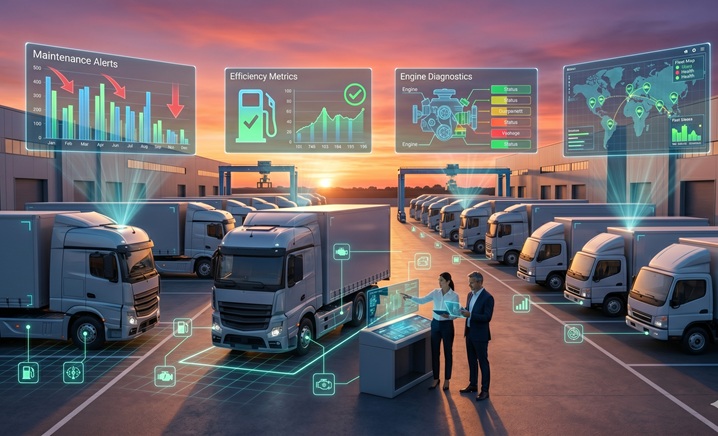
Why AI Is Becoming Essential in Logistics
Traditional logistics operations often depend on manual processes and historical data. While these methods can work, they are not always efficient in today’s fast-moving business environment. AI introduces a more intelligent and data-driven approach to logistics management.
With AI in logistics, companies can:
- Optimize delivery routes in real time
- Reduce fuel consumption and transportation costs
- Improve fleet management and vehicle utilization
- Predict maintenance issues before breakdowns occur
- Forecast demand more accurately
- Automate warehouse operations
- Enhance customer communication and support
- Improve last-mile delivery performance
These capabilities allow logistics businesses to operate more efficiently while delivering a better experience for customers.
How AI Is Transforming the Logistics Industry
Artificial Intelligence is reshaping nearly every aspect of transportation and logistics. From route planning and warehouse automation to predictive analytics and customer service, AI-powered systems are helping organizations solve complex operational challenges.
For example, AI route optimization software can analyze traffic conditions, weather patterns, road closures, and delivery schedules to determine the most efficient routes. This helps reduce delivery times, lower fuel costs, and improve driver productivity.
Similarly, AI-powered fleet management systems monitor vehicle performance in real time, allowing companies to identify potential maintenance issues before they lead to costly repairs or unexpected downtime.
In warehouses, AI can improve inventory management, automate order fulfillment processes, and increase overall operational efficiency. These improvements help logistics providers reduce costs while maintaining high service levels.
Growing Adoption of AI in Logistics
The adoption of AI in logistics continues to grow as companies recognize its potential to drive efficiency and profitability. Organizations are investing in AI-powered logistics solutions to gain better visibility across their supply chains, reduce operational risks, and improve customer experiences.
As eCommerce continues to expand and delivery expectations increase, AI is becoming a critical technology for logistics companies that want to remain competitive. Businesses that embrace AI can respond faster to changing market conditions, optimize resources more effectively, and deliver greater value to their customers.
What You Will Learn in This Guide
In this article, you’ll discover:
- How logistics companies use AI to reduce delivery costs
- The role of AI in route optimization and fleet management
- How AI improves customer satisfaction and delivery experiences
- Real-world applications of AI in transportation and logistics
- The key benefits of AI-powered logistics solutions
- Common challenges and best practices for AI implementation
- Future trends shaping the logistics industry
By the end of this guide, you’ll understand why AI in logistics is no longer a future trend but a business necessity for companies looking to improve efficiency, reduce costs, and deliver exceptional customer experiences.
The Growing Challenges Facing Logistics Companies Today
The logistics industry is facing unprecedented pressure. Rising transportation costs, increasing customer expectations, and ongoing supply chain disruptions are making it difficult for companies to maintain profitability while delivering excellent service.
To stay competitive, logistics businesses must overcome several operational challenges that directly impact delivery performance, customer satisfaction, and overall costs.
1. Rising Transportation Costs
Transportation expenses continue to increase across the logistics industry. These costs affect every stage of the supply chain and can significantly reduce profit margins.
Fuel Expenses
Fuel is one of the largest operational expenses for logistics companies. Rising fuel prices can quickly increase delivery costs, especially for businesses operating large fleets.
Common impacts include:
- Higher transportation expenses
- Reduced profit margins
- Increased delivery costs
- Greater pressure on route efficiency
Vehicle Maintenance
Fleet vehicles require regular maintenance to remain safe and operational. Routine servicing, repairs, and part replacements can become costly over time.
Challenges include:
- Unexpected breakdowns
- Increased repair costs
- Delivery delays
- Reduced fleet availability
Driver Wages
The transportation industry continues to face a shortage of qualified drivers. As demand grows, companies must offer competitive salaries and benefits to attract and retain talent.
As a result, businesses often experience:
- Higher labor costs
- Recruitment challenges
- Increased employee turnover
- Workforce shortages
Empty Miles
Empty miles occur when trucks travel without cargo after completing deliveries. These non-revenue-generating trips increase operational costs and reduce efficiency.
The impact includes:
- Wasted fuel
- Higher labor expenses
- Increased vehicle wear and tear
- Lower profitability
2. Last-Mile Delivery Challenges
Last-mile delivery is often the most expensive and complex stage of the shipping process. It directly affects customer satisfaction and delivery performance.
High Operational Costs
Last-mile deliveries require significant investments in drivers, vehicles, fuel, and technology.
Major cost drivers include:
- Frequent delivery stops
- Urban delivery routes
- Labor expenses
- Delivery management systems
Failed Delivery Attempts
Failed deliveries create unnecessary costs and delays. When packages cannot be delivered on the first attempt, companies must spend additional time and resources to complete the order.
Common causes include:
- Incorrect addresses
- Customer unavailability
- Incomplete delivery instructions
Traffic Congestion
Traffic remains one of the biggest obstacles to efficient delivery operations.
Traffic-related challenges include:
- Longer delivery times
- Increased fuel consumption
- Reduced driver productivity
- Unpredictable arrival times
3. Customer Expectations Are Higher Than Ever
Modern customers expect fast, convenient, and transparent delivery experiences.
Companies that fail to meet these expectations risk losing customers to competitors.
Real-Time Tracking
Customers want complete visibility into their orders from dispatch to delivery.
Benefits of real-time tracking include:
- Better customer communication
- Increased trust
- Reduced support inquiries
- Improved customer satisfaction
Same-Day Delivery
The rise of eCommerce has made fast delivery a competitive necessity.

Customers increasingly expect:
- Same-day delivery
- Next-day shipping
- Accurate delivery estimates
- Faster fulfillment
Delivery Transparency
Consumers expect clear and proactive communication throughout the delivery process.
They want updates about:
- Shipment status
- Delivery delays
- Estimated arrival times
- Order confirmations
Personalized Experiences
Customers now expect delivery options tailored to their preferences.
Examples include:
- Preferred delivery windows
- Customized notifications
- Flexible pickup options
- Alternative delivery locations
4. Supply Chain Disruptions
Supply chain disruptions continue to affect logistics companies around the world.
Unexpected events can delay shipments, increase costs, and reduce operational efficiency.
Weather Conditions
Severe weather can disrupt transportation routes and delay deliveries.
Common weather-related disruptions include:
- Storms
- Floods
- Snow events
- Hurricanes
Labor Shortages
Many logistics companies struggle to find enough drivers, warehouse workers, and supply chain professionals.
This often leads to:
- Slower operations
- Higher labor costs
- Reduced capacity
Demand Fluctuations
Customer demand can change rapidly due to seasonal trends, promotions, and market conditions.
These fluctuations make it difficult to:
- Plan resources
- Manage inventory
- Optimize delivery schedules
Inventory Issues
Poor inventory management can create bottlenecks throughout the supply chain.
Common challenges include:
- Overstocking
- Stock shortages
- Inventory inaccuracies
- Fulfillment delays
What Is Artificial Intelligence in Logistics?
Artificial Intelligence (AI) in logistics refers to the use of advanced technologies that enable systems to analyze data, learn from patterns, make decisions, and automate tasks with minimal human intervention. Instead of relying solely on manual processes, logistics companies can use AI-powered logistics solutions to improve efficiency, reduce delivery costs, optimize operations, and enhance customer satisfaction.
In today’s fast-moving supply chain environment, logistics companies generate massive amounts of data from vehicles, warehouses, shipments, customers, and suppliers. AI helps businesses turn this data into actionable insights that support smarter decision-making and better operational performance.
From route optimization and fleet management to warehouse automation and customer service, AI is transforming nearly every aspect of the transportation and logistics industry.
Definition of AI in Logistics
AI in logistics combines multiple technologies that work together to improve supply chain operations, increase efficiency, and reduce costs. These technologies help logistics companies predict outcomes, automate workflows, and respond quickly to changing conditions.
Let’s explore the key technologies that power AI in logistics.
Machine Learning
Machine Learning (ML) is one of the most important components of Artificial Intelligence in logistics. It allows systems to learn from historical and real-time data without being explicitly programmed for every situation.
For example, a logistics company can use machine learning algorithms to analyze delivery patterns, customer demand, fuel consumption, and route performance. Over time, the system continuously improves its predictions and recommendations.
Common applications of machine learning in logistics include:
- Route optimization
- Demand forecasting
- Fleet management
- Inventory planning
- Delivery time predictions
- Risk assessment
By learning from data, machine learning helps logistics providers make faster and more accurate decisions.
Predictive Analytics
Predictive analytics uses historical data, trends, and AI algorithms to forecast future events. This technology enables logistics companies to anticipate problems before they occur and take proactive action.
For example, predictive analytics can identify potential delivery delays, forecast seasonal demand spikes, or predict vehicle maintenance needs.
Benefits of predictive analytics in logistics include:
- Improved demand forecasting
- Reduced transportation costs
- Better inventory management
- Lower operational risks
- More accurate delivery schedules
Instead of reacting to issues after they happen, companies can prevent disruptions before they impact operations.
Computer Vision
Computer vision enables AI systems to interpret and analyze visual information from cameras, scanners, and images.
In logistics and supply chain management, computer vision helps automate tasks that traditionally require manual inspections and monitoring.
Common uses of computer vision include:
- Barcode and package scanning
- Warehouse inventory tracking
- Quality control inspections
- Vehicle monitoring
- Automated package sorting
By reducing manual work and human errors, computer vision improves operational efficiency and accuracy.
Natural Language Processing (NLP)
Natural Language Processing (NLP) allows computers to understand, interpret, and respond to human language.
Many logistics companies use NLP-powered chatbots and virtual assistants to improve customer communication and support services.
Applications of NLP in logistics include:
- Customer service chatbots
- Automated shipment updates
- Voice-based logistics systems
- Email and support ticket automation
- Customer inquiry management
This technology helps businesses provide faster responses and better customer experiences while reducing support costs.
Intelligent Automation
Intelligent automation combines Artificial Intelligence with automated workflows to perform repetitive and time-consuming tasks without human intervention.
Instead of manually processing orders, updating shipment records, or scheduling deliveries, AI-powered systems can handle these activities automatically.
Examples of intelligent automation in logistics include:
- Automated order processing
- Delivery scheduling
- Shipment tracking updates
- Invoice processing
- Warehouse workflow automation
This allows logistics teams to focus on higher-value tasks while increasing productivity across the organization.
Why Logistics Companies Are Investing in AI
The logistics industry is becoming increasingly complex. Rising transportation costs, growing customer expectations, and global supply chain challenges are forcing companies to find smarter ways to operate.
This is why more businesses are investing in AI-powered logistics solutions than ever before.
Cost Reduction
One of the biggest reasons logistics companies adopt AI is to reduce operational costs.
AI helps businesses identify inefficiencies, optimize resources, and eliminate waste throughout the supply chain.
AI reduces logistics costs by:
- Optimizing delivery routes
- Reducing fuel consumption
- Minimizing empty miles
- Improving vehicle utilization
- Preventing costly breakdowns
- Automating manual tasks
These improvements help companies increase profitability while maintaining high service levels.
Faster Operations
Speed is critical in today’s logistics industry. Customers expect faster deliveries, and businesses need efficient operations to remain competitive.
AI enables faster decision-making by analyzing large amounts of data in real time.
AI improves operational speed through:
- Automated route planning
- Real-time shipment tracking
- Faster warehouse processing
- Automated dispatching
- Intelligent task scheduling
As a result, logistics companies can complete deliveries more efficiently and respond quickly to changing conditions.
Better Forecasting
Accurate forecasting is essential for effective logistics management. Poor forecasts can lead to inventory shortages, excess stock, delayed deliveries, and increased costs.
AI-powered forecasting tools analyze historical data, market trends, seasonal demand, and external factors to provide highly accurate predictions.
Benefits of AI forecasting include:
- Improved inventory planning
- Better workforce allocation
- Reduced stockouts
- More efficient resource management
- Enhanced supply chain planning
With better forecasts, logistics companies can make more informed business decisions.
Enhanced Customer Experiences
Customer satisfaction has become a major competitive advantage in the logistics industry. Customers expect fast deliveries, accurate updates, and seamless communication.
AI helps companies deliver a superior customer experience by providing greater visibility and personalized services.
AI improves customer satisfaction through:
- Real-time shipment tracking
- Accurate delivery estimates
- Automated notifications
- Faster customer support
- Personalized delivery options
- Proactive issue resolution
When customers receive timely updates and reliable service, they are more likely to remain loyal and recommend the company to others.
How AI Reduces Delivery Costs for Logistics Companies
Reducing delivery costs has become one of the top priorities for logistics companies. Rising fuel prices, increasing labor costs, vehicle maintenance expenses, and growing customer expectations are putting significant pressure on profit margins. Traditional logistics processes often rely on manual planning and reactive decision-making, which can lead to inefficiencies and unnecessary expenses.
Artificial Intelligence (AI) is helping logistics companies solve these challenges by making operations smarter, faster, and more efficient. From route optimization and fleet management to demand forecasting and warehouse automation, AI-powered logistics solutions enable businesses to reduce costs while improving delivery performance.
Let’s explore the key ways AI helps logistics companies lower delivery costs and maximize operational efficiency.
AI-Powered Route Optimization
One of the most effective ways AI reduces delivery costs is through route optimization. Traditional route planning often relies on fixed routes and manual scheduling, which may not account for changing traffic conditions, weather, or road closures.
AI-powered route optimization systems analyze real-time data and continuously identify the most efficient routes for delivery vehicles.
How AI Route Optimization Works
AI evaluates multiple factors before recommending the best delivery route, including:
- Dynamic route planning
- Real-time traffic prediction
- Road condition analysis
- Weather-based route adjustments
- Delivery schedules and priorities
- Vehicle capacity and availability
Unlike traditional navigation systems, AI can continuously adjust routes throughout the day as conditions change.
Benefits of AI-Powered Route Optimization
Logistics companies can achieve several cost-saving benefits, including:
- Reduced fuel consumption
- Shorter delivery times
- Lower transportation costs
- Improved driver productivity
- Reduced vehicle wear and tear
- More deliveries per vehicle per day
Example: Before vs. After AI Route Optimization
Before AI:
A delivery truck follows a fixed route without considering traffic congestion or road conditions. The vehicle spends extra time in traffic, consumes more fuel, and completes fewer deliveries.
After AI:
The AI system analyzes traffic patterns, weather conditions, and delivery locations in real time. It automatically selects the fastest and most efficient route, reducing travel time and fuel usage while allowing the driver to complete additional deliveries.
Result: Lower operating costs and higher delivery efficiency.
Predictive Maintenance for Fleet Management
Vehicle breakdowns are one of the most expensive problems in logistics operations. Unexpected repairs can lead to delayed deliveries, lost revenue, and dissatisfied customers.
AI-powered predictive maintenance helps logistics companies identify potential vehicle issues before they become serious problems.
How Predictive Maintenance Works
Modern fleet vehicles are equipped with sensors that continuously collect data about vehicle performance.
AI analyzes information such as:
- Engine performance
- Tire condition
- Brake health
- Fuel system efficiency
- Battery performance
- Vehicle diagnostics
When the system detects unusual patterns, it alerts maintenance teams before a breakdown occurs.
Benefits of Predictive Maintenance
By identifying issues early, logistics companies can:
- Lower maintenance costs
- Reduce unexpected repairs
- Minimize vehicle downtime
- Improve fleet reliability
- Extend vehicle lifespan
- Increase delivery consistency
Instead of reacting to breakdowns, companies can schedule maintenance proactively and avoid costly disruptions.
Fuel Consumption Optimization
Fuel expenses represent one of the largest operational costs in transportation and logistics. Even small improvements in fuel efficiency can generate significant savings across a large fleet.
AI helps logistics companies optimize fuel consumption by analyzing vehicle performance and driver behavior.
How AI Optimizes Fuel Usage
AI systems monitor and evaluate:
- Driver behavior analysis
- Excessive speeding
- Harsh braking
- Rapid acceleration
- Engine idle time
- Route efficiency
- Vehicle performance metrics
The system then provides recommendations to improve fuel efficiency.
Results of AI Fuel Optimization
Companies that use AI-powered fuel management often experience:
- Lower fuel costs
- Reduced emissions
- Improved sustainability
- Better fleet performance
- Increased operational efficiency
By reducing fuel waste, logistics companies can significantly lower transportation expenses while supporting environmental goals.
AI-Powered Demand Forecasting
Accurate demand forecasting is essential for controlling logistics costs. Poor forecasting can result in overstaffing, underutilized vehicles, excess inventory, or delivery delays.
AI-powered demand forecasting helps businesses predict future demand with greater accuracy.
What AI Analyzes
AI evaluates large volumes of data, including:
- Historical order data
- Seasonal demand trends
- Customer purchasing behavior
- Market demand patterns
- Economic indicators
- Industry trends
This information allows logistics companies to anticipate future demand and prepare accordingly.
Benefits of AI Demand Forecasting
Better forecasting leads to:
- Improved resource allocation
- Reduced overstaffing
- Better workforce planning
- More efficient fleet utilization
- Improved inventory planning
- Reduced operational waste
As a result, businesses can operate more efficiently while lowering overall delivery costs.
Warehouse Automation and Optimization
Warehouses play a critical role in logistics operations. Inefficient warehouse processes can slow down order fulfillment, increase labor costs, and create delivery delays.
AI-powered warehouse automation helps companies streamline operations and improve productivity.
AI Applications in Warehouse Management
AI improves warehouse performance through:
- Intelligent inventory management
- Automated stock tracking
- Picking route optimization
- Robotics and automation
- Smart storage allocation
- Space utilization optimization
These technologies help warehouses operate faster and more accurately.
Benefits of Warehouse Automation
Logistics companies gain several advantages, including:
- Faster order fulfillment
- Lower labor costs
- Reduced human errors
- Improved inventory accuracy
- Better warehouse productivity
- Faster shipment processing
Efficient warehouse operations directly contribute to lower delivery costs and improved customer service.
AI-Based Load Planning
Many logistics companies lose money because trucks are not fully utilized. Empty space inside vehicles leads to unnecessary transportation costs and reduced profitability.
AI-based load planning helps maximize vehicle capacity and improve shipment efficiency.
How AI Improves Load Planning
AI analyzes:
- Shipment sizes and dimensions
- Vehicle capacity
- Delivery destinations
- Route schedules
- Cargo weight distribution
The system then creates the most efficient loading plan possible.
Benefits of AI Load Planning
AI helps logistics companies:
- Maximize truck capacity
- Reduce empty miles
- Optimize shipment consolidation
- Improve fleet utilization
- Lower fuel consumption
- Reduce transportation expenses
By making better use of available space, companies can move more goods using fewer vehicles.
Outcomes of AI-Based Load Planning
The long-term benefits include:
- Increased profitability
- Lower transportation costs
- Improved delivery efficiency
- Better resource utilization
- Reduced environmental impact
How AI Improves Customer Satisfaction in Logistics
Customer satisfaction has become one of the most important success factors in the logistics industry. Today’s customers expect fast deliveries, accurate updates, real-time visibility, and personalized experiences throughout the delivery journey. A delayed shipment, lack of communication, or poor delivery experience can quickly damage customer trust and lead to lost business.
This is why logistics companies are increasingly investing in AI-powered logistics solutions. Artificial Intelligence (AI) helps businesses improve communication, increase delivery accuracy, resolve issues faster, and provide a seamless customer experience from order placement to final delivery.
By using AI in logistics, companies can not only reduce delivery costs but also build stronger customer relationships and increase customer loyalty.
Real-Time Shipment Tracking
One of the biggest customer expectations today is complete visibility into the delivery process. Customers want to know exactly where their package is and when it will arrive.
AI-powered shipment tracking systems provide real-time updates throughout the delivery journey, helping customers stay informed every step of the way.
Key Features of AI-Powered Shipment Tracking
Modern AI logistics platforms offer:
- Live package updates
- Real-time vehicle tracking
- Delivery ETA predictions
- Automated delay notifications
- Location-based shipment visibility
- Instant status updates
Unlike traditional tracking systems, AI continuously analyzes delivery data and provides more accurate information as conditions change.
Customer Benefits
Real-time shipment tracking improves the customer experience by providing:
Transparency
Customers can monitor their shipments at every stage of the delivery process. This visibility creates confidence and reduces the need to contact customer support for updates.
Reduced Uncertainty
Knowing the exact location of a package eliminates guesswork and helps customers plan accordingly.
Better Trust
When logistics companies provide accurate and timely information, customers feel more confident in the service. Greater transparency often leads to higher satisfaction and stronger customer relationships.
Why It Matters
Customers value visibility as much as speed. Even when delays occur, proactive communication helps maintain trust and improve the overall customer experience.
Accurate Delivery Time Predictions
Providing accurate delivery estimates is one of the most effective ways to improve customer satisfaction in logistics.
Traditional delivery estimates are often based on fixed schedules and historical averages. However, real-world conditions can change quickly, making those estimates unreliable.
AI-powered delivery prediction systems use real-time data to generate highly accurate estimated times of arrival (ETAs).
What AI Analyzes
AI evaluates multiple factors simultaneously, including:
- Traffic conditions
- Weather forecasts
- Road closures
- Historical delivery patterns
- Driver performance
- Route efficiency
- Delivery volume
By analyzing these variables in real time, AI can continuously update delivery estimates throughout the journey.
Impact on Customer Satisfaction
Accurate delivery predictions help logistics companies achieve:
More Accurate ETAs
Customers receive realistic delivery windows rather than broad estimates. This improves convenience and reduces missed deliveries.
Fewer Customer Complaints
When deliveries arrive within the promised timeframe, customers are less likely to become frustrated or contact support teams.
Improved Planning
Customers can better organize their schedules when they know exactly when a shipment will arrive.
Why It Matters
Reliable delivery estimates create a smoother customer experience and strengthen confidence in the logistics provider.
AI-Powered Customer Support
Customer service plays a critical role in logistics operations. Customers frequently have questions about shipment status, delivery schedules, delays, and order updates.
AI-powered customer support solutions help logistics companies respond faster while improving service quality.
Technologies Used in AI Customer Support
Modern logistics companies use several AI technologies, including:
- AI chatbots
- Virtual assistants
- Automated ticket handling systems
- Intelligent customer service platforms
- Natural Language Processing (NLP)
These tools can handle thousands of customer inquiries simultaneously without requiring human intervention.
Benefits of AI-Powered Customer Support
24/7 Support Availability
Customers can receive assistance anytime, even outside regular business hours.
Faster Responses
AI systems instantly answer common questions, reducing wait times and improving customer satisfaction.
Consistent Service Quality
AI provides accurate and consistent responses, ensuring customers receive reliable information.
Improved Customer Experience
Quick support and timely communication help create a smoother and more positive customer journey.
Why It Matters
Fast and efficient customer service is often the difference between a satisfied customer and a lost customer. AI helps logistics companies deliver support at scale while maintaining high service standards.
Personalized Delivery Experiences
Modern consumers expect more than standard delivery services. They want delivery experiences tailored to their individual needs and preferences.
AI enables logistics companies to offer personalized delivery options that improve convenience and customer satisfaction.
Examples of Personalized Delivery Experiences
AI can provide customers with:
- Preferred delivery windows
- Smart delivery recommendations
- Alternative delivery locations
- Customized shipment notifications
- Delivery preference management
- Flexible scheduling options
These personalized features make the delivery process more convenient and customer-focused.
Customer Impact
Higher Satisfaction Rates
Customers appreciate having greater control over how and when their packages are delivered.
Increased Loyalty
When customers receive personalized experiences, they are more likely to return and continue using the service.
Better Customer Engagement
Personalized communication helps customers feel valued and improves overall brand perception.
Why It Matters
Personalization helps logistics companies differentiate themselves in a competitive market while creating stronger customer relationships.
Proactive Problem Resolution
One of the most powerful benefits of AI in logistics is its ability to identify potential issues before they affect the customer.
Instead of waiting for problems to occur, AI systems continuously monitor shipments and delivery operations to detect risks in real time.
What AI Can Detect
AI-powered logistics platforms can identify:
- Delayed shipments
- Route disruptions
- Vehicle breakdown risks
- Traffic-related delays
- Weather-related disruptions
- Delivery exceptions
This allows logistics teams to take action before the problem escalates.
Actions AI Can Take
Once a risk is detected, AI can automatically:
- Send customer alerts
- Update delivery estimates
- Recommend alternative routes
- Reschedule deliveries
- Notify support teams
- Create backup delivery plans
These actions help minimize disruptions and improve customer communication.
Results for Logistics Companies
Better Customer Retention
Customers are more likely to remain loyal when companies proactively communicate and resolve issues quickly.
Reduced Customer Frustration
Early notifications help customers adjust expectations and avoid surprises.
Improved Brand Reputation
Proactive service demonstrates reliability and professionalism, which strengthens customer trust.
Why It Matters
Customers understand that delays can happen. What matters most is how a company communicates and responds. AI helps logistics providers address problems before they negatively impact the customer experience.
Real-World Applications of AI in Logistics
Artificial Intelligence (AI) is no longer a future technology in the logistics industry. Today, logistics companies around the world are using AI-powered logistics solutions to improve efficiency, reduce delivery costs, enhance customer satisfaction, and gain better visibility across their supply chains.
From last-mile delivery and fleet management to warehouse operations and supply chain monitoring, AI is helping businesses solve some of the industry’s biggest challenges. By analyzing massive amounts of real-time data, AI enables faster decision-making, smarter planning, and more efficient operations.
Let’s explore some of the most impactful real-world applications of AI in logistics.
AI in Last-Mile Delivery
Last-mile delivery is often the most expensive and complex stage of the logistics process. It involves transporting products from a distribution center to the customer’s final destination.
Because last-mile delivery directly impacts both delivery costs and customer satisfaction, many logistics companies are using AI to optimize this critical stage of the supply chain.
How AI Improves Last-Mile Delivery
AI continuously analyzes delivery data, traffic conditions, customer locations, and vehicle availability to make smarter delivery decisions.
Route Optimization
AI-powered route optimization helps delivery vehicles take the fastest and most efficient routes.
Instead of relying on static routes, AI evaluates:
- Real-time traffic conditions
- Road closures
- Weather conditions
- Delivery priorities
- Vehicle capacity
As conditions change throughout the day, AI automatically adjusts routes to reduce delays and improve delivery efficiency.
Benefits include:
- Lower fuel consumption
- Faster deliveries
- Reduced transportation costs
- Improved driver productivity
Dynamic Dispatching
Traditional dispatching often relies on manual planning, which can lead to inefficiencies.
AI-powered dynamic dispatching automatically assigns deliveries based on:
- Driver availability
- Vehicle location
- Delivery urgency
- Route efficiency
This helps logistics companies maximize resources and improve delivery performance.
Benefits include:
- Better fleet utilization
- Faster order fulfillment
- Reduced delivery delays
- Improved operational efficiency
Delivery Scheduling
AI helps companies create smarter delivery schedules by analyzing customer preferences, delivery windows, and route conditions.
This allows businesses to:
- Improve delivery accuracy
- Reduce missed deliveries
- Increase customer convenience
- Optimize delivery workloads
Real-World Impact
By using AI in last-mile delivery, logistics companies can lower costs, complete more deliveries per vehicle, and provide a better customer experience.
AI in Fleet Management
Fleet management is one of the most important areas where AI is creating value for logistics companies. Managing dozens or even thousands of vehicles requires constant monitoring and decision-making.
AI-powered fleet management systems provide real-time visibility into vehicle performance, driver behavior, and maintenance needs.
Vehicle Tracking
AI-enabled vehicle tracking systems provide real-time visibility into fleet operations.
Companies can monitor:
- Vehicle locations
- Route progress
- Delivery status
- Fuel usage
- Travel times
Real-time tracking helps logistics teams respond quickly to unexpected situations and maintain efficient operations.
Benefits include:
- Better fleet visibility
- Improved route planning
- Faster issue resolution
- Increased delivery accuracy
Driver Monitoring
Driver performance directly affects fuel costs, safety, and delivery efficiency.
AI systems analyze driver behavior, including:
- Speeding
- Harsh braking
- Rapid acceleration
- Excessive idling
- Route compliance
This data helps companies improve driver performance and reduce operational risks.
Benefits include:
- Lower fuel consumption
- Improved safety
- Reduced vehicle wear and tear
- Better driver productivity
Predictive Maintenance
Unexpected vehicle breakdowns can be costly and disruptive.
AI-powered predictive maintenance systems use sensors and vehicle data to identify potential problems before they lead to failures.
AI monitors:
- Engine performance
- Brake conditions
- Tire health
- Battery performance
- Mechanical components
When an issue is detected, maintenance teams receive alerts and can schedule repairs before a breakdown occurs.
Benefits include:
- Lower maintenance costs
- Reduced downtime
- Longer vehicle lifespan
- Improved fleet reliability
Real-World Impact
AI-driven fleet management helps logistics companies reduce operating costs, improve vehicle utilization, and increase delivery reliability.
AI in Warehouse Operations
Warehouses are the foundation of efficient logistics operations. Delays or errors in warehouse processes can affect the entire supply chain.
AI-powered warehouse automation helps businesses improve speed, accuracy, and productivity while reducing labor costs.
Smart Inventory Management
Managing inventory manually can lead to stock shortages, excess inventory, and fulfillment delays.
AI continuously monitors inventory levels and predicts future demand based on:
- Historical sales data
- Seasonal trends
- Customer behavior
- Market demand
This helps businesses maintain optimal inventory levels and avoid costly mistakes.
Benefits include:
- Improved inventory accuracy
- Reduced stockouts
- Lower storage costs
- Better demand planning
Automated Sorting
Sorting packages manually can be time-consuming and prone to errors.
AI-powered sorting systems use computer vision and machine learning to automatically identify, categorize, and route packages.
This allows warehouses to process large volumes of shipments more efficiently.
Benefits include:
- Faster order processing
- Reduced human errors
- Improved fulfillment speed
- Greater operational efficiency
Robotics Integration
Many modern warehouses use AI-powered robots to automate repetitive tasks.
Robots can assist with:
- Picking products
- Moving inventory
- Packing orders
- Sorting shipments
- Managing storage locations
By working alongside warehouse employees, robots help increase productivity and reduce operational costs.
Benefits include:
- Faster fulfillment times
- Reduced labor costs
- Increased warehouse efficiency
- Improved workplace safety
Real-World Impact
AI-powered warehouse operations help logistics companies fulfill orders faster, reduce errors, and improve overall supply chain performance.
AI in Supply Chain Visibility
One of the biggest challenges in logistics is maintaining visibility across the entire supply chain. Without accurate information, companies may struggle to identify disruptions, manage risks, and make informed decisions.
AI-powered supply chain visibility solutions provide real-time insights into every stage of the logistics process.
End-to-End Monitoring
AI enables logistics companies to monitor shipments, inventory, suppliers, warehouses, and transportation networks from a single platform.
Real-time visibility helps businesses track operations from the point of origin to final delivery.
Benefits include:
- Greater operational transparency
- Faster issue identification
- Improved shipment visibility
- Better supply chain control
Risk Detection
AI continuously analyzes data to identify potential risks before they impact operations.
These risks may include:
- Delivery delays
- Weather disruptions
- Inventory shortages
- Supplier issues
- Transportation bottlenecks
By detecting risks early, businesses can take proactive action to minimize disruptions.
Benefits include:
- Reduced supply chain disruptions
- Faster response times
- Improved business continuity
- Better operational resilience
Better Decision-Making
AI transforms raw logistics data into actionable insights that support smarter decision-making.
Executives and logistics managers can use AI-generated recommendations to:
- Optimize resources
- Improve delivery performance
- Reduce costs
- Plan future operations
- Improve customer service
This allows organizations to make data-driven decisions with greater confidence.
Real-World Impact
Companies with strong supply chain visibility can respond faster to disruptions, improve operational efficiency, and provide more reliable service to customers.
Key Benefits of AI for Logistics Companies
Artificial Intelligence (AI) is transforming the logistics industry by helping companies operate faster, smarter, and more efficiently. As transportation costs continue to rise and customer expectations become more demanding, logistics companies are turning to AI-powered logistics solutions to gain a competitive advantage.
From route optimization and fleet management to warehouse automation and predictive analytics, AI is helping businesses reduce costs, improve operational performance, and deliver better customer experiences.
Let’s explore the key benefits of AI in logistics and why more companies are investing in AI-driven supply chain technologies.
Cost Reduction
One of the biggest reasons logistics companies adopt AI is to reduce operational costs.
Traditional logistics operations often involve manual planning, inefficient routes, unexpected vehicle breakdowns, and resource waste. AI helps eliminate these inefficiencies by analyzing data and automating decision-making processes.
How AI Reduces Logistics Costs
AI helps companies lower expenses through:
- Route optimization
- Fuel consumption reduction
- Predictive maintenance
- Automated workflows
- Better inventory management
- Reduced empty miles
For example, AI-powered route optimization software identifies the most efficient delivery routes based on real-time traffic, weather conditions, and delivery schedules. This reduces fuel usage and transportation expenses.
Business Impact
Companies that use AI can achieve:
- Lower transportation costs
- Reduced fuel expenses
- Fewer maintenance costs
- Less operational waste
- Improved cost control
By reducing unnecessary spending, logistics providers can improve profitability while maintaining high service quality.
Increased Operational Efficiency
Efficiency is critical in modern logistics operations. Delays, manual processes, and poor coordination can quickly affect delivery performance and customer satisfaction.
AI improves operational efficiency by automating routine tasks and helping teams make faster, data-driven decisions.
How AI Improves Efficiency
AI-powered logistics systems can:
- Automate route planning
- Streamline dispatching
- Optimize warehouse operations
- Improve inventory management
- Monitor fleet performance in real time
Instead of relying on manual processes, logistics companies can use AI to identify the most efficient way to complete tasks and allocate resources.
Business Impact
Improved efficiency leads to:
- Faster workflows
- Better productivity
- Reduced human errors
- More reliable operations
- Improved service performance
As a result, companies can handle higher delivery volumes without significantly increasing costs.
Faster Deliveries
Speed has become a major competitive advantage in the logistics industry. Customers expect same-day, next-day, and on-time deliveries.
AI helps logistics companies deliver products faster by improving planning and execution across the entire supply chain.
How AI Enables Faster Deliveries
AI supports faster delivery operations through:
- Real-time route optimization
- Dynamic dispatching
- Delivery scheduling
- Traffic prediction
- Automated warehouse processes
AI continuously analyzes changing conditions and adjusts operations to avoid delays.
Business Impact
Faster deliveries help companies:
- Meet customer expectations
- Improve delivery accuracy
- Reduce late shipments
- Increase customer loyalty
Reliable and fast delivery services are essential for maintaining a strong market reputation.
Better Resource Utilization
Many logistics companies struggle with underutilized vehicles, inefficient warehouse space, and poorly allocated labor resources.
AI helps organizations maximize the use of their available assets and resources.
How AI Optimizes Resources
AI analyzes operational data to improve:
- Vehicle capacity utilization
- Workforce scheduling
- Warehouse space allocation
- Inventory distribution
- Fleet deployment
For example, AI-based load planning systems help ensure trucks are filled as efficiently as possible, reducing empty space and unnecessary trips.
Business Impact
Better resource utilization results in:
- Lower operating costs
- Increased productivity
- Reduced waste
- Improved asset performance
This allows businesses to achieve more with existing resources rather than investing in additional infrastructure.
Improved Customer Satisfaction
Customer satisfaction is one of the most important drivers of long-term business success.
Today’s customers expect fast deliveries, real-time updates, accurate delivery estimates, and responsive support. AI helps logistics companies meet and exceed these expectations.
How AI Improves Customer Experience
AI-powered logistics solutions provide:
- Real-time shipment tracking
- Accurate delivery ETAs
- Automated notifications
- AI-powered customer support
- Personalized delivery options
These features improve communication and create a more transparent delivery experience.
Business Impact
Higher customer satisfaction leads to:
- Stronger customer trust
- Increased customer retention
- Better online reviews
- Greater brand loyalty
- More repeat business
Companies that consistently deliver positive customer experiences gain a significant competitive advantage.
Higher Profit Margins
Reducing costs and improving efficiency ultimately leads to higher profit margins.
AI enables logistics companies to increase profitability without sacrificing service quality.
How AI Increases Profitability
AI helps improve financial performance by:
- Reducing transportation costs
- Improving fleet utilization
- Minimizing delivery delays
- Increasing operational efficiency
- Lowering maintenance expenses
At the same time, better customer experiences help drive repeat business and long-term revenue growth.
Business Impact
Organizations can achieve:
- Increased profitability
- Better return on investment (ROI)
- Sustainable growth
- Improved financial performance
This makes AI one of the most valuable investments for modern logistics businesses.
Better Forecasting Accuracy
Accurate forecasting is essential for managing inventory, workforce planning, transportation resources, and customer demand.
Traditional forecasting methods often rely on limited historical data and assumptions. AI-powered forecasting provides much greater accuracy.
How AI Improves Forecasting
AI analyzes:
- Historical orders
- Seasonal demand patterns
- Customer behavior
- Market trends
- Economic indicators
- Supply chain data
This allows logistics companies to anticipate future demand and make proactive decisions.
Business Impact
Better forecasting helps businesses:
- Avoid inventory shortages
- Reduce excess inventory
- Improve workforce planning
- Optimize fleet allocation
- Minimize operational disruptions
More accurate forecasts lead to better decision-making and lower operational costs.
Scalability for Growth
As logistics companies grow, managing larger delivery volumes becomes increasingly complex.
AI provides the flexibility and automation needed to scale operations efficiently without dramatically increasing costs.
How AI Supports Business Growth
AI-powered logistics systems can manage:
- Higher shipment volumes
- Larger vehicle fleets
- More warehouse locations
- Increased customer demand
- Complex supply chain networks
Because AI automates many operational processes, businesses can expand more efficiently while maintaining service quality.
Business Impact
Scalability benefits include:
- Faster business growth
- Reduced operational complexity
- Improved efficiency at scale
- Better customer service
- Long-term competitive advantage
AI allows logistics companies to grow confidently while maintaining control over costs and performance.
AI Technologies Transforming the Logistics Industry
Artificial Intelligence is reshaping the logistics industry faster than ever before. Today’s logistics companies are managing increasingly complex supply chains, larger delivery networks, rising customer expectations, and growing operational costs. Traditional systems often struggle to keep up with these challenges.
This is where AI-powered logistics solutions are making a significant difference.
Modern logistics organizations are using advanced AI technologies to automate operations, improve decision-making, reduce delivery costs, optimize routes, enhance customer satisfaction, and increase supply chain visibility. These technologies help businesses work smarter, respond faster to disruptions, and operate more efficiently.
Let’s explore the key AI technologies transforming transportation, supply chain management, warehousing, and logistics operations.
Machine Learning
Machine Learning (ML) is one of the most widely used AI technologies in logistics. It enables systems to learn from historical and real-time data without being manually programmed for every scenario.
Instead of relying on fixed rules, machine learning continuously improves its performance by analyzing patterns and trends.
How Machine Learning Is Used in Logistics
Logistics companies use machine learning for:
- Route optimization
- Demand forecasting
- Delivery time predictions
- Fleet management
- Inventory planning
- Risk detection
For example, a machine learning system can analyze thousands of past deliveries and identify the fastest routes based on traffic patterns, weather conditions, and customer locations.
Benefits of Machine Learning
Machine learning helps logistics companies:
- Reduce delivery costs
- Improve operational efficiency
- Increase delivery accuracy
- Optimize resources
- Make faster decisions
As more data becomes available, machine learning models become even more accurate and valuable.
Predictive Analytics
Predictive analytics uses AI algorithms and historical data to forecast future events and outcomes.
Rather than reacting to problems after they occur, logistics companies can use predictive analytics to anticipate disruptions and take preventive action.
How Predictive Analytics Works
AI analyzes:
- Historical shipment data
- Customer demand trends
- Seasonal fluctuations
- Vehicle performance
- Supply chain activity
- Market conditions
Based on this analysis, the system predicts future events and recommends the best course of action.
Applications in Logistics
Predictive analytics helps companies:
- Forecast customer demand
- Predict delivery delays
- Plan inventory levels
- Optimize workforce allocation
- Prevent vehicle breakdowns
Benefits of Predictive Analytics
Businesses can achieve:
- Better forecasting accuracy
- Reduced operational risks
- Lower inventory costs
- Improved planning
- More efficient resource utilization
This technology allows logistics providers to make proactive decisions instead of reactive ones.
Internet of Things (IoT)
The Internet of Things (IoT) refers to a network of connected devices that collect and share data in real time.
In logistics, IoT devices provide valuable visibility into vehicles, shipments, warehouses, and supply chain operations.
Common IoT Devices in Logistics
Examples include:
- GPS tracking devices
- Vehicle sensors
- Smart inventory trackers
- Temperature monitoring systems
- Asset tracking devices
- Connected warehouse equipment
These devices continuously send data to AI-powered logistics platforms.
Applications of IoT in Logistics
IoT helps businesses:
- Track shipments in real time
- Monitor fleet performance
- Improve inventory visibility
- Monitor cargo conditions
- Detect equipment issues
Benefits of IoT
Key advantages include:
- Real-time operational visibility
- Improved asset tracking
- Better fleet management
- Faster issue detection
- Enhanced supply chain transparency
IoT provides the data foundation that makes many AI-powered logistics solutions possible.
Computer Vision
Computer Vision is an AI technology that allows computers to interpret and understand visual information from cameras, images, and video feeds.
This technology helps automate tasks that traditionally required manual inspections and monitoring.
Applications of Computer Vision in Logistics
Logistics companies use computer vision for:
- Barcode scanning
- Package identification
- Warehouse inventory tracking
- Quality inspections
- Automated sorting
- Security monitoring
For example, AI-powered cameras can automatically identify packages and direct them to the correct destination without human intervention.
Benefits of Computer Vision
Computer vision helps businesses:
- Reduce human errors
- Increase processing speed
- Improve inventory accuracy
- Automate repetitive tasks
- Enhance warehouse efficiency
As warehouse operations become more automated, computer vision is becoming increasingly important.
Robotic Process Automation (RPA)
Robotic Process Automation (RPA) uses software robots to automate repetitive digital tasks.
Many logistics operations involve administrative processes that consume significant time and resources. RPA helps automate these tasks while improving speed and accuracy.
Applications of RPA in Logistics
RPA can automate:
- Order processing
- Shipment scheduling
- Invoice generation
- Data entry
- Customer notifications
- Documentation management
These tasks can be completed automatically without requiring constant human involvement.
Benefits of RPA
Companies using RPA often experience:
- Lower labor costs
- Faster processing times
- Improved accuracy
- Reduced manual work
- Increased productivity
RPA allows logistics teams to focus on strategic activities rather than routine administrative tasks.
Digital Twins
Digital Twins are virtual replicas of physical assets, systems, or entire supply chains.
These digital models allow logistics companies to simulate operations, test scenarios, and identify opportunities for improvement before making real-world changes.
How Digital Twins Work
A digital twin continuously receives data from:
- Vehicles
- Warehouses
- Inventory systems
- Transportation networks
- IoT devices
The virtual model reflects real-world conditions in real time.
Applications in Logistics
Digital twins help companies:
- Optimize warehouse layouts
- Simulate delivery routes
- Analyze supply chain performance
- Improve fleet operations
- Test operational changes
Benefits of Digital Twins
Organizations gain:
- Better operational visibility
- Reduced risk
- Improved planning
- Faster problem-solving
- More informed decision-making
Digital twins help logistics companies optimize performance while minimizing disruptions.
Generative AI
Generative AI is one of the newest and fastest-growing technologies in logistics. Unlike traditional AI systems that focus on analysis, generative AI can create content, recommendations, and solutions based on available data.
Applications of Generative AI in Logistics
Generative AI can assist with:
- Route planning recommendations
- Supply chain optimization
- Customer service responses
- Logistics reporting
- Workforce planning
- Operational insights
It can quickly analyze large amounts of data and provide actionable recommendations.
Benefits of Generative AI
Logistics companies can benefit from:
- Faster decision-making
- Improved productivity
- Enhanced customer support
- Better planning
- Reduced administrative workload
As generative AI continues to evolve, its impact on logistics operations is expected to grow significantly.
Autonomous Delivery Systems
Autonomous delivery systems use AI, sensors, cameras, and advanced navigation technologies to perform deliveries with minimal human involvement.
These systems represent the future of logistics and transportation.
Examples of Autonomous Delivery Systems
Emerging technologies include:
- Self-driving delivery vehicles
- Autonomous trucks
- Delivery robots
- Drone deliveries
- Automated warehouse vehicles
These systems can operate continuously while reducing dependence on manual labor.
Benefits of Autonomous Delivery Systems
Potential advantages include:
- Lower delivery costs
- Faster deliveries
- Reduced labor expenses
- Improved operational efficiency
- Increased scalability
While adoption is still growing, autonomous delivery technologies are expected to play a major role in the future of logistics.
AI Implementation Roadmap for Logistics Companies
Implementing Artificial Intelligence (AI) in logistics is not just about adopting new technology. It requires a clear strategy, defined goals, and a step-by-step approach to ensure success. While the benefits of AI in logistics are significant, including reduced delivery costs, improved customer satisfaction, better forecasting, and increased operational efficiency, companies need a structured roadmap to maximize their return on investment.
Whether you are a transportation company, supply chain provider, warehouse operator, or last-mile delivery business, following a well-planned AI implementation strategy can help you achieve faster results while minimizing risks.
Below is a practical AI implementation roadmap that logistics companies can follow to successfully integrate AI-powered logistics solutions into their operations.
Step 1: Assess Current Operations
Before investing in any AI technology, logistics companies must first understand their current operational performance.
A thorough assessment helps identify inefficiencies, bottlenecks, and areas where AI can deliver the greatest value.
What to Evaluate
Delivery Costs
Analyze all transportation-related expenses, including:
- Fuel costs
- Vehicle maintenance costs
- Driver wages
- Last-mile delivery expenses
- Route inefficiencies
Understanding these costs helps identify where AI can reduce spending and improve profitability.
Fleet Efficiency
Evaluate how effectively your fleet is being utilized.
Key questions include:
- Are vehicles operating at full capacity?
- How many empty miles are being driven?
- Are delivery routes optimized?
- How often do vehicles experience downtime?
This information provides a baseline for measuring future improvements.
Customer Satisfaction Metrics
Customer experience should be a major focus when implementing AI.
Review metrics such as:
- On-time delivery rates
- Customer complaints
- Delivery accuracy
- Customer retention rates
- Support response times
Identifying customer pain points helps prioritize AI initiatives that improve service quality.
Why This Step Matters
Without understanding current performance, it is difficult to measure the impact of AI implementation. A detailed assessment establishes clear benchmarks for future success.
Step 2: Identify AI Opportunities
Once current operations have been evaluated, the next step is identifying where AI can generate the highest return on investment.
Not every logistics process needs AI immediately. Companies should focus on areas with the greatest potential for improvement.
Key Focus Areas
Routing
Route optimization is often one of the fastest ways to achieve measurable results.
AI can help:
- Reduce fuel consumption
- Minimize delivery times
- Improve driver productivity
- Lower transportation costs
For many logistics companies, routing is an ideal starting point for AI adoption.
Forecasting
Accurate forecasting helps companies prepare for demand fluctuations and improve resource planning.
AI-powered forecasting can support:
- Inventory management
- Workforce planning
- Fleet allocation
- Demand prediction
Better forecasting reduces waste and improves operational efficiency.
Customer Service
Customer expectations continue to rise across the logistics industry.
AI-powered customer service solutions can improve:
- Shipment tracking
- Customer communication
- Response times
- Support availability
AI chatbots and virtual assistants can provide 24/7 support while reducing service costs.
Fleet Management
AI can significantly improve fleet performance through:
- Vehicle tracking
- Predictive maintenance
- Driver monitoring
- Fuel optimization
These improvements help lower costs while increasing fleet reliability.
Why This Step Matters
Identifying high-impact opportunities ensures that AI investments focus on solving real business problems and delivering measurable results.
Step 3: Develop an AI Strategy
After identifying the most valuable use cases, companies need a clear AI implementation strategy.
A well-defined strategy provides direction and helps ensure that AI projects align with overall business objectives.
Define Clear Goals
Every AI initiative should have specific objectives.
Examples include:
- Reduce delivery costs by 15%
- Improve on-time deliveries by 20%
- Increase fleet utilization by 25%
- Reduce customer support inquiries by 30%
Clearly defined goals make success easier to measure.
Establish Key Performance Indicators (KPIs)
KPIs help track progress and evaluate the effectiveness of AI solutions.
Common logistics AI KPIs include:
- Fuel consumption
- Delivery times
- Vehicle downtime
- Customer satisfaction scores
- Fleet utilization rates
- Order fulfillment speed
Tracking KPIs allows companies to measure the return on their AI investment.
Set a Realistic Budget
AI implementation requires investment in technology, software, training, and integration.
Budget planning should include:
- Software costs
- Hardware requirements
- Employee training
- System integration
- Ongoing maintenance
A realistic budget helps prevent unexpected expenses during implementation.
Create a Timeline
Develop a roadmap with clear milestones and deadlines.
The timeline should include:
- Assessment phase
- Pilot program launch
- Testing period
- Full deployment
- Performance review
A structured timeline helps keep projects on track and ensures accountability.
Why This Step Matters
A strong AI strategy increases the likelihood of successful implementation and long-term business value.
Step 4: Deploy AI Solutions
Once the strategy is in place, logistics companies can begin implementing AI-powered logistics solutions.
Rather than deploying AI across the entire organization at once, it is often best to start with smaller pilot programs.
Launch Pilot Programs
Pilot programs allow companies to test AI technologies on a limited scale before making larger investments.
Examples include:
- AI route optimization for a specific region
- Predictive maintenance for part of the fleet
- AI chatbots for customer support
- Warehouse automation trials
Pilot projects help identify challenges and opportunities before company-wide deployment.
Testing and Optimization
After deployment, businesses should continuously evaluate performance.
Key activities include:
- Monitoring results
- Collecting feedback
- Measuring KPI performance
- Identifying improvement opportunities
- Refining AI models
AI systems become more effective as they learn from new data and operational experiences.
Why This Step Matters
Testing reduces implementation risks and ensures AI solutions deliver the expected business outcomes.
Step 5: Monitor and Scale
Successful AI implementation does not end after deployment. Continuous monitoring and improvement are essential for maximizing long-term value.
As AI solutions prove successful, companies can expand their use across additional operations and locations.
Continuous Improvement
AI systems should be regularly reviewed and updated to maintain optimal performance.
Continuous improvement activities include:
- Analyzing performance data
- Updating AI models
- Incorporating new data sources
- Improving workflows
- Expanding automation capabilities
The more data AI receives, the smarter and more accurate it becomes.
Performance Tracking
Ongoing performance measurement helps ensure AI investments continue delivering value.
Track metrics such as:
- Cost savings
- Delivery performance
- Fleet efficiency
- Customer satisfaction
- Resource utilization
- Revenue growth
Regular reporting helps identify additional opportunities for optimization.
Scale Across the Organization
Once proven successful, AI solutions can be expanded to:
- Additional delivery regions
- Larger fleets
- Multiple warehouses
- Customer service operations
- Supply chain management systems
This allows logistics companies to maximize the benefits of AI across their entire organization.
Why This Step Matters
Scaling successful AI initiatives helps companies achieve greater efficiency, reduce costs, and maintain a competitive advantage as they grow.
Future Trends of AI in Logistics
Artificial Intelligence (AI) is already transforming the logistics industry, but its impact is only beginning. As technology continues to evolve, AI-powered logistics solutions will become even more advanced, helping companies reduce delivery costs, improve customer satisfaction, increase efficiency, and build smarter supply chains.
In the coming years, logistics companies will rely more heavily on AI, automation, real-time data, and predictive intelligence to stay competitive in a rapidly changing market. Businesses that embrace these innovations early will be better positioned to deliver faster, operate more efficiently, and meet growing customer expectations.
Below are the key future trends that will shape the future of AI in logistics and supply chain management.
Hyper-Automation Across Logistics Operations
One of the biggest trends in logistics is the rise of hyper-automation. This involves combining Artificial Intelligence, Machine Learning, Robotic Process Automation (RPA), and advanced analytics to automate entire workflows.
Instead of automating individual tasks, logistics companies will automate complete operational processes.
Future Applications
Hyper-automation will support:
- Automated route planning
- Intelligent dispatching
- Warehouse operations
- Inventory management
- Customer communication
- Supply chain coordination
Expected Benefits
Companies can expect:
- Lower operating costs
- Faster decision-making
- Reduced manual work
- Improved productivity
- Greater operational efficiency
As automation expands, logistics businesses will be able to handle larger delivery volumes with fewer resources.
Autonomous Delivery Vehicles and Drones
The future of logistics will include greater use of autonomous delivery technologies.
AI-powered self-driving vehicles and delivery drones are expected to play a major role in improving last-mile delivery efficiency.
Emerging Technologies
Future delivery systems may include:
- Autonomous delivery trucks
- Self-driving vans
- Delivery robots
- AI-powered drones
- Automated warehouse vehicles
These technologies use AI, sensors, cameras, and real-time navigation systems to operate with minimal human involvement.
Expected Benefits
Autonomous delivery systems can provide:
- Faster deliveries
- Reduced labor costs
- Lower transportation expenses
- Increased scalability
- Improved delivery efficiency
Although widespread adoption will take time, many logistics companies are already testing these technologies.
Advanced Predictive Analytics
Predictive analytics will become even more powerful as AI systems gain access to larger volumes of data.
Future AI models will be able to predict disruptions, customer demand, and operational challenges with greater accuracy.
What AI Will Predict
Future predictive systems may forecast:
- Delivery delays
- Vehicle failures
- Demand spikes
- Inventory shortages
- Supply chain disruptions
- Weather-related risks
Expected Benefits
More accurate predictions will help companies:
- Improve planning
- Reduce operational risks
- Optimize resources
- Lower inventory costs
- Increase service reliability
This shift from reactive operations to predictive logistics will become a major competitive advantage.
Real-Time Supply Chain Visibility
Supply chains are becoming more complex and globalized. Future AI-powered platforms will provide complete visibility across every stage of the supply chain.
Companies will be able to monitor operations in real time and respond instantly to changing conditions.
Future Capabilities
AI-powered visibility platforms will provide:
- End-to-end shipment tracking
- Live inventory monitoring
- Supplier performance insights
- Transportation visibility
- Risk alerts and recommendations
Expected Benefits
Improved visibility will lead to:
- Better decision-making
- Faster issue resolution
- Increased transparency
- Stronger supply chain resilience
- Improved customer experiences
Organizations with greater visibility will be better prepared to handle disruptions and maintain operational efficiency.
AI-Powered Digital Twins
Digital twins are expected to become a critical technology in future logistics operations.
A digital twin is a virtual replica of a physical supply chain, warehouse, fleet, or transportation network.
How Digital Twins Will Evolve
Future digital twins will allow companies to:
- Simulate delivery networks
- Test operational changes
- Predict supply chain disruptions
- Optimize warehouse layouts
- Improve transportation planning
AI will continuously update these virtual models using real-time operational data.
Expected Benefits
Digital twins can help businesses:
- Reduce risks
- Improve planning accuracy
- Increase operational efficiency
- Lower costs
- Make faster decisions
This technology will allow logistics companies to solve problems before they impact real-world operations.
Generative AI for Logistics Decision-Making
Generative AI is rapidly becoming one of the most exciting innovations in business technology.
Future logistics organizations will use Generative AI to analyze large amounts of operational data and provide intelligent recommendations.
Future Applications
Generative AI may assist with:
- Route planning
- Demand forecasting
- Workforce scheduling
- Inventory optimization
- Customer support
- Supply chain strategy
Instead of manually analyzing reports, managers will receive AI-generated insights and recommendations in seconds.
Expected Benefits
Generative AI can deliver:
- Faster decision-making
- Increased productivity
- Better planning
- Improved customer service
- Greater operational efficiency
This technology will help logistics leaders make smarter business decisions based on real-time information.
Smarter Warehouse Automation
Warehouses are expected to become increasingly intelligent and automated.
Future AI-powered warehouses will use robotics, computer vision, sensors, and machine learning to improve every aspect of warehouse management.
Future Warehouse Capabilities
Advanced warehouses may include:
- Autonomous mobile robots
- AI-powered inventory tracking
- Automated picking systems
- Smart storage optimization
- Real-time inventory monitoring
Expected Benefits
Companies can achieve:
- Faster order fulfillment
- Reduced labor costs
- Improved inventory accuracy
- Higher productivity
- Better customer satisfaction
Warehouse automation will continue to be a major driver of efficiency in the logistics industry.
Sustainable and Green Logistics
Sustainability is becoming a priority for logistics companies worldwide.
AI will play a major role in helping businesses reduce environmental impact while improving operational performance.
How AI Supports Sustainability
AI can help optimize:
- Fuel consumption
- Delivery routes
- Fleet utilization
- Warehouse energy usage
- Transportation planning
Expected Benefits
Green logistics initiatives supported by AI can lead to:
- Lower carbon emissions
- Reduced fuel costs
- Improved sustainability goals
- Better regulatory compliance
- Enhanced brand reputation
As environmental regulations become stricter, AI will become a key tool for achieving sustainable logistics operations.
Personalized Customer Experiences
Customer expectations will continue to evolve, and AI will help logistics companies provide more personalized delivery experiences.
Future AI systems will analyze customer preferences and automatically customize services to meet individual needs.
Future Personalization Features
Customers may receive:
- Customized delivery windows
- Personalized notifications
- Smart delivery recommendations
- Flexible delivery options
- Predictive delivery scheduling
Expected Benefits
Personalization can improve:
- Customer satisfaction
- Customer loyalty
- Retention rates
- Brand trust
- Overall customer experience
Companies that provide highly personalized services will stand out in a competitive market.
Human-AI Collaboration
Despite increasing automation, AI will not replace logistics professionals. Instead, AI will work alongside employees to improve decision-making and productivity.
The future of logistics will focus on collaboration between human expertise and AI-driven intelligence.
How Human-AI Collaboration Will Work
AI will handle:
- Data analysis
- Predictive forecasting
- Process automation
- Operational recommendations
Human teams will focus on:
- Strategic planning
- Customer relationships
- Business growth
- Complex decision-making
Expected Benefits
This partnership will create:
- Better decisions
- Improved efficiency
- Higher productivity
- Greater innovation
- Stronger business performance
The most successful logistics companies will combine human expertise with AI capabilities.
Why Choose Cor Advance Solutions for AI-Powered Logistics Transformation
Successfully implementing Artificial Intelligence in logistics requires more than just technology. It requires the right strategy, industry expertise, and a trusted technology partner that understands the unique challenges of transportation, supply chain management, fleet operations, warehouse management, and customer service.
At Cor Advance Solutions, we help logistics companies leverage AI-powered solutions to reduce delivery costs, improve customer satisfaction, optimize operations, and drive sustainable business growth. Our team combines deep expertise in Artificial Intelligence, Machine Learning, automation, predictive analytics, and digital transformation to deliver customized solutions that generate measurable results.
Whether you are looking to improve route planning, automate logistics operations, enhance supply chain visibility, or create better customer experiences, Cor Advance Solutions provides the expertise and technology needed to transform your logistics business.
Custom AI Development
Every logistics company operates differently. A one-size-fits-all solution rarely delivers the best results.
That is why Cor Advance Solutions focuses on developing custom AI solutions tailored to your specific business requirements, operational challenges, and growth objectives.
Our Custom AI Capabilities
We develop intelligent solutions for:
- Route optimization
- Fleet management
- Demand forecasting
- Warehouse automation
- Supply chain visibility
- Customer support automation
- Delivery management
Our AI models are designed around your workflows, data, and business goals to maximize efficiency and return on investment.
Benefits of Custom AI Development
With customized AI solutions, logistics companies can:
- Solve specific operational challenges
- Improve efficiency across departments
- Reduce implementation risks
- Achieve faster ROI
- Scale more effectively
By aligning technology with business objectives, we help organizations unlock the full value of Artificial Intelligence.
Logistics Automation Expertise
Manual processes can slow operations, increase costs, and create inefficiencies throughout the logistics network.
Cor Advance Solutions specializes in logistics automation that streamlines workflows and reduces operational complexity.
Areas We Help Automate
Our automation solutions can optimize:
- Shipment processing
- Dispatch operations
- Delivery scheduling
- Inventory management
- Customer communication
- Reporting and analytics
- Order fulfillment workflows
By eliminating repetitive manual tasks, businesses can improve productivity while reducing operational expenses.
Benefits of Logistics Automation
Companies that automate logistics processes often experience:
- Faster operations
- Lower labor costs
- Reduced errors
- Improved scalability
- Better resource utilization
Automation allows logistics teams to focus on strategic initiatives instead of routine administrative tasks.
Predictive Analytics Solutions
Data is one of the most valuable assets in modern logistics. However, data only becomes valuable when it can be transformed into actionable insights.
Our predictive analytics solutions help logistics companies make smarter decisions using real-time and historical data.
What Our Predictive Analytics Solutions Can Forecast
We help businesses predict:
- Customer demand
- Delivery delays
- Fleet maintenance needs
- Inventory requirements
- Supply chain disruptions
- Resource utilization trends
These insights allow organizations to proactively address challenges before they impact operations.
Benefits of Predictive Analytics
Businesses can achieve:
- Better forecasting accuracy
- Improved planning
- Reduced operational risks
- Lower costs
- More informed decision-making
Predictive analytics empowers logistics leaders to move from reactive management to proactive optimization.
Fleet and Route Optimization Systems
Transportation expenses represent one of the largest costs for logistics companies. Improving fleet performance and route efficiency can have a direct impact on profitability.
Cor Advance Solutions develops AI-powered fleet and route optimization systems that improve delivery performance while reducing transportation costs.
Our Optimization Solutions Help Businesses
- Identify the most efficient delivery routes
- Reduce fuel consumption
- Minimize empty miles
- Improve fleet utilization
- Monitor vehicle performance
- Enhance driver productivity
Our systems continuously analyze real-time traffic conditions, weather patterns, vehicle data, and delivery schedules to improve decision-making.
Benefits of Fleet and Route Optimization
Companies can benefit from:
- Lower fuel expenses
- Faster deliveries
- Improved on-time performance
- Reduced vehicle wear and tear
- Higher operational efficiency
These improvements help logistics providers increase profitability while enhancing customer satisfaction.
AI-Powered Customer Experience Platforms
Customer expectations in logistics have never been higher. Today’s customers expect real-time updates, accurate delivery estimates, personalized services, and instant support.
Cor Advance Solutions develops AI-powered customer experience platforms that improve engagement and strengthen customer relationships.
Key Features of Our Customer Experience Solutions
Our platforms can provide:
- Real-time shipment tracking
- Accurate delivery ETAs
- Automated notifications
- AI-powered chatbots
- Virtual assistants
- Personalized delivery experiences
These capabilities help create a seamless and transparent customer journey.
Benefits for Logistics Companies
Organizations can achieve:
- Higher customer satisfaction
- Improved customer retention
- Faster support response times
- Better communication
- Increased customer loyalty
Delivering exceptional customer experiences is essential for long-term business growth, and AI makes it possible at scale.
End-to-End Digital Transformation Support
Implementing AI successfully requires more than software deployment. It requires strategic planning, system integration, employee adoption, and ongoing optimization.
Cor Advance Solutions provides end-to-end digital transformation support to help logistics companies modernize their operations with confidence.
Our Digital Transformation Services Include
- AI strategy development
- Technology consulting
- Process optimization
- System integration
- Data analytics implementation
- Employee training
- Ongoing support and optimization
We work closely with your team throughout every stage of the transformation journey.
Why End-to-End Support Matters
Our comprehensive approach helps businesses:
- Reduce implementation risks
- Accelerate AI adoption
- Maximize ROI
- Improve operational performance
- Scale efficiently
From initial assessment to full-scale deployment, we ensure your AI initiatives deliver measurable business outcomes.
Ready to Reduce Delivery Costs and Improve Customer Satisfaction with AI?
The logistics industry is becoming more competitive every day. Rising transportation costs, increasing customer expectations, supply chain disruptions, and growing delivery demands require smarter and more efficient solutions.
Artificial Intelligence is helping logistics companies transform their operations by improving route optimization, enhancing fleet management, automating warehouse processes, increasing supply chain visibility, and delivering exceptional customer experiences.
At Cor Advance Solutions, we help logistics businesses leverage AI-powered logistics solutions to reduce operational costs, improve delivery performance, increase efficiency, and drive long-term growth.
How Cor Advance Solutions Can Help
Our AI experts can help you:
- Reduce delivery and transportation costs
- Optimize routes and fleet performance
- Improve demand forecasting accuracy
- Automate logistics and warehouse operations
- Enhance real-time supply chain visibility
- Increase customer satisfaction and retention
- Implement scalable AI-powered logistics solutions
Whether you are looking to modernize a specific process or transform your entire logistics operation, our team can design a solution tailored to your business goals.
Why Start Your AI Transformation Now?
Companies that adopt AI early gain a significant competitive advantage through:
- Lower operating costs
- Faster and more reliable deliveries
- Better resource utilization
- Improved decision-making
- Higher customer satisfaction
- Increased profitability
- Scalable business growth
The sooner you begin your AI journey, the sooner you can unlock measurable business results.
Get a Free AI Logistics Consultation
Ready to discover how AI can help your logistics company reduce delivery costs, improve operational efficiency, and create outstanding customer experiences?
Contact Cor Advance Solutions today for a free AI logistics consultation.
Our experts will evaluate your current operations, identify high-impact AI opportunities, and provide a customized roadmap to help you build a smarter, more efficient, and future-ready logistics business.
Let’s transform your logistics operations with AI and drive measurable results for your business.
FAQ
How is AI used in logistics?
AI is used in logistics to automate operations, optimize delivery routes, improve fleet management, forecast demand, manage inventory, and enhance customer service. It analyzes large amounts of real-time data to help logistics companies make faster and smarter decisions. AI also improves supply chain visibility and reduces operational costs. As a result, businesses can increase efficiency and deliver better customer experiences.
Can AI reduce logistics costs?
Yes, AI can significantly reduce logistics costs by optimizing delivery routes, lowering fuel consumption, reducing vehicle downtime, and automating repetitive tasks. AI-powered predictive maintenance helps prevent costly breakdowns, while demand forecasting improves resource planning. These improvements reduce waste and increase operational efficiency. Many logistics companies use AI to improve profitability and control transportation expenses.
What are the benefits of AI in transportation and logistics?
AI offers numerous benefits in transportation and logistics, including lower operating costs, faster deliveries, improved route planning, better fleet utilization, and enhanced customer satisfaction. It also helps companies forecast demand, automate workflows, and improve supply chain visibility. By using AI-powered logistics solutions, businesses can make data-driven decisions and achieve greater efficiency. This leads to stronger business performance and long-term growth.
How does AI improve customer satisfaction in logistics?
AI improves customer satisfaction by providing real-time shipment tracking, accurate delivery estimates, automated notifications, and faster customer support. AI-powered chatbots and virtual assistants can answer customer inquiries 24/7. It also helps logistics companies proactively identify delivery issues and communicate updates before problems occur. These capabilities create a more transparent and reliable customer experience.
What is AI-powered route optimization?
AI-powered route optimization uses real-time data such as traffic conditions, weather forecasts, road closures, and delivery schedules to identify the most efficient delivery routes. Unlike traditional route planning, AI continuously adjusts routes as conditions change. This helps reduce fuel consumption, shorten delivery times, and improve fleet productivity. It is one of the most effective ways to lower transportation costs.
How does AI help with fleet management?
AI helps with fleet management by monitoring vehicle performance, tracking driver behavior, optimizing fuel usage, and predicting maintenance needs. AI-powered systems collect data from sensors and telematics devices to identify potential issues before they cause breakdowns. This improves fleet reliability and reduces downtime. Companies can also increase vehicle lifespan and improve operational efficiency.
Can AI predict delivery delays?
Yes, AI can predict delivery delays by analyzing traffic patterns, weather conditions, route disruptions, vehicle performance, and historical delivery data. When potential delays are detected, AI can recommend alternative routes or update delivery schedules automatically. This allows logistics companies to take proactive action before customers are affected. Predictive insights help improve delivery reliability and customer satisfaction.
What logistics processes can be automated with AI?
AI can automate many logistics processes, including route planning, dispatching, shipment tracking, inventory management, warehouse operations, customer support, demand forecasting, and order processing. Automation reduces manual work, minimizes errors, and improves operational efficiency. By streamlining repetitive tasks, logistics companies can focus on strategic growth and customer service. This results in faster and more cost-effective operations.
Is AI suitable for small logistics companies?
Yes, AI is suitable for both small and large logistics companies. Many AI-powered logistics solutions are scalable and can be customized based on business size and budget. Small logistics businesses can use AI for route optimization, customer support automation, demand forecasting, and fleet management without requiring major infrastructure investments. Implementing AI early can help smaller companies improve efficiency and compete more effectively in the market.