Healthcare clinics often struggle with time-consuming administrative tasks that slow down operations and affect patient satisfaction. From appointment scheduling and patient record management to billing and follow-ups, clinic staff spend hours handling repetitive work manually.
That’s exactly the challenge one growing healthcare provider faced before partnering with Cor Advance Solutions.
We developed a powerful AI-driven Patient Management System that streamlined clinic operations, reduced waiting time, improved staff productivity, and delivered a smoother patient experience — all from one centralized platform.
The Challenge
The clinic was managing most of its operations manually, leading to several problems:
- Missed or overlapping appointments
- Slow patient registration process
- Difficulty accessing patient history quickly
- Delayed billing and reporting
- Manual follow-up calls consuming staff time
- Long patient waiting periods
- Inefficient communication between departments
As patient numbers increased, the clinic needed a smarter and more scalable system to manage daily operations efficiently.
Our Solution: AI-Powered Patient Management System
Our team designed and developed a custom healthcare management platform powered by AI automation and smart workflow systems.
The goal was simple:
Reduce manual work, improve operational efficiency, and enhance patient care.
The platform combined automation, cloud technology, and intelligent workflows into one easy-to-use dashboard for doctors, receptionists, and administrators.

Key Features We Built
🤖 AI Appointment Scheduling
We implemented an intelligent appointment scheduling system that automatically:
- Managed doctor availability
- Reduced booking conflicts
- Sent instant confirmations
- Suggested optimal appointment slots
- Handled rescheduling automatically
This drastically reduced front-desk workload and improved appointment accuracy.
📁 Smart Patient Records Management
The system centralized all patient records in one secure digital platform.
Doctors could instantly access:
- Medical history
- Prescriptions
- Lab reports
- Treatment records
- Previous consultations
This improved diagnosis speed and eliminated paperwork confusion.
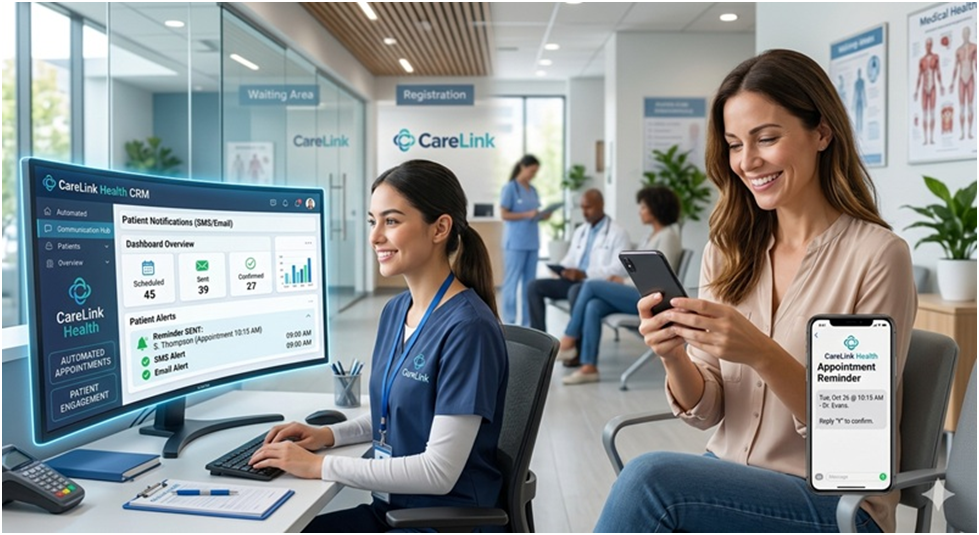
🔔 Automated Follow-Ups & Reminders
One of the biggest issues clinics face is missed appointments and delayed patient communication.
We solved this by creating automated:
- SMS reminders
- Email notifications
- Follow-up alerts
- Prescription reminders
- Appointment confirmations
As a result, patient engagement increased significantly.
💳 Faster Billing & Reporting
Manual billing was causing delays and errors.
We built an automated billing module that:
- Generated invoices instantly
- Managed payment records
- Created financial reports automatically
- Reduced accounting errors
- Improved operational transparency
Clinic administrators could now monitor performance in real-time.
🔒 Secure & Scalable Healthcare Infrastructure
Healthcare systems require strong security and compliance standards.
We developed the platform with:
- Secure cloud architecture
- Encrypted patient data
- Role-based access control
- Scalable infrastructure
- Backup and recovery systems
This ensured both security and future scalability as the clinic expanded.
Technology Stack We Used
Our development team used modern technologies to build a fast, scalable, and secure healthcare solution:
- AI-Based Workflow Automation
- Cloud Infrastructure
- Advanced Database Management
- Real-Time Dashboard Systems
- Secure API Integrations
- Mobile-Friendly Interface
The system was designed for high performance and easy adoption by clinic staff.
The Results
After implementing the AI Patient Management System, the clinic experienced major operational improvements:
✅ Reduced manual administrative work
✅ Faster patient processing and billing
✅ Improved appointment management
✅ Better patient communication
✅ Reduced waiting time
✅ Increased staff productivity
✅ Enhanced patient satisfaction
✅ Scalable digital healthcare operations
The clinic saved countless hours every week while delivering faster and better patient care.
Why This Project Matters
Modern healthcare businesses need more than basic software. They need intelligent systems that automate operations, improve efficiency, and create better patient experiences.
This project demonstrates how AI-powered healthcare automation can transform traditional clinic management into a smart digital ecosystem.
Looking to Build a Custom Healthcare Solution?
Cor Advance Solutions specializes in building AI-powered healthcare software, automation systems, and scalable digital platforms for clinics, hospitals, and healthcare businesses.
Whether you need:
- AI Patient Management Software
- Clinic Automation Systems
- Healthcare CRM Solutions
- Medical Billing Platforms
- Appointment Booking Systems
- Custom Healthcare Applications
Our team can help you build a secure, scalable, and high-performance solution tailored to your business goals.
FAQ
What is an AI Patient Management System for clinics?
An AI Patient Management System is a smart healthcare software that automates clinic operations like appointments, patient records, billing, and follow-ups. It uses artificial intelligence to reduce manual work and improve accuracy in daily workflows. Clinics can manage all patient data from a single centralized dashboard. This system enhances efficiency, speed, and patient care quality. It is widely used in modern digital healthcare transformation.
How does an AI patient management system work in healthcare?
An AI patient management system works by integrating patient data, automation tools, and smart workflows into one platform. It schedules appointments, updates records, and sends automated reminders without manual effort. AI algorithms help optimize doctor availability and patient flow. It also analyzes data for better decision-making. This makes healthcare operations faster, smarter, and more reliable.
Why do clinics need AI-based management systems today?
Clinics need AI-based systems to handle increasing patient loads and reduce manual administrative work. Traditional systems are slow, error-prone, and time-consuming. AI helps improve efficiency by automating repetitive tasks like scheduling and billing. It also enhances patient experience through faster service. In today’s digital healthcare era, automation is essential for scalability and growth.
What problems does a patient management system solve?
A patient management system solves issues like missed appointments, manual record-keeping, billing errors, and slow patient processing. It centralizes all patient data for quick access by doctors and staff. The system reduces communication gaps between departments. It also improves accuracy and workflow speed. Overall, it eliminates inefficiencies in clinic operations.
How does AI improve clinic operations and workflow?
AI improves clinic operations by automating repetitive tasks such as scheduling, reminders, and data entry. It reduces human errors and speeds up daily workflows significantly. Doctors get instant access to patient history and reports. AI also helps optimize resource management and staff productivity. This leads to smoother and more efficient clinic operations.
How does healthcare automation improve patient care?
Healthcare automation improves patient care by reducing waiting time and ensuring faster service delivery. Patients receive timely reminders, updates, and follow-ups automatically. Doctors can access complete medical history instantly for accurate diagnosis. It reduces paperwork delays and improves communication. As a result, patients receive faster and more personalized treatment.
What challenges do clinics face without automation?
Without automation, clinics face issues like long waiting times, manual errors, and inefficient patient management. Staff spend too much time on repetitive administrative tasks. Data becomes scattered across multiple systems, causing confusion. Appointment scheduling becomes inaccurate and delayed. This reduces overall patient satisfaction and clinic productivity.
Why do clinics struggle with manual appointment scheduling?
Manual appointment scheduling often leads to double bookings, missed appointments, and time conflicts. Staff must handle calls and paperwork, which increases workload. It also lacks real-time updates on doctor availability. Patients may face delays or incorrect booking information. This creates inefficiency and frustration for both staff and patients.
How does manual billing affect healthcare operations?
Manual billing increases the risk of errors, delays, and missing payment records. It requires significant staff effort and slows down the overall workflow. Financial reporting becomes time-consuming and less accurate. Clinics may also face transparency issues in accounting. This directly impacts operational efficiency and revenue management.
What causes delays in patient registration at clinics?
Delays in patient registration occur due to manual data entry and paper-based systems. Staff must repeatedly collect and verify patient information. Lack of centralized databases slows down the process. High patient volume further increases waiting time. This creates congestion at reception and reduces operational efficiency.
How does long waiting time affect patient satisfaction?
Long waiting times negatively impact patient experience and trust in the clinic. Patients often feel frustrated and dissatisfied with slow service. It can also lead to missed appointments or patients leaving early. Overcrowding increases stress for both staff and patients. Ultimately, it reduces overall healthcare quality perception.
How does billing automation improve clinic efficiency?
Billing automation speeds up invoice generation and reduces manual errors significantly. It ensures accurate financial records and real-time payment tracking. Clinics can generate reports instantly without paperwork delays. Staff workload is reduced, allowing focus on patient care. This leads to faster, transparent, and more efficient financial operations.
How does automation reduce administrative tasks in clinics?
Automation reduces repetitive tasks like scheduling, record updates, billing, and reminders. It eliminates manual data entry and minimizes human errors. Staff can focus more on patient care instead of paperwork. Workflows become faster and more organized. This improves overall clinic productivity and operational efficiency.