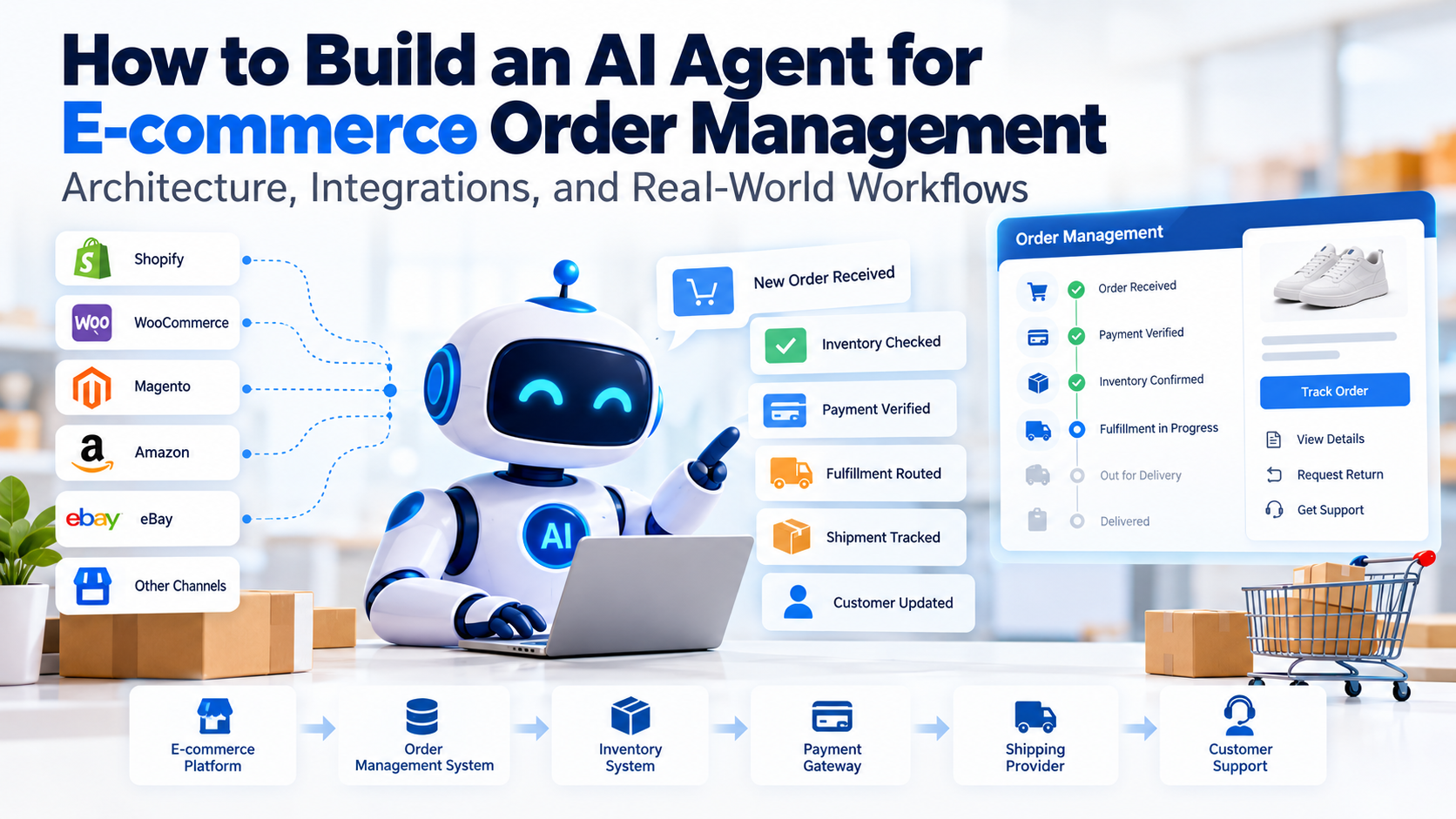
Quick Answer: The best AI agent development companies in the USA combine three things: production experience with agents that act on real business systems, clear governance for what an agent can and cannot do, and a delivery model that fits your team. Larger programs often need firms with enterprise delivery experience, while smaller teams often choose specialist AI engineering firms. This guide lists the seven US firms that hold a 5.0 rating on Clutch's AI development ranking, explains how we checked each one, and gives you a method to shortlist the right partner. For context on your options, see our AI agent development services.
AI agents are software systems that plan steps, use tools, and complete multi-step tasks, such as checking an order, updating a CRM record, or routing an insurance claim. Building one is different from building a chatbot. The agent needs access to your systems, clear permissions, testing for failure cases, and monitoring after launch. That is why choosing the right development partner matters more than choosing the right model. Businesses that want a broader view of agent design can also review our agentic AI services.
This article covers the market context, the companies to evaluate, the top US cities for AI talent, how to choose a partner, and the questions to ask before you sign. It also states clearly where the evidence is strong and where it is limited.
Key takeaways
- Adoption is rising fast on paper. Gartner's August 2025 prediction said 40% of enterprise applications would feature task-specific AI agents by the end of 2026, up from less than 5% in 2025. Forecasts like this are useful for planning, but they are not measures of what has already been deployed.
- Talent is concentrated. CBRE's August 2026 tech talent report reports nearly 99,000 AI-skilled workers in the Bay Area and roughly 68,000 in New York Metro, which ranks second.
- Ratings need checking. Directory ratings can rest on a small number of reviews, and a top rating does not always mean agent-specific work. Check each profile before you shortlist.
- Partner choice matters more than tool choice. The model is only one part of an agent. Integration, testing, and governance usually decide whether the project succeeds.
What AI agent development companies actually do
An AI agent development company typically helps with five kinds of work:
- Use-case design. Choosing a task where an agent adds value, such as order exception handling or lead qualification, and defining the boundaries.
- Architecture and integration. Connecting the agent to your CRM, ERP, ticketing, data warehouse, and communication tools through approved APIs.
- Agent logic. Designing how the agent plans steps, retrieves information (often with retrieval-augmented generation, or RAG), and calls tools.
- Guardrails and governance. Setting permissions, approval rules, audit logs, and fallback behavior.
- Operations. Monitoring performance, updating prompts and workflows, and managing model changes over time.
Some projects need a single agent that completes one task well. Others need multi-agent systems, where specialized agents hand work to each other under a coordinator. A good partner will recommend the simplest design that meets your goal.
How we selected the companies
We started with Clutch's AI development ranking, updated October 2026. The page shows each firm's overall rating, review count, and location. We kept only firms with a 5.0 rating, then checked each firm's reviews and profile for evidence of AI agent work.
We also checked two more sources you asked us to include: Clutch's AI agents ranking (October 2026) and Intellectyx's list of US agent firms. The Clutch agents page adds no new US firm at 5.0, because its only US 5.0 firm, Goji Labs, is already on the list. Intellectyx is rated 4.9 on Clutch, with no review count shown, and its list places Intellectyx first, so it does not meet the 5-star rule and is not included in the main list.
We tried to reach 20 US firms with a 5.0 rating and could not. The ranking pages we could read show seven US firms at 5.0. Two other 5.0 firms, Wizard Labs (Vancouver) and PowerGate Software (Hanoi), are outside the US and are left out. GoodFirms blocked our access, so no GoodFirms data is included.
Three limits apply:
- Partial view. The ranking page we could read shows 14 firms. Other firms further down the list may also hold 5.0 ratings, and we could not see them. This list is therefore complete only for the firms we could read.
- Sponsored placements. Clutch labels some listings on this page as "Sponsored," so position on the page does not indicate quality.
- GoodFirms unavailable. GoodFirms blocked our access, so this article includes no GoodFirms ratings.
Clutch's rating is also based on a small number of reviews for some firms. A 5.0 from 13 reviews is a strong signal, but it is not the same as a long track record. Treat each rating as one input, not a verdict.
Seven US firms with a 5.0 Clutch rating
Each profile below uses the same format: location, rating, pricing or size where listed, evidence of agent work, review themes, and what to verify before you shortlist.
1. Krazimo
- Location: New York, NY
- Clutch rating: 5.0 (13 reviews)
- Hourly rate: $100 to $149 (per Clutch profile)
- Agent-related evidence: A Clutch review describes custom AI agents built and integrated with a restoration company's existing tools. A February 2025 review from an education client describes an AI grading system that the client said reached over 85% accuracy on student image responses.
- Review themes: Clients praise quality and the firm's understanding of their industry. One reviewer advises giving precise, well-thought-out instructions to get the most from the engagement.
- Note: The firm's own profile says it prioritizes deterministic steps over unpredictable AI agents. That is a useful position to test in your first conversation.
- Verify: Ask for the restoration-platform and grading-system references, and how the agents are monitored after launch.
2. Goji Labs
- Location: Los Angeles, CA
- Clutch rating: 5.0 (91 reviews on the ranking page)
- Company size and minimum: 50 to 249 employees, founded 2014, minimum project size of $25,000
- Agent-related evidence: We did not find a review of an AI agent build. Reviews focus on UX and UI design, web, and mobile work. One review covers discovery and UX design for a consulting firm's AI app.
- Review themes: Clients praise design quality, attention to detail, and agile delivery. The main criticism is budget transparency. Some clients say projects exceeded initial estimates.
- Verify: Ask for agent-specific case studies, and ask how cost forecasts are built and updated.
3. Plego
- Location: Chicago, IL, with additional offices listed in Houston, Milwaukee, Dubai, Riyadh, and Karachi
- Clutch rating: 5.0 (32 reviews on the ranking page)
- Service mix: Clutch's profile shows 45% AI development, 30% custom software, and 25% web development
- Agent-related evidence: The reviews we retrieved did not describe an AI agent project. The AI claims rest on the firm's own service mix.
- Review themes: Clients praise responsiveness, project management, and on-time, on-budget delivery. Recent reviews mainly cover web maintenance and older custom development.
- Verify: Ask for a recent AI agent project, including the systems it connected and the results it measured.
4. GenAI.Labs USA
- Location: Los Angeles, CA (per the ranking page)
- Clutch rating: 5.0 (26 reviews on the ranking page)
- Positioning: The Clutch profile describes a USA-based AI consultancy offering AI-powered multi-agent systems.
- Agent-related evidence: The profile describes multi-agent work. We could not retrieve the full review text, so the specific agent projects are unverified.
- Review themes: Clients reportedly praise alignment with budgets, project management, and integration with existing systems.
- Verify: Confirm the rating and review count on the full Clutch profile. A DesignRush listing under a similar name shows a web-design review, which is unrelated to agents, so confirm you are looking at the same company.
5. Sketch Development
- Location: Webster Groves, MO (St. Louis area)
- Clutch rating: 5.0 (23 reviews on the ranking page)
- Self-description: A boutique custom software development and AI consulting firm
- Recognition: The firm announced a Summer 2026 Clutch Global Award for API development. This comes from a company press release, not from Clutch directly.
- Agent-related evidence: We did not find a review of an AI agent project. The award relates to API development.
- Verify: Ask for AI agent examples and the client references behind them.
6. Designli
- Location: Greenville, SC
- Clutch rating: 5.0 (83 reviews on the ranking page; 79 on Clutch's South Carolina listing)
- Company profile: 250 to 999 employees, $10,000+ minimum project size, $50 to $99 average hourly rate
- Service mix: Clutch lists 10% AI development, 60% mobile app development, and 20% custom software
- Agent-related evidence: We did not find a Clutch review of an AI agent build. Reviews praise prototyping, MVP delivery, and communication.
- Review themes: About 90% of reviews express satisfaction with turning client ideas into working prototypes. A DesignRush profile lists AI development as a top service, with reviews mainly about AI UI and UX design.
- Verify: Ask for agent-specific case studies, and confirm how much of the team works on AI rather than mobile apps.
7. Bolder Apps
- Location: Miami, FL (founded 2019, per third-party profiles)
- Clutch rating: 5.0 (6 reviews on the ranking page)
- Profile check: We could not open the firm's Clutch profile, so the rating comes only from the ranking page. Verify it there before you rely on it.
- AI positioning: DesignRush named the firm a Top AI App Development Company in its 2026 rankings. The firm also describes itself as AI-native and says it completed more than 20 AI-augmented app projects in the past year. These are company and directory claims, not client reviews.
- Agent-related evidence: We did not find a review of an AI agent project.
- Verify: Ask for a Clutch profile link, two agent references, and the integration and monitoring approach for one completed project.
Other 5.0 firms on Clutch's AI agents ranking
These firms hold a 5.0 rating on Clutch's AI agents ranking, but they are based outside the US. We list them so you can compare, not as US options.
| Company | Location | Clutch rating (reviews) | Note |
|---|---|---|---|
| Trigma | India | 5.0 (139) | Largest review count among 5.0 firms on the page |
| WPWeb Infotech | Ahmedabad, India | 5.0 (87) | Agent work listed on the ranking page |
| Valletta.Software: AI-Care | Malta | 5.0 (53) | Listed on the ranking page |
| PowerGate Software | Hanoi, Vietnam | 5.0 (41) | Also appears on the AI development ranking |
| Leanware | Bogotá, Colombia | 5.0 (26) | Listed on the ranking page |
| Wise Monks | Vilnius, Lithuania | 5.0 (4) | Small review base |
The ranking page was truncated, so other 5.0 firms may appear further down.
Summary table
| Company | Location | Clutch rating (reviews) | Agent-specific evidence found | Next step |
|---|---|---|---|---|
| Krazimo | New York, NY | 5.0 (13) | Yes: custom agents and an AI grading system, from client reviews | Check references and monitoring |
| Goji Labs | Los Angeles, CA | 5.0 (91) | No, mostly UX, web, and mobile | Ask for agent case studies |
| Plego | Chicago, IL | 5.0 (32) | No agent review found | Ask for a recent agent project |
| GenAI.Labs USA | Los Angeles, CA | 5.0 (26) | Profile describes multi-agent systems; reviews not retrieved | Confirm on the full profile |
| Sketch Development | Webster Groves, MO | 5.0 (23) | No agent review found | Ask for AI agent examples |
| Designli | Greenville, SC | 5.0 (83) | No agent review found; reviews focus on prototypes and MVPs | Ask for agent case studies |
| Bolder Apps | Miami, FL | 5.0 (6) | No agent review found; AI app claims from directory and company | Confirm the Clutch profile and ask for references |
What this table means: Only Krazimo has agent-specific evidence in the reviews we could read. The other six are strong on ratings and delivery, but you should confirm agent experience before you rely on them for an agent project.
Top 5 US cities for AI talent
Company headquarters are not always stated in the sources, so we do not assign each company to a city in this section. Instead, we describe the talent markets where these firms hire and where many AI agent projects are staffed. The order follows the consensus of the sources we reviewed, which varies by method.
1. San Francisco Bay Area
The Bay Area is the largest AI talent hub in North America. CBRE's August 2026 report says it added more than 20,000 AI jobs over the past year and reports nearly 99,000 AI-skilled workers, even as the wider tech workforce shrank. Teams here often have deep experience in model evaluation and production systems. Expect higher rates for senior talent.
2. New York Metro
New York ranks second, with roughly 68,000 AI-skilled workers according to CBRE. Its large financial and professional-services sectors make it a common market for agents that handle regulated workflows. Look for firms with compliance experience in the sectors you serve.
3. Seattle
Seattle is listed among the national leaders for engineering talent, with a high concentration of experienced software engineers. Its strengths are cloud infrastructure and large-scale systems, which matter for agents that run across many services.
4. Washington, DC
The Washington area stands out for research-oriented roles and government-linked work. One ranking notes that it employs more computer and information research scientists than any other metro it reviewed. Agent projects here often involve strict security and data-handling rules.
5. Boston
Boston is listed as a national leader, and one analysis places it in the top five for AI hiring volume. Its research institutions make it a practical hub for teams that need advanced technical talent. Agents that touch patient or student data still need strict privacy controls and clear review steps.
Also worth watching: Austin, which one ranking places in an established-hub tier and notes is priced below the national average for tech talent.
Caveat: The city rankings come from secondary sources that combine different data. Treat the ordering as directional. Verify talent figures against the original reports before using them in a planning document.
How to choose the right partner
Start with your use case, not the vendor list. Write down the task the agent will perform, the systems it must touch, the actions it can take alone, and the actions that need approval. Then score each shortlisted company against the criteria below.
1. Production experience. Ask for agents in live use, the number of tasks they handle, and how the client measures results. A demo that works once is not the same as an agent that runs every day.
2. Integration skills. Confirm experience with your specific systems. Ask how the agent authenticates, what permissions it gets, and how changes are tested before release.
3. Governance and safety. Ask how the team sets approval thresholds, logs actions, handles failures, and prevents duplicate actions such as double refunds. Ask for their approach to data privacy and access control.
4. Evaluation method. Ask how they measure agent quality before launch and after. Strong partners define acceptance criteria, build test sets from real cases, and monitor errors over time.
5. Team and delivery model. Confirm who will work on your project, where they are located, and how they handle time-zone overlap with your team. Ask whether the same engineers stay through launch and support.
6. Post-launch support. Agents need maintenance as systems and policies change. Ask for the support model, response times, and the cost of ongoing changes.
Red flags
- No references you can contact
- Only demos, with no production examples
- A quote that leaves out integration, testing, and monitoring
- No clear answer on what the agent cannot do
- Unclear data storage locations or access rules
- Promises of fixed results without a baseline
Build, buy, or configure?
Not every project needs a custom build. Some business teams can configure agents inside platforms they already use. One source in our review notes that teams should hire a development company when agents must act on their own systems and data, and consider platform-based tools when the work already lives in that platform.
A simple way to decide:
- Configure when the workflow is standard and sits mostly inside one platform.
- Build when the agent must connect several systems, follow custom rules, or handle sensitive data.
- Combine when a platform handles the front end and a custom layer handles the business logic.
What agent projects typically cost and how long they take
Costs depend on the number of systems, the complexity of the decisions, the level of testing, and the support model. A narrow, single-workflow agent costs far less than a multi-agent system that touches several departments. Ask every vendor for a quote that separates discovery, build, integration, testing, launch, and ongoing support, so you can compare proposals on the same basis.
Timelines follow the same logic. A focused pilot with one workflow and a small number of integrations is faster than a program that spans several systems and departments. Start with the pilot, measure it, and expand only after the results hold.
Industry use cases for AI agents
AI agents fit best where work is repetitive, rule-based, and spread across several systems. These examples are typical starting points, not results from any specific company:
- Banking and insurance: claims intake, document checks, and policy renewal reminders, with human approval for payouts and exceptions.
- E-commerce and retail: order exception handling, return requests, and inventory alerts that connect storefront and warehouse data.
- Healthcare operations: appointment scheduling, prior authorization paperwork, and billing follow-up, kept away from clinical decisions.
- Logistics and supply chain: shipment delay detection, supplier follow-ups, and exception routing.
- Real estate: lead qualification, viewing bookings, and document collection for transactions.
In each case, the strongest projects start with one workflow, define what the agent cannot do, and measure results against a baseline before expanding.
Security, compliance, and data governance
An agent that can act on your systems is also a security surface. Plan for it from the first design session. Give the agent its own identity with the least access it needs, and use separate credentials for each system it touches. Log every action with enough detail to explain what happened and why.
Data governance matters just as much. Decide which data the agent can read, which it can store, and how long transcripts and logs are kept. Ask vendors where data is processed, whether it is used to train shared models, and how deletion requests are handled. For regulated sectors, confirm the vendor can support the audits and documentation your regulator expects.
The NIST AI Risk Management Framework is a useful reference for structuring these controls, because it covers governance, mapping, measurement, and management of AI risk across the system lifecycle.
Common mistakes to avoid
- Choosing by logo or ranking alone. Many rankings are written by the firms they rank. Use them as a starting point.
- Automating a broken process. An agent will not fix a workflow that is unclear or inconsistent. Clean the process first.
- Giving too much access. Least-privilege access limits the damage from a mistake.
- Skipping failure testing. Test timeouts, missing data, duplicate events, and conflicting records before launch.
- Measuring only activity. Track resolution time, error rates, and escalations, not only the number of tasks completed.
- No owner after launch. Assign someone to review agent behavior every week.
Questions to ask every shortlisted company
- Can you show a live agent in production, and a reference client I can call?
- Which of our systems have you integrated before, and how did you handle permissions?
- What actions can the agent take alone, and which ones need human approval?
- How do you test an agent before launch, and how do you monitor it afterward?
- Where is our data stored, who can access it, and how long is it kept?
- Who will work on our project, where are they located, and how do you handle time zones?
- What does post-launch support include, and what does it cost?
- What results should we expect in the first 60 days, and how will you measure them?
Engagement models and what they mean for you
Vendors price agent projects in several ways. Each model shifts risk between you and the firm, so understand the trade-off before you sign.
- Fixed price. Works when scope is clear and stable, such as one well-defined workflow with agreed systems. Risk: changes after kickoff are expensive, and vendors may cut corners on testing to protect margin.
- Time and materials. Works when requirements will change as you learn. Risk: total cost is harder to predict, so set a budget cap and review progress every two weeks.
- Dedicated team. Works for ongoing programs with several agents. Risk: you need strong internal ownership to direct the team.
- Outcome-based pricing. Some firms tie fees to measured results, such as resolution rates. This only works when the metric is clear, measured the same way by both sides, and not easily gamed.
For a first project, many buyers start with a short discovery phase on a fixed fee, then move to time and materials for the build. That structure gives you a real scope before you commit to a full budget.
A 90-day plan for your first AI agent
A clear plan keeps the first project focused. The timeline below is a pattern, not a promise, because actual timing depends on systems, data access, and approvals.
Days 1 to 30: Discover and design. Pick one workflow with clear inputs, outputs, and volume. Map the current process step by step, including the exceptions that cause the most work. Define the agent's allowed actions, its approval points, and the cases it must hand off. Agree on the baseline metrics you will use to judge success.
Days 31 to 60: Build and test. Connect the agent to the systems it needs, starting with read-only access. Build test cases from real historical examples, including edge cases and failures. Run the agent in shadow mode, where it recommends actions and a person decides, and compare its output with the human decision.
Days 61 to 90: Pilot and decide. Turn on limited live operation for a small share of cases. Review every failed or escalated case each week and fix the cause. At day 90, decide whether to expand, adjust, or stop, based on the baseline comparison you agreed in the first month.
How to measure the return on an AI agent
Return on an agent comes from fewer manual hours, faster resolution, fewer errors, and better use of skilled staff. Measure each one against the baseline you set before launch.
- Cycle time: how long a case takes from start to finish
- First-pass accuracy: how often the agent's action is correct without correction
- Escalation rate: how often a person must take over, and why
- Rework rate: how often a completed case has to be reopened
- Cost per case: the fully loaded cost of handling each case, including platform, build, and support costs
Be careful with the metric you choose. A high completion rate is not useful if the agent completes cases incorrectly or pushes problems to customers. Pair volume metrics with quality metrics, and review a sample of completed cases by hand every week.
How AI agents fit with your team
Agents change jobs more than they remove them. Plan the new roles before launch so people know what they own:
- Process owner: decides what the agent should do and approves changes to its rules
- Reviewer: checks a sample of agent actions and records errors
- Exception handler: takes over the cases the agent escalates, with the summary it provides
- Technical owner: manages access, monitoring, and vendor coordination
Staff who handle exceptions usually see the hardest cases, so they need training on the agent's logic and on how to correct it. Treat their feedback as data. Their corrections are often the fastest way to improve the agent.
Key terms to know
- AI agent: software that plans steps, uses tools, and completes tasks toward a goal, with some level of independence.
- Tool use: the agent's ability to call approved functions, such as looking up an order or creating a ticket.
- Retrieval-augmented generation (RAG): a method where the agent looks up relevant documents before it answers, so its responses rely on your own content.
- Guardrails: rules that limit what an agent can do, such as approval thresholds, blocked actions, and required checks.
- Human-in-the-loop: a design where a person reviews or approves certain actions before they are completed.
- Handoff: the transfer of a case from the agent to a person, along with a summary of what happened.
- Multi-agent system: a design where several specialized agents work together under a coordinator.
- Shadow mode: a testing phase where the agent makes recommendations that people review but do not execute automatically.
Frequently asked questions
Who are the top AI agent development companies in the USA? On Clutch's October 2026 AI development ranking, seven US firms hold a 5.0 rating: Krazimo, Goji Labs, Plego, GenAI.Labs USA, Sketch Development, Designli, and Bolder Apps. Ratings for some firms rest on small review counts, and not all of them show agent-specific work. Check each profile, and ask for agent case studies and references. Shortlist by checking production references, integration experience, and governance practices.Shortlist by checking production references, integration experience, and governance practices.
How much does it cost to build an AI agent in the USA? Cost depends on the number of systems, the complexity of the decisions, testing needs, and ongoing support. A narrow single-workflow agent costs far less than a multi-agent program that spans several departments. Ask each firm for a quote that separates discovery, build, integration, testing, launch, and support, so you can compare proposals on the same basis. Be cautious about any quote that leaves out integration and monitoring, because those are often the largest costs.
What is the difference between an AI agent and a chatbot? A chatbot mainly answers questions in a conversation. An AI agent plans steps, uses tools, and completes tasks across systems, such as checking an order and opening a support ticket. Because agents can take actions, they need stronger permissions, approval rules, and monitoring. That extra responsibility is why agent projects need more careful design than chatbot projects.
Which US city has the most AI talent? CBRE's August 2026 report identifies the San Francisco Bay Area as North America's largest AI talent hub, with nearly 99,000 AI-skilled workers. New York Metro ranks second with roughly 68,000. Other cities, including Seattle, Washington DC, and Boston, also have strong talent pools, though rankings vary by method.
Should I build a custom AI agent or use a platform? Use a platform when the workflow is standard and sits inside one system you already use. Build custom when the agent must connect several systems, follow custom business rules, or handle sensitive data. Many projects combine both, using a platform for the interface and a custom layer for business logic. The right answer depends on your systems and how much control you need over the agent's decisions.
How do I measure whether an AI agent is working? Set a baseline before launch, then track resolution time, error rate, escalation rate, and cost per task. Review failed cases every week. A useful agent improves these measures against the baseline, not only the number of tasks it completes.
Disclosure
This article is published by Cor Advance Solutions, which offers AI agent development services. The seven firms above come from Clutch's public ranking and review summaries, which include sponsored placements. We have not tested these firms. Use the questions above to compare any partner, including us.