
Executive Summary
Managing patient flow efficiently is one of the biggest challenges for modern hospitals. A leading multi-specialty hospital was facing increasing patient wait times, overcrowded waiting areas, scheduling inefficiencies, and declining patient satisfaction scores. These operational issues were affecting both the patient experience and staff productivity.
To address these challenges, the hospital partnered with Cor Advance Solutions to implement an AI-powered Patient Flow Management System. The solution was designed to streamline healthcare operations, optimize patient movement, and improve overall hospital efficiency. By leveraging artificial intelligence, the platform optimized appointment scheduling, automated patient routing, improved resource allocation, and provided real-time operational insights for faster decision-making.
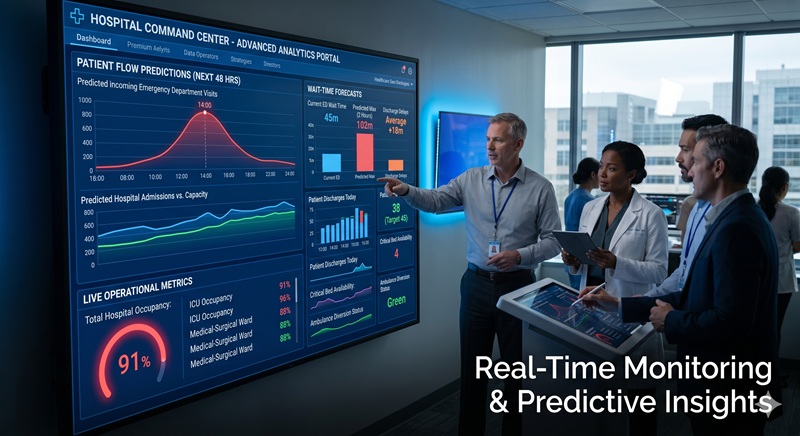
The healthcare technology experts at Cor Advance Solutions worked closely with the hospital to develop a customized AI-powered healthcare solution that integrated seamlessly with existing systems and workflows. This enabled healthcare providers and administrators to gain greater visibility into patient demand, staff availability, and department capacity.
With the help of AI-driven analytics and automation, the hospital was able to make faster, data-driven decisions, reduce operational bottlenecks, and improve patient flow across departments. Within a few months of implementation, the organization achieved significant improvements in operational performance, patient satisfaction, and resource utilization.
The AI-powered patient flow management solution developed by Cor Advance Solutions helped create a smoother, faster, and more efficient patient journey from check-in to discharge while establishing a scalable foundation for future healthcare growth.
Key Results
The implementation of the AI-powered patient flow management solution delivered measurable results across the hospital:
- Reduced average patient wait times by 42%
- Improved appointment scheduling efficiency by 31%
- Increased physician utilization by 27%
- Reduced patient bottlenecks across departments by 35%
- Increased patient satisfaction scores by 24%
- Improved staff productivity and overall healthcare workflow efficiency
These results demonstrate how AI-powered healthcare solutions from Cor Advance Solutions can help hospitals reduce wait times, improve patient satisfaction, optimize resource utilization, and deliver a better patient care experience while enhancing operational efficiency.
Client Overview
About the Hospital
The client is a leading multi-specialty hospital that provides a wide range of healthcare services across multiple facilities. With thousands of patients visiting each year, the hospital is committed to delivering high-quality medical care while maintaining an excellent patient experience.
As patient volumes continued to grow, the hospital faced increasing pressure to manage appointments, reduce delays, and improve overall healthcare operations. The organization employed hundreds of doctors, nurses, and healthcare professionals who worked together to provide efficient and personalized care.
Organization Profile
- Industry: Healthcare
- Type: Multi-Specialty Hospital
- Staff: XXX+ Doctors and Healthcare Professionals
The hospital had already invested in modern healthcare technology, but it needed a smarter solution to improve patient flow management, optimize resources, and enhance operational efficiency across departments.
Business Goals
To improve operational efficiency and deliver a better patient experience, the hospital set several key business goals before implementing the AI-powered patient flow management solution.
1. Improve Patient Experience
The hospital wanted to provide a smoother and more convenient healthcare experience. Reducing delays and improving service quality were essential to increasing patient satisfaction and trust.
2. Reduce Patient Wait Times
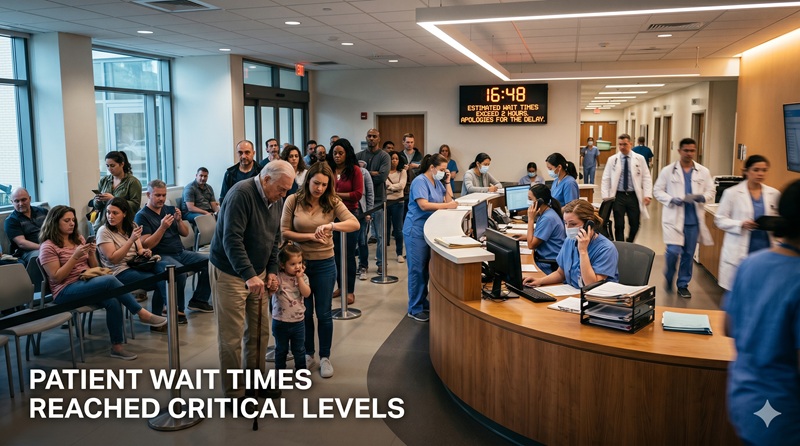
Long waiting periods were creating frustration among patients and affecting overall service quality. The hospital aimed to reduce wait times and ensure patients received care more quickly.
3. Optimize Appointment Scheduling
The organization wanted to improve appointment scheduling by minimizing conflicts, reducing gaps in physician schedules, and ensuring better patient distribution throughout the day.
4. Enhance Healthcare Staff Efficiency
The hospital sought to streamline daily operations and reduce administrative workloads, allowing doctors, nurses, and healthcare professionals to focus more on patient care.
5. Improve Resource Utilization
Better management of hospital resources, including staff, examination rooms, and medical equipment, was a priority to maximize operational efficiency and reduce bottlenecks.
6. Increase Patient Satisfaction and Retention
By delivering faster and more efficient healthcare services, the hospital aimed to improve patient satisfaction scores, strengthen patient loyalty, and increase retention rates.
7. Modernize Healthcare Operations
The hospital wanted to adopt AI-powered healthcare technology to support data-driven decision-making, improve patient flow management, and create a more efficient healthcare system.
8. Build a Scalable Healthcare Environment
As patient demand continued to grow, the organization needed a scalable solution that could support future expansion while maintaining high standards of care and operational performance.
The Challenge
Growing Operational Bottlenecks
As the hospital continued to serve more patients each year, managing daily operations became increasingly difficult. Higher patient volumes placed additional pressure on staff, scheduling systems, and hospital resources. As a result, several operational bottlenecks began affecting the quality of care and the overall patient experience.
The hospital needed a more efficient way to manage patient flow, optimize healthcare operations, and reduce delays across departments.
Long Patient Wait Times
One of the biggest challenges was excessive patient wait times. Many patients experienced significant delays before receiving care, creating frustration and reducing overall satisfaction.
Common issues included:
- Patients waiting 45 to 90 minutes before meeting with a physician
- Long delays for diagnostic tests and medical procedures
- Slow admission and discharge processes
- Overcrowded waiting areas during peak hours
These delays negatively impacted both patient experience and hospital efficiency.
Inefficient Appointment Scheduling
The hospital’s existing scheduling process struggled to keep up with growing demand. Without advanced scheduling tools, managing appointments became increasingly complex.
Key scheduling challenges included:
- Double-booked appointments
- Uneven distribution of patient visits
- Underutilized physician schedules
- High patient no-show rates
- Scheduling gaps that reduced productivity
These issues made it difficult to optimize appointment scheduling and maximize available resources.
Lack of Real-Time Visibility
Hospital administrators had limited visibility into daily patient movement and resource utilization. Without real-time insights, it was difficult to identify potential bottlenecks before they became major problems.
The organization lacked:
- Real-time patient tracking
- Live department performance monitoring
- Resource availability visibility
- Predictive patient demand forecasting
- Early congestion alerts
This lack of operational visibility often resulted in delayed decision-making and inefficient resource allocation.
Declining Patient Satisfaction
The combined impact of long wait times, scheduling inefficiencies, and operational delays began affecting patient satisfaction levels.
As challenges increased, the hospital experienced:
- Lower patient satisfaction scores
- More patient complaints
- Reduced confidence in service quality
- Decreased patient loyalty
- Fewer referrals and repeat visits
Hospital leadership recognized that improving patient flow management and healthcare workflow efficiency was essential to delivering a better patient experience and supporting future growth.
To address these challenges, the organization decided to invest in an AI-powered patient flow management solution that could streamline operations, improve scheduling, and enhance patient satisfaction across the entire healthcare system.
Solution: AI-Powered Patient Flow Management System
Technology Strategy
To overcome growing operational challenges, the hospital partnered with Cor Advance Solutions to implement an advanced AI-powered Patient Flow Management System. The solution was specifically designed to improve patient movement, optimize healthcare operations, and enhance the overall patient experience.
The healthcare technology team at Cor Advance Solutions developed and integrated the solution with the hospital’s existing systems, enabling seamless data flow across departments. This allowed healthcare staff and administrators to access real-time insights, automate workflows, and make faster, data-driven decisions.
By combining artificial intelligence, predictive analytics, machine learning, and real-time monitoring, Cor Advance Solutions helped the hospital reduce patient wait times, improve appointment scheduling efficiency, optimize resource utilization, and enhance operational performance across the organization.
Key Features Implemented
AI Appointment Scheduling
One of the core components developed by Cor Advance Solutions was an intelligent AI-powered appointment scheduling system designed to streamline patient bookings and maximize physician availability.
The platform automatically analyzed appointment demand, physician schedules, patient preferences, and historical booking patterns to create more efficient schedules.
Key Capabilities
- Intelligent appointment allocation
- Automated schedule optimization
- Patient no-show prediction models
- Dynamic rescheduling recommendations
- Balanced physician workloads
As a result, the hospital improved scheduling efficiency, reduced appointment conflicts, and provided patients with faster access to healthcare services.
Real-Time Patient Tracking
The AI-powered healthcare solution from Cor Advance Solutions provided complete visibility into the patient journey, from registration to discharge.
Hospital staff could monitor patient movement in real time and quickly identify delays before they developed into major operational bottlenecks.
Features Included
- Live patient journey monitoring
- Real-time queue management dashboards
- Department congestion alerts
- Waiting time tracking
- Patient flow monitoring across departments
This real-time visibility helped reduce overcrowding, improve patient flow management, and enhance the overall patient experience.
Predictive Analytics Engine
To support proactive decision-making, Cor Advance Solutions implemented a powerful predictive analytics engine that transformed historical and real-time data into actionable insights.
Using advanced AI algorithms, the platform analyzed:
- Historical patient data
- Seasonal demand patterns
- Physician availability
- Patient arrival trends
- Resource utilization patterns
These insights enabled hospital administrators to forecast demand, improve planning, and proactively manage patient flow across the facility.
Smart Resource Allocation
Efficient resource utilization is essential for delivering high-quality healthcare services. The AI platform developed by Cor Advance Solutions continuously monitored hospital operations and automatically optimized resource allocation based on real-time patient demand.
The System Helped Manage
- Examination room availability
- Medical equipment utilization
- Healthcare staff scheduling
- Department capacity planning
- Resource distribution across facilities
This intelligent approach ensured that hospital resources were utilized more effectively while minimizing delays and operational bottlenecks.
Executive Dashboard
To enable data-driven healthcare management, Cor Advance Solutions developed a comprehensive executive dashboard that provided hospital leadership with a real-time view of operational performance.
Hospital administrators gained instant access to:
- Patient wait time metrics
- Department performance data
- Resource utilization insights
- Patient satisfaction trends
- Operational efficiency reports
With greater visibility into hospital operations, leadership teams could quickly identify issues, monitor key performance indicators, and make informed decisions to improve patient care and hospital efficiency.
Solution Impact
By implementing the AI-powered Patient Flow Management System developed by Cor Advance Solutions, the hospital successfully transformed its healthcare workflows and operational processes.
The solution helped the organization:
- Reduce patient wait times
- Improve patient satisfaction
- Optimize appointment scheduling
- Increase healthcare staff productivity
- Improve resource utilization
- Enhance operational visibility
- Create a scalable healthcare infrastructure
This project demonstrates how Cor Advance Solutions helps healthcare organizations leverage AI-powered healthcare solutions to improve patient outcomes, streamline operations, and build a more efficient and future-ready healthcare environment.
Implementation Process
Successfully implementing an AI-powered Patient Flow Management System required a structured and phased approach. The hospital worked closely with healthcare technology experts to ensure the solution aligned with existing workflows, operational goals, and patient care standards.
The implementation process was completed in five key phases.
Phase 1: Discovery & Assessment
The project began with a detailed assessment of the hospital’s existing operations. The goal was to understand current challenges, identify inefficiencies, and establish clear improvement opportunities.
Key activities included:
- Comprehensive workflow analysis
- Stakeholder interviews with hospital leadership and staff
- Data collection from multiple departments
- Identification of operational bottlenecks
- Evaluation of patient flow patterns and wait times
This phase provided valuable insights into the areas that needed the most attention and helped define the project’s success metrics.
Phase 2: AI Model Development
Once the assessment was complete, the team developed and trained the AI models that would power the patient flow management solution.
Key tasks included:
- Historical patient data analysis
- Predictive model development and training
- Patient flow simulations
- Demand forecasting model creation
- System architecture planning
The AI models were designed to predict patient demand, optimize scheduling, and improve resource allocation across the hospital.
Phase 3: System Integration
To ensure seamless operation, the new AI-powered healthcare solution was integrated with the hospital’s existing technology infrastructure.
The platform was connected with:
- Hospital Information System (HIS)
- Electronic Health Records (EHR)
- Appointment Scheduling Software
- Patient Communication Systems
- Internal operational databases
This integration enabled real-time data sharing and provided a unified view of hospital operations.
Phase 4: Pilot Deployment
Before a full rollout, the hospital launched a pilot program to test the solution in selected departments. This allowed the team to evaluate performance, gather feedback, and make necessary adjustments.
The pilot was conducted in:
- Outpatient Department
- Diagnostic Center
- Emergency Services
The pilot phase demonstrated significant improvements in patient flow, scheduling efficiency, and operational visibility, giving hospital leadership confidence to move forward with full deployment.
Phase 5: Full-Scale Rollout
Following the successful pilot, the AI-powered patient flow management system was deployed across the entire hospital network.
Key activities included:
- Hospital-wide implementation
- Staff onboarding and training
- Performance monitoring and reporting
- Continuous workflow optimization
- Ongoing AI model refinement
The hospital also established a continuous improvement strategy to ensure the solution could adapt to changing patient volumes and operational needs.
By following this phased implementation approach, the hospital successfully adopted AI-powered healthcare technology with minimal disruption, enabling faster patient flow, improved operational efficiency, and better patient satisfaction across all departments.
Results & Outcomes
Key Performance Improvements
The implementation of the AI-powered Patient Flow Management System delivered measurable improvements across hospital operations. By optimizing patient flow, improving appointment scheduling, and providing real-time operational insights, the hospital achieved significant gains in efficiency, productivity, and patient satisfaction.

The results clearly demonstrated the impact of AI in healthcare and how intelligent automation can improve both patient care and operational performance.
| Metric | Before AI | After AI | Improvement |
| Average Patient Wait Time | 67 Minutes | 39 Minutes | 42% Reduction |
| Scheduling Efficiency | Baseline | +31% | Improvement |
| Physician Utilization | Baseline | +27% | Improvement |
| Patient Satisfaction Score | 74% | 92% | 24% Increase |
| Department Bottlenecks | High | Low | 35% Reduction |
| Staff Productivity | Baseline | +22% | Improvement |
42% Reduction in Patient Wait Times
One of the most significant outcomes was the reduction in average patient wait times. The hospital decreased wait times from 67 minutes to just 39 minutes, creating a faster and more efficient patient experience.
Shorter wait times helped reduce patient frustration, improve service quality, and increase overall satisfaction.
31% Improvement in Scheduling Efficiency
The AI-powered appointment scheduling system improved scheduling accuracy and reduced conflicts across departments. Better appointment allocation helped balance patient demand and physician availability, leading to a 31% increase in scheduling efficiency.
27% Increase in Physician Utilization
With improved patient flow management and smarter scheduling, physicians were able to spend more time providing care and less time dealing with scheduling gaps or operational delays. This resulted in a 27% increase in physician utilization.
24% Increase in Patient Satisfaction
Patient satisfaction scores increased from 74% to 92% after implementation. Faster service, reduced waiting times, and a smoother patient journey contributed directly to higher satisfaction levels and a better overall healthcare experience.
35% Reduction in Department Bottlenecks
Real-time patient tracking and predictive analytics helped hospital administrators identify and address bottlenecks before they impacted operations. As a result, congestion across departments was reduced by 35%, improving workflow efficiency and patient movement.
22% Improvement in Staff Productivity
Healthcare staff benefited from automated workflows, better resource allocation, and improved operational visibility. This allowed teams to work more efficiently, leading to a 22% increase in staff productivity.
Business Impact
The implementation of the AI-powered Patient Flow Management System delivered benefits that extended far beyond operational improvements. By reducing patient wait times, optimizing healthcare workflows, and improving resource utilization, the hospital achieved meaningful business outcomes that strengthened its overall performance and reputation.
Improved Patient Experience
One of the biggest impacts was the improvement in the patient experience. Patients received faster care, spent less time waiting, and experienced a more organized healthcare journey.
Key benefits included:
- Faster consultations and treatment access
- Reduced patient frustration caused by long wait times
- Better communication throughout the care process
- Improved patient confidence and trust in hospital services
- A smoother and more efficient patient journey
As a result, patient satisfaction increased significantly, helping the hospital build stronger relationships with its patients.
Increased Operational Efficiency
The AI-powered healthcare solution helped hospital administrators gain greater control over daily operations. With real-time visibility and data-driven insights, teams were able to make faster and more informed decisions.
Key operational improvements included:
- Better resource planning and allocation
- Reduced idle capacity across departments
- Improved workflow automation
- More efficient staff scheduling
- Better management of patient flow and hospital resources
These improvements helped create a more productive healthcare environment while reducing operational bottlenecks.
Enhanced Revenue Opportunities
By improving patient flow management and overall service quality, the hospital also unlocked new growth opportunities.
Key business benefits included:
- Higher patient retention rates
- Increased appointment capacity
- Improved hospital reputation
- More patient referrals and recommendations
- Greater ability to serve growing patient demand
With shorter wait times and higher patient satisfaction, the hospital was able to attract and retain more patients while maximizing the value of its existing resources.
Overall Business Value
The AI-powered patient flow management solution not only improved hospital efficiency but also delivered measurable business value. By combining healthcare automation, predictive analytics, and intelligent resource management, the hospital strengthened patient loyalty, improved operational performance, and positioned itself for long-term growth.
This project demonstrates how AI in healthcare can help organizations improve patient outcomes, increase efficiency, and create a sustainable competitive advantage in today’s rapidly evolving healthcare industry.
Client Testimonial
“The AI-powered patient flow management solution developed by Cor Advance Solutions transformed our hospital operations. We significantly reduced patient wait times, improved patient satisfaction, and gained valuable operational insights that help us deliver better healthcare every day. The team’s expertise in AI-powered healthcare solutions and patient flow management played a key role in improving our efficiency and enhancing the overall patient experience.”
— Hospital Operations Director
Key Takeaways
The success of this AI-powered patient flow management project shows how healthcare organizations can improve patient care, reduce hospital wait times, and increase operational efficiency through the effective use of artificial intelligence and predictive analytics.
What Made This Project Successful?
Several key factors contributed to the success of the implementation and helped the hospital achieve its patient flow optimization goals.
1. AI-Driven Decision-Making
The hospital used AI-powered healthcare technology to analyze patient demand, scheduling patterns, and resource utilization in real time. This enabled faster, smarter, and more accurate decision-making across departments.
2. Real-Time Operational Visibility
Hospital administrators gained complete visibility into patient movement, department performance, and resource availability. Real-time insights allowed teams to identify issues quickly and respond before delays affected patient care.
3. Predictive Patient Demand Forecasting
Using predictive analytics, the hospital was able to forecast patient volumes, anticipate peak demand periods, and allocate resources more effectively. This proactive approach improved planning and reduced operational disruptions.
4. Seamless System Integration
The AI-powered patient flow management system integrated smoothly with existing hospital platforms, including Electronic Health Records (EHR), Hospital Information Systems (HIS), and appointment scheduling software. This ensured a connected and efficient healthcare ecosystem.
5. Continuous Optimization
The hospital adopted a continuous improvement strategy to monitor performance, refine workflows, and enhance AI models over time. This helped sustain long-term operational improvements and patient satisfaction gains.
Lessons Learned
The project also provided valuable insights that can help other healthcare organizations successfully implement AI-powered healthcare solutions.
1. High-Quality Healthcare Data Is Essential
The accuracy of AI models depends on the quality of data. Clean, consistent, and reliable healthcare data helped improve forecasting, patient flow management, and operational decision-making.
2. Staff Adoption Is Critical
Successful implementation required active participation from doctors, nurses, and administrative teams. Comprehensive training and user adoption played a major role in achieving project goals.
3. Predictive Analytics Improves Planning
Predictive analytics allowed the hospital to anticipate patient demand and resource requirements before challenges occurred. This resulted in better planning and improved operational efficiency.
4. Real-Time Visibility Helps Eliminate Bottlenecks
Access to real-time operational data enabled hospital leaders to quickly identify bottlenecks and take corrective action. This significantly improved patient flow and reduced wait times.
Key Success Factors at a Glance
✔ AI-powered decision-making
✔ Real-time patient flow visibility
✔ Predictive demand forecasting
✔ Seamless healthcare system integration
✔ Continuous workflow optimization
✔ Strong staff adoption and training
✔ High-quality healthcare data
✔ Data-driven operational management
Conclusion
The successful implementation of the AI-powered Patient Flow Management System helped the hospital overcome critical operational challenges and deliver a better patient experience. By leveraging artificial intelligence, predictive analytics, and real-time patient flow monitoring, the hospital was able to streamline healthcare operations and improve overall efficiency.
The solution reduced average patient wait times by 42%, increased patient satisfaction by 24%, improved appointment scheduling efficiency, and optimized resource utilization across multiple departments. It also provided hospital administrators with valuable real-time insights that supported faster and more informed decision-making.
Beyond the measurable results, the project established a scalable and future-ready healthcare framework that can adapt to growing patient demand while maintaining high standards of care. This case study demonstrates how AI-powered healthcare solutions can help hospitals improve patient outcomes, enhance operational performance, and drive long-term growth.
Transform Your Hospital Operations with AI
Healthcare organizations today face increasing pressure to improve patient care while managing growing operational demands. AI-powered patient flow management offers a proven way to reduce delays, optimize resources, and create a better experience for both patients and healthcare professionals.
How AI Can Help Your Healthcare Organization
✅ Reduce patient wait times and improve patient flow
✅ Increase patient satisfaction and engagement
✅ Optimize appointment scheduling and resource allocation
✅ Improve healthcare staff productivity
✅ Eliminate operational bottlenecks
✅ Gain real-time visibility into hospital performance
✅ Support data-driven decision-making
✅ Build scalable and efficient healthcare workflows
Whether you operate a hospital, clinic, diagnostic center, or healthcare network, AI-powered healthcare solutions can help you improve efficiency, reduce costs, and deliver better patient outcomes.
Partner with Cor Advance Solutions
At Cor Advance Solutions, we help healthcare organizations leverage AI, automation, and data-driven technologies to streamline operations and enhance patient care.
Ready to improve hospital efficiency and patient satisfaction?
Contact Cor Advance Solutions today to discover how our AI-powered healthcare solutions can transform your healthcare operations and support long-term growth.