
AI automation for e-commerce logistics means using artificial intelligence and smart software to manage, optimize, and automate logistics tasks like inventory, warehousing, order processing, and delivery—helping businesses improve speed, accuracy, and efficiency while reducing human effort and operational costs.
AI works by analyzing large amounts of data, learning patterns, and making real-time decisions without constant human input. Instead of relying on manual processes, businesses use AI-powered systems to predict demand, optimize routes, and automate repetitive tasks.
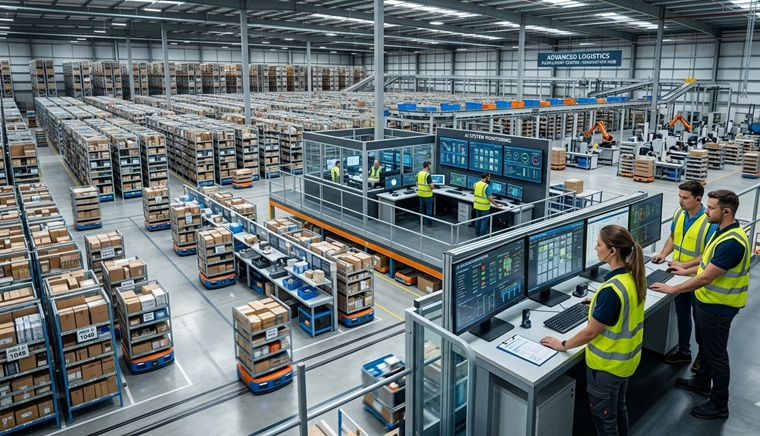
Core concepts include:
- Machine Learning (ML): Learns from past data to improve decisions
- Predictive Analytics: Forecasts demand and delivery timelines
- Automation Systems: Handles repetitive logistics tasks
- Real-Time Data Processing: Tracks shipments and inventory instantly
In simple terms, AI automation turns slow, manual logistics into a fast, smart, and self-improving system.
Role of AI in Modern Supply Chains
In today’s fast-growing e-commerce world, customers expect same-day or next-day delivery, accurate tracking, and zero errors. This is where AI in logistics and supply chain becomes essential.
AI acts as the “brain” of modern logistics operations. It connects every part of the supply chain—from suppliers to warehouses to delivery systems—and ensures everything runs smoothly.
Key roles of AI in e-commerce logistics include:
- Smart Demand Forecasting: AI predicts what customers will buy, helping businesses prepare in advance
- Inventory Optimization: Keeps the right products in the right location to avoid overstock or stockouts
- Warehouse Automation: AI-powered systems and robots speed up picking, packing, and sorting
- Route Optimization: AI finds the fastest and most cost-effective delivery routes
- Real-Time Tracking: Offers live updates for both businesses and customers
With AI supply chain automation, companies can deliver faster, reduce costs, and provide a seamless customer experience.
Difference Between Traditional vs AI-Driven Logistics
Understanding the difference between traditional and AI-powered logistics helps you see why automation is becoming a necessity.
| Factor | Traditional Logistics | AI-Driven Logistics |
| Decision Making | Manual & experience-based | Data-driven & automated |
| Speed | Slower processes | Faster, real-time execution |
| Accuracy | Prone to human errors | High accuracy with minimal errors |
| Inventory Management | Reactive | Predictive and optimized |
| Delivery Routes | Fixed or manual planning | Dynamic route optimization using AI |
| Scalability | Limited | Highly scalable with automation |
Traditional logistics reacts to problems, while AI automation for e-commerce logistics predicts and prevents them before they happen.
AI automation for e-commerce logistics uses advanced technologies like machine learning and predictive analytics to automate and optimize logistics operations. It improves delivery speed, reduces errors, enhances inventory management, and enables real-time decision-making, helping businesses create faster and more efficient supply chains.
Why E-commerce Logistics Needs AI in 2026
E-commerce is growing faster than ever, and customer expectations are higher than ever before. In 2026, businesses can no longer rely on slow, manual systems. To stay competitive, companies must adopt AI automation for e-commerce logistics to improve speed, accuracy, and efficiency.
AI is no longer a “future technology”—it is now a business necessity for managing complex logistics operations at scale.
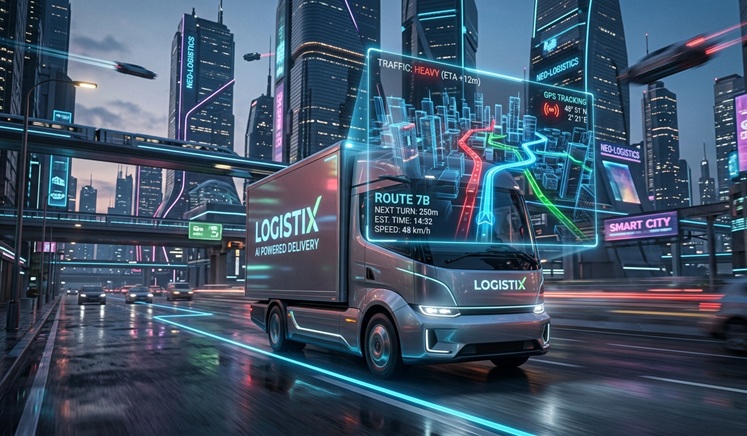
🔹 Rising Customer Expectations
Modern customers expect:
- Same-day or next-day delivery
- Real-time order tracking
- Error-free deliveries
- Easy returns and fast refunds
Meeting these expectations manually is almost impossible. This is where AI in logistics and supply chain makes a huge difference.
AI systems can:
- Predict delivery times accurately
- Provide live tracking updates
- Optimize delivery routes instantly
👉 In simple words, AI helps businesses deliver faster and keep customers happy.
🔹 Challenges in Manual Logistics Systems
Traditional logistics systems struggle to handle today’s e-commerce demands. Without AI logistics automation, businesses face many problems:
- Human Errors: Wrong orders, incorrect shipping, and data mistakes
- Slow Processing: Manual order handling delays shipments
- Poor Inventory Management: Overstocking or running out of products
- Lack of Visibility: No real-time tracking or insights
These issues lead to higher costs, delayed deliveries, and unhappy customers.
👉 AI solves these problems by automating processes and improving accuracy.
🔹 Data Explosion in E-commerce
E-commerce businesses generate massive amounts of data every day:
- Customer behavior
- Order history
- Inventory levels
- Delivery routes
Managing this data manually is not practical. AI supply chain automation can analyze this data in seconds and turn it into actionable insights.
With AI, businesses can:
- Forecast demand more accurately
- Optimize stock levels
- Improve decision-making in real time
👉 Simply put, AI turns raw data into smart business decisions.
🔹 Need for Faster and Scalable Operations
As e-commerce grows, logistics operations become more complex. Businesses need systems that can scale quickly without increasing costs.
AI automation for e-commerce logistics enables scalability by:
- Automating repetitive tasks
- Handling large order volumes efficiently
- Reducing dependency on manual labor
This allows businesses to grow without operational bottlenecks.
🔹 Cost Pressure and Profit Margins
Logistics costs are one of the biggest challenges in e-commerce. Fuel costs, labor costs, and delivery inefficiencies can reduce profits.
AI helps reduce costs by:
- Optimizing delivery routes (saving fuel)
- Reducing errors and returns
- Improving warehouse efficiency
👉 This makes operations more cost-effective and profitable.
🔥 Quick Answer
E-commerce logistics needs AI in 2026 to handle rising customer expectations, large data volumes, and complex operations. AI automation improves delivery speed, reduces errors, optimizes inventory, and lowers costs, helping businesses scale efficiently and stay competitive in a fast-moving digital marketplace.
🔥 Key Takeaways
- AI is essential for fast, accurate, and scalable logistics
- It solves major problems in manual logistics systems
- Helps businesses manage large data and demand fluctuations
- Improves customer satisfaction and reduces operational costs
Key Benefits of AI Automation in Logistics
AI automation systems in logistics are helping businesses move faster, reduce costs, and improve accuracy across the entire supply chain. In 2026, companies using AI are gaining a strong competitive advantage because they can process more orders with fewer errors and better control.
Below are the key benefits explained in a simple and practical way.
🔹 1. Faster Order Processing
AI speeds up the entire order lifecycle—from receiving an order to shipping it out. It removes manual delays and automates repetitive tasks.
Key improvements:
- Automated order entry and processing
- Faster warehouse picking and packing using AI systems
- Reduced time between order confirmation and dispatch
- Smart routing for quick delivery assignment
📊 Impact: Businesses can reduce order processing time by 30%–70%, leading to faster deliveries and happier customers.
🔹 2. Improved Accuracy & Reduced Errors
AI reduces human mistakes in inventory, shipping, and data entry. It ensures every step is tracked and verified automatically.
Key improvements:
- Fewer wrong shipments and packing errors
- Accurate inventory tracking in real time
- Automated barcode and scanning systems
- Smart validation before order dispatch
📊 Impact: Companies can reduce logistics errors by up to 90%, lowering returns and customer complaints.
🔹 3. Cost Optimization
One of the biggest benefits of AI in logistics is reducing operational costs across transportation, warehousing, and labor.
Key improvements:
- Fuel-efficient route optimization
- Reduced labor dependency through automation
- Lower warehouse storage and handling costs
- Fewer delays and emergency shipping expenses
📊 Impact: Businesses can save 30%–50% on total logistics costs by using AI-powered systems.
🔹 4. Real-Time Tracking & Visibility
AI provides complete visibility of the supply chain, helping businesses track every shipment in real time.
Key improvements:
- Live GPS tracking of shipments and vehicles
- Instant alerts for delays or disruptions
- End-to-end supply chain transparency
- AI dashboards for quick decision-making
📊 Impact: Companies improve delivery reliability by 40%+ with real-time tracking systems.
🔹 5. Demand Forecasting & Inventory Optimization
AI predicts future demand using historical data, trends, and customer behavior. This helps businesses manage stock more efficiently.
Key improvements:
- Predicts high and low demand periods
- Prevents overstocking and stock shortages
- Automatically adjusts inventory levels
- Improves warehouse space utilization
📊 Impact: Businesses reduce inventory holding costs by 20%–40% and improve stock accuracy significantly.
Core AI Technologies Powering E-commerce Logistics
Modern AI automation systems in logistics are powered by advanced technologies that make supply chains faster, smarter, and more reliable. In e-commerce logistics, these technologies work together to automate decisions, improve accuracy, and reduce operational costs.
Below are the core AI technologies that are transforming e-commerce logistics in 2026.
🔹 Machine Learning (ML)
Machine Learning helps systems learn from data and improve automatically without being explicitly programmed. It plays a key role in optimizing logistics operations.
How it works in logistics:
- Learns from past delivery and order data
- Improves route planning and delivery predictions
- Detects patterns in customer demand and inventory usage
- Reduces errors by continuously improving decisions
📊 Impact: ML can improve delivery efficiency by 20%–40% through smarter automation and learning-based optimization.
🔹 Predictive Analytics
Predictive analytics uses historical and real-time data to forecast future outcomes. It helps businesses prepare for demand changes and potential disruptions.
How it works in logistics:
- Predicts product demand during peak seasons
- Forecasts delivery delays before they happen
- Identifies supply chain risks early
- Helps plan inventory and stock levels accurately
📊 Impact: Businesses using predictive analytics reduce stockouts and overstocking by 30%–50%.
🔹 Robotic Process Automation (RPA)
RPA automates repetitive and rule-based tasks in logistics operations. It reduces manual effort and improves speed and accuracy.
How it works in logistics:
- Automates order entry and invoice processing
- Handles shipment tracking updates automatically
- Reduces paperwork and administrative tasks
- Improves backend workflow efficiency
📊 Impact: RPA can reduce operational processing time by 40%–60%, saving both time and labor costs.
🔹 Computer Vision in Warehouses
Computer vision allows machines to “see” and analyze visual data using cameras and AI. It is widely used in smart warehouses for automation and quality control.
How it works in logistics:
- Scans and identifies products automatically
- Detects damaged or incorrect items
- Assists robots in picking and sorting goods
- Monitors warehouse safety and operations
📊 Impact: Improves warehouse accuracy by up to 95%, reducing human errors and improving speed.
🔹 Natural Language Processing (NLP) for Customer Support
Natural Language Processing (NLP) helps AI understand and respond to human language. It is widely used in customer service for logistics companies.
How it works in logistics:
- Powers AI chatbots for order tracking and support
- Understands customer queries in real time
- Automates responses for delivery updates and complaints
- Improves communication between customers and systems
📊 Impact: NLP reduces customer support response time by 60%–80%, improving overall user experience.
Top Use Cases of AI in E-commerce Logistics
In 2026, AI automation systems in logistics are widely used in e-commerce to improve speed, reduce costs, and increase delivery accuracy. From warehouses to last-mile delivery, AI is making every part of logistics smarter and more efficient.
Below are the most important real-world use cases of AI in e-commerce logistics with simple explanations and examples.
🔹 Smart Warehouse Automation
Smart warehouses use AI and robotics to handle storage, picking, packing, and sorting with minimal human effort. This reduces delays and improves accuracy.
Key functions:
- Automated picking and packing systems
- AI-powered robots for sorting and movement
- Smart inventory storage and tracking
📌 Real-world example:
Amazon uses AI-powered robots in its fulfillment centers to move shelves, pick products, and speed up packing. This reduces processing time and increases order accuracy.
📊 Impact:
- Faster order fulfillment (up to 2–3x speed improvement)
- Up to 95% accuracy in warehouse operations
🔹 Route Optimization & Last-Mile Delivery
AI improves delivery efficiency by finding the fastest and most fuel-efficient routes for drivers in real time.
Key functions:
- Real-time traffic and weather analysis
- Smart delivery route planning
- Dynamic last-mile delivery optimization
📌 Real-world example:
FedEx uses AI-based route optimization systems to reduce delays and improve delivery efficiency by continuously adjusting routes based on traffic conditions.
📊 Impact:
- 20%–30% reduction in delivery time
- Lower fuel and transportation costs
🔹 Inventory Management & Demand Prediction
AI helps businesses manage stock levels by predicting customer demand and tracking inventory in real time.
Key functions:
- Predicts future product demand
- Prevents overstocking and stockouts
- Real-time inventory updates across warehouses
📌 Real-world example:
Walmart uses AI to analyze sales data and predict demand for thousands of products, ensuring shelves are always stocked during peak seasons.
📊 Impact:
- 30%–50% improvement in inventory accuracy
- Reduced waste and storage costs
🔹 Fraud Detection & Risk Management
AI plays a major role in identifying suspicious transactions and reducing risks in e-commerce logistics operations.
Key functions:
- Detects fake orders and payment fraud
- Identifies unusual shipping patterns
- Reduces financial and operational risks
📌 Real-world example:
PayPal uses AI systems to analyze millions of transactions and detect fraudulent activity in real time, protecting both businesses and customers.
📊 Impact:
- Up to 90% improvement in fraud detection accuracy
- Reduced financial losses and chargebacks
🔹 Automated Customer Communication
AI improves customer experience by automating communication such as order updates, delivery tracking, and support queries.
Key functions:
- AI chatbots for instant customer support
- Automated order and delivery updates
- Personalized customer notifications
📌 Real-world example:
Amazon and Flipkart use AI chatbots to handle customer queries like order tracking, returns, and delivery status without human support.
📊 Impact:
- 60%–80% faster response time
- Higher customer satisfaction and engagement
AI Tools & Software for Logistics Automation
Modern AI automation systems in logistics depend on powerful software platforms that help businesses manage warehouses, transportation, analytics, and customer communication. These tools reduce manual work, improve accuracy, and make supply chains faster and more efficient.
Below are the most important AI tools used in logistics automation in 2026.
🔹 Warehouse Management Systems (WMS)
Warehouse Management Systems (WMS) help businesses control and optimize warehouse operations using AI and automation.
Key features:
- Real-time inventory tracking
- Automated picking, packing, and sorting
- Smart storage optimization
- Barcode and RFID integration
Benefits:
- Reduces warehouse errors
- Improves order fulfillment speed
- Increases inventory accuracy
📊 Impact: Businesses can improve warehouse efficiency by 30%–60% using AI-powered WMS solutions.
🔹 Transportation Management Systems (TMS)
Transportation Management Systems (TMS) use AI to manage shipping, routing, and fleet operations efficiently.
Key features:
- AI-powered route optimization
- Real-time shipment tracking
- Carrier and cost management
- Delivery scheduling automation
Benefits:
- Lower fuel and transportation costs
- Faster and more reliable deliveries
- Better fleet utilization
📊 Impact: Companies can reduce transportation costs by 20%–35% with AI-based TMS platforms.
🔹 AI-Powered Analytics Platforms
These platforms analyze large volumes of logistics data to help businesses make smarter decisions.
Key features:
- Predictive demand forecasting
- Supply chain performance dashboards
- Risk detection and alerts
- Real-time data visualization
Benefits:
- Better decision-making
- Early detection of supply chain issues
- Improved forecasting accuracy
📊 Impact: Improves planning accuracy by up to 50%, reducing operational risks and delays.
🔹 Chatbots & Virtual Assistants
AI chatbots and virtual assistants improve customer support and internal communication in logistics systems.
Key features:
- 24/7 customer support automation
- Order tracking and updates
- Automated query handling
- Multilingual communication support
Benefits:
- Faster customer response times
- Reduced support workload
- Better customer experience
📊 Impact: Reduces customer service response time by 60%–80%.
📊 Comparison Table: AI Logistics Tools
| Tool Type | Main Function | Key Benefits | Best For | Cost Range |
| Warehouse Management System (WMS) | Inventory control & warehouse automation | Higher accuracy, faster fulfillment | Warehouses, e-commerce, retail | Medium to High |
| Transportation Management System (TMS) | Shipping & fleet optimization | Lower transport cost, faster delivery | Logistics companies, delivery fleets | Medium |
| AI Analytics Platforms | Data analysis & forecasting | Better decisions, demand prediction | Enterprises & supply chain teams | High |
| Chatbots & Virtual Assistants | Customer support automation | Faster replies, improved CX | E-commerce & logistics support teams | Low to Medium |
How AI Improves Last-Mile Delivery Efficiency
Last-mile delivery is the final and most important step in logistics, where products are delivered directly to the customer. It is also the most expensive and complex part of the supply chain. In 2026, AI automation systems in logistics are solving these challenges by making last-mile delivery faster, cheaper, and more accurate.
Below are the key ways AI improves last-mile delivery efficiency.
🔹 Real-Time Traffic Analysis
AI uses real-time data to understand road conditions, traffic jams, accidents, and weather updates. This helps delivery companies avoid delays and choose better routes.
How it works:
- Collects live traffic data from GPS and maps
- Detects road congestion and accidents instantly
- Suggests faster alternative routes to drivers
📊 Impact: Helps reduce delivery delays by 20%–40%, especially in busy urban areas.
🔹 Dynamic Route Optimization
AI continuously updates delivery routes based on changing conditions. Unlike traditional systems, it does not follow a fixed plan.
How it works:
- Recalculates routes in real time
- Prioritizes urgent deliveries
- Groups nearby deliveries for efficiency
📊 Impact: Reduces fuel usage and travel time by 15%–30%, improving overall delivery efficiency.
🔹 Delivery Time Predictions
AI improves customer experience by providing accurate delivery time estimates. It analyzes multiple factors to predict when a package will arrive.
How it works:
- Uses historical delivery data
- Considers traffic, weather, and distance
- Updates estimated delivery time in real time
📊 Impact: Improves delivery accuracy by up to 50%, reducing customer complaints and missed expectations.
🔹 Autonomous Delivery (Drones & Vehicles)
AI is powering the future of last-mile delivery through drones and self-driving vehicles. These technologies reduce human dependency and speed up deliveries.
How it works:
- Drones deliver small packages in short distances
- Autonomous vehicles handle local deliveries without drivers
- AI controls navigation, safety, and route planning
📊 Impact: Can reduce last-mile delivery costs by 20%–35% and significantly speed up urgent deliveries.
AI improves last-mile delivery efficiency through real-time traffic analysis, dynamic route optimization, accurate delivery time predictions, and autonomous delivery systems like drones and self-driving vehicles.
In simple words, AI automation systems in logistics make last-mile delivery faster, smarter, more reliable, and cost-efficient, improving both business performance and customer satisfaction in 2026.
Step-by-Step Guide to Implement AI in E-commerce Logistics
Implementing AI automation systems in logistics is not just about installing software. It is a structured process that helps businesses improve efficiency, reduce costs, and scale operations smoothly. Companies that follow a step-by-step approach get better results and fewer risks.
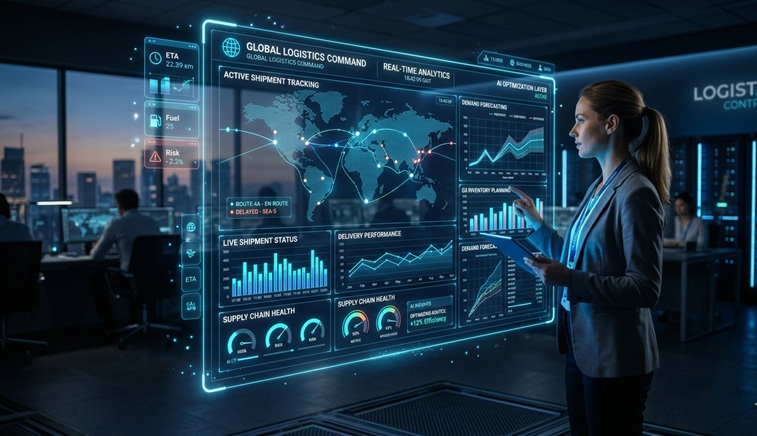
Below is a simple and practical guide to implementing AI in e-commerce logistics.
🔹 Step 1: Assess Business Needs
The first step is to understand where your logistics business is struggling the most. AI works best when it solves real problems.
What to analyze:
- Delivery delays and route inefficiencies
- High warehouse and labor costs
- Inventory errors and stock mismatches
- Poor visibility in the supply chain
📊 Why it matters:
Clear problem identification ensures you invest in the right AI solution instead of wasting money on unnecessary tools.
🔹 Step 2: Choose the Right AI Tools
After identifying problems, the next step is selecting the right AI logistics tools and platforms based on your business needs.
What to consider:
- AI-powered route optimization systems
- Warehouse automation and WMS software
- Predictive analytics tools for demand forecasting
- Fleet management and tracking systems
📊 Why it matters:
The right tools improve efficiency faster and integrate smoothly with your existing logistics operations.
🔹 Step 3: Data Collection & Preparation
AI depends heavily on data. Clean, accurate, and well-organized data is essential for success.
What to do:
- Collect historical shipping and sales data
- Organize warehouse and inventory records
- Clean incorrect or missing data
- Integrate real-time data sources like GPS and IoT
📊 Why it matters:
Better data leads to more accurate AI predictions and smarter decision-making.
🔹 Step 4: Pilot Testing
Before full implementation, start with a small test (pilot project) to evaluate AI performance.
What to do:
- Apply AI in one warehouse or delivery route
- Track performance improvements
- Compare results with manual systems
- Identify issues and make adjustments
📊 Why it matters:
Pilot testing reduces risk and helps businesses understand real-world AI performance before scaling.
🔹 Step 5: Full-Scale Deployment
After successful testing, AI systems can be rolled out across the entire logistics network.
What to do:
- Expand AI across warehouses, fleets, and supply chains
- Train employees to use AI tools effectively
- Continuously monitor system performance
- Upgrade tools based on business growth
📊 Why it matters:
Full deployment ensures maximum efficiency, cost savings, and long-term scalability.
To implement AI automation systems in logistics, businesses should follow five key steps: assess business needs, choose the right AI tools, prepare clean data, run pilot testing, and finally deploy at full scale.
In simple words, a structured approach ensures lower risks, higher efficiency, and faster success in transforming e-commerce logistics with AI in 2026.
Why Choose Cor Advance Solutions for AI Logistics Automation
When it comes to AI automation systems in logistics, choosing the right partner is just as important as choosing the right technology. Cor Advance Solutions stands out because it delivers smart, scalable, and result-driven AI solutions designed specifically for modern e-commerce and logistics businesses.
Below are the key reasons why businesses trust Cor Advance Solutions.
🔹 Expertise in AI & Supply Chain
Cor Advance Solutions has deep expertise in both artificial intelligence and supply chain management, which helps businesses build truly intelligent logistics systems.
What this means for your business:
- Strong understanding of logistics challenges
- Advanced AI models for forecasting and optimization
- Real-time automation across supply chain operations
- Integration of AI with existing logistics systems
📊 Impact: Faster implementation and smarter decision-making across your entire logistics network.
🔹 Customized Solutions for E-commerce
Every e-commerce business is different, and Cor Advance Solutions builds custom AI logistics solutions based on your exact needs.
What you get:
- Tailored AI workflows for your business model
- Scalable systems for small to enterprise-level operations
- Integration with e-commerce platforms and marketplaces
- Flexible automation for warehouse, delivery, and inventory
📊 Impact: Higher efficiency because solutions are designed specifically for your business, not generic systems.
🔹 Proven Results & Case Studies
Cor Advance Solutions has delivered successful AI-driven logistics transformations for multiple businesses, improving speed, accuracy, and cost efficiency.
Real results include:
- Faster order processing and fulfillment
- Reduced logistics operational costs
- Improved delivery accuracy and tracking
- Better inventory and demand forecasting
📊 Impact: Businesses typically see 30%–50% cost savings and significant performance improvement after implementation.
🔹 Scalable & Cost-Effective Services
One of the biggest advantages of Cor Advance Solutions is its ability to grow with your business. Whether you are a startup or a large enterprise, the solutions are designed to scale.
Key benefits:
- Easy scaling as your logistics operations grow
- Affordable pricing models for all business sizes
- Cloud-based AI systems for flexibility
- Continuous updates and performance optimization
📊 Impact: Businesses can expand operations without increasing complexity or overhead costs.
Choosing Cor Advance Solutions for AI logistics automation means working with experts who understand AI, supply chains, and e-commerce deeply. With customized solutions, proven results, and scalable services, it helps businesses improve efficiency, reduce costs, and grow faster.
FAQs
What is AI automation in logistics and how does it work in real-world supply chains?
AI automation in logistics means using artificial intelligence to manage and improve supply chain tasks like planning, tracking, warehousing, and delivery. In real-world supply chains, AI collects data from orders, vehicles, and warehouses, then analyzes it to make smart decisions automatically. It helps companies predict demand, optimize routes, and reduce delays. This makes the entire logistics system faster, cheaper, and more efficient. In simple words, AI acts like a smart brain that runs the supply chain smoothly.
How do AI automation systems in logistics improve delivery speed and accuracy?
AI improves delivery speed and accuracy by analyzing real-time data such as traffic, weather, and order priority. It automatically selects the fastest routes and assigns deliveries efficiently. AI also reduces manual mistakes in order processing and tracking. This ensures packages reach customers faster and with fewer errors. Overall, it makes logistics operations more reliable and precise.
Why are logistics companies adopting AI automation systems in 2026?
Logistics companies are adopting AI in 2026 because they need to reduce rising costs, handle growing demand, and improve efficiency. Traditional systems are too slow and error-prone for modern supply chains. AI helps automate operations, predict problems, and improve decision-making. It also increases customer satisfaction through faster deliveries. Simply put, AI gives companies a strong competitive advantage.
How does AI transform traditional logistics into smart logistics systems?
AI transforms traditional logistics by replacing manual processes with intelligent automation. It connects warehouses, vehicles, and inventory systems into one smart network. AI continuously analyzes data and improves operations in real time. This reduces delays, errors, and inefficiencies. As a result, logistics becomes faster, more connected, and highly intelligent.
How does AI help logistics companies manage large-scale operations efficiently?
AI helps manage large-scale logistics by processing massive amounts of data quickly and accurately. It automates planning for thousands of shipments, warehouses, and delivery routes. AI also detects issues early and suggests solutions instantly. This reduces complexity in large operations. It allows companies to scale without losing efficiency.
How do AI automation systems in logistics reduce overall transportation and fuel costs?
AI reduces transportation and fuel costs by optimizing delivery routes based on traffic, distance, and fuel efficiency. It avoids unnecessary travel and reduces idle time for vehicles. AI also improves fleet usage by assigning smarter delivery schedules. This leads to fewer trips and lower fuel consumption. Overall, it significantly cuts transportation expenses.
Can AI automation reduce labor costs in logistics operations effectively?
Yes, AI can reduce labor costs by automating repetitive tasks like sorting, tracking, and data entry. Robotics and AI systems handle warehouse operations more efficiently than manual work. This reduces the need for large workforce teams. However, human workers are still needed for supervision and decision-making. Overall, it improves productivity while lowering labor expenses.
How does AI reduce unnecessary shipping and logistics overhead costs?
AI reduces unnecessary shipping by optimizing inventory placement and predicting demand accurately. It prevents overstocking and minimizes emergency shipments. AI also streamlines warehouse operations and reduces handling errors. This lowers storage, transportation, and operational overhead costs. As a result, logistics becomes more cost-efficient.
Why do companies save up to 30–50% logistics costs using AI systems?
Companies save up to 30–50% because AI reduces fuel usage, labor costs, and operational inefficiencies. It improves route planning, inventory management, and warehouse automation. AI also prevents costly errors like delays and wrong shipments. These improvements add up to major savings across the supply chain. In simple terms, AI removes waste and improves efficiency at every step.
Is investing in AI logistics automation worth it for small businesses?
Yes, it is worth it because AI helps small businesses compete with larger companies. It reduces operational costs, improves delivery speed, and minimizes errors. Many AI tools are now affordable and cloud-based, making them easy to adopt. Small businesses can start with basic automation and scale later. This improves growth and customer satisfaction.
How does AI optimize delivery routes in real-time logistics operations?
AI optimizes delivery routes by analyzing live traffic, weather conditions, and delivery priorities. It continuously updates routes to avoid delays and improve efficiency. AI also groups nearby deliveries to save time and fuel. This ensures faster and more cost-effective deliveries. It makes logistics more dynamic and responsive.
How do AI systems reduce last-mile delivery delays and inefficiencies?
AI reduces last-mile delays by predicting traffic conditions and optimizing delivery schedules. It assigns the best routes and delivery times automatically. AI also helps in real-time adjustments if delays occur. This reduces failed delivery attempts and waiting time. Overall, it makes last-mile delivery faster and more reliable.
How does AI reduce human errors in logistics and supply chain processes?
AI reduces human errors by automating tasks like order entry, inventory tracking, and shipment processing. It uses real-time data validation to ensure accuracy. AI systems also detect mistakes before they impact operations. This reduces wrong deliveries and data mismatches. As a result, logistics becomes more accurate and efficient.
How does AI improve inventory accuracy and stock management systems?
AI improves inventory accuracy by tracking stock in real time across all warehouses. It automatically updates inventory when goods are moved or sold. AI also predicts future demand to avoid overstocking or shortages. This ensures better stock planning and reduced waste. It keeps inventory levels balanced and accurate.
What is predictive demand forecasting in logistics and how does it work?
Predictive demand forecasting uses AI to analyze past sales, seasonal trends, and market behavior to predict future demand. It helps businesses plan inventory and supply chain operations more effectively. AI identifies patterns that humans may miss. This reduces stock shortages and excess inventory. It improves overall supply chain planning.
How do logistics companies use AI to improve order fulfillment speed?
Logistics companies use AI to automate order processing, warehouse picking, and delivery scheduling. AI assigns tasks to robots or systems for faster execution. It also optimizes storage locations for quicker picking. This reduces delays in order fulfillment. As a result, customers receive products faster.
How does AI improve fleet management and vehicle performance tracking?
AI improves fleet management by tracking vehicle location, fuel usage, and performance in real time. It predicts maintenance needs before breakdowns occur. AI also optimizes driver routes and schedules. This reduces downtime and improves efficiency. It helps companies manage fleets more effectively.
How do AI chatbots improve logistics customer service operations?
AI chatbots improve customer service by providing instant responses to delivery tracking, order updates, and complaints. They work 24/7 without delays or human effort. Chatbots reduce workload on support teams and speed up communication. They also improve customer satisfaction by giving accurate real-time information. This makes logistics support faster and more efficient.
Conclusion
AI is now very important in modern logistics. It is changing how supply chains work by making them faster, smarter, and more efficient. With AI automation systems in logistics, companies can improve delivery speed, reduce costs, and avoid mistakes in daily operations.
In simple words, AI helps in planning better routes, managing inventory, predicting demand, and tracking shipments in real time. This makes the whole system more organized and reliable. It also improves customer satisfaction because deliveries become faster and more accurate.
The main point is clear: companies that use AI in 2026 will grow faster and perform better than those that don’t. AI is not just a new tool—it is the future of logistics.
Businesses should start using AI now to save money, improve efficiency, and stay competitive in the market.