
In 2026, the global logistics industry is under huge pressure. Companies are struggling with rising costs, frequent delivery delays, fuel price changes, and a serious shortage of skilled workers. At the same time, customers expect faster, cheaper, and more accurate deliveries than ever before.
Because of this, traditional supply chain systems are no longer strong enough. Old methods that depend only on manual planning and human decision-making cannot handle today’s fast-moving global demand. This is where AI automation systems for logistics are becoming a game-changer.
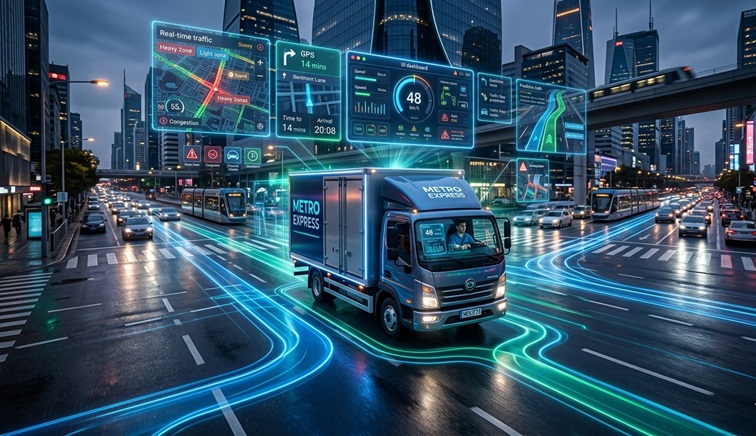
AI is now acting as the backbone of modern supply chains. It helps companies make faster decisions, reduce errors, and manage operations in real time. With the power of AI in logistics industry 2026, businesses can now predict problems before they happen and fix them automatically.
Big global companies are already leading this transformation:
- Amazon is using AI-powered robotics and smart forecasting systems to speed up deliveries and improve warehouse operations.
- DHL is applying AI to optimize global shipping routes and improve supply chain visibility.
- FedEx is using AI tracking systems to provide real-time shipment updates and reduce delays.
These companies show how powerful logistics automation solutions are changing the entire industry.
The reality is simple but powerful:
“Every delayed delivery costs money, trust, and customers.”
In today’s competitive world, even a small delay can lead to lost sales, unhappy customers, and damaged brand reputation. That is why businesses are now rapidly shifting toward AI supply chain optimization, smart forecasting, and automated delivery systems. In short, 2026 marks a turning point where logistics is no longer just about moving goods—it is about intelligent, AI-driven decision-making that keeps the entire supply chain fast, efficient, and reliable.
What Are AI Automation Systems in Logistics?
AI automation systems in logistics are smart technologies that help companies manage, control, and improve their supply chain operations with very little human effort. In simple words, they are systems that use artificial intelligence to make logistics faster, smarter, and more accurate.
Instead of doing everything manually, these systems can think, predict, and take action on their own. This is a key part of modern AI automation systems in logistics, and it is changing how goods are moved around the world.
📌 Definition in Simple Terms
AI automation in logistics means using smart machines and software that can:
- Plan delivery routes
- Manage warehouses
- Track shipments in real time
- Predict demand and supply needs
- Reduce human errors
It combines automation (doing tasks automatically) with AI (thinking and learning from data).
🧠 Core Technologies Behind AI Logistics Systems
AI automation systems are powered by several advanced technologies:
1. Machine Learning
Machine Learning allows systems to learn from past data.
In logistics, it helps predict delivery times, demand trends, and supply chain risks.
2. Predictive Analytics
This technology analyzes data and predicts what will happen next.
For example, it can forecast product demand or possible delivery delays before they occur.
3. Computer Vision
Computer Vision helps machines “see” and understand images or videos.
In warehouses, it is used for scanning packages, checking damage, and tracking inventory automatically.
4. Robotic Process Automation (RPA)
RPA handles repetitive tasks like order entry, invoice processing, and shipment updates.
It reduces manual work and speeds up operations.
🚚 Real-World Examples in Logistics
Many global companies are already using logistics automation solutions powered by AI:
- Amazon uses robots in warehouses to pick, pack, and move products faster.
- DHL uses AI-based analytics to optimize global shipping routes and reduce delivery time.
- FedEx uses AI tracking systems to provide real-time shipment updates and improve customer experience.
These examples show how AI is making logistics smarter, faster, and more reliable.
Biggest Logistics Problems in 2026 (Critical Pain Points)
In 2026, the global logistics industry is under heavy pressure. Companies are dealing with unstable demand, rising costs, limited labor, and weak visibility across supply chains. These issues are not small—they directly increase operational costs, delay deliveries, and reduce customer satisfaction. Below are the biggest logistics problems businesses face today, explained in simple and practical terms with real business impact.
Unpredictable Demand Fluctuations
One of the biggest problems in logistics is unstable and unpredictable customer demand. In today’s market, demand changes quickly due to promotions, economic shifts, seasonal trends, and online shopping behavior.
Many companies still rely on outdated forecasting systems, which leads to major errors.
Business Impact:
- Companies often overstock or understock inventory
- Overstock leads to high storage costs and waste
- Understock leads to lost sales and unhappy customers
- Retailers may lose 10%–30% of potential revenue during peak demand errors
Cost Implications:
- Extra warehousing cost for unsold goods
- Emergency shipping costs to fix shortages
- Loss of customer lifetime value due to poor service
Rising Fuel and Transportation Costs
Fuel prices and transportation costs continue to rise globally due to inflation, geopolitical issues, and supply shortages. Transportation is one of the largest cost drivers in logistics, so even small price changes have a big impact.
Business Impact:
- Higher cost per delivery
- Reduced profit margins for logistics companies
- Increased product prices for customers
Cost Implications:
- Fuel cost increases can raise logistics expenses by 15%–40%
- Long-distance shipping becomes significantly more expensive
- Companies are forced to increase product pricing, reducing demand
Last-Mile Delivery Inefficiencies
Last-mile delivery (final step of delivery to customer) is the most expensive and complex part of logistics. In 2026, urban congestion, poor route planning, and failed deliveries make this even worse.
Business Impact:
- Delayed deliveries reduce customer satisfaction
- High rate of failed or repeated delivery attempts
- Poor delivery experience damages brand reputation
Cost Implications:
- Last-mile delivery can account for 40%–50% of total shipping cost
- Re-delivery attempts increase fuel and labor costs
- More customer complaints increase support expenses
Warehouse Management Errors
Warehouse operations are still heavily affected by manual errors, poor systems, and lack of automation. Mistakes in picking, packing, and inventory tracking are common.
Business Impact:
- Wrong product shipments
- Delayed order processing
- Inventory mismatch and stock inaccuracies
Cost Implications:
- Returns and replacements increase operational costs
- Labor waste due to rework and correction
- Inventory holding cost increases due to poor tracking
Even a small warehouse error rate of 2%–5% can cause major annual financial losses for large businesses.
Lack of Real-Time Supply Chain Visibility
Many companies still cannot see their supply chain in real time. This means they don’t know where shipments are, when delays happen, or what risks are coming next.
Business Impact:
- Slow decision-making during disruptions
- Poor coordination between suppliers and logistics partners
- Increased risk of missed deadlines
Cost Implications:
- Emergency logistics arrangements (high-cost shipping)
- Inventory safety stock increases (higher holding cost)
- Losses due to delayed or canceled orders
Without real-time visibility, companies react late—and paying more for every delay becomes unavoidable.
Global Supply Chain Disruptions
Global disruptions such as geopolitical conflicts, port congestion, natural disasters, and trade restrictions continue to affect logistics networks in 2026.
Business Impact:
- Shipment delays across international routes
- Raw material shortages in manufacturing
- Unstable global trade flow
Cost Implications:
- Higher international freight charges
- Increased insurance and risk costs
- Production downtime losses can reach millions of dollars per day for large manufacturers
These disruptions make supply chains less predictable and more expensive to manage.
Labor Shortages and Human Error
The logistics industry is facing a serious shortage of skilled workers, drivers, and warehouse staff. At the same time, overworked employees increase the risk of human errors.
Business Impact:
- Slower warehouse operations
- Delivery delays due to lack of drivers
- Higher dependency on untrained workers
Cost Implications:
- Rising wages increase operating costs
- Training and onboarding costs increase
- Human errors lead to returns, refunds, and re-shipping costs
Labor shortages also reduce productivity, forcing companies to spend more to achieve the same output.
How AI Automation Systems Solve Logistics Problems (Core Section)
In 2026, logistics companies are no longer relying only on manual planning or traditional software. Instead, they are rapidly shifting toward AI automation systems in logistics to solve major challenges like delays, rising costs, warehouse errors, and poor visibility.
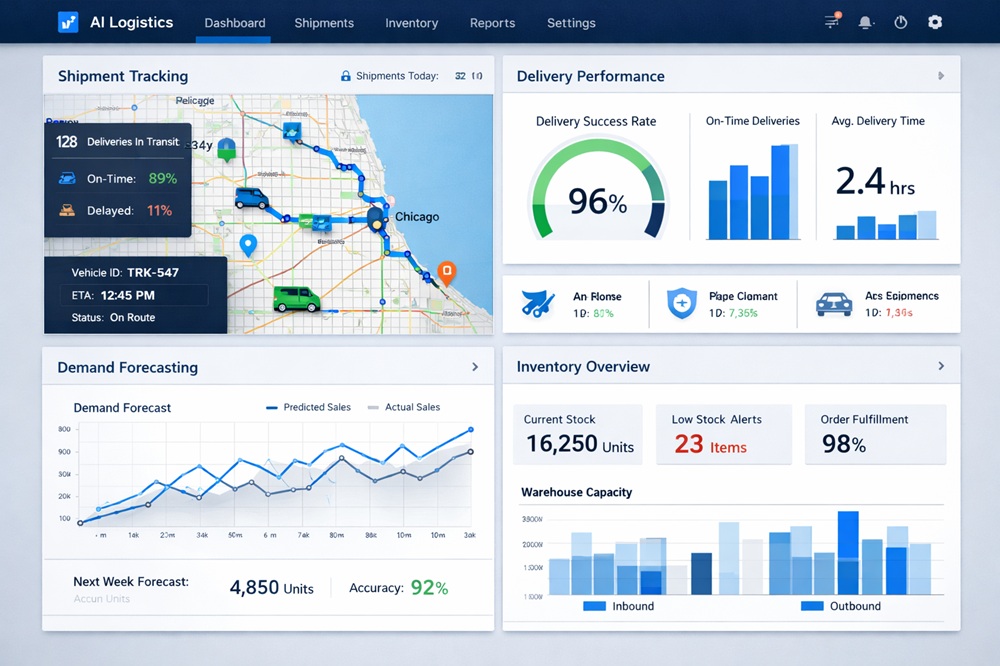
AI works like a smart brain for the entire supply chain. It collects real-time data, learns patterns, predicts problems, and automatically improves decisions. This leads to faster delivery, lower costs, and higher customer satisfaction.
Below is a clear breakdown of how AI automation solves the biggest logistics problems step by step.
AI-Powered Route Optimization
One of the most powerful uses of AI in logistics is route optimization. AI systems analyze live data such as traffic conditions, weather updates, road accidents, and delivery priorities to create the best possible route for drivers.
Key Benefits:
- Real-time traffic and weather analysis for smarter routing
- Fuel-efficient delivery paths to reduce cost
- Faster delivery with fewer delays
Business Impact:
AI reduces unnecessary mileage and idle time. Delivery fleets can save 10%–25% on fuel costs and significantly reduce late deliveries. It also improves driver productivity by assigning the most efficient routes automatically.
Predictive Demand Forecasting Systems
Traditional forecasting often fails because demand changes quickly. AI solves this problem by analyzing historical sales data, seasonal patterns, customer behavior, and real-time market trends.
Key Benefits:
- AI analyzes both historical and live data
- Prevents overstocking and stockouts
- Improves inventory planning accuracy
Business Impact:
Companies using AI forecasting can reduce inventory errors by up to 30%–50%. This means fewer unsold products, less warehouse waste, and better product availability during high demand periods.
Smart Warehouse Automation
Warehouses are becoming smarter with the help of AI and robotics. Instead of relying only on manual labor, companies now use automated systems for picking, packing, sorting, and storage management.
Key Benefits:
- Robotics for picking and packing items faster
- Automated sorting systems for accuracy
- Faster order fulfillment with fewer errors
Business Impact:
Smart warehouses can process orders 2–5 times faster than traditional setups. This reduces labor costs, minimizes human errors, and improves delivery speed, especially for e-commerce businesses.
AI Inventory Management Systems
Inventory management is one of the most critical parts of logistics. AI systems provide real-time control over stock levels and automatically track product movement across warehouses.
Key Benefits:
- Real-time stock tracking across all locations
- Automated replenishment alerts when stock is low
- Reduced waste and lower storage costs
Business Impact:
AI reduces excess inventory and stock shortages. Businesses can cut inventory holding costs by 15%–30%, while improving product availability and reducing storage waste.
Real-Time Supply Chain Visibility
One major problem in logistics is lack of visibility. AI combined with IoT (Internet of Things) solves this by offering real-time tracking and full supply chain transparency.
Key Benefits:
- IoT + AI dashboards for live monitoring
- End-to-end shipment tracking from warehouse to customer
- Risk prediction and automatic alerts for delays
Business Impact:
Companies can respond faster to disruptions, avoid delivery failures, and reduce emergency shipping costs. Real-time visibility improves decision-making speed and reduces supply chain uncertainty.
Last-Mile Delivery Optimization
Last-mile delivery is the most expensive and complex stage in logistics. AI helps optimize it by improving delivery planning and reducing unnecessary travel.
Key Benefits:
- AI clustering for efficient delivery zones
- Predictive delivery time estimation for customers
- Integration with drones and autonomous delivery vehicles
Business Impact:
AI reduces last-mile delivery costs by up to 20%–35%. It also improves customer experience by giving accurate delivery times and reducing failed delivery attempts.
AI-Powered Fleet Management
Fleet management becomes smarter with AI by monitoring vehicles, predicting maintenance needs, and improving driver performance.
Key Benefits:
- Real-time vehicle tracking and diagnostics
- Predictive maintenance to avoid breakdowns
- Driver behavior optimization for safety and efficiency
Business Impact:
AI reduces vehicle downtime and repair costs by up to 25%. It also extends vehicle lifespan and improves fuel efficiency through better driving behavior analysis.
AI automation systems in logistics solve major industry problems by improving speed, accuracy, and efficiency across the entire supply chain. From route optimization and demand forecasting to warehouse automation and fleet management, AI reduces costs, prevents delays, and increases profitability.
In simple terms, AI turns traditional logistics into a fully intelligent, self-optimizing system that works faster, cheaper, and smarter than ever before.
Key Benefits of AI in Logistics
The adoption of AI automation systems in logistics is not just a trend in 2026—it is a major transformation in how supply chains work. Companies are using AI to improve speed, reduce costs, and make smarter decisions across every step of logistics operations. Below are the most important benefits explained in simple and practical terms.
Faster Delivery Operations
AI helps logistics companies deliver products much faster by improving planning, routing, and warehouse operations. It automatically selects the best delivery paths, reduces delays, and speeds up order processing.
With AI-driven systems, companies can process and ship orders in minutes instead of hours, leading to quicker delivery cycles and better operational efficiency.
Reduced Operational Costs (Up to 30–50%)
One of the biggest advantages of AI in logistics is cost reduction. AI reduces waste, improves fuel usage, and minimizes human errors across the supply chain.
How cost savings happen:
- Lower fuel consumption through optimized routes
- Reduced labor costs with automation
- Fewer errors in warehousing and shipping
- Better inventory control reduces storage waste
In many real-world cases, companies report 30%–50% reduction in total logistics costs after implementing AI systems.
Improved Inventory Accuracy
Inventory mistakes are one of the biggest problems in traditional logistics. AI solves this by providing real-time tracking and smart forecasting.
AI ensures that businesses always know:
- What stock is available
- Where it is located
- When it needs to be restocked
This reduces overstocking, stockouts, and unnecessary storage costs, leading to smoother supply chain operations.
Real-Time Decision-Making
AI enables companies to make fast and accurate decisions using live data from across the supply chain. Instead of waiting for manual reports, managers get instant insights.
Benefits include:
- Quick response to delays or disruptions
- Better delivery planning based on real-time conditions
- Faster problem-solving across logistics networks
This improves overall efficiency and reduces the risk of costly delays.
Lower Carbon Emissions
Sustainability is now a major focus in logistics. AI helps reduce environmental impact by making transportation and delivery systems more efficient.
How AI helps the environment:
- Optimized delivery routes reduce fuel usage
- Less idle time means lower emissions
- Smart fleet management improves fuel efficiency
This leads to a more eco-friendly supply chain and supports global sustainability goals.
Higher Customer Satisfaction
Customer experience is directly improved when logistics become faster and more reliable. AI ensures timely deliveries, accurate tracking, and fewer errors.
Impact on customers:
- Faster and on-time deliveries
- Real-time shipment tracking updates
- Fewer order mistakes and returns
- Better communication and transparency
As a result, businesses see higher trust, better reviews, and increased repeat purchases.
Top AI Automation Technologies Transforming Logistics
In 2026, the logistics industry is rapidly changing because of AI automation technologies in logistics. These advanced tools are helping companies move goods faster, reduce costs, and improve accuracy across the entire supply chain. Below are the most important technologies that are transforming how logistics works today.
Autonomous Vehicles
Autonomous vehicles are self-driving trucks and delivery vans that use AI, sensors, and cameras to move goods without human drivers.
How they work:
They analyze road conditions, traffic, and navigation data in real time to drive safely and efficiently.
Business Impact:
- Reduces driver dependency in long-distance transport
- Lowers labor and fuel costs
- Improves delivery speed and consistency
Autonomous trucks are especially useful for long highway routes where human fatigue and delays are common.
AI-Powered Drones
AI-powered drones are becoming a powerful tool for fast and small-package deliveries, especially in crowded cities and remote areas.
How they work:
Drones use AI for navigation, obstacle detection, and route planning to deliver packages quickly and safely.
Business Impact:
- Ultra-fast last-mile delivery
- Reduces traffic-related delays
- Ideal for urgent deliveries like medical supplies
Drones help companies reduce last-mile delivery costs and improve delivery speed dramatically.
Smart Warehouses
Smart warehouses use AI, robotics, and automation systems to manage storage, picking, packing, and sorting with minimal human involvement.
Key features:
- Automated robots for picking and packing
- AI-driven inventory tracking
- Smart sorting systems for faster processing
Business Impact:
- Faster order fulfillment
- Fewer human errors
- Lower labor costs and higher efficiency
Smart warehouses are now essential for e-commerce and large retail operations.
Digital Twins in Supply Chains
A digital twin is a virtual copy of a real supply chain system. It uses real-time data to simulate and predict how the supply chain will perform.
How it works:
It collects data from warehouses, trucks, and shipments to create a live digital model of the entire logistics network.
Business Impact:
- Predicts delays before they happen
- Helps test different supply chain strategies
- Improves decision-making accuracy
Digital twins allow companies to “see the future” of their supply chain and act early to avoid problems.
Blockchain + AI Integration
When blockchain technology is combined with AI, it creates a highly secure and intelligent logistics system.
How it works:
- Blockchain ensures secure and transparent data sharing
- AI analyzes that data to improve decisions and predictions
Business Impact:
- Prevents fraud and data tampering
- Improves transparency in shipments
- Builds trust between suppliers, carriers, and customers
This combination is especially powerful for global logistics and international trade.
Future Trends: What’s Next for AI in Logistics Beyond 2026?
The future of logistics is moving beyond simple automation. After 2026, AI automation systems in logistics will become even more advanced, intelligent, and fully connected. Companies will not just use AI as a tool—they will depend on it as the core brain of their entire supply chain.
Here are the most important future trends that will shape the next generation of logistics.
Fully Autonomous Supply Chains
In the future, supply chains will run with very little human involvement. AI will manage everything from forecasting demand to delivering products.
How it will work:
- AI will automatically plan inventory, shipping, and delivery
- Systems will self-correct delays and disruptions in real time
- Robots, drones, and autonomous trucks will handle most movement
Future Impact:
- Faster and error-free logistics operations
- Near-zero manual intervention in routine tasks
- Lower operational costs and higher efficiency
This will create a self-running supply chain ecosystem that operates 24/7 without breaks.
Hyper-Personalized Delivery Systems
Future logistics will focus heavily on customer personalization. AI will analyze user behavior, location, and preferences to deliver a fully customized experience.
How it will work:
- AI predicts exact delivery time based on customer habits
- Customers can choose flexible, smart delivery options
- Systems adjust routes based on personal delivery needs
Future Impact:
- Ultra-fast and more accurate deliveries
- Improved customer satisfaction and loyalty
- Better control for customers over their orders
Every delivery will feel custom-built for each individual customer.
AI-Driven Sustainability Solutions
Sustainability will become a major focus in future logistics. AI will help companies reduce environmental impact while improving efficiency.
How it will work:
- AI will optimize routes to reduce fuel consumption
- Smart systems will reduce empty truck movement
- Predictive planning will cut down waste in warehouses
Future Impact:
- Lower carbon emissions across supply chains
- Reduced energy and fuel usage
- More eco-friendly global logistics networks
AI will help companies balance profitability with environmental responsibility.
Human + AI Collaboration
Even in the future, humans will not be fully replaced. Instead, logistics will rely on a strong partnership between humans and AI systems.
How it will work:
- AI handles data, predictions, and automation
- Humans focus on strategy, decision-making, and supervision
- Employees work alongside robots and smart systems
Future Impact:
- Higher productivity with fewer errors
- Smarter decision-making with AI insights
- Better job roles focused on creativity and management
This collaboration will create a balanced and highly efficient logistics workforce.
How to Implement AI Automation in Your Logistics Business
Implementing AI automation systems in logistics is not just about buying software. It is a step-by-step transformation of your entire supply chain. Companies that follow a structured approach see faster results, lower risks, and higher ROI.
Below is a simple, practical strategy to successfully implement AI in your logistics business.
Identify Key Pain Points
The first step is to clearly understand where your logistics business is losing time, money, or efficiency. AI works best when it solves real problems.
What to analyze:
- Delivery delays and route inefficiencies
- High fuel and transportation costs
- Warehouse errors and inventory mismatches
- Lack of real-time tracking and visibility
Why it matters:
If you don’t identify the right problem, even the best AI system will not deliver results. This step helps you focus on high-impact areas first.
Choose the Right AI Tools
Once you know your problems, the next step is selecting the right AI logistics solutions that match your needs.
Types of tools to consider:
- AI route optimization software for faster deliveries
- Predictive analytics tools for demand forecasting
- Warehouse automation systems for picking and packing
- AI fleet management platforms for vehicle tracking
Why it matters:
Choosing the wrong tool can waste time and money. The right tool ensures smooth integration and faster improvement in operations.
Start with Pilot Projects
Instead of changing your entire system at once, start small with a pilot project. This helps you test AI performance in real conditions.
How to do it:
- Apply AI in one warehouse or delivery zone
- Track performance for a limited time
- Compare results with your current system
Why it matters:
Pilot projects reduce risk and help you understand how AI works in your real business environment before full investment.
Scale Gradually
After a successful pilot, expand AI usage step by step across your logistics network. Do not rush the process.
How to scale:
- Add more warehouses and delivery routes
- Integrate AI across inventory, fleet, and supply chain systems
- Train employees to work with AI tools
Why it matters:
Gradual scaling ensures smooth transition, fewer errors, and better adoption across the organization.
Monitor and Optimize
AI is not a one-time setup. It needs continuous monitoring and improvement to deliver long-term value.
What to monitor:
- Delivery speed and accuracy
- Cost savings and fuel efficiency
- Inventory performance
- Customer satisfaction levels
Why it matters:
Regular optimization helps improve AI performance over time and ensures your logistics system stays efficient and competitive.
Best AI Automation Tools & Platforms for Logistics
In 2026, businesses are rapidly adopting AI automation systems in logistics to improve efficiency, reduce costs, and gain real-time control over supply chains. The right software can automate everything from demand forecasting to warehouse operations and fleet tracking.
Below are the most powerful AI logistics tools and platforms used by modern supply chain companies.
AI Supply Chain Software
AI supply chain software helps companies manage the entire logistics process—from planning to delivery—using intelligent automation and predictive analytics.
Key Features:
- AI-based demand forecasting
- End-to-end supply chain visibility
- Predictive delay and risk alerts
- Automated decision-making workflows
Benefits:
- Reduces supply chain errors
- Improves delivery accuracy
- Lowers overall logistics cost (up to 30%–40%)
Best For:
Large enterprises, manufacturers, and e-commerce businesses that need full supply chain control.
Warehouse Automation Tools
Warehouse automation tools use AI, robotics, and IoT to manage inventory, picking, packing, and sorting with high speed and accuracy.
Key Features:
- Robotic picking and packing systems
- AI-powered inventory tracking
- Automated sorting and storage systems
- Real-time warehouse dashboards
Benefits:
- Faster order processing (up to 2–5x improvement)
- 99%+ inventory accuracy
- Reduced labor costs and human errors
Best For:
E-commerce, retail, 3PL companies, and large distribution centers.
Fleet Management Systems
Fleet management systems use AI to track vehicles, optimize routes, and improve driver performance across logistics networks.
Key Features:
- Real-time GPS vehicle tracking
- AI route optimization and fuel efficiency planning
- Predictive maintenance alerts
- Driver behavior monitoring
Benefits:
- Reduces fuel and transportation costs
- Improves delivery speed and reliability
- Reduces vehicle downtime and maintenance costs
Best For:
Delivery companies, transport businesses, and logistics fleets of all sizes.
Comparison Table: AI Logistics Tools
| Feature | AI Supply Chain Software | Warehouse Automation Tools | Fleet Management Systems |
| Core Function | End-to-end supply chain optimization | Warehouse operations automation | Vehicle tracking & delivery optimization |
| AI Capabilities | High (forecasting + decision AI) | Medium–High (robotics + AI tracking) | High (route + predictive maintenance) |
| Key Benefit | Full supply chain control | Faster fulfillment & accuracy | Lower fuel & transport cost |
| Cost Range | High (enterprise-level pricing) | Medium to High | Low to High (based on fleet size) |
| Best For | Large enterprises & global logistics | Warehouses & e-commerce ops | Delivery & transport companies |
The best AI automation tools for logistics include AI supply chain software for full operational control, warehouse automation tools for faster and accurate fulfillment, and fleet management systems for optimized transportation.
In simple words, these platforms help businesses save money, reduce delays, improve accuracy, and automate the entire logistics process from warehouse to final delivery.
FAQs
What is AI automation in logistics?
AI automation in logistics is the use of artificial intelligence to manage and improve supply chain operations with minimal human effort. It helps automate tasks like planning, tracking, forecasting, and delivery management. AI systems analyze large amounts of data to make faster and smarter decisions. This leads to smoother operations, lower costs, and faster deliveries. In simple words, it makes the entire logistics process more efficient and intelligent.
How does AI improve logistics operations?
AI improves logistics operations by analyzing real-time data and optimizing every step of the supply chain. It helps in better route planning, demand forecasting, and warehouse management. AI reduces delays by predicting problems before they happen. It also improves communication between different logistics systems. Overall, it makes operations faster, cheaper, and more accurate.
Why is AI important in supply chain management?
AI is important in supply chain management because it increases speed, accuracy, and efficiency. It helps businesses predict demand, reduce waste, and avoid stock shortages. AI also improves decision-making using real-time data insights. This reduces operational risks and improves customer satisfaction. In short, AI makes supply chains smarter and more reliable.
What are AI automation systems in logistics?
AI automation systems in logistics are smart software solutions that manage transportation, warehousing, inventory, and delivery processes automatically. These systems use machine learning and data analytics to improve performance. They help reduce human effort and operational errors. Businesses use them to speed up processes and cut costs. They act as a digital brain for the entire logistics network.
How is AI used in transportation and logistics?
AI is used in transportation and logistics for route optimization, fleet tracking, predictive maintenance, and delivery planning. It analyzes traffic, weather, and road conditions to find the best routes. AI also monitors vehicle performance and driver behavior. This reduces fuel usage and improves delivery speed. It makes transportation more efficient and cost-effective.
What problems does AI solve in logistics?
AI solves major logistics problems like delivery delays, high transportation costs, inventory errors, and poor supply chain visibility. It helps predict demand and prevents stock shortages. AI also reduces human errors in warehouses and shipping processes. It improves last-mile delivery efficiency and reduces fuel waste. Overall, it makes logistics faster, cheaper, and more reliable.
What is the future of AI in logistics industry?
The future of AI in logistics includes fully automated supply chains, autonomous vehicles, drone deliveries, and smart warehouses. AI will handle most planning, tracking, and optimization tasks automatically. Human roles will focus more on strategy and supervision. Logistics will become faster, more sustainable, and highly data-driven. In simple terms, the industry will become almost fully intelligent and self-operating.
How does AI reduce logistics costs?
AI reduces logistics costs by optimizing routes, improving fuel efficiency, and minimizing operational errors. It reduces waste in warehouses through better inventory management. AI also lowers labor costs by automating repetitive tasks. Predictive systems help avoid expensive delays and disruptions. Overall, it can reduce total logistics expenses by up to 30–50%.
How does AI optimize delivery routes?
AI optimizes delivery routes by analyzing real-time traffic, weather conditions, road closures, and delivery priorities. It calculates the fastest and most fuel-efficient paths for drivers. AI continuously updates routes to avoid delays. This ensures faster deliveries and lower transportation costs. It improves overall delivery efficiency and customer satisfaction.
What is AI-powered route optimization?
AI-powered route optimization is a technology that uses artificial intelligence to find the best delivery routes in real time. It considers traffic, distance, fuel usage, and delivery schedules. The system automatically adjusts routes to avoid delays and reduce costs. This improves speed and efficiency in logistics operations. It is widely used in modern fleet management systems.
How does AI improve warehouse management?
AI improves warehouse management by automating tasks like sorting, picking, packing, and inventory tracking. It uses robots and smart systems to increase speed and accuracy. AI also helps manage storage space efficiently. It reduces human errors and improves order fulfillment speed. This makes warehouse operations faster and more reliable.
How does AI reduce human errors in logistics?
AI reduces human errors by automating repetitive and complex tasks in logistics operations. It ensures accurate data entry, order processing, and inventory tracking. AI systems also provide real-time alerts to prevent mistakes. This improves accuracy in warehousing and delivery processes. As a result, businesses experience fewer losses and higher efficiency.
How does AI improve inventory accuracy?
AI improves inventory accuracy by tracking stock levels in real time across warehouses. It automatically updates data whenever products are moved or sold. AI also predicts future stock needs based on demand patterns. This prevents overstocking and stock shortages. It ensures businesses always have the right amount of inventory available.
What is predictive demand forecasting in logistics?
Predictive demand forecasting in logistics is an AI-based method that predicts future customer demand using historical data and market trends. It analyzes sales patterns, seasons, and real-time behavior. This helps businesses plan inventory and supply chain operations more effectively. It reduces waste and prevents stock shortages. In simple terms, it helps companies prepare for future demand accurately.
onclusion
In 2026, logistics is no longer just about moving goods from one place to another. It is about speed, accuracy, cost control, and real-time decision-making. Throughout this guide, we explored how AI automation systems in logistics are solving the biggest industry problems like unpredictable demand, rising fuel costs, warehouse errors, and poor supply chain visibility. We also saw how AI improves route optimization, inventory management, fleet tracking, and last-mile delivery efficiency.
The main takeaway is simple: AI is now the backbone of modern logistics operations. It helps businesses reduce costs, improve delivery speed, and increase customer satisfaction. Companies that adopt AI early are already gaining a strong advantage in efficiency and profitability compared to traditional logistics systems.
The urgency is very clear. Logistics is becoming more competitive every day, and businesses that delay AI adoption will fall behind. On the other hand, companies that invest in AI automation now will build smarter, faster, and more scalable supply chains for the future. AI is not just an upgrade—it is a competitive necessity.
Don’t wait until your competitors take the lead. The logistics industry is already shifting toward AI automation systems in logistics, and early adopters are gaining faster delivery, lower costs, and stronger customer satisfaction.
Now is the time to upgrade your operations with AI-powered tools, smart automation, and real-time supply chain intelligence. Start with small steps, test the right solutions, and gradually scale across your business.
👉 Take action today: Implement AI automation in your logistics business now and transform your supply chain into a faster, smarter, and more profitable system for the future.